EC 1935: EU Regulation for Pet Bag Food Parts
EC 1935/2004 is the European framework regulation for food contact materials, and it imposes three duties on a pet bag programme: the material must be inert, it must be traceable, and it must be documented. In practical terms that covers one to three component lines, requires a declaration from the material supplier, and costs EUR 600-2,000 per material family including testing. It does not produce a certificate for a finished bag, and no such certificate exists under this regulation.
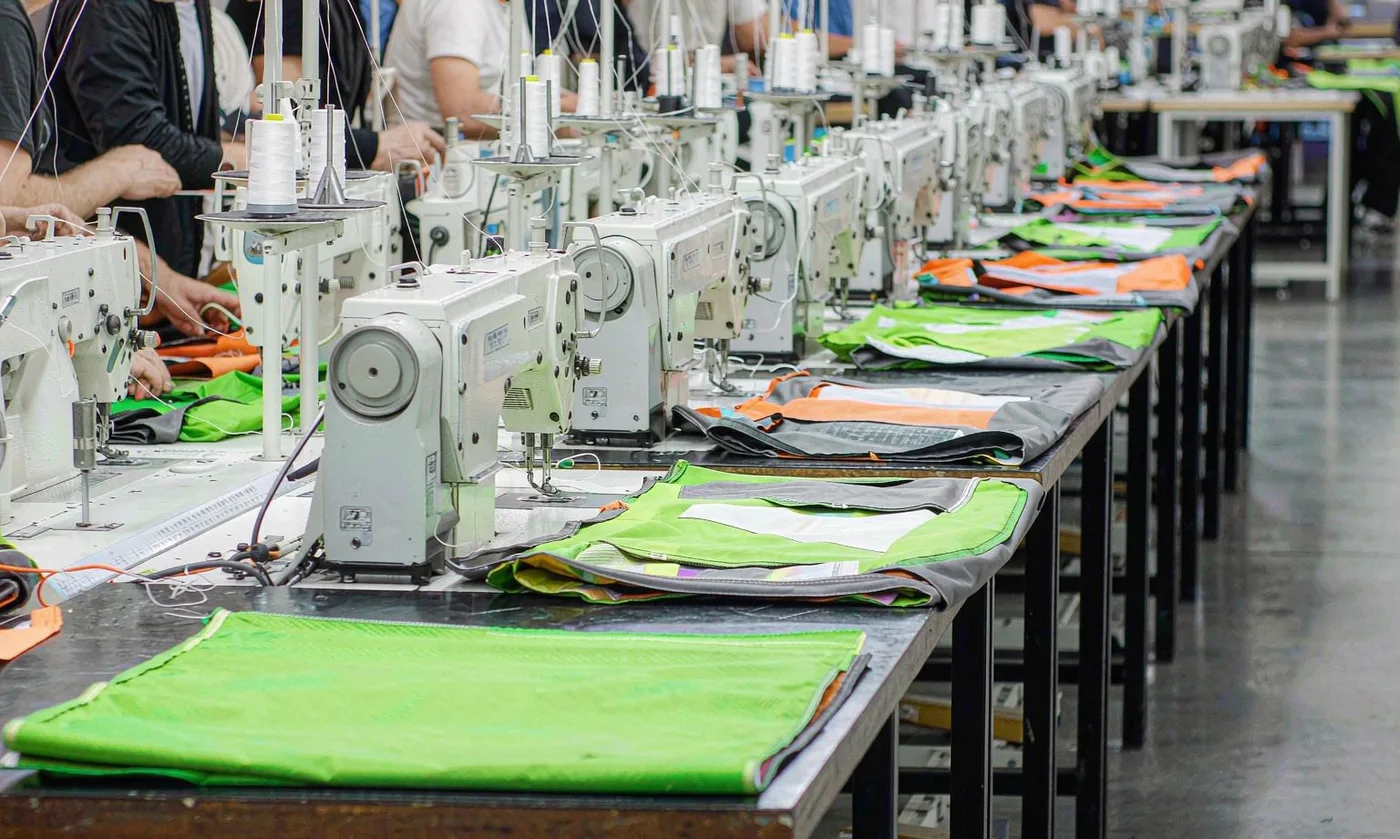
Executive summary for buyers. The framework is principle-based, so compliance is demonstrated through evidence rather than through approval. Our production team collects the material supplier's declaration, verifies it against migration results obtained under the product's real use conditions, and maintains lot traceability from component receipt to packed carton before sampling closes. Programme mechanics are unchanged: MOQ 500 pieces per colourway, samples in 6-10 working days, bulk 35-50 days after written sample approval, final inspection at AQL 2.5, T/T 30/70, FOB Xiamen. Across an SGS-verified 4,950 m2 base with 137 staff, 7 lines and 149 machines, traceability is maintained by production order, which is what allows a claim made at sample stage to be defended at shipment stage.
Wholesale nylon pet carrier and wholesale polyester pet carrier lines differ mainly in abrasion behaviour, which Material & Technology should record as a cycle count instead of a fabric name. Wholesale eco friendly pet carrier programmes add a certificate cost that is small per unit but fixed per colourway.
What the Framework Regulation Requires, in Buyer Language
The European framework regulation does something unusual: it sets principles rather than product rules. Materials intended to contact food must be safe - they must not transfer constituents in quantities that could endanger human health or bring about an unacceptable change in the composition of the food - they must not degrade the organoleptic properties of the food, and they must be manufactured under appropriate quality systems. Everything else in the European file descends from those sentences.
For a pet bag buyer, the translation is operational rather than philosophical. Safety means migration testing under conditions that match real use. No unacceptable change means sensory assessment. Appropriate manufacturing means a documented quality system at the component maker. And traceability means lot records that survive assembly. Four obligations, four documents, none of them a certificate.
The framework also establishes how specific measures relate to it. Material groups with their own European measure - plastics above all - are governed by that measure for the matters it covers, and by the framework for everything else. Material groups without a specific measure fall back on the framework plus any applicable national provisions. That is why a European file looks different depending on whether the component is polypropylene or silicone.
The final structural point is that the obligations attach to the material or article placed on the market, and to the operator that places it there. An importer placing a pet bag with a bowl onto the European market is an operator with obligations, which is why the European file is a shared responsibility rather than a supplier deliverable.
The principle-based structure has a practical consequence that surprises buyers: there is no list of approved materials to consult. Compliance is established by demonstrating inertness under the relevant conditions, which means the evidence is always test-led rather than lookup-led. Buyers who spend time searching for an approval register are looking for an instrument the regulation does not create.
Article-Level Duties: Inertness, Traceability, Labelling
Inertness is the substantive duty and the one that generates laboratory work. Materials must not transfer constituents to food in quantities that pose a risk, evaluated through migration testing with simulants, times and temperatures matched to intended use. The evaluation is condition-dependent by design: a component is not inert in the abstract, it is inert under the conditions for which it was assessed.
Traceability is the procedural duty and the one most often under-implemented. Operators must be able to identify their supplier and their customer, one step in each direction, and must maintain systems allowing that information to be made available to competent authorities on request. In a bag programme this means lot numbers carried from component receipt through production order to carton label - three links that cost nothing and are worth a great deal in a complaint.
Labelling is the third duty and the one with the most direct marketing impact. Materials and articles intended for food contact should be labelled as such, or otherwise identified, with instructions for safe and appropriate use where necessary. Where a symbol is used, it must not mislead. For pet bag components this duty is usually discharged on the component or its packaging rather than on the bag, which is both accurate and commercially sensible.
A fourth duty applies to active and intelligent materials - those designed to release or absorb substances, or to monitor the condition of food. Pet bag components rarely fall into this category, but antimicrobial liners and odour-absorbing panels occasionally do. Where they do, the requirement is substantially heavier, and the design decision should be made with that in mind rather than discovered afterwards.
Active and intelligent materials deserve a design-stage decision. An antimicrobial liner or an odour-absorbing panel may fall into a category with substantially heavier requirements, including specific authorisation and labelling. Where the function is not essential to the product, using a conventional material removes an entire compliance category at no functional cost - a trade worth making before tooling rather than after.

The Declaration and the Evidence Behind It
The declaration of compliance is the document that makes the framework work in commerce. Issued by the material supplier, it confirms that the material complies with the applicable rules and states the conditions under which that conclusion holds. Its required content is defined for material groups with a specific measure, and the discipline of collecting a complete declaration is what separates a usable file from a folder of reports.
| Obligation | Evidence | Held by | Typical timing |
|---|---|---|---|
| Inertness under use conditions | Migration report with simulants and conditions | Component manufacturer and laboratory | 3-5 weeks |
| No organoleptic change | Sensory assessment result | Laboratory | 1-2 weeks |
| Documented compliance | Declaration of compliance with required fields | Component manufacturer | 2-5 days |
| Appropriate manufacturing | Quality system or GMP description and audit summary | Component manufacturer | 2-5 days |
| Traceability | Lot records from receipt to carton | Assembly plant | Prepared at stuffing |
| Correct labelling | Artwork and claim wording review | Buyer and assembly plant | Pre-production |
| National add-on where applicable | Additional material-specific test reports | Laboratory | 2-4 weeks |
The timing column is the useful one for planning. Migration work and any national add-on dominate the calendar, while declarations and system documents arrive within days. A buyer who requests the slow items first and the fast items second finishes the file in the shortest possible time; a buyer who requests them in the order they come to mind usually discovers the slow item last.
Evidence quality matters more than evidence quantity. A single migration report with correct simulants, conditions and limits, tied to a lot, is worth more than six reports with mismatched parameters. Our production team reviews every incoming component report for parameter consistency before filing it, because an inconsistent report is worse than a missing one - it creates the impression of coverage where none exists.
One discipline makes the evidence usable: name the use profile in every document. The declaration, the test request and the artwork should all state the same food types, temperature and contact pattern. Where those three diverge, the file supports nothing, because a reviewer can always find the weakest statement and ask the others to justify themselves against it.
Good Manufacturing Practice for Food Contact Materials
A companion European regulation requires food contact materials to be manufactured under good manufacturing practice. It applies to sectors and processes rather than to individual products, and its content is familiar to anyone who has worked with a documented quality system: controlled inputs, defined process parameters, documented checks, control of non-conformity, and records retained for a defined period.
The distinction that matters for a buyer is between the component maker and the assembly plant. The component maker operates under the full GMP expectation because it produces the contact material. The assembly plant converts that material into an article and holds obligations appropriate to that activity - incoming control, segregation, hygiene in packing. Both are auditable, and both are asked about in a serious retailer review.
Practically, GMP is a supplier-selection filter rather than a document to be created. A component maker supplying European kitchenware already operates the system and can describe it; a general moulder cannot, and building it takes longer than most programmes have. Buying the documented component remains the fastest route to a defensible European file.
Evidence is easy to request and revealing to receive: a system description or the relevant quality manual section, the most recent audit summary, and confirmation of record retention. Suppliers with a European customer base send these without discussion. Those without send marketing material instead, which is an answer in itself.
Buyers can strengthen manufacturing assurance cheaply by asking two operational questions: how are non-conforming components segregated, and how is a change of raw material approved. Both answers reveal whether the system functions day to day. A supplier with a documented system and no segregation practice is describing an aspiration, and the buyer's incoming inspection should be scaled accordingly.

Where Specific Measures Take Over From the Framework
The framework delegates. Where a material group has a European specific measure, that measure governs the matters it covers - authorisation of substances, migration limits, how compliance is demonstrated - and the framework continues to apply to everything else. Plastics have the most developed measure, with a union list of authorised substances and defined migration testing rules. Ceramics, regenerated cellulose and a few other groups have their own.
Silicone, rubber, coatings and paper occupy the gap: no full union harmonisation, so the framework plus national provisions apply. This is why a silicone bowl destined for Germany attracts a national evidence set while a polypropylene scoop does not, and why a buyer's test scope should be built from the material upward rather than copied from the last programme.
The practical method is a two-question matrix. Does the material have a European specific measure? If yes, follow it and add the framework duties. If no, identify the national provisions in the destination markets and test to the strictest of them. Answering those two questions at RFQ is worth more than any amount of document collection later.
Change of material invalidates the analysis, which is the discipline worth institutionalising. A switch from polypropylene to copolyester, or from a general-purpose silicone to a kitchenware grade, changes which measure applies and restarts the file. Recording material changes as compliance events is the single habit that keeps a European file accurate across seasons.
Revision management is the administrative burden that comes with a delegated structure. Measures are updated, lists are amended and transition periods apply, so a file built two seasons ago may cite a version that has since been superseded. An annual version check against the current text costs an hour and prevents the most frustrating kind of rejection: a valid result presented under an outdated reference.
Labelling, Instructions and the Symbols Question
European labelling for food contact articles is functional rather than decorative. The purpose is to tell the user that the article is intended for contact with food and how to use it safely. Where a symbol is used, it must not mislead; where instructions are necessary for safe use, they must be given. A component that is suitable for dry food at ambient temperature but not for hot liquid should say so, and the packaging copy should follow the declaration rather than the marketing meeting.
Three practices cause trouble in this category. Printing the food contact symbol on a pet bag whose shell never touches food. Using the symbol without a supporting declaration anywhere in the file. And showing a use in imagery - hot soup in a bowl rated for ambient dry food - that the documentation does not cover. Each is an inconsistency a reviewer can find in minutes.
Instructions are cheap insurance. Maximum temperature, suitability for dishwasher use, and whether the article is intended for dry or wet food are three lines that both reduce misuse complaints and demonstrate that the operator took its labelling duty seriously. Where a retailer requires specific wording, adopt it verbatim rather than paraphrasing, because paraphrase is where mismatches enter.
Language follows the market. Copy must be comprehensible to the end user in the country of sale, which for a European programme means translating not just the symbol legend but any limitation. A multilingual insert is inexpensive at volume and removes the most common source of cross-border complaint: a limitation that was never understood.
Instructions also carry a marketing benefit that buyers underrate. Clear statements of what a component is designed for - dry food, warm water, dishwasher safe - read as competence to a careful customer and reduce misuse returns. Where a competitor's listing is vague and yours is specific, the difference shows up in review scores long before it shows up in any compliance conversation.
Multi-Material Articles and the Weakest Component Rule
A pet bag with a food contact component is a multi-material article, and European practice treats it that way: each material in contact with food is assessed in its own right, and the article is only as well documented as its weakest component. A bowl with excellent evidence attached to a bag with a decorated pouch liner that has none produces a file with a hole in it.
The practical method is a contact-surface inventory. List every surface that food or drink can touch under intended use - bowl interior, liner interior, spout bore, gasket face, any printed or coated area inside a pouch - and assign each a documentation status. Surfaces with no documentation are either tested or redesigned out of contact. That inventory, one page long, is the most useful compliance artefact in a pet bag programme.
Welded and laminated constructions deserve particular attention. The contact surface of a laminated film is the weld layer, not the structural layer, and a report on the base film does not cover it. Similarly, an internal print is a contact surface with its own requirements. Both are frequently missed because the buyer asked about "the liner" rather than about each layer.
Where documentation cannot be obtained for a surface, redesign is cheaper than risk. Moving a print to the exterior, substituting an undecorated liner, or changing a gasket material are small design changes with large documentation consequences, and they are far cheaper before tooling than after.
The inventory should be reviewed at each design change rather than at each season. A new print placement, a different gasket or a revised liner construction can create a contact surface that nobody documented, and mid-season design tweaks are the usual source of those changes. Making the inventory a standing item on the design-change checklist keeps the file aligned with the product instead of with the product as it was last reviewed.
Enforcement, Market Surveillance and Recall Exposure
European enforcement is decentralised: national authorities carry out market surveillance, and their findings are shared through a rapid-alert system for food and feed. A notification in that system is a commercial event, not just a regulatory one, because retailers monitor it and delisting follows quickly. The cost of a notification dwarfs the cost of the documentation that would have prevented it.
Recall exposure is shaped by traceability. With lot records intact, a buyer can scope a withdrawal to a defined component lot and carton range. Without them, the scope becomes an entire shipment or production period, and the logistics and reputational cost rises by an order of magnitude. Traceability is therefore a financial control as much as a legal duty.
Buyers should also understand the private enforcement environment. Competitor complaints and consumer organisation testing are common in several European markets, and an over-claimed product is an easy target. Conservative claim wording, matched exactly to the declaration, is the cheapest available protection and it costs nothing to implement.
Preparation is mostly routine. Keep the file current, re-test on material change, review artwork against the declaration before each production run, and maintain a contactable technical person on both the supplier and buyer side. Programmes that do these four things rarely appear in an alert; programmes that do not are the ones that do.
Buyers should also plan the internal response path before it is needed: who is authorised to withdraw a listing, who contacts the supplier, who holds the lot records. A withdrawal exercise is a logistics problem under time pressure, and organisations that have rehearsed it scope the action narrowly and quickly. Those that have not tend to over-scope, because over-scoping feels safer when the alternative is uncertainty.
Applying the Framework to a Pet Bag Programme
Translating all of the above into a working programme produces a short sequence. At RFQ, scope the food contact components and request the declaration, the citation or national reference, and the most recent test reports from the component maker. During the 6-10 working day sample window, commission any missing testing against a stated use profile. Before bulk, review artwork and claim wording against the declaration. At stuffing, record lot numbers and assemble the shipment document pack. After the 35-50 day run, inspect at AQL 2.5 with component-specific checks and file the results.
The budget consequence is modest. Migration and sensory work plus declaration handling runs EUR 600-2,000 per material family, and consolidation - one qualified component article across the range - keeps that to a single occurrence rather than one per SKU. The larger cost in most programmes is not the testing; it is the delay caused by discovering the requirement late.
The organisational consequence is a small amount of discipline: a contact-surface inventory, a component change log, and a shipment document pack assembled before the carrier cut-off. Three habits, none of them expensive, all of them the difference between a file that closes and a file that generates questions.
For wholesale pet bag buyers the conclusion is encouraging. The framework's duties are clear, the evidence is obtainable from established component makers, and the programmes that succeed are those that treat documentation as part of design rather than as paperwork after it. Substance information for the European market is published by ECHA, management-system expectations are set out by ISO, and independent verification is available through bodies such as SGS.
Production capability
- SGS-verified production space of 4,950 m², 149 machines, 7 assembly lines
- Pet bag output since 2014 from a 137-person team
- 200,000 units shipped monthly under BSCI and ISO 9001 systems
People Also Ask
What is the European framework regulation for food contact materials?
It is the regulation setting general principles - inertness, no organoleptic change, traceability, labelling and appropriate manufacturing - with material-specific detail delegated to specific measures and national provisions.
Does the framework apply to pet products?
Yes. Food and feed contact materials are within its scope, so pet bag components that touch food or drink are assessed under the same principles as human food contact articles.
What document proves compliance under the framework?
A declaration of compliance from the material supplier, stating the applicable rules and conditions, supported by migration and sensory results and lot traceability.
How is traceability demonstrated in practice?
By lot numbers carried from component receipt through the production order to the carton label, so that a shipment can be traced to a specific component lot on request.
Do multi-material articles need separate evidence per material?
Yes. Each contact surface is assessed in its own right, and the article is only as well documented as its weakest component.
What happens if a product appears in a European alert system?
Retailers monitor the system and delisting often follows quickly. The commercial cost exceeds the cost of the documentation that would have prevented the notification.
Frequently Asked Questions
Does EC 1935/2004 issue a certificate to suppliers?
No. It sets principles and duties. Compliance is demonstrated through a supplier declaration supported by migration testing, sensory assessment, traceability records and appropriate manufacturing controls.
Which parts of a pet bag are covered by the framework?
The surfaces intended to contact food or drink: bowls, pouch liners, spout bores, gasket faces and any internal print or coating. The shell fabric and hardware are not food contact surfaces.
What are the three core duties under the framework?
Inertness under intended conditions of use, traceability one step up and one step down, and appropriate labelling or identification for food contact use, supported by documented manufacturing controls.
Is sensory assessment part of European compliance?
Yes. The framework prohibits unacceptable change to the organoleptic properties of food, so odour and taste transfer testing belongs in the file alongside migration results.
How does a specific measure interact with the framework?
Where a material group has a European specific measure, that measure governs the matters it covers and the framework continues to apply to everything else, including traceability and labelling.
Why does silicone need national evidence while PP does not?
Plastics are harmonised at union level with a defined measure; silicone is not fully harmonised, so national provisions apply in markets such as Germany. Build the test scope from the material upward.
What is a contact-surface inventory?
A one-page list of every surface that food or drink can touch under intended use, each with a documentation status. It is the most useful compliance artefact in a pet bag programme.
Is a welded liner covered by a report on the base film?
Not fully. The contact surface is the weld layer, and it needs its own identification. Internal prints are likewise contact surfaces with their own requirements.
What is the cost of a framework-compliant component file?
Plan EUR 600-2,000 per material family including migration and sensory work and declaration handling, with consolidation across SKUs keeping that to a single occurrence.
How does traceability reduce financial exposure?
Lot records let a withdrawal be scoped to a defined component lot and carton range. Without them the scope becomes the whole shipment, and logistics and reputational cost rise sharply.
Can the food contact symbol be printed on the bag?
Only where accurate. It belongs on the component or its packaging and should be matched by a declaration covering the use shown in marketing imagery.
What invalidates an existing European component file?
Any change of material, grade, pigment, coating or component supplier. Treat each change as a compliance event and refresh the declaration and test evidence before the next run.
Talk to QUANZHOU JUNYUAN BAGS about a wholesale pet bag order: MOQ 500 pieces per colourway, samples in 6-10 working days, bulk production in 35-50 days under AQL 2.5 inspection.
Get a free quote Request a sample