FMVSS Certified Pet Bags: US Safety Compliance Guide
FMVSS certification does not apply to pet bags: the Federal Motor Vehicle Safety Standards govern motor vehicles and specific items of motor vehicle equipment, and FMVSS 213 in particular governs child restraint systems, not pet containment. Two parts of the FMVSS family are still relevant to a US pet bag programme - FMVSS 302 flammability of interior materials if the product is vehicle equipment, and the dynamic test vocabulary of FMVSS 213 if a buyer chooses to adapt its criteria. A defensible brief states a change of velocity, a test mass, pass criteria and the laboratory, and describes the result as tested rather than certified.
The US compliance environment differs from the European one in a way that catches buyers out: it is a self-certification system. A manufacturer or importer placing regulated equipment on the US market certifies compliance themselves rather than receiving an approval, which means the documentation burden sits with the buyer's own file rather than with an authority's certificate. For pet containment - which is not covered by a specific FMVSS - the practical consequence is that a buyer defines the requirement themselves and must be able to produce the evidence behind any safety statement. Our production team supports US programmes by building restraint geometry to the chosen criteria, supplying production-representative test units and locking load-bearing components so the tested configuration is the shipped one. Qualification sampling runs 6-10 working days before the laboratory phase, which is booked separately. Bulk production is 35-50 days from approved sample, inspected to AQL 2.5 with restraint components classified as critical. Standard terms are MOQ 500 pieces per colourway, T/T 30/70 and FOB Xiamen.
Two quotes that look comparable on unit price rarely are: one pet carrier supplier prices the carrier alone while another bundles the pad, the hang tag and the polybag. Split the bill of materials line by line before comparing, and ask each pet bag supplier to state the carton cubage, because that is where the freight difference hides.
What the FMVSS System Regulates and Where Pet Bags Sit
The Federal Motor Vehicle Safety Standards are a set of performance requirements for motor vehicles and items of motor vehicle equipment, issued under the National Traffic and Motor Vehicle Safety Act and administered by the National Highway Traffic Safety Administration. Compliance is demonstrated by self-certification: the manufacturer or importer certifies that the product meets the applicable standards, and the agency enforces through testing, inspection, defect investigation and recall. Understanding that structure is useful even for unregulated products, because it explains why documentation rather than approval is the currency of US compliance.
Pet containment is not a regulated category within that system. FMVSS 213 governs child restraint systems, FMVSS 208 addresses occupant crash protection, FMVSS 209 covers seat belt assemblies and FMVSS 302 addresses the flammability of interior materials. A pet bag is not any of those things, and no standard in the family tells a buyer how a pet bag must perform. That absence is the reason the category is full of borrowed vocabulary, and it is the reason a buyer should be precise about which standard was borrowed and what was actually measured.
Two parts still matter, one directly and one by analogy. FMVSS 302 matters directly if the product is treated as item of motor vehicle equipment and is made of materials used in a vehicle occupant compartment, because the burn-rate requirement is a material property rather than a containment property. FMVSS 213 matters by analogy, because its dynamic sled test and performance criteria are the vocabulary North American labs and buyers already use, and adapting them is the fastest route to a credible pet programme.
The self-certification structure is the part buyers should internalise. There is no certificate to collect for a pet bag, so the file a buyer assembles - criteria, report, sample provenance, component lock - is the whole compliance position. If the file cannot be produced, the claim cannot be defended.
Why the Distinction Matters Commercially
The difference between regulated and unregulated is not academic for a buyer: it changes who carries the burden of proof. For a regulated item, the buyer certifies against a published requirement and the argument is about measurement. For an unregulated one, the buyer has chosen the requirement, so the argument is about whether the choice was reasonable. Documenting why a particular criterion was selected - and dating that decision before the test - is what makes the choice defensible later.
FMVSS 213 by Analogy: Adapting the Dynamic Criteria
FMVSS 213 sets out a dynamic test in which a restraint system is installed on a standard seat fixture, a test dummy of specified mass is placed in it, and the assembly is subjected to a sled deceleration with a specified change of velocity. The criteria cover dummy excursion and restraint integrity. Adapting that structure to a pet bag is straightforward, and the adaptations need to be stated rather than assumed.
- Test mass: the standard specifies child dummies; a pet programme must define a representative mass at the top of the marketed animal weight range and say it is a test load.
- Excursion criterion: the standard limits dummy movement; a pet programme should define what staying on the seat means for a bag.
- Integrity criterion: the standard covers restraint integrity; a pet programme should add closure integrity and structural integrity explicitly.
- Installation: the tested configuration must match the instructions the customer receives.
The change of velocity matters as much as the criteria. A pet programme should state the target speed and the achieved pulse, because a softer pulse produces better numbers and two results are not comparable unless both state it. Around 30 mph, or roughly 48 km/h, is the common reference point for a frontal event.
Test method documentation in North America typically references the ASTM standards family for materials and the FMVSS vocabulary for dynamic performance; ASTM International publishes the material and test methods used across US supply chains, and the consumer product safety framework is administered separately by the US Consumer Product Safety Commission. A report should name what it used.
Repetition and provenance complete the adaptation. A programme should test more than one unit, taken from different production positions rather than consecutive pieces, because a single favourable result describes a sample rather than a process. Three units is a workable default and the report should identify them as production-representative rather than as prototypes.
FMVSS 302 Flammability: The Requirement That Does Apply
FMVSS 302 is the one standard in the family that can apply to materials directly. It sets a maximum burn rate for materials used in the occupant compartment of a motor vehicle, measured by exposing a horizontal specimen to a small flame and timing the burn over a measured distance. The requirement is a property of the material, not of the assembled product, which makes it easy to test and easy to specify.
Whether it applies to a given pet bag depends on how the product is classified and sold. A product marketed as vehicle equipment and made of the kinds of materials used in occupant compartments is the case where buyers should take it seriously; a general-purpose pet tote is a different case. The decision should be made deliberately with the compliance contact rather than by default, because it changes the material specification.
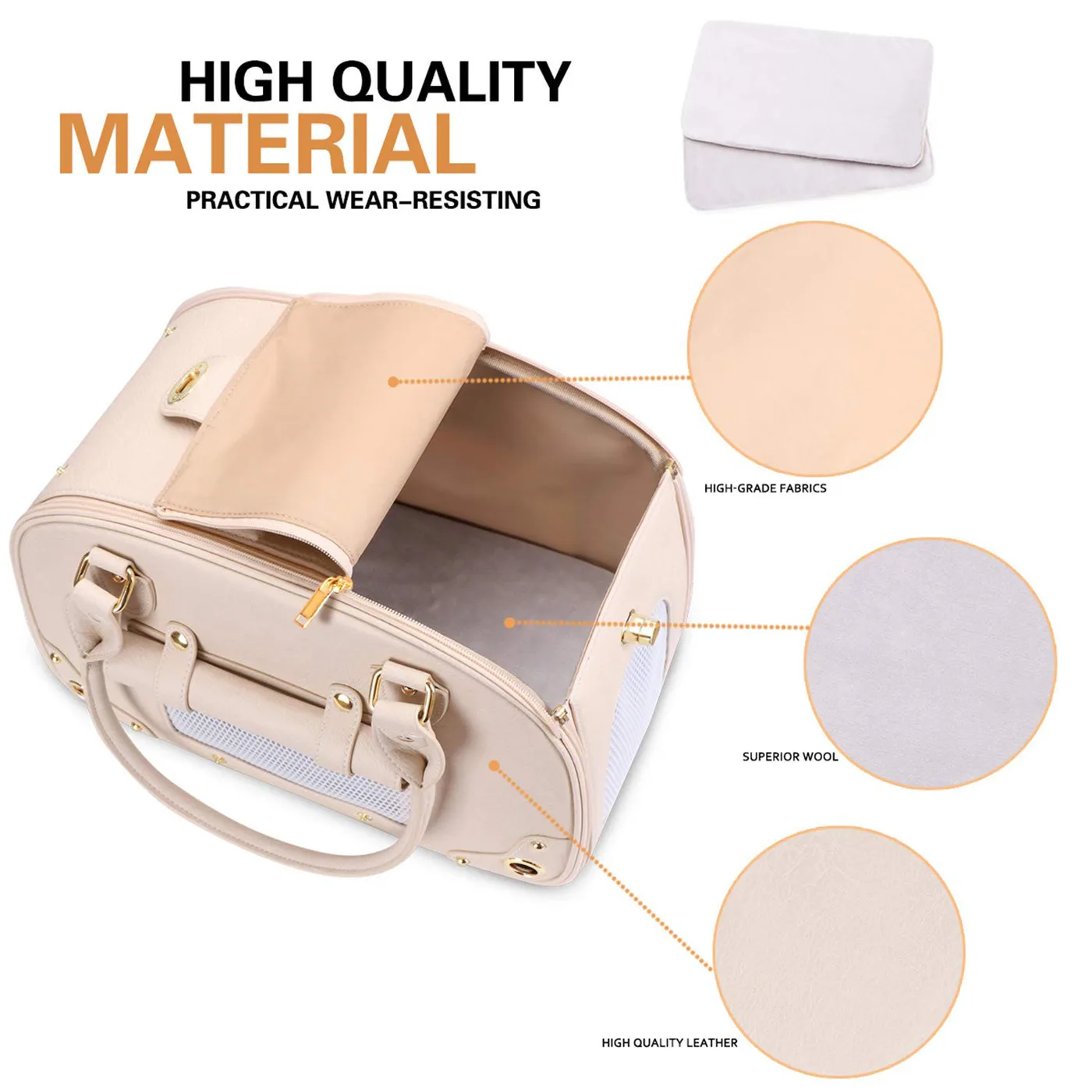
The material consequence is concrete. Untreated polyester and nylon fabrics can burn at rates above the limit, and meeting the requirement usually means selecting a treated or inherently resistant face fabric and backing. That in turn interacts with the chemical documentation for the US market, where flame-retardant treatments attract scrutiny, and with California's Proposition 65 regime administered by the Office of Environmental Health Hazard Assessment, which carries its own warning obligations.
| Material | Typical burn behaviour | Treatment route | Documentation needed |
|---|---|---|---|
| Untreated polyester | May exceed limit | Topical or back-coat treatment | Burn-rate report, treatment declaration |
| Untreated nylon | May exceed limit | Treated backing | Burn-rate report, treatment declaration |
| PVC-coated fabric | Usually compliant | None typically required | Burn-rate report, plasticiser declaration |
| Inherently FR fibre | Compliant | None required | Fibre specification, burn-rate report |
The practical advice is to test early. A burn-rate failure discovered after bulk is a material change, and a material change at that stage resets the chemical documentation as well. Testing a candidate fabric before the tech pack is frozen costs very little and removes one of the few failure modes that can invalidate an entire order rather than a single lot.
Burn-rate results also vary with the finished state of the material. Coatings, prints and laminations change how a specimen burns, so the specimen submitted must carry the production finish and construction rather than the greige cloth. Our production team submits finished-state coupons for exactly this reason, and recommends re-testing whenever a finish supplier changes.
Self-Certification: What the Buyer's File Must Contain
Because the US system is self-certifying, the compliance position is the file. Buyers assembling a US safety programme should build a folder that answers the questions an enforcement enquiry, a retailer or a plaintiff's attorney would ask, in that order of likelihood.
- Classification decision: a written record of why the product is or is not treated as motor vehicle equipment, and which standards were considered.
- Test report: dynamic or material testing as applicable, with laboratory, method, achieved conditions and sample provenance.
- Criteria as written before the test: the pass criteria, dated before testing, so the result cannot be accused of being reverse-engineered.
- Component lock: the specification of load-bearing components, with part numbers, for the tested configuration.
- Instructions: the shipped installation instructions, matching the tested configuration.
- Claim approval record: who approved the marketing wording and against which document.
Product safety obligations apply independently of vehicle standards. Components, finishes and mechanical hazards fall under the general consumer product regime administered by the Consumer Product Safety Commission, and where a product is marketed alongside children's products the CPSIA requirements for lead and phthalates can come into play. A safety programme for a pet bag does not replace any of that.
Retention matters. Records should be kept for the life of the product plus a margin, because an enquiry can arrive years after the sale and a file that was never assembled cannot be reconstructed. Assigning an owner to the file, and reviewing it once a year, is the difference between a compliance position and a folder of old emails.
Importers should note one more point: the obligations of an importer are not identical to those of a domestic distributor, and a own-brand programme places the certification burden on whoever puts the product on the market under their name. Buyers running own-brand programmes should confirm which entity carries that role before the first shipment rather than during an enquiry.
Restraint Design for North American Vehicles
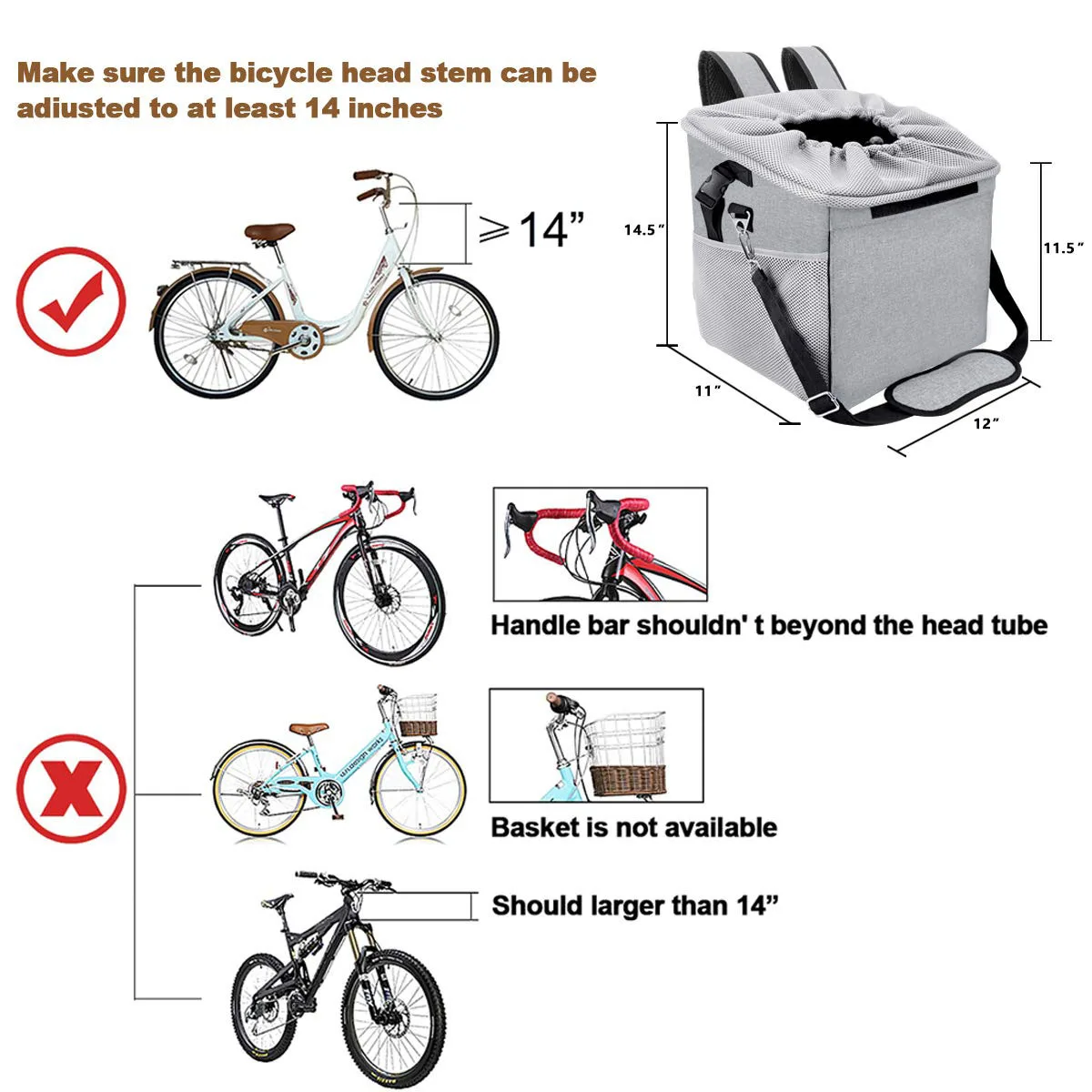
North American vehicle interiors present their own installation environment. Seat belt geometry, buckle stalk design, the widespread presence of LATCH anchorages, and the popularity of pickup trucks and large SUVs with different rear-seat and cargo configurations all affect how a restraint behaves. A design tested on a single fixture should be checked against the vehicle types the product is actually sold into.
Lower anchorages are the North American equivalent of ISOFIX, and they are widely available in passenger vehicles. As with ISOFIX, using them for pet containment describes an attachment interface rather than conferring any approval, and the load path needs to be understood rather than assumed. A belt-path design remains the most broadly compatible answer across trucks and SUVs where anchorage availability varies.
Truck and large-SUV cargo areas introduce a different case entirely: a bag placed in a cargo area is often unrestrained, and the realistic risk is projectile motion rather than restraint failure. Products marketed for those vehicles should address securement in the cargo area explicitly, with an anchor method that does not depend on a rear seat belt.
Instruction clarity is the cheapest safety feature available. A single clearly marked belt route, a fixed tether length, a diagram shipped with the product and a one-sentence statement of the tested installation will do more for real-world performance than most material upgrades.
Compatibility statements should be honest about limits. No restraint performs identically in every vehicle, and claiming universal fit invites both a customer complaint and an argument about what was tested. Stating the vehicle types and seat configurations the product was evaluated against is more credible, more useful to the customer and far easier to defend.
Cost, Volume and Programme Viability
A US safety programme has the same shape as any documented test programme: a fixed element that does not scale down and a variable element that recurs on every unit. The fixed element covers laboratory time, the report, the design iteration needed to reach a pass, and the internal time spent on claim review and retailer questionnaires. The variable element covers reinforced anchorages, specified webbing, rated hardware, market-specific instructions and any flame-retardant treatment.
The fixed element is what determines viability. Amortised across a single small trial it dominates the unit cost; amortised across a committed annual programme it becomes a small line. This is why documented safety programmes are structured as annual commitments and quoted against MOQ 500 pieces per colourway rather than as one-off buys.
Channel decides whether the spend returns. Specialty automotive channels, premium pet chains and technical buyers will ask for the file and will pay for it. Marketplace and mass channels generally will not, and a programme funded for those channels rarely recovers the test cost. Decide the channel before commissioning the work.
The defensive case is the one that survives a slow season: a documented programme answers a serious complaint in hours, and buyers who have handled one claim usually fund the programme afterwards without needing a sales argument. A documented programme also gives category managers a defensible reason to hold a price point when a cheaper untested competitor appears, which is often where the value shows up first, and it is the argument that survives a season in which the safety case is never needed. Buyers who review their programme annually, rather than only when a problem appears, tend to keep both the file and the product current.
One cost item deserves separate budgeting: marketplace and retailer onboarding. Each channel has its own documentation upload, its own wording rules and its own review time, and preparing those submissions is real work that falls between the test and the first sale. Programmes that budget for it launch on time; programmes that do not launch late.
Claims, Listings and Wording Risk
Most exposure in this category is created at the listing, not in the laboratory. Short absolute words are the problem: certified, approved, compliant and crash proof each imply an external authority or an absolute result that does not exist for pet containment in the US market.
| Wording | Survives review? | Reason |
|---|---|---|
| FMVSS 213 certified pet bag | No | That standard governs child restraints, not pet containment |
| Meets FMVSS 302 burn rate | Yes, if tested | A material property with a measurable result |
| Dynamically tested at 48 km/h | Yes | States the condition and implies no false authority |
| DOT approved | No | No approval scheme exists for this product |
| Tested to criteria adapted from FMVSS 213 | Yes | Accurate and verifiable |
Marketplaces screen for these words and retailers increasingly do the same at line review. A listing pulled for a false claim costs more than the testing would have, so final copy should be routed through whoever holds the file. A single approved-claims list per SKU, checked before every launch, prevents most drift. The drift is usually introduced by well-meaning shortening rather than by bad intent, which is why the control has to be a checklist rather than a memory.
The safest wording separates what was tested from what was certified. A dynamic test performed to adapted criteria supports "tested to FMVSS 213 criteria" only when the report says exactly that, and it never supports "FMVSS certified" for a product class the standard does not cover. Marketplace listing teams read these words literally, and the correction costs more than getting it right the first time.
Inspection and Change Control in Production
Because the result belongs to the assembled product, production control is where a US programme either holds or quietly drifts. The components that carry load must be identical to the tested configuration on every unit, and that requires records rather than good intentions.
- Component lock: webbing specification, hardware part numbers and anchorage stitching recorded and verified against bulk.
- Batch pull testing: a defined sample from each production batch pull-tested at the anchorages to a stated force.
- Instruction check: shipped instructions verified against the tested installation.
- Treatment verification: where a flame-retardant treatment is specified, verification on the production lot rather than a swatch.
- Change control: any substitution of a load-bearing component triggers documented review and, where relevant, a re-test.
At goods-in, restraint and treatment defects are critical. Wrong webbing, unrated hardware, missing reinforcement at an anchor and an untreated face fabric where treatment was specified each remove the tested property entirely and are invisible to the customer until the moment they matter. Our production team inspects to AQL 2.5 with these classified as critical.
Re-test triggers should be written down rather than decided case by case. Annual re-testing, plus immediate re-testing after any change to webbing, hardware, stitching pattern, foam density or flame-retardant treatment, is a workable rule. Writing the triggers into the programme file means the decision is already made when a supplier proposes a substitution.
Change control is the discipline that keeps a self-certification valid. Any change to foam density, webbing supplier, buckle tooling or stitch pattern alters the product that was tested, and undocumented changes quietly void the file. Our production team requires written buyer approval before substituting any component named in the test report, which is slower and consistently worth the delay.
Building the Programme in the Right Order
Decide the claim, derive the criteria, design the restraint geometry on the bench, book the laboratory, test production-representative units, then write the copy last. That sequence is what keeps a US programme defensible.
The second season decides whether the programme compounds or decays. Programmes that re-test on a schedule, hold the component lock and keep the claims list current get cheaper and safer each year; programmes that treat the test as a one-off certificate drift away from the tested configuration without anyone deciding to drift.
Sequence matters more than speed here. Lock the restraint hardware and webbing specification first, because those components carry the longest qualification lead time, and only then commit fabric and colour. Buyers who colour-match first and qualify hardware last routinely discover the buckle they selected is not available at the volume they need.
Related Regimes a US Programme Still Needs
A dynamic or flammability file does not replace general product safety obligations. Components and finishes fall under the consumer product regime administered by the CPSC, and California's Proposition 65 adds warning obligations administered by OEHHA. Air carriage is separate again, governed by airline rules shaped by the IATA Live Animals Regulations with public guidance from the FAA for travellers flying with pets.
Timing and Commercial Terms
Qualification sampling runs 6-10 working days before the laboratory phase, which should be booked when the brief is finalised. Material flammability testing should run in parallel because a late failure changes the material specification. Bulk production is 35-50 days from approved sample, with standard terms of MOQ 500 pieces per colourway, T/T 30/70 and FOB Xiamen.
Supplier Questions That Matter
Ask whether the tested unit came from production tooling, whether the achieved pulse is stated, whether the criteria were written before the test, and whether load-bearing components are locked and change-controlled. Four clean answers indicate a supplier who has supported a documented programme before. Ask one more - what happens if a load-bearing component is discontinued - because the answer reveals whether change control exists at all.
Why brands source here
- Pet bag programmes run since 2014; founding team in sewn goods since 2004
- SGS-verified production floor of 4,950 m² with 137 workers across 7 lines
- Monthly capacity of 200,000 units, audited to BSCI and ISO 9001
People Also Ask
Can a pet bag be FMVSS certified?
No. The FMVSS family governs motor vehicles and specified items of motor vehicle equipment, and FMVSS 213 governs child restraint systems. A pet bag can be dynamically tested against criteria adapted from that standard and described accurately as tested, not certified.
Which FMVSS standard applies to pet bag materials?
FMVSS 302, which sets a maximum burn rate for materials used in a vehicle occupant compartment, may apply depending on how the product is classified and sold. It is a material property, so it is tested on a specimen rather than on the assembled bag.
Is the US system self-certifying?
Yes. A manufacturer or importer certifies compliance for regulated equipment rather than receiving an approval certificate. For unregulated pet containment that means the buyer defines the requirement and must hold the evidence behind any safety statement.
What speed is used for a dynamic pet bag test?
Around 30 mph, or roughly 48 km/h, is the common reference for a frontal event. The achieved pulse must be stated in the report, because a softer pulse produces better numbers and results are not otherwise comparable.
Do flame-retardant treatments create other obligations?
Yes. Treatments interact with chemical documentation for the US market and with California's Proposition 65 warning obligations administered by OEHHA. A treatment should be approved with the chemical file rather than added at the end of sampling.
Can LATCH anchorages be used for pet containment?
Yes as an attachment interface, but using them confers no approval. The load path must be understood rather than assumed, and a belt-path design remains more broadly compatible across trucks and large SUVs where anchorage availability varies.
How much does a US safety programme cost?
A fixed element covering laboratory time, reporting, design iteration and internal review plus a variable element covering reinforced anchorages, specified webbing, rated hardware and any flame-retardant treatment. The fixed element only amortises sensibly at committed annual volume.
Frequently Asked Questions
What is FMVSS 213?
It is the Federal Motor Vehicle Safety Standard governing child restraint systems, setting out a dynamic sled test with specified change of velocity, test dummies and performance criteria. Pet programmes borrow the test vocabulary and criteria by analogy, not by obligation.
What is FMVSS 302?
It sets a maximum burn rate for materials used in the occupant compartment of a motor vehicle, measured by exposing a horizontal specimen to a small flame. It is a material property and is easier to test and specify than a dynamic requirement.
Does a pet bag count as motor vehicle equipment?
Sometimes, depending on how it is classified and marketed. The decision should be made deliberately with the compliance contact, because it determines whether material flammability requirements apply and it changes the material specification.
Why is self-certification important for buyers?
Because there is no certificate to collect for pet containment. The buyer's own file - criteria, report, provenance, component lock and claim approval record - is the entire compliance position and must be assembled deliberately.
How should the test mass be chosen?
At or above the top of the marketed animal weight range, positioned the way an animal would sit, with the report stating plainly that it was a test load rather than a regulated dummy. A lighter mass produces better numbers and indefensible marketing.
What pass criteria should be written?
Retention by the restraint system, the bag staying within its footprint on the seat, structural integrity and closure integrity. Write them before the test so the result cannot be accused of being reverse-engineered.
Do CPSIA requirements apply to pet bags?
They can apply where a product is marketed alongside children's products, since CPSIA covers lead and phthalates in children's products. A safety programme for a pet bag does not replace general product safety obligations.
What is the risk of using the word certified?
That it implies an external approval that does not exist for pet containment, which is precisely the kind of false claim that marketplaces and retailers screen for. Use tested, name the condition, and offer the report.
How often should restraint anchorages be tested?
Per production batch rather than per shipment, to a stated force, with results recorded. Batch-level testing catches drift before a customer does.
What happens if a load-bearing component changes?
Change control should trigger documented review and, where relevant, a re-test. A supplier without a documented answer does not have change control, and a programme without it is a test result rather than a product attribute.
Does a US safety file help with airline acceptance?
No. Air carriage rules address ventilation and containment under the Live Animals Regulations rather than crash performance, so a dynamically tested bag is not automatically airline acceptable.
How long does a US safety programme take?
Qualification sampling runs 6-10 working days before the laboratory phase, which is booked when the brief is finalised, with material flammability testing running in parallel. Bulk production is 35-50 days from approved sample.
Talk to QUANZHOU JUNYUAN BAGS about a wholesale pet bag order: MOQ 500 pieces per colourway, samples in 6-10 working days, bulk production in 35-50 days under AQL 2.5 inspection.
Get a free quote Request a sample