GOTS Organic Cotton Pet Bags: Sourcing Spec Guide
GOTS certification on a pet bag programme certifies that the organic fibre content is grown to organic standards and tracked through every processing stage, not simply that the fabric feels natural. Pet bags in organic cotton canvas are normally specified at the 95 percent threshold, which permits the label grade most retail channels recognise. Our production team quotes GOTS programmes at MOQ 500 pieces per colourway, with lab dips and construction samples returned in 6-10 working days.
Organic fibre is a specification decision with a cost attached, and the buyer's job is to decide whether the premium is recoverable at the shelf. GOTS is the most widely recognised organic textile standard in wholesale programmes, and unlike a chemical screening test it covers the full chain from fibre through to labelling, including social criteria. That breadth is its value and also the reason it adds administrative work to a programme.
The commercial mechanics are straightforward once understood. GOTS requires a transaction certificate for each transfer of certified goods between certified entities, so the paperwork follows the physical goods rather than sitting in a single file. Our production team plans this at quotation stage because a missing transaction certificate at the retail intake desk is treated the same way as a missing test report. Standard commercial terms are MOQ 500 pieces per colourway, samples in 6-10 working days after tech pack confirmation, bulk production 35-50 days after sample approval, pre-shipment inspection at AQL 2.5, FOB Xiamen, and T/T 30/70.
Two questions should therefore be settled before sampling: which labelling tier the programme requires, and whether the assembled weight supports the percentage the marketing plan assumes. Both are answerable at quotation and expensive to correct after lab dips are approved.
Wholesale pet bags uk and wholesale pet bags australia share most of the same test file, but Material & Technology still has to be matched to the retailer's own checklist. Pet bags wholesale china terms are usually quoted FOB, so pet bags import export cost is a separate line the buyer has to model.
What GOTS Certifies and What It Does Not
The Global Organic Textile Standard is a processing standard, not a fibre standard and not a product performance standard. It begins with fibre that has been grown to a recognised organic agricultural standard, then governs every subsequent stage: ginning, spinning, weaving or knitting, wet processing, garment or product assembly, and finally labelling and packaging. Each stage must be carried out by a certified entity, and each handover between those entities must be documented. This chain-of-custody structure is what distinguishes GOTS from a laboratory test.
What GOTS deliberately does not cover is worth stating plainly, because buyers frequently assume otherwise. It does not certify that a pet bag is structurally stronger, more durable, softer or more resistant to abrasion than a conventional equivalent. Organic cotton canvas is still cotton canvas, and its tensile and tear behaviour is governed by yarn count, weave construction and finishing, not by the certification. Performance must be specified separately using recognised test methods.
GOTS also does not cover synthetic components beyond the permitted input list. A pet bag contains webbing, zippers, buckles, foam padding and often a polyester mesh ventilation panel. Those components are not organic and cannot be, but they must still comply with the GOTS criteria on permitted inputs and residues. In practice this means the non-organic portion of the bill of materials is assessed against a chemical input standard, which is where the two certification families meet.
The scope document matters in the same way it does for any certificate. A GOTS scope certificate names the certified entity, the certified product categories and the processing stages that entity is approved to perform. A weaving mill's scope does not cover assembly, and an assembly operation's scope does not cover wet processing. Buyers should read the scope line to confirm the whole chain they are relying on is actually certified at each step.
For a wholesale pet bag programme, the practical conclusion is that GOTS answers one specific question - is the natural fibre content organic and traceable - and leaves the others open. Buyers who need chemical safety evidence alongside it should request a separate article-level test, and buyers who need performance evidence should request separate mechanical testing. A complete technical file contains all three rather than relying on the organic certificate to imply them.
Fibre Content Rules: The Two Label Grades
GOTS recognises two labelling tiers, and the distinction drives both the claim a buyer can make and the cost of the fabric. The higher tier requires at least 95 percent certified organic fibre by weight, with the balance made up of permitted non-organic fibre. The lower tier requires at least 70 percent certified organic fibre, with tighter restrictions on what the remaining portion may be. Products below the 70 percent threshold cannot carry a GOTS label at all.
For pet bags, the 95 percent tier is the usual commercial choice. Buyers selecting the lower tier often discover that their retail partner's compliance team does not accept the resulting claim language, or that the marketplace listing they had planned is not permitted to use the organic wording they assumed. Specifying the higher tier from the start costs slightly more per metre and removes a negotiation at the end of the process.
The calculation is by weight of the finished product, which creates a specific problem for pet bags. Hardware is heavy. A canvas pet bag with a metal-reinforced base, substantial buckles, a padded strap and a full-length zipper can carry a meaningful share of its total weight in non-certifiable components. Buyers should run the fibre percentage on the full assembled weight at the specification stage rather than on the fabric weight alone, because the two numbers can fall on opposite sides of a threshold.
Blending rules add a further constraint. Where a non-organic fibre is blended in, it is restricted to specified types, and regenerated or synthetic fibres face additional limits. A canvas construction with a small polyester content for dimensional stability may still qualify, but the permitted share is not unlimited, and the blend must be declared. Undeclared blend components are one of the more common reasons a scope review fails.
Buyers should also note that the organic claim attaches to the fibre, not to the colour. A certified organic canvas dyed with a non-compliant dyestuff loses the certification just as surely as one made from conventional fibre. Dye and auxiliary inputs are assessed against the GOTS criteria, which means the colour palette available on a certified base cloth is narrower than on a conventional one.
Transaction Certificates: The Document Buyers Forget
A scope certificate proves an entity is certified. A transaction certificate proves that a specific shipment of certified goods moved between two certified entities. GOTS requires a transaction certificate for each such transfer, and the retail buyer at the end of the chain is entitled to ask for the set covering the goods being delivered. This is the document most often missing from a first-time organic programme.
The mechanism is straightforward but unforgiving. When a certified fabric supplier ships certified cloth to a certified assembly operation, the supplier requests a transaction certificate from its certification body, quoting the scope numbers of both parties and the shipment quantity. The assembly operation then does the same when shipping finished goods onward. Each certificate references a defined quantity, so the quantities must reconcile across the chain: a transaction certificate covering 800 metres cannot support a finished-goods certificate covering 1,200 bags.
Reconciliation failures are the practical risk. Buyers who place a small first order, then a larger reorder from the same cloth, can end up with a shortfall if the fabric was purchased for the smaller quantity only. Our production team plans fabric purchase against forecast annual volume for exactly this reason, because buying certified cloth once for the full season is both cheaper and administratively cleaner than buying it twice.
Timing matters as much as quantity. Certification bodies take time to issue transaction certificates, and the request cannot be made before the physical shipment occurs. On a bulk schedule of 35-50 days, buyers should expect the document set to be finalised in the final week before vessel loading. Any buyer working to a hard retail intake date should confirm the document date rather than the goods date.
The administrative discipline required is modest but must be assigned. Someone in the buying organisation needs to hold the scope numbers, the transaction certificates and the quantity reconciliation in one place and check them before each release. Buyers who treat this as a supplier responsibility without verifying it are the ones who discover the gap at the distribution centre.
Cost Premium and Where It Comes From
The organic premium is real and it arrives from three separate directions, only one of which is the fibre itself. Understanding the split helps buyers decide where they can economise without losing the claim. The first component is the certified fibre price, which carries an agricultural premium over conventional cotton and fluctuates with certified crop availability. The second is processing: certified spinning, weaving and wet processing operate at smaller scale with segregation requirements, and that cost is passed through per metre. The third is administrative: scope certification, transaction certificates and annual audit fees.
The fibre premium is the largest single line and the least negotiable. Certified organic cotton is a smaller market than conventional cotton, and its price responds to harvest outcomes in the main growing regions. Buyers should treat it as a commodity input with a volatile price and build a price-adjustment clause into annual agreements rather than fixing a unit price for twelve months.
Processing and segregation costs are where volume helps. A certified wet-processing operation must separate certified from conventional lots, clean down between runs, and document the segregation. Those costs are largely fixed per run, so they amortise better over a longer production run. A 500-piece order carries the same segregation overhead as a larger one, which is why the unit premium on small organic runs is disproportionately high and why consolidation improves the economics sharply.
Buyers should calculate the premium per finished unit rather than per metre of cloth, because that is the number that meets the retail price. On a mid-sized canvas pet bag, a modest per-metre premium typically translates to a smaller but still material addition to the finished unit cost once fabric consumption is accounted for. Whether that is recoverable depends on the channel: a specialty pet retailer with an established natural-products shelf can pass it through, while a price-led marketplace listing usually cannot.
| Cost component | What drives it | Practical buyer lever |
|---|---|---|
| Certified fibre premium | Certified crop availability and harvest outcomes | Forward contract, price adjustment clause |
| Segregated processing | Smaller certified runs, clean-down between lots | Consolidate runs, lengthen production |
| Certification and transaction fees | Annual and largely fixed | Amortise across the full annual programme |
| Internal administration | Scope tracking, quantity reconciliation | Assign ownership, hold one index file |
| Re-test and re-certification | Late change of class or component | Declare target class in the tech pack |
The decision framework is simple. If the organic claim is the reason the product earns its shelf space, the premium is an investment with a measurable return. If the claim is incidental to the positioning, the same money is better spent on construction quality, hardware specification or a wider colour range, all of which are visible to the shopper in a way a certificate is not.

Sourcing Certified Canvas at Wholesale Volume
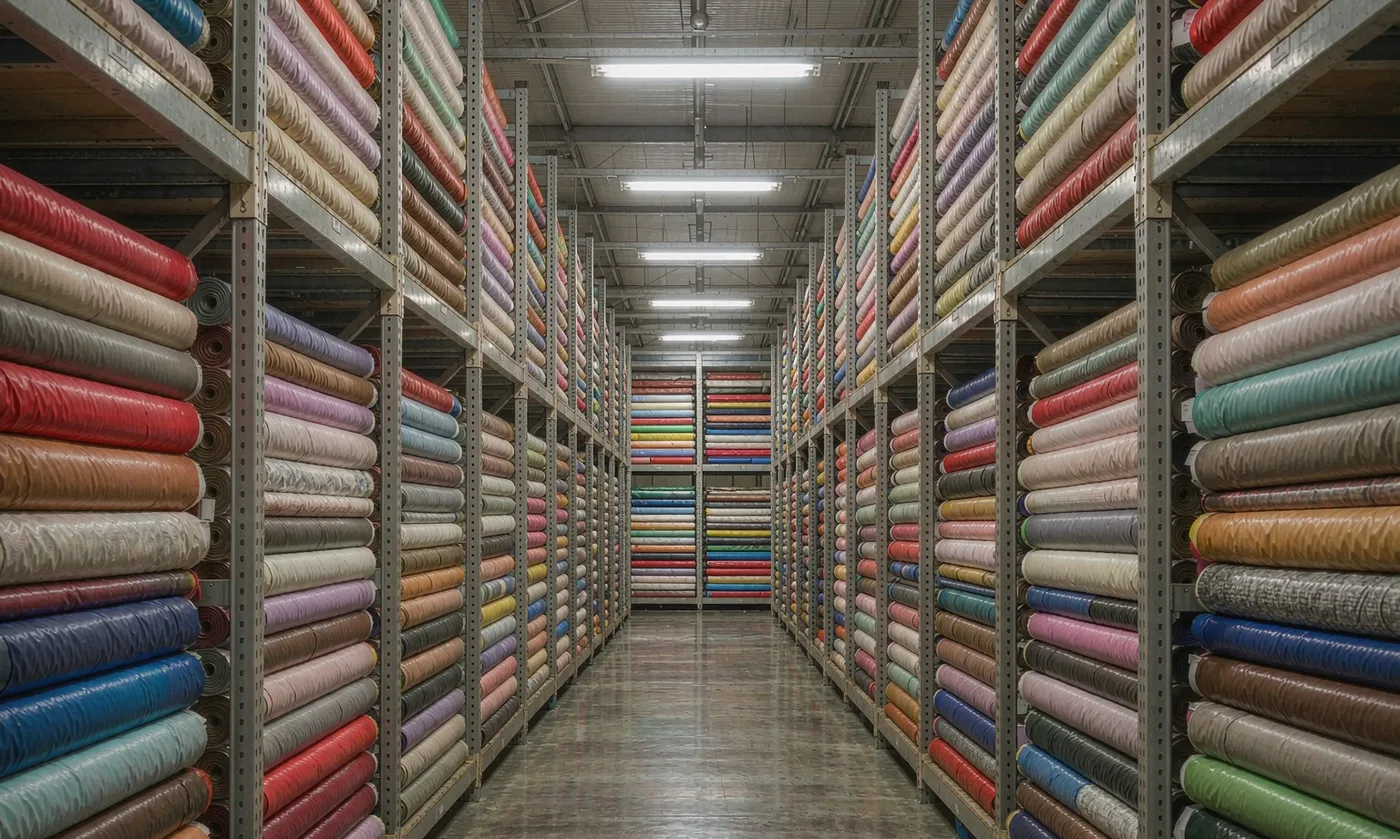
Organic canvas is not a single product. It spans a range of weights, weave constructions and finishes, and availability at wholesale volume is narrower than the conventional market. Buyers specifying a pet bag should start from constructions that certified mills produce routinely rather than from an ideal specification that only exists in small lots.
Weight selection drives most of the performance conversation. A lighter canvas suits a sling or a small-breed tote where the load is modest; a heavier canvas is required for a structured bag carrying a larger animal, particularly where the base panel takes the load. Certified mills hold standard weights in open stock more often than unusual ones, and specifying a standard weight is the single most effective way to protect both price and lead time.
Finish is the second decision. Certified canvas is available plain, waxed, or with a water-repellent treatment drawn from the permitted input list. A water-repellent finish is frequently required for a pet bag because of the soiling and cleaning reality of the use case, but not every conventional durable water-repellent chemistry is permitted under the standard. Buyers should confirm the finish is on the approved input list before approving a lab dip, not after.
Colour range is the third constraint and the one most likely to disappoint. The certified dyestuff palette is narrower, and achieving a specific brand shade may require an approved-input substitution that shifts the shade slightly. Buyers with tight brand colour requirements should plan a shade tolerance into the specification and approve lab dips against a physical standard rather than a Pantone reference alone.
Our production team sources certified cloth through established mill partners and quotes against current availability rather than theoretical availability. For buyers planning a seasonal programme, the practical guidance is to confirm cloth allocation early: certified fabric is produced in planned lots, and a late specification change can push a programme into the next production window. Performance testing of the finished construction should be specified through recognised methods published by AATCC, since organic status says nothing about abrasion or tear behaviour.
Social Criteria, Audits and Overlapping Standards
GOTS is unusual among textile standards in that it contains social criteria as well as environmental ones. Certified entities must meet requirements drawn from core labour standards: no forced or child labour, freedom of association, safe and hygienic working conditions, and employment terms that meet at least a legal or industry benchmark. These are audited on site, not self-declared, and the audit is part of what the buyer is paying for.
For buyers, this creates overlap with the social compliance audits they may already require. Programmes that ask for a BSCI or SEDEX audit and a GOTS certification are asking for partially duplicated work, and the sensible approach is to map the overlap and avoid paying twice for the same assurance. The certification body will conduct its own audit regardless, but the buyer-side audit frequency can sometimes be rationalised where the GOTS audit is current.
Quality management sits alongside. A supplier operating under ISO 9001 has documented process control, which supports the traceability and record-keeping that organic certification demands. Buyers assessing a new supply partner should look at the two together: ISO 9001 speaks to process discipline, GOTS speaks to fibre and input compliance, and neither replaces the other.
Third-party verification remains the buyer's own safety net. Independent inspection and testing organisations such as SGS can verify both the physical goods and the documentation set before shipment. On a first organic order, that verification is inexpensive relative to the consequences of a rejected delivery, particularly where the buyer has made an organic claim in published marketing.
The audit calendar also affects scheduling. Certification bodies audit annually and often unannounced, and a nonconformity raised during an audit can temporarily restrict an entity's certified status. Buyers with a single-source organic programme should ask about audit status at quotation and consider whether the volume justifies qualifying a second source. Related reading on social compliance audits covers the buyer-side framework.
Labelling Rules and Claim Substantiation
Organic claims are among the most actively scrutinised claims in retail, and the exposure sits with the party making the claim. A brand printing an organic statement on a hangtag is responsible for substantiating it, and the substantiation is the certificate set described earlier. Buyers should treat claim wording as a compliance artefact to be approved, not as marketing copy to be written freely.
The label itself is regulated in its presentation. GOTS permits use of the recognised label on qualifying products, and its use is subject to the standard's labelling rules, including the requirement that the label be accompanied by the certification body reference. A buyer reproducing a logo without the reference, or applying it to a product below the threshold, creates an exposure that is entirely avoidable.
Adjacent claims deserve the same discipline. Words such as natural, eco, green and sustainable are not defined by the organic standard, and several jurisdictions restrict their use in the absence of substantiation. A pet bag that is legitimately GOTS-certified can still attract a challenge for an unqualified environmental claim printed on the same hangtag. The safe approach is to state the specific certified fact and leave the general characterisations out.
Marketplace listings present a distinct risk because the claim is published at scale and is easy for a competitor or a regulator to screenshot. Listing copy should match the certificate scope precisely: if the certificate covers the canvas shell but the listing implies the whole bag is organic, the claim overstates the document. Buyers should write listing copy from the scope line rather than from the product concept.
A simple internal control works well: maintain a claim register per SKU, listing each published statement and the document that substantiates it. Reviewing that register once per season, ahead of any reprint of packaging, catches most problems before they become a listing suspension or a retailer chargeback. Buyers should also check destination-market rules, since claim substantiation requirements differ between the EU, the United States and other markets.
Order Planning: Fibre Availability and Lead Times
Organic programmes fail on timing more often than on price, because certified fibre is an agricultural product with a production calendar. Certified cotton is grown, ginned and spun in planned lots, and a buyer entering the market after the season's cloth has been allocated may wait for the next window. That waiting period is longer than any manufacturing lead time and cannot be compressed by paying more.
The practical mitigation is forward planning against a forecast rather than against confirmed orders. A buyer who can state an annual volume, even approximately, allows cloth to be reserved in the correct production window. The reservation does not require a purchase commitment at the full quantity, but it does require a conversation several months ahead of the delivery date. Our production team works with buyers on rolling forecasts for this reason.
Manufacturing lead time then behaves normally. Samples in 6-10 working days once the tech pack and the certified cloth allocation are confirmed, bulk production 35-50 days after sample approval, and pre-shipment inspection at AQL 2.5 before release. The variable is the cloth, not the assembly line, so the planning question to ask early is whether the base cloth is in stock or in production.
Colourway strategy interacts with the same constraint. Each colourway draws on the same certified base cloth but requires a separate dyeing run, and certified dyeing capacity is more limited than conventional capacity. Buyers planning a wide palette should either consolidate the certified range to a smaller core set or accept a longer window for the extended colours. A phased launch, with core colours first and extensions following, keeps the initial delivery date intact.
Reorder planning deserves particular attention because certified cloth purchased for one run may not be available for the next. Where a programme is expected to repeat, buying cloth for two or three runs at the outset is usually cheaper and safer than reordering later, and it removes the risk that the reorder lands in a different dye lot with a different shade. Storage cost is small compared with the cost of a shade mismatch across a retail estate.
Production capability
- SGS-verified production space of 4,950 m², 149 machines, 7 assembly lines
- Pet bag output since 2014 from a 137-person team
- 200,000 units shipped monthly under BSCI and ISO 9001 systems
People Also Ask
What does GOTS stand for?
Global Organic Textile Standard. It is a processing standard covering organic fibre content, permitted chemical inputs, social criteria and labelling across the full textile supply chain.
How much more does organic canvas cost?
The premium comes from certified fibre price, segregated processing and certification administration. Expressed per finished unit it is smaller than the per-metre figure, and it amortises better on longer runs.
Is GOTS the same as organic cotton?
No. Organic cotton describes the fibre. GOTS describes the certified processing chain that turns that fibre into a finished product, including inputs, social criteria and labelling rules.
Do I need a transaction certificate for every order?
Yes, for every transfer of certified goods between certified entities. Quantities must reconcile across the chain, so fabric purchased for one run may not support a larger reorder.
Can organic pet bags be dyed in brand colours?
Often yes, but the permitted dyestuff palette is narrower. Expect shade tolerance and approve against a physical standard rather than a colour reference alone.
Does GOTS certification expire?
Scope certification is audited annually and must remain current. Buyers should check validity dates against the production and delivery schedule, since a lapsed certificate invalidates the claim on goods shipped after the lapse.
Frequently Asked Questions
Can a pet bag with a polyester mesh panel still be GOTS certified?
Yes, provided the certified organic fibre meets the required percentage of total product weight and the non-organic components comply with the permitted input criteria. The calculation is made on the assembled product, not on the fabric alone.
What is the minimum organic fibre percentage for a GOTS label?
Seventy percent is the lower tier and ninety-five percent is the higher tier. Most pet bag programmes specify the higher tier because it supports the claim language retail channels accept without negotiation.
Does GOTS certify the durability of organic canvas?
No. Durability is a function of yarn count, weave and finish, tested by mechanical methods separate from the organic standard. Buyers should specify abrasion and tear testing as a separate requirement.
What is a transaction certificate and who issues it?
It is a document issued by a certification body recording the transfer of a defined quantity of certified goods between two certified entities. It is requested by the shipping party after the physical shipment.
Why is the organic premium higher on small orders?
Segregation, clean-down and documentation costs are largely fixed per production run. On a small run those fixed costs are spread across fewer units, so the per-unit premium rises disproportionately.
Are all dyes permitted on certified organic fabric?
No. Dyes and auxiliaries must meet the standard's input criteria, so the available palette is narrower than on conventional cloth. Approving lab dips against a physical standard is the usual way to manage shade tolerance.
Does GOTS cover labour conditions?
Yes. The standard includes social criteria based on core labour standards, audited on site by the certification body. This overlaps with buyer-side social audits and should be mapped to avoid duplicated cost.
How long does certified cloth take to source?
If the base cloth is in mill stock, manufacturing lead times apply normally. If cloth must be produced, the agricultural and spinning calendar governs, which is longer than any assembly lead time and should be planned months ahead.
Can the GOTS logo be printed on a hangtag?
Yes for qualifying products, subject to the labelling rules including the certification body reference. Reproducing the label without the reference, or on a product below the threshold, creates avoidable exposure.
Is organic cotton canvas waterproof?
Not inherently. Water resistance comes from a finish, and the finish must be drawn from the permitted input list. Buyers needing water repellency should confirm the finish approval before approving lab dips.
Should a buyer request ISO 9001 alongside GOTS?
The two are complementary. ISO 9001 addresses documented process control and traceability discipline; GOTS addresses fibre content and permitted inputs. Neither substitutes for the other in a technical file.
What happens if an entity fails its annual audit?
A nonconformity can restrict the certified status temporarily. Buyers running single-source organic programmes should check audit status at quotation and consider qualifying a second source if volume justifies it.
Talk to QUANZHOU JUNYUAN BAGS about a wholesale pet bag order: MOQ 500 pieces per colourway, samples in 6-10 working days, bulk production in 35-50 days under AQL 2.5 inspection.
Get a free quote Request a sample