Pet Bag CPSC Rules: Product Safety for Wholesale Buyers
A pet bag sold in the United States is a consumer product under CPSC jurisdiction, but most pet bags are not children's products. That distinction decides the whole file: a general-use pet bag needs a General Certificate of Conformity backed by reasonable testing, while a bag marketed to children under 12 adds third-party testing, permanent tracking labels and a Children's Product Certificate. Budget 4-9% of FOB value for testing and documentation, and plan MOQ 500 pieces per colourway.
CPSC compliance is a documentation discipline as much as a materials discipline, and buyers who treat it as the former move through retail review far faster. Our production team builds pet bag programs at MOQ 500 pieces per colourway, with samples in 6-10 working days and bulk production in 35-50 days after approval, inspected to AQL 2.5 before release. The compliance work runs in parallel with sampling rather than after it. On the first call we classify the product, list every regulated surface and component, and map the applicable rules before a single metre of fabric is booked. Testing is then commissioned on the actual production substrate and trim, not on a lab-friendly substitute, because a report on the wrong substrate is worthless at the port. The certificate is issued against the finished article with its real bill of materials. Buyers who reverse that order usually discover the gap when a retailer's compliance portal rejects the file, by which point re-testing costs three to five weeks and the season is already lost.
Pet bag moq is quoted per colourway, not per order, so Market & Business Strategy planning decides how many shades a launch can carry. A pet bag wholesale price that looks attractive at 500 units often shifts once the dye-lot minimum is added, and pet bag sample cost is normally credited back against the first production run.
Where CPSC Jurisdiction Starts and Stops on a Pet Bag
The Consumer Product Safety Commission has authority over consumer products distributed in commerce in the United States, and a pet bag imported for resale falls squarely inside that definition. The useful question for a buyer is not whether jurisdiction exists, because it almost always does, but which specific rules attach to the article. A soft-sided pet bag with textile panels, foam, webbing and metal hardware is regulated very differently from the same silhouette with a battery-powered fan, a light module or a USB heating pad, and the difference is decided by the bill of materials rather than by the product name.
Jurisdiction attaches at importation and at distribution. An importer of record is responsible for the certificate, not the overseas supplier, which means the compliance file must be assembled by the buying side with the supplier providing data. Our production team supplies substrate declarations, trim specifications and test reports, but the certificate itself carries the importer's name. Buyers who assume the supplier will "handle certification" frequently arrive at the port with no document at all.
Scope also depends on how the product is presented. Marketing copy, packaging art and the sales channel all inform classification. A pet bag sold next to children's luggage, illustrated with a child holding the handle, or listed in a kids' category can attract children's product treatment regardless of the designer's intent. That is a merchandising decision with a regulatory consequence, and it should be settled before artwork is locked.
The practical boundary test is four questions. Does any component carry an electrical function? Is any surface intended for food contact? Is the article marketed to or for children under 12? Does the article make a safety claim such as flame resistant or crash tested? Two yes answers out of four moves the program from a simple general-use file into a multi-rule file with third-party testing, and the cost difference is material.
Buyers should also note that jurisdiction does not stop at the port. State-level requirements run alongside federal ones, and a product that is federally compliant can still carry a state exposure. California's chemical warning regime is the most frequently encountered example, and it is assessed on substance presence rather than on product category. Treat federal clearance as the floor of the compliance file, not as its completion.
General Certificate of Conformity: The Core Document
A General Certificate of Conformity is the document that accompanies a non-children's consumer product into US commerce. It identifies the product, cites the rule or rules the product is certified to, names the importer or domestic manufacturer certifying compliance, gives the date and place of manufacture, and identifies the third-party or internal testing on which the certification is based. For a pet bag program the certificate is issued per product, not per shipment, but it must be supported by a test report that matches the actual production article.
The certificate is only as good as the test data behind it. A report issued against a generic polyester swatch does not cover a laminated shell with a PU face and a printed topcoat, and a report on a natural webbing does not cover a dyed webbing in the same construction. Buyers should require the laboratory report to name the substrate, colour, coating and trim reference as they appear in the approved specification, and should reject any report where the described sample is thinner than the described article.
Recordkeeping is where most programs fail. The regulation requires the certificate to be available and to be furnished on request, and retailers increasingly ask for it during onboarding rather than at receipt. A file that lives in one person's inbox does not satisfy that. We recommend a folder per product containing the certificate, the supporting test reports, the bill of materials with supplier names for each regulated component, and the production records that tie the certificate to a specific factory and month.
Renewal cadence deserves attention. A certificate does not expire on a fixed date, but it stops being defensible when the product changes. A new colourway, a substitute zipper supplier, a switch from solvent to water-based coating, or a revised foam density all invalidate the supporting data. Our production team flags any change of this class in writing before it goes into production, so the buyer can decide whether to re-test or to hold the specification.
Electronic filing is now standard practice for many importers, and it changes how the certificate should be written. A certificate drafted for a paper file often omits the SKU-level detail a digital portal requires, and the omission forces a manual re-issue during onboarding. Drafting the certificate against the SKU list from the start avoids that rework entirely.
Children's Product Triggers That Change the Whole File
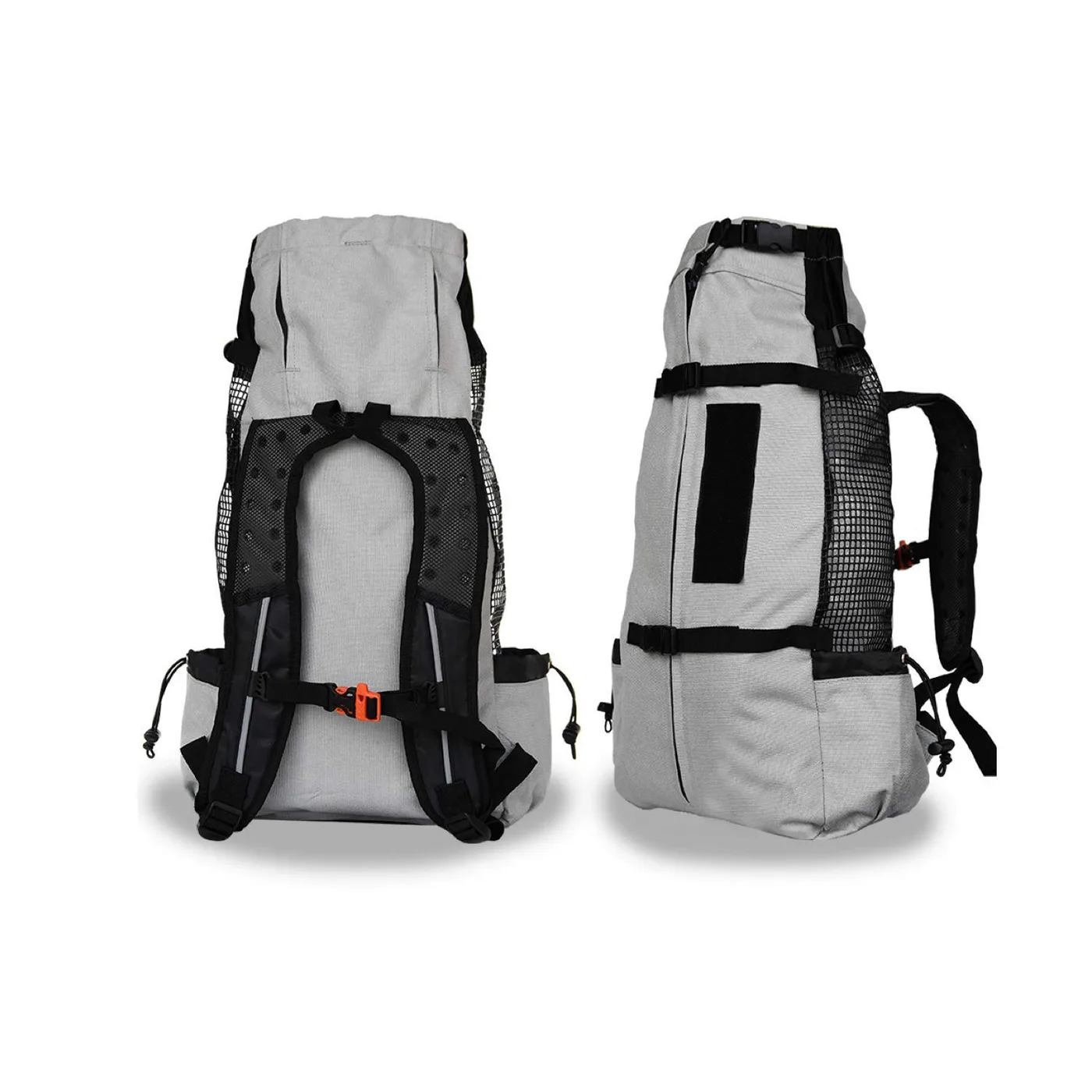
The classification that matters most in this category is whether the pet bag is a children's product. If it is, the program moves from self-certification to third-party testing by an accepted laboratory, permanent tracking label requirements, and a Children's Product Certificate referencing each applicable rule. The cost and the calendar both change, and the change is not recoverable after the fact.
Classification rests on intended use, not on the buyer's preference. A pet bag designed for a child to carry a small animal, sold in sizes sized to children, decorated with juvenile graphics, or priced and merchandised in a children's aisle will be treated as a children's product by a regulator and by a retailer's compliance team. The designer's intention is evidence, but it is not the only evidence and it is rarely the strongest.
The commercial consequences of a children's classification are specific and quantifiable. Third-party testing by an accepted laboratory becomes mandatory rather than optional, which typically doubles the test budget. A permanent tracking label carrying production location, date and batch information must be applied to the article and to the packaging where practical, which affects both artwork and the packing line. The certificate must also reference each applicable rule individually rather than citing a general conformity statement.
The rule set that attaches in children's scope is broader. Limits on lead and phthalates apply at stricter thresholds, and further requirements attach to any component that is mouthing-accessible or that a child could detach. For a pet bag this usually pulls in the zipper pull, the mesh window frame, any decorative badge and any removable strap pad. Each becomes a separate line on the test plan and each adds to both cost and calendar.
Buyers running an own-brand assortment should settle this classification across the whole range rather than SKU by SKU. Mixed classification inside one assortment is the worst outcome: the compliance file doubles, the artwork rules diverge, and warehouse staff cannot apply a single receiving rule. One documented classification decision per assortment, made before artwork starts, is worth more than any amount of downstream care.
Where a children's line is genuinely wanted, the right approach is to design for it from the first sketch. Choosing TPE instead of PVC for soft trim, plated steel instead of decorative alloy, and pigment suppliers with standing declarations costs almost nothing at design stage and removes most of the testing exposure later. Retrofitting a children's classification onto an existing adult design costs far more and usually forces component changes anyway.
How to Keep a Pet Bag Out of Children's Product Scope
Three disciplines keep a general-use pet bag out of children's scope. Keep the graphics adult-neutral, keep the size range in adult carry dimensions, and keep the merchandising in the pet category rather than the juvenile category. None of these cost money at the design stage, and all of them are expensive to reverse after a retailer has classified the SKU in its own system.
A fourth discipline matters for online sellers: category and keyword selection on marketplaces. Category placement and search terms are evidence of intended use, and listing a pet bag under a children's travel category is treated much the same as printing juvenile graphics on the shell. Category choice should be reviewed with the same care as artwork.
Testing Scope: Lead, Phthalates, Flammability and Physical Hazards
A general-use pet bag has a narrower mandatory testing scope than a children's product, but the scope is not empty and the physical hazard analysis is real. Lead in coatings and substrates, phthalates in flexible plastic components, and small parts or sharp point hazards are the recurring items. Flammability applies to certain textile categories and is assessed method by method rather than by product name.
The efficient way to scope testing is to walk the bill of materials component by component. Coated fabric and printed panels carry coating and substrate lead exposure. Flexible PVC trim, zipper pulls, badge windows and soft grab handles carry phthalate exposure. Metal hardware carries coating lead exposure if painted or plated with a lead-containing finish. Foam and lining carry flammability exposure if the article is used in or around a home textile context.
Composite testing is the cost trap. A laboratory that tests every component separately will produce a report stack costing several thousand dollars for a program that may sell two thousand units. A risk-ranked approach tests the highest exposure components on the first pass and holds the rest for a second pass only if a result is near the limit. Our production team recommends the ranked approach to every buyer under 5,000 units and documents the reasoning so a reviewer can see why a component was deferred.
Test method choice matters as much as test selection. Standard methods published by ASTM International and textile methods maintained by AATCC define how a result is generated, and a report that names no method is not defensible. Buyers should require the method number on page one of every report and should confirm the laboratory is accredited for that method, because accreditation is method-specific rather than laboratory-wide.
Sampling plan matters as much as method. A single unit tested once tells a buyer very little about a 5,000-piece run, and most reviewers know it. Testing across at least two production lots, or one lot plus a retained reference sample, gives the file a defensible basis at modest extra cost, and that basis is what a reviewer is actually looking for.
Where Pet Bag Failures Actually Occur: Substrate, Trim and Hardware
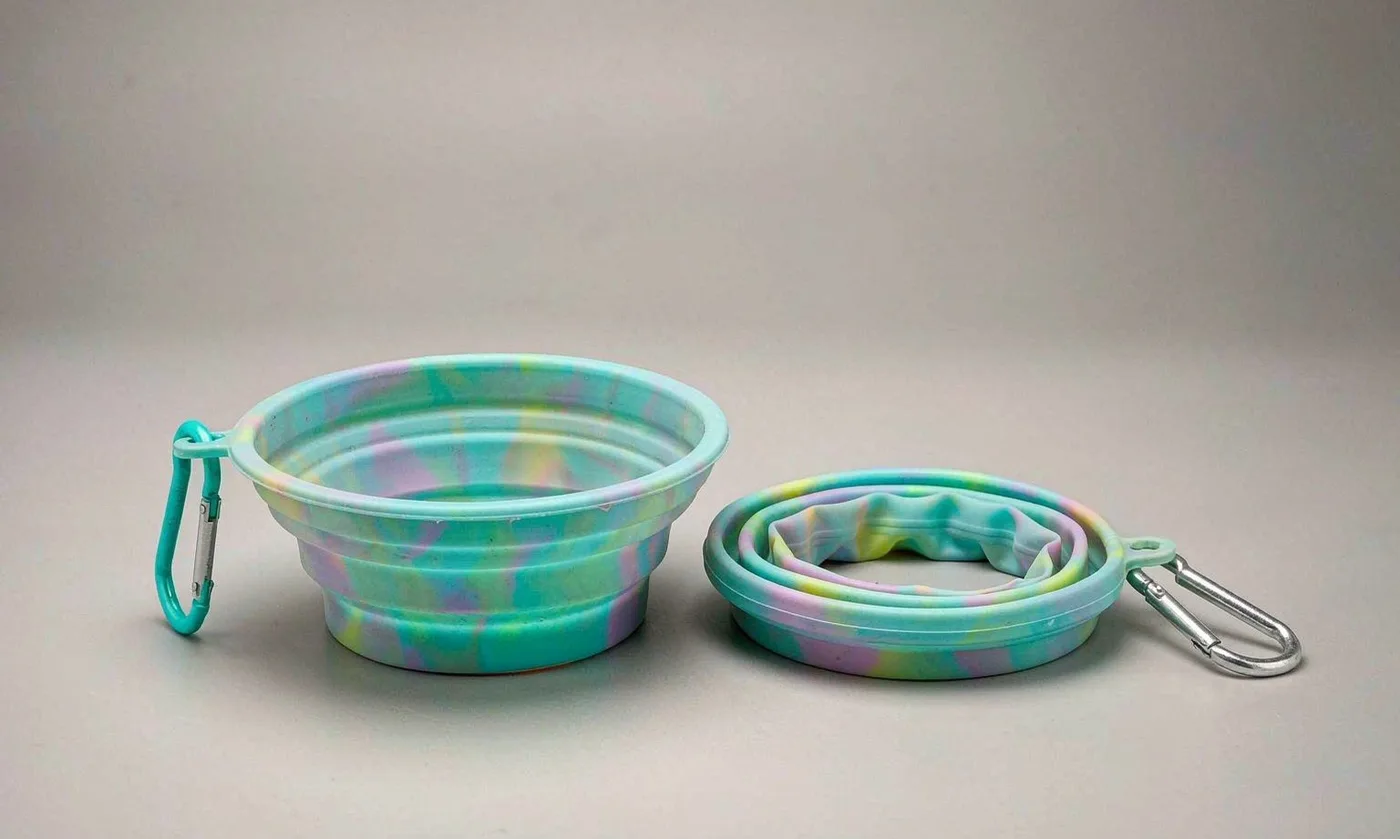
Failure data in this category clusters in three places, and none of them is the main shell fabric. The recurring offenders are prints and coatings on the shell, soft plastic trim, and decorative metal hardware. A supplier that certifies the base fabric but substitutes a cheaper print paste, a softer PVC pull, or a decorative alloy charm will produce a compliant-looking product that fails on the finished article.
Colour is a second cluster. Darker pigments and certain red, orange and yellow pigment families carry higher metal content risk than neutral shades, and a certificate issued on a black colourway does not cover a bright red in the same construction. Buyers running a multi-colourway program should either test the worst-case colourway and document the rationale, or test per colourway and accept the cost. Testing one colourway and shipping four is the most common compliance error we see in this category.
| Component | Primary exposure | Typical test cost per SKU | Risk rank | Mitigation at source |
|---|---|---|---|---|
| Printed coated shell | Lead in coating and substrate | USD 180-320 | High | Specify pigment supplier, lock print paste reference |
| Soft PVC zipper pull | Phthalates | USD 160-280 | High | Move to TPE or silicone pull, same tooling |
| Decorative metal charm | Lead in coating and alloy | USD 140-260 | Medium | Delete charm or move to plated steel with declaration |
| Dyed webbing | Lead and colourfastness | USD 120-220 | Medium | Fix dye house, require lot-level declaration |
| Foam and lining | Flammability behaviour | USD 200-360 | Medium | Specify density and FR treatment in BOM |
| Base polyester fabric | Lead in substrate | USD 110-200 | Low | OEKO-TEX certified source, annual renewal |
The table reflects the ranking our production team applies when scoping a first test round on a pet bag program under 5,000 units. It is a starting hypothesis, not a rule: an article with a large soft plastic window panel moves that component to the top of the list, and an article with no printed surface removes the highest-cost line entirely.
Recall Exposure, Reporting Duties and Contract Language
A recall in this category rarely originates in a laboratory. It originates in a field failure pattern: a zipper that separates and drops an animal, a strap that releases under load, a mesh panel that tears at the seam, or a hardware failure that creates a sharp edge. The regulatory duty attaches when a manufacturer, importer or distributor learns that a product creates a substantial product hazard or fails to comply with an applicable rule, and the duty is to report rather than to investigate privately.
The commercial consequence is larger than the regulatory one. A marketplace listing removed for a safety complaint loses its review history and its ranking, and restoring it costs more than the recall itself. Buyers should model the downside before the first order rather than after the first complaint, and should size the first order so that a single recall event does not consume the season's margin.
Contract language is the control. A manufacturing agreement should require the supplier to notify the buyer of any safety complaint within a defined window, to preserve production records for a defined period, to identify component suppliers in the bill of materials, and to accept responsibility for articles that do not match the approved specification. Without those clauses, a buyer facing a recall has no contractual path to the component supplier that actually caused it.
Insurance and indemnity complete the picture. Product liability coverage should name the importer as insured, and the supplier's coverage should be evidenced rather than asserted. Our production team maintains BSCI-audited and ISO 9001-documented partner facilities, and provides the audit and certificate copies a buyer's insurer will ask for during underwriting.
A written corrective action path closes the loop. When a field pattern appears, the sequence should already be agreed: quarantine remaining stock, identify the affected production window, commission a root cause test on retained samples, and notify the channel with a specific remedy. Buyers who define that sequence before launch resolve complaints in days; buyers who improvise lose listings.

Documentation Package That Retail and Marketplace Reviewers Accept
Retail compliance portals ask for a predictable set of documents, and the difference between a one-pass review and a three-week correspondence is almost always file structure. A reviewer working through forty SKUs does not want to search for the certificate inside an email thread. They want one folder per SKU with predictable filenames and a document that ties everything together.
The package we recommend has six items. A product specification with the bill of materials and named component suppliers. A General Certificate of Conformity or Children's Product Certificate as applicable. Third-party test reports with method numbers and sample descriptions matching the specification. A tracking label artwork showing placement and permanence. A supplier declaration for each regulated component. And a production record identifying the facility and month.
Naming convention matters more than buyers expect. Files named by SKU and document type, with a version suffix, let a reviewer verify coverage without opening anything. Files named by email subject line do not. This costs nothing at the factory and saves days at the portal.
Third-party verification closes the loop. Independent test and inspection bodies such as the US Consumer Product Safety Commission's accepted laboratory programme and SGS provide the reports and factory audit evidence that retail reviewers recognise on sight, and using a recognised body removes a whole round of questions from the review.
Version control is the last piece. When a specification changes, the old file must be marked superseded rather than deleted, because a reviewer may be comparing a current article against a historical complaint. Keeping the prior version visible and dated shows a controlled change process, which is itself a credibility signal in a compliance review.
Cost, MOQ and Lead Time: What Compliance Adds to the Quote
Compliance has a price and a calendar, and both should appear in the sourcing plan rather than emerging as a surprise. On a general-use pet bag program the testing and documentation load typically adds 4-9% of FOB value, concentrated in the first order and falling sharply on repeats that reuse an existing report. On a children's product classification the load rises to 9-16% and the calendar extends by three to five weeks.
The calendar is the harder constraint. Laboratory turnaround runs 7-15 working days depending on method and season, and the clock starts when the laboratory receives a production-representative sample, not when the buyer approves a drawing. Sequencing sampling before testing adds a avoidable week. We commission test samples from the same lot as the buyer's approval sample so the two clocks run together, which is the single largest schedule saving available in this category.
MOQ interacts with compliance because testing cost is fixed per SKU. A 500-piece first order amortises a USD 1,200 test load at USD 2.40 per unit; a 5,000-piece order amortises the same load at USD 0.24. Buyers testing their way into a small program should expect a real per-unit burden and should price accordingly, rather than discovering it after the retail price is set.
Bulk production runs 35-50 days after approval at MOQ 500 pieces per colourway, with samples in 6-10 working days, and inspection to AQL 2.5 before release. Compliance does not extend production; it extends the pre-production window. Buyers who book fabric before the test plan is agreed are the ones who lose a season, because fabric booked against an unapproved specification cannot be re-certified after the fact.
Finally, price the compliance load per unit rather than per program. A buyer who books 500 pieces at a 9% compliance load is carrying roughly USD 1.10-2.40 per unit of testing overhead, and that number should sit in the margin model next to freight and duty. Programs that ignore it look profitable on paper and thin in reality.
Why brands source here
- Pet bag programmes run since 2014; founding team in sewn goods since 2004
- SGS-verified production floor of 4,950 m² with 137 workers across 7 lines
- Monthly capacity of 200,000 units, audited to BSCI and ISO 9001
People Also Ask
Who is responsible for CPSC certification on imported pet bags?
The importer of record is responsible for certifying the product and furnishing the certificate on request. The overseas supplier supplies test reports, substrate declarations and component identification to support that certification.
How do I know if my pet bag is a children's product?
Regulators look at intended use, size range, graphics, price point and merchandising category. Adult-neutral graphics, adult carry dimensions and pet-category placement keep a general-use pet bag out of children's scope.
Is third-party testing mandatory for all pet bags?
Third-party testing by an accepted laboratory is mandatory for children's products. For general-use pet bags the certification must be based on a reasonable testing programme, which can be internal or third-party, but third-party evidence is far easier to defend.
What is the difference between a GCC and a CPC?
A General Certificate of Conformity covers non-children's consumer products and cites the applicable rules. A Children's Product Certificate covers children's products, requires third-party testing by an accepted laboratory, and references tracking label compliance.
Can I reuse last year's test report on a new order?
Only if the article, substrate, coating, trim and component suppliers are unchanged. Any change to those invalidates the data. Buyers should keep a change log per SKU so reuse decisions are defensible.
How much should I budget for pet bag compliance?
Budget 4-9% of FOB for general-use programs and 9-16% for children's product programs, concentrated in the first order. Repeat orders that reuse an existing report carry a much smaller load.
Frequently Asked Questions
Is a pet bag a consumer product under CPSC rules?
Yes. A pet bag imported for resale in the United States is a consumer product and the importer of record is responsible for certification and for furnishing the certificate on request. The supplier provides test data and declarations, but the certificate carries the importer's name.
Does a general-use pet bag need a Children's Product Certificate?
No, unless the article is classified as a children's product. Classification depends on intended use, size range, graphics and merchandising, not on the buyer's preference. A general-use pet bag needs a General Certificate of Conformity instead.
What does CPSC testing cost for a pet bag program?
Expect USD 900-2,400 for a first test round on a general-use pet bag, depending on how many regulated components are in the bill of materials. Children's product scope roughly doubles that because third-party testing and tracking label verification are added.
How long does laboratory turnaround take?
Typically 7-15 working days from the laboratory receiving a production-representative sample. The clock does not start at drawing approval, so buyers should commission test samples from the same lot as the approval sample.
Does one test report cover all colourways?
Not automatically. Darker and saturated pigments carry higher metal content risk, so a report on black does not cover bright red. Test the worst-case colourway and document the rationale, or test per colourway and accept the cost.
Which components fail most often in pet bag testing?
Printed and coated shell panels, soft PVC trim such as zipper pulls, and decorative metal hardware. The base fabric is rarely the offender, which is why a fabric-only certificate is not sufficient coverage.
Can the overseas supplier issue the certificate for us?
The certificate must name the importer or a US domestic manufacturer. A supplier certificate can support the file but does not replace the importer's obligation. Treat supplier documents as evidence, not as compliance.
What records should we keep for each pet bag SKU?
Six items: specification with bill of materials, the certificate, test reports with method numbers, tracking label artwork if applicable, component supplier declarations, and the production record identifying facility and month.
Does adding a fan or light module change the compliance picture?
Yes. An electrical function adds product safety and, in most markets, electromagnetic compatibility and waste electronics obligations to the file. The change is driven by the bill of materials rather than by the product name.
How does compliance affect MOQ and unit cost?
Testing cost is fixed per SKU, so a 500-piece first order carries a per-unit burden roughly ten times that of a 5,000-piece order. Plan the compliance load into the landed cost before the retail price is set.
What happens if a component supplier is changed after testing?
The supporting data is invalidated and the article should be re-tested or the change held. Our production team flags substrate, coating and hardware changes in writing before production so the buyer can decide.
Do marketplaces ask for the certificate before listing?
Large marketplaces increasingly request it during onboarding or after a safety complaint. Having the file ready at onboarding avoids a listing suspension later, which costs more than the certificate ever did.
Talk to QUANZHOU JUNYUAN BAGS about a wholesale pet bag order: MOQ 500 pieces per colourway, samples in 6-10 working days, bulk production in 35-50 days under AQL 2.5 inspection.
Get a free quote Request a sample