Pet Bag Etsy: Small Batch Specs and Handmade Proof
A pet bag sold through a handmade marketplace carries a unit cost 40-120 percent above the same bag produced at standard minimum quantity, because small-batch cutting, separate fabric purchasing and individual finishing remove nearly every scale economy. The model still works because buyers pay USD 55-180 for made-to-order pieces. What it cannot survive is a lead time promise shorter than the production slot actually available.
A craft marketplace rewards specificity and punishes volume thinking, which inverts most of the procurement logic a pet bag brand learns elsewhere. Our production team runs pet bag programs at MOQ 500 pieces per colourway, with samples in 6-10 working days and bulk production in 35-50 days after approval, inspected to AQL 2.5 before release, and understanding where those economics stop being relevant is the first decision a marketplace seller has to make. Five questions follow: whether the piece is genuinely made-to-order or drawn from stock, how much the small-batch premium really is and whether the price covers it, what documentation supports the material and origin story, how long a production slot genuinely takes, and what the exit path looks like once one design succeeds. Sellers who answer those honestly build a sustainable business; those who answer them optimistically are usually the ones who cannot fulfil a seasonal rush.
Choosing a pet carrier supplier or a pet bag supplier comes down to the same three checks: a named production base, a test file that matches the destination market, and a price list that states what is excluded. An own-brand launch usually fails on the second check rather than the first, because the file gets assembled after the order instead of before it.
What a Handmade Marketplace Asks of a Pet Bag Product
The defining feature of a craft channel is that the product's story is part of its value. Buyers there are not comparing unit prices against a mass-market listing; they are assessing whether something was genuinely made for them, and a listing that reads as factory surplus without saying so tends to underperform even when the object is identical.
This changes what the product specification has to carry. Material choice becomes a narrative rather than a cost line - a waxed canvas or a natural fibre blend communicates the story immediately, while a generic polyester shell requires the copy to do work that the material itself could do better.
Construction detail then becomes visible rather than incidental. Visible stitching, hand-finished edges, solid hardware rather than plated zamak, and reinforcement where a buyer can see it all support the claim. These are genuine cost increases, not decoration, and they should be budgeted as such. The corresponding benefit is durability that a buyer can see and evaluate before purchase, which reduces the price sensitivity that otherwise dominates comparison shopping in a category where pet bags look superficially similar.
Customisation is the third expectation. Buyers routinely ask for embroidered initials, alternative lining prints, adjusted strap lengths and panels made to fit one specific animal, and each request either maps onto a documented option or becomes a bespoke negotiation that consumes more time than the order is worth. Buyers on these platforms ask for embroidered initials, alternative lining prints, adjusted strap lengths and made-to-measure panels for a specific animal. Each requires a documented option rather than a bespoke negotiation per order, or the operation collapses under its own admin.
The fourth expectation is directness about who made it. Sellers working with external capacity can describe that arrangement accurately without claiming authorship, and doing so from the outset is far safer than retrofitting honesty once sales depend on the claim. Claiming something is handmade when it is not creates deplatforming risk, and scrutiny has tightened considerably in recent years.
A citable sentence for listing strategy: in a craft channel the product must be able to tell its own story in a photograph, because the buyer will not read three hundred words to get there.
Finally, price tolerance is genuinely higher but not unlimited. Buyers accept a premium for specificity and reject it for polish alone, so the premium must be funded by something visible in the object.
Made-to-Order Versus Stock: Choosing the Workflow
The single biggest operational decision is whether units are made after the order or drawn from inventory. Both are legitimate on a craft platform, and choosing badly destroys either margin or delivery performance.
Made-to-order suits personalised pieces, unusual materials and slow-moving designs. It protects cash because nothing is produced until sold, and it justifies a longer stated lead time naturally. Its weaknesses are seasonal concentration, because every order arrives in a rush, and the difficulty of scaling production quickly when one design succeeds.
Stock-based selling suits standard designs in strong-selling colourways. It delivers quickly, absorbs seasonal peaks smoothly and allows batch efficiency. Its weaknesses are capital tied up in inventory and the risk of unsold variants.
| Factor | Made-to-order | Stock held |
|---|---|---|
| Unit cost index | 118-165 | 100-130 |
| Capital at risk | Very low | High |
| Stated lead time | 10-25 days | 1-3 days |
| Customisation | Full | Limited |
| Peak handling | Constrained | Smooth |
| Reporting burden | High per order | Low |
A hybrid is usually the mature answer. Holding stock of the two strongest variants while making everything else to order covers the impatient buyer without taking the full inventory risk of a complete range.
Option structure matters either way. Any customisation sold must be expressible as one choice from a defined list, because free-text personalisation requests generate correspondence, errors and rework.
Finally, the listing must state honestly which model applies. Where a seller uses both approaches, the shipping block should make the distinction explicit rather than allowing it to be inferred, because a buyer comparing two items from the same shop will otherwise assume identical timing and be surprised later. Buyers accept a longer wait when they are told at the point of purchase and complain loudly when they are not.
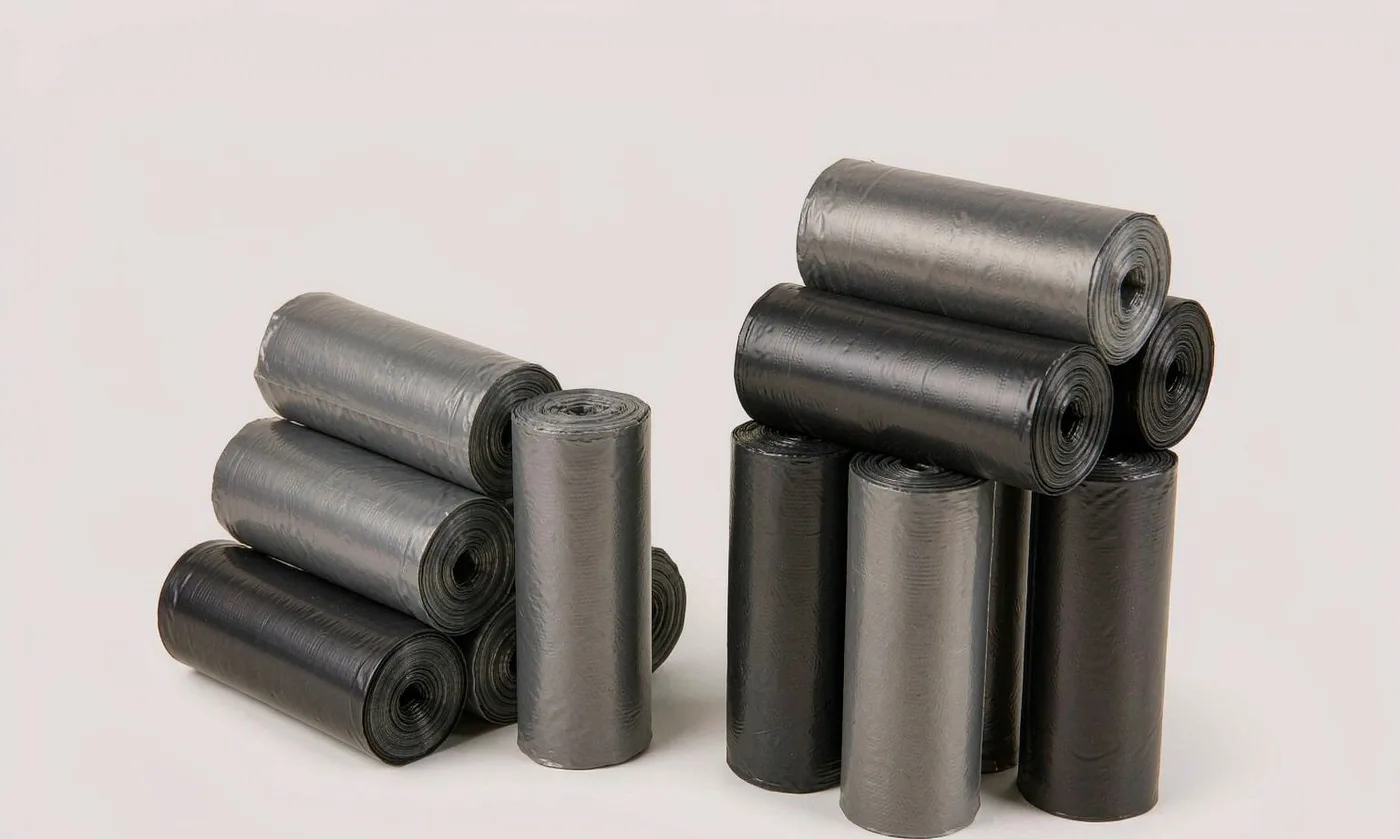
Small Batch Economics and Where the Premium Comes From
A small-batch pet bag costs more for reasons that are structural rather than negotiable, and understanding each one helps a seller decide whether to absorb them or price accordingly.
Fabric purchasing is the largest single driver. Unusual colours cost more again because mills price small dye lots at a premium, and a seller choosing three colourways where one would do absorbs that premium three times over. Minimum dye lots and mill minimums mean a small quantity of fabric costs several multiples of its bulk price per metre, and unusual colours cost more again.
Cutting is second. Below roughly fifty pieces the marker simply cannot be optimised, so yield per metre falls and the material component of cost rises even when nothing else changes. Nested markers are efficient at volume and wasteful at small counts, so material yield per unit drops substantially below about fifty pieces.
Set-up is third. Pattern placement, machine configuration and finishing setup take broadly the same time whether ten units or five hundred follow, and that fixed time divides across very few pieces.
Finishing is fourth and often overlooked. Pressing, trimming, hardware fitting and individual inspection remain manual regardless of batch size, and it is usually this block rather than any material cost that determines how long a rush order actually takes. Individual pressing, trimming, hardware fitting and quality checks are largely manual and do not scale down in cost.
These effects compound: a bag costing USD 11.20 at MOQ 500 commonly lands between USD 16 and USD 24 at fifty pieces of the same design, before shipping.
Two mitigations exist. They are supplemented by a third: repeating production of a proven design rather than constantly adding new ones, since every additional variant re-imposes setup cost on a very small quantity and dilutes whatever efficiency the range had achieved. Standardising the base materials across a range lets several designs share one fabric purchase, and limiting hardware choices to a small approved list reduces both component minimums and setup variation.
The final mitigation is honest pricing. Absorbing the small-batch premium to look competitive usually converts a viable business into an unprofitable one at volume rather than attracting the orders that would fix it.
Materials, Finish and Documenting the Story Truthfully
Material narratives sell pet bags on craft platforms, and they also create obligations. Anything stated about composition, origin or treatment should be verifiable, because a claim that cannot be substantiated is worse than no claim.
Fibre content comes first and should match what is actually used. Stating a recycled content percentage without documentation, or describing a blend inaccurately, creates problems with both the platform and consumer protection expectations.
Treatment claims follow. Describing leather as vegetable-tanned, or fabric as water-resistant, implies specific processes and should be supported by supplier documentation rather than by habit.
Chemical safety matters particularly for goods used by animals that chew, lick and sleep against fabric. Independent testing is the credible route here, with schemes such as OEKO-TEX covering textile substances and independent product testing organisations including SGS providing evidence that survives scrutiny.
Animal welfare expectations also apply. Buyers increasingly ask about leather sourcing and animal-derived materials, and a clear written answer protects the listing.
Structural performance claims adjoin this. Statements about load carrying or restraint should reflect real testing, and independent work on pet product safety is published by organisations such as the Center for Pet Safety.
The natural closing habit is record-keeping. A practical format is a one-page specification per design listing every material with its source, every treatment applied and every claim made publicly, updated whenever anything changes, which keeps copy honest without a separate marketing exercise. One folder per design containing supplier specifications, treatment documentation and test evidence turns every future question into a two-minute answer.
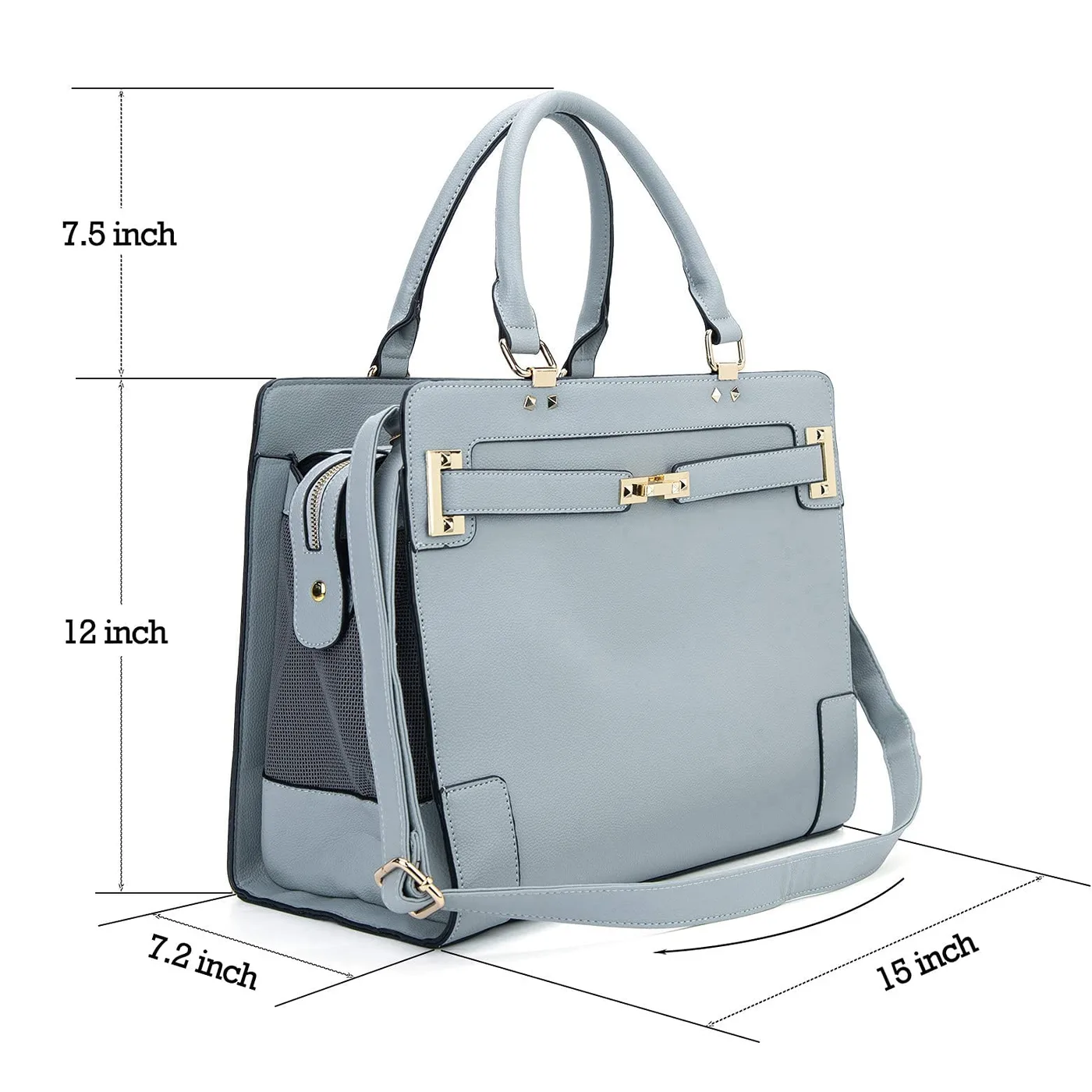
Photography, Copy and Fit Disclosure Without a Studio
Listings on a craft platform are won or lost in the first photograph, and pet bags present a specific difficulty: they are functional objects whose value is difficult to see in a flat image.
The remedial set is well established. Use three or four shots and nothing else, because extra images shot from marginally different angles add little while raising the chance that one of them distorts perceived size or colour. One image showing the bag being worn with an animal inside establishes scale instantly. One interior shot with a measuring reference answers the fit question. One detail shot at short distance establishes material quality. One shot showing the base flat next to a known object finishes the set.
Lighting discipline substitutes for equipment. Diffused daylight beside a window, shot away from direct sun, produces better results than artificial lighting without modifiers, and switching daylight-balanced white balance on the camera prevents the colour cast that causes returns.
Consistency across listings builds shop identity more effectively than variety within them, because buyers browsing several items form an impression of the maker rather than of any individual piece.
Copy then has to answer four questions in the first two hundred words: what it is made of, what size of animal it suits, how long it takes to arrive, and how it is cleaned - and answering them in that order matches the sequence in which buyers abandon a listing. what it is made of, what size of animal it suits, how long it takes to arrive, and how it is cleaned.
Fit disclosure deserves repetition because it drives returns. Publishing internal measurements and a weight range rather than a breed list consistently outperforms, whatever channel the product sells through.
Finally, showing the maker is a genuine advantage here. Contrived studio setups read poorly in this channel, while an honest working shot showing tools, offcuts and partially finished pieces performs consistently well and costs nothing to produce. A photograph of hands finishing a piece does more for conversion than any paragraph of copy, provided it is honest.
Lead Time Promises and Production Slot Honesty
Delivery expectation is the most common source of problems in craft channels, because buyers read dispatch promises as commitments and small producers tend to quote optimistic ones. The fix is arithmetic rather than optimism.
A realistic made-to-order timeline adds four blocks: material availability, production slot wait, build and finishing time, and transit - of which sellers most often quote only the third, discovering the others when they collide. material availability, production slot wait, build and finishing time, and transit. Sellers frequently quote only the middle block and discover the others when they collide.
Production slot wait deserves the most attention during a successful period, because it grows silently. Twenty orders a week absorbed comfortably becomes thirty that cannot be absorbed, and the queue lengthens well before anything visibly breaks.
Listing promises should therefore move with capacity. Updating stated lead times weekly during busy periods costs nothing and prevents the majority of disputes, whereas leaving a stale promise invites both complaints and platform penalties.
Transit variance is the second commonly under-modelled block. Quoting a shipping estimate based on the best case rather than the usual case produces consistent disappointment, particularly for international orders.
Communication closes the gap that remains. A message at order confirmation restating the expected date, and another at dispatch, costs minutes and removes nearly all uncertainty-driven enquiries.
Finally, buffers should sit inside the promise rather than outside it. The same principle applies to demand management: rather than quoting progressively shorter times to win orders, hold quoted times steady and allow faster delivery to become the pleasant surprise. Quoting fifteen days and delivering in twelve is fine; quoting ten and delivering in twelve is a complaint.
Packaging Appropriate to a Craft Channel
Packaging carries unusual weight here because it is read as evidence of care, and it is one of the few elements a small seller can optimise cheaply. It also has a practical job, since most parcels travel alone rather than on a pallet.
Material choice leads. There is a protection trade-off to be managed honestly, since paper-based mailers resist scuffing well but do not shed rain the way film does, and adding a compostable liner costs less than absorbing one wet-goods claim. Recycled kraft mailers, paper tape and unbleached tissue communicate the same values as the product and cost marginally more than their synthetic equivalents at small volumes.
Printed elements come next. Below a few hundred units, a single stamped or printed card beats colour-printed inserts on both cost and appearance, and it can be updated between seasons without committing to a reprint volume. A single stamped or printed card carrying care instructions and the maker's mark outperforms a colour-printed insert both aesthetically and economically, particularly below a few hundred units.
Protection cannot be compromised for appearance. Corner protection against strap pressure marks, tissue to prevent hardware scuffing against fabric, and sufficient fill to stop movement all prevent damage claims that cost more than any packaging saving.
Unboxing deserves one considered gesture. A handwritten note, a care card signed, or a small repair kit converts first-time buyers into repeat ones more reliably than any discount.
Reusability has become an expectation. Buyers in this category notice excess plastic quickly and mention it, so minimising film while keeping adequate protection is both an ethical and commercial choice.
Cost discipline still applies. Buying packaging materials in the largest quantity that available storage permits is usually worthwhile, since unit prices fall steeply with volume and paper-based products keep indefinitely if stored dry. Packaging typically runs USD 0.85-2.40 per parcel for a pet bag at this scale, and it should be budgeted per listing rather than absorbed silently.
Policy Risk, Account Rules and IP Protection
Marketplace accounts are assets, and losing one removes the business overnight. Policy compliance is therefore commercial risk management rather than administrative tidiness.
The maker requirement comes first. Claiming items as handmade when they are produced elsewhere breaches the platform's core terms, and the appropriate structure for a seller using partner capacity is to describe the arrangement accurately rather than to appropriate credit.
Intellectual property follows. Branded fabric prints, recognisable pattern shapes and reproduced designs all carry exposure, and complaints filed in this category tend to be processed before the seller has finished reading them. Using branded fabric prints, copying a recognisable pattern shape or reproducing another maker's design carries real exposure, and complaints in this space are processed quickly.
Photography ownership matters too. Images taken from suppliers or competitors can be reported, so shooting original photography is both safer and more effective.
Trademark considerations extend to product names. Checking availability before launch is quick, whereas discovering a conflict after several hundred sales have built recognition around the name is expensive and demoralising in equal measure. Choosing a name that infringes another brand prevents later registration and wastes whatever recognition has already been built.
Documentation of original rights pays off quickly. Keeping design files, development sketches and dated photographs establishes authorship cheaply and prepares the ground for formal registration later.
Formal protection then becomes worth considering once a design proves itself, since the cost of registration is small relative to the cost of being copied by a seller with greater scale. That value arrives at precisely the moment a listing starts attracting imitations, which is why sellers so often register too late, having judged the process unnecessary while the shop was still small.
Scaling Beyond the Marketplace
Success on a craft platform tends to arrive as a single design that suddenly sells better than anything else, and the response determines what happens next. Most sellers discover that the constraint is production rather than demand.
The first step is volume transition. Moving a proven design from fifty-piece batches into a standard production quantity reduces unit cost substantially, but it requires certainty that demand justifies the inventory.
Range rationalisation usually follows. Sellers often carry too many variants because each was interesting to make, and cutting the slowest third frequently improves both cash and focus.
Channel expansion is the third decision. Wholesale, larger marketplaces or a direct store each bring different requirements, and expanding into all three at once usually strains an operation that has grown organically.
Specification documentation becomes essential at this stage. A design that exists mainly as maker knowledge cannot be reproduced consistently by anyone else, and transferring it into a proper specification is what makes scaling possible.
Quality consistency is the corresponding risk. Buyers who loved a handmade piece notice small variations immediately, so inspection criteria should tighten rather than loosen as volume grows, and rejected units should be held to one standard regardless of who made them. Buyers who loved a handmade piece notice variation immediately, so inspection criteria should tighten rather than loosen as volume grows.
A closing planning rule: scale the proven design rather than the catalogue, because focus compounds and breadth does not. Keeping the rest of the range deliberately small through that transition preserves attention, cash and production capacity for the line that has already demonstrated demand.
Order and quality terms
- MOQ 500 pieces per colourway; samples in 6-10 working days
- Bulk production 35-50 days after approval; AQL 2.5 inspection standard
- T/T 30/70 terms, FOB Xiamen, full document set per shipment
People Also Ask
What does made-to-order mean for pet bag cash flow?
Very low capital at risk because nothing is produced until sold, at the cost of a longer stated lead time and difficulty absorbing seasonal peaks.
Why does unit cost rise so steeply below fifty pieces?
Because fabric minimums, cutting waste and setup time are largely fixed and divide across very few units.
Can several designs share one fabric purchase?
Yes, and it is one of the few effective mitigations. Standardising base materials across a range spreads mill minimums across more units.
Is handwritten packaging detail worth the time?
Generally yes. A signed card or note converts first-time buyers into repeat ones more reliably than a discount at this price point.
Should stated shipping estimates use best or usual transit?
Usual. Quoting best case produces steady disappointment, particularly on international orders where variance is widest.
How is authorship of a design established cheaply?
By keeping development files, dated photographs and supplier correspondence together per design, which also prepares the ground for formal registration.
Frequently Asked Questions
How much does small-batch production raise unit cost?
Typically 40-120 percent depending on the design. A bag costing USD 11.20 at MOQ 500 commonly lands between USD 16 and USD 24 at fifty pieces, before freight.
Where does most of that premium come from?
Fabric minimums first, then cutting yield at low counts, followed by setup time divided across few units and manual finishing that does not scale down.
Should pet bags be made to order or held in stock?
A hybrid usually works best: stock the two strongest variants for impatient buyers and make everything else to order, limiting inventory risk without sacrificing delivery speed.
What lead time should a made-to-order listing promise?
The sum of material availability, production slot wait, build time and realistic transit, quoted with a buffer inside the promise rather than outside it.
How often should stated lead times be updated?
Weekly during busy periods. Slot queues lengthen silently, and a stale promise generates both disputes and platform penalties.
Can personalisation be offered on every order?
Only where expressed as one choice from a defined list. Free-text requests generate correspondence, errors and rework that small operations cannot absorb.
What material claims need documentation?
Fibre content, recycled percentages, treatments such as tanning or water resistance, and any structural performance statement about load or restraint.
How should animal-derived materials be handled?
With a clear written position on sourcing. Buyers in this category ask directly, and an answer prepared in advance protects both conversion and reputation.
What packaging cost should be budgeted per parcel?
Roughly USD 0.85-2.40 at this scale, including mailer, protection materials, printed card and fill, budgeted per listing rather than absorbed silently.
How is fit best disclosed without professional photography?
One worn shot, one interior measurement shot, one detail shot and one shot against a known object, using diffused daylight and consistent white balance.
What puts a marketplace account at risk?
Misrepresenting who made the item, using unlicensed fabric prints or copied designs, and reusing supplier or competitor photography.
When should a proven design move to larger production?
When demand is demonstrably repeatable rather than seasonal chance, and once the design has been captured in a proper specification someone else can follow.
Talk to QUANZHOU JUNYUAN BAGS about a wholesale pet bag order: MOQ 500 pieces per colourway, samples in 6-10 working days, bulk production in 35-50 days under AQL 2.5 inspection.
Get a free quote Request a sample