Pet Bag Wholesale Price: What Moves the Number
Six drivers move a pet bag wholesale price, and material is the largest at roughly 45-60% of the FOB figure, followed by labour at 20-30% and compliance pass-through at 2-6%. Volume, currency and specification drift move the remainder, and only three of the six are within a buyer's control.
Unit price is treated as a single variable and it is a sum of six, with very different behaviour. Material cost is large and moves with commodity cycles the buyer cannot influence. Labour content is large and moves with the construction, which the buyer absolutely controls. Compliance pass-through is small, non-negotiable and frequently omitted from comparisons. Volume and utilisation are real but bounded. Currency moves the whole figure rather than any part of it. And specification drift, the quietest of the six, adds cost in small increments that nobody approves and everybody pays. Separating them is the whole discipline, because a buyer who knows the split knows which levers exist, and a buyer who does not negotiates the total and gets the saving taken back out of the construction. Our production team quotes against MOQ 500 pieces per colourway, with samples in 6-10 working days, bulk production 35-50 days after approval and release at AQL 2.5, and each of those parameters sits on a different driver: the minimum on volume, the sample window on compliance confirmation, the production window on utilisation, and the acceptance limit on the cost of getting it wrong twice.
Pet bag market size estimates vary by whether accessories are counted in, which matters when Market & Business Strategy plans are built on a growth assumption. Start a pet bag business with one clear channel rather than three, and pet bag wholesale business economics improve fastest when the reorder cycle is shorter than the selling season.
Six Drivers, Not One: Decomposing the Unit Price
The first thing to establish about a unit price is that it is not a single number with a single cause. It is a sum of six components that behave differently over time, respond to different levers and are controlled by different parties. Treating them as one is why price negotiations so often produce a number that moves and a product that changes.
The decomposition is approximate but stable in its ordering. Material dominates, labour is second, overhead and compliance follow, and margin sits on top. That ordering holds across most soft bag constructions, and the absolute figures move with fabric choice and construction complexity far more than with anything the buyer says.
Why the decomposition matters practically: each component has a different negotiation profile. Material responds to volume and specification but not to persuasion. Labour responds directly to the construction and is the most controllable cost in the whole product. Compliance is fixed once the destination market is chosen. Volume leverage exists but is bounded. Currency is a risk to be allocated rather than a cost to be reduced. And specification drift is entirely within the buyer's control, because it is the buyer's own revision history.
Three of the six are genuinely controllable by the buyer: labour content through design, compliance scope through market and claim discipline, and specification drift through governance. One is partly controllable, which is volume. Two are not controllable at all, being material commodity cycles and currency.
That is the map. A negotiation that spends its energy on the two uncontrollable drivers is not a negotiation; it is a conversation about the weather. The practical consequence for a buying entity is that the first question to ask about any quotation is not whether the total can move but which of the six produced it. A supplier who can say that material rose and labour did not has given the buyer somewhere to work; a supplier who can only say costs went up has given them nothing. Buyers who source pet bags from China across several seasons learn to ask this question early, because by the time a price increase has been announced the decomposition is the only thing that tells them whether it is justified. The returns are in the construction, the compliance scope and the revision discipline.
Six drivers, three of them controllable, and the controllable ones are the ones nobody negotiates.
Material Share: Fabric, Hardware and Trim
Material is the largest line in a pet bag and typically between 45% and 60% of the FOB figure, with the exact share depending on how much hardware the design carries and how expensive the shell fabric is. Understanding what sits inside it is the first step to influencing it.
| Cost element | Share of FOB price | Price volatility | Buyer leverage |
|---|---|---|---|
| Shell fabric | 22-32% | High, follows fibre and oil | Grade choice, colourway count |
| Lining and mesh | 6-10% | Moderate | Specification simplification |
| Hardware | 8-14% | Moderate, metal-linked | Finish and family commonality |
| Zippers and closures | 4-8% | Low | Brand versus generic |
| Webbing, binding, thread | 3-6% | Low | Minimal |
| Direct labour | 20-30% | Rising structurally | Construction complexity |
| Compliance and testing | 2-6% | Fixed per market | Scope discipline |
| Overheads, packing, waste | 6-12% | Low | Packing configuration |
Shell fabric is the single biggest lever inside the biggest line, and the trade-offs between denier, weave and coating are set out in the pet bag materials reference. Moving from a heavier denier to a lighter one, or from a branded coated finish to a standard one, moves several percentage points of the total, and it does so visibly. The caution is that it moves performance with it: a lighter shell is cheaper because there is less material in it, and the saving is real only if the article still passes whatever abrasion and load expectations the channel has. Where a performance claim is made, it should be tested against a published method rather than assumed; the compendium maintained by ASTM International is the usual reference for abrasion, seam strength and colour fastness.
Hardware is the second lever and the one with the best ratio of saving to risk. A plated finish costs more than a standard one and looks better on a retail hook; a common hardware family across a range costs less than a bespoke selection per style and is indistinguishable to the end customer. Most ranges can standardise hardware without any visible compromise, and pet bag wholesale suppliers will usually price a common hardware family across a range more sharply than a bespoke selection per style.
Colourway count acts on this line rather than on any other, and it is where pet bag wholesale vendors see most of the avoidable cost in a first range plan. Pet bag manufacturers in China quote colourway surcharges because a colourway is a separate dye lot, not because colour is expensive. Pet bag manufacturers in China quote colourway surcharges because a colourway is a separate dye lot, not because colour is expensive. Each additional colourway is another fabric lot at a smaller average size, which means the material share rises for every style in the range. It is the most common cause of a range costing more than the sum of its styles.
Material is the largest line and mostly uncontrollable in price, but it is highly controllable in quantity, and quantity is decided at design stage.
Labour Content: The Driver With the Most Buyer Control
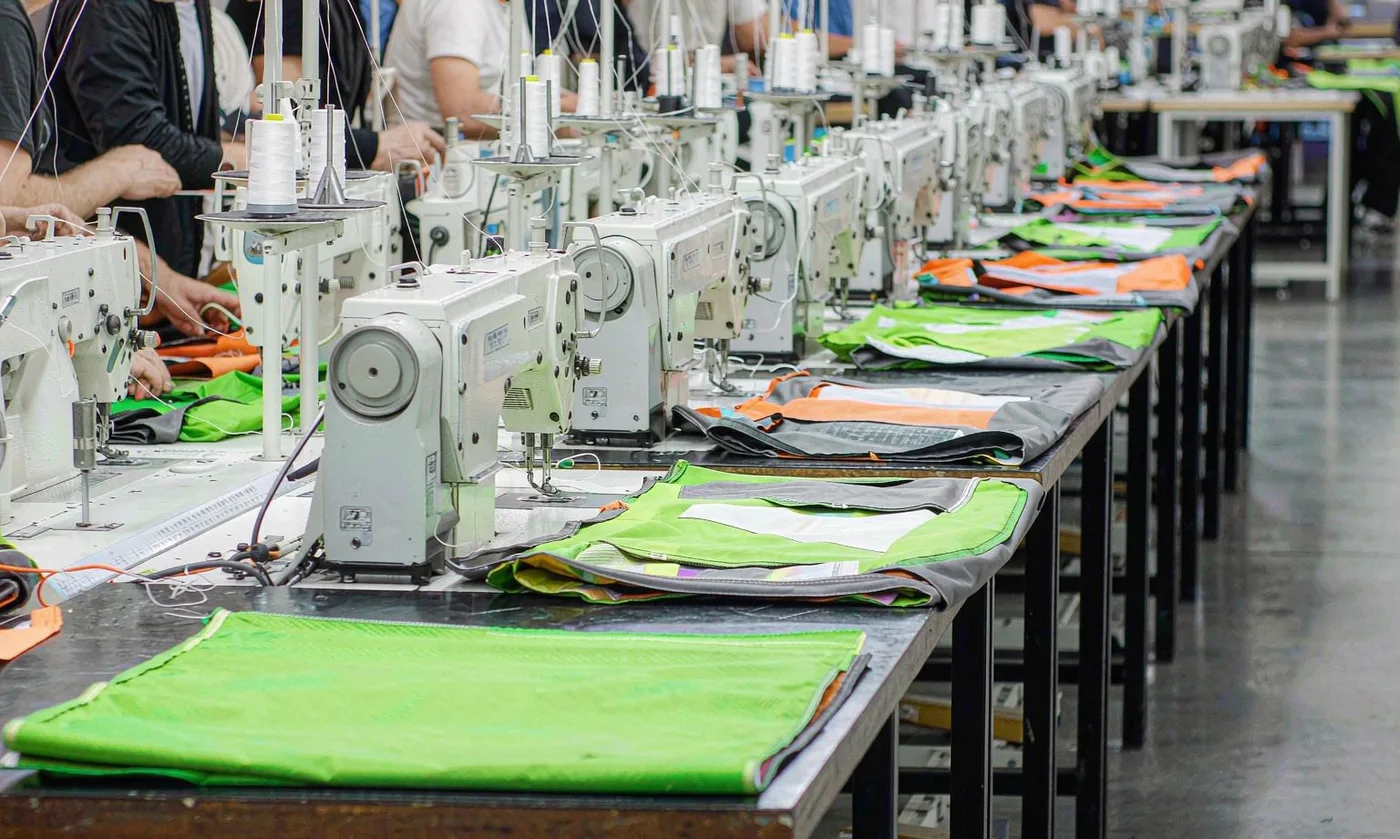
Labour is the second largest line and, unlike material, its quantity is decided entirely by the design. Two bags of the same size and the same fabric can differ by 40% in labour content purely through construction, and that difference is invisible in a photograph and decisive in a quotation.
Labour content is driven by operation count, seam length and handling difficulty. Operation count is the number of distinct steps a unit passes through: every pocket, every binding pass, every reinforcement, every label application is an operation with a time cost. Seam length is the total stitched distance, which is larger in a shaped, panelled construction than in a simple one. Handling difficulty covers the operations that need skills or jigs, such as setting a zipper into a curved panel or binding a shaped opening.
The practical translation is that design decisions made for appearance have a direct labour bill. A decorative piping detail adds a binding operation along its whole length. A shaped ventilation panel with a bound edge costs several times what a straight bound opening costs. An internal divider adds cutting, sewing and setting operations for a feature most end users never notice.
Ask for the operation count. A supplier who has costed a style properly can state how many operations it runs through and where the time concentrates, and those two facts tell a buyer exactly which features to challenge. A feature that is 8% of the labour content and invisible to the customer is the first thing to remove; one that is 2% and appears in every review is the last.
Labour cost also has a structural direction that buyers should plan for rather than resist, and it is the reason a pet bag wholesale price held flat for two years is usually a price that will be recovered at re-order rather than a genuine saving. Wage levels in coastal Chinese manufacturing have risen steadily for a decade and continue to, which means the labour share of a quote is not a candidate for a multi-year price hold. Programmes quoted on a two-year fixed price are either absorbing that drift or planning to recover it at re-order.
Labour is the only large cost the buyer controls directly, and it is controlled in the tech pack rather than in the negotiation.
Compliance Pass-Through and the Cost of a Claim
Compliance is a small line, typically 2-6% of the FOB figure, and it is the one buyers most often omit from comparisons and most often regret having omitted. It divides into two categories with very different behaviour.
Mandatory compliance is the cost of meeting the destination market's requirements. Chemical documentation for the European market, consumer product obligations in the United States, marking requirements everywhere, and article-level verification that a retailer will ask for before listing. This cost is fixed once the market is chosen; it cannot be negotiated away and should not be, because the alternative is a product that cannot be sold.
Voluntary certification is the second category and it is a genuine choice. Schemes that verify textile articles against restricted-substance lists, such as those operated by OEKO-TEX, carry a per-material cost and produce a document a channel may or may not require. Where a retailer requires it, it is mandatory in practice; where nobody requires it, it is a marketing expense and should be evaluated as one.
Performance claims are the third and most dangerous category. A load rating, a crash-tested assertion, a waterproof claim or an airline-compliance statement each implies a test, and a test implies a cost per claim per material. More importantly, an untested claim is a liability that dwarfs the cost of the test. Buyers should treat every performance claim as a decision to commission a test rather than as a sentence in a product description.
The efficient approach is to decide the compliance scope at specification stage and freeze it, because pet bag wholesale suppliers price what they know at the time of quoting and re-quote what is added afterwards. A programme that adds a certification requirement after sampling pays for a re-test and, worse, pays for the delay. A programme that decides the scope upfront prices it into the unit cost where it belongs.
Compliance is cheap to include and expensive to add, which is the argument for deciding it before anything else.
Volume, Run Length and Utilisation: Real but Bounded
Volume is the lever every buyer reaches for and it is genuinely effective, with an important caveat: it is bounded. Unit price falls as run length rises, but the curve flattens, and past a certain point additional volume buys very little.
The shape is worth understanding because it prevents a common mistake, and the band structure behind it is set out in more detail under pet carrier wholesale price breakpoints. The steep part of the curve is at the bottom, where setup and material lot effects are being amortised. That is why the move from a minimum run to twice the minimum produces a visible saving, and the move from ten thousand to twenty thousand produces almost none. Buyers who commit to large volumes hoping for leverage often find they have bought inventory rather than a discount.
Utilisation is the second and less discussed volume effect. A supplier with idle capacity will price to fill it, and a supplier at full capacity will price to ration it, which is why pet bag wholesale vendors quote differently in a quiet month than in the weeks before a shipping peak. This is why quotes received in the weeks before a seasonal production peak are consistently higher than quotes received in a quiet month, for the identical specification, and why a buyer with flexible timing has a lever that costs nothing.
Timing flexibility is therefore a real commercial asset. A buyer who can accept a longer window, or who can place an order in a quiet period, is offering the supplier something worth money, and should ask for it in return. This is the cleanest negotiation available because it costs the buyer nothing but calendar.
The caveat on volume is inventory risk, and it applies with particular force to bulk pet bag orders placed against a seasonal window, where the cost of unsold units at the end of the season exceeds the entire volume discount. A saving of 6% on unit cost is not a saving at all if half the additional units are still in a warehouse at the end of the season. The correct comparison is unit price against carrying cost, and carrying cost includes capital, storage and the obsolescence risk of a colour that does not repeat. For bulk pet bag orders placed against a single season, that comparison usually argues for the smaller run at the higher unit cost.
Volume leverage is real, it is front-loaded, and it stops paying well before it stops being offered.
Currency, Input Cycles and Freight: The Two Nobody Controls
Two drivers move the whole figure rather than any part of it, and the right response to both is allocation rather than reduction.
Currency is the first. A quote in one currency paid months later in another carries an exposure equal to the movement over the period between quotation and payment, which on a first programme is roughly the sampling window plus the production window plus transit. That is several months, and a few percent of movement over several months is unremarkable rather than exceptional. Three responses exist: quote and settle in one currency and accept the exposure, agree a band within which the price holds and outside which it is reviewed, or hedge through the buyer's own treasury. What does not work is asking a supplier to absorb an open-ended currency risk indefinitely, which produces either a padded price or an argument at the worst moment.
Input cycles are the second. Fibre and coating costs follow petrochemical markets, metal hardware follows base metal markets, and both move on cycles unrelated to anything in the pet industry. A supplier quoting a firm price for a year is pricing the risk of that movement into the figure, which means the buyer pays for volatility that may never materialise. A quote with a stated validity and a stated review mechanism is usually cheaper and more honest.
Freight is technically outside the FOB figure and practically part of the buyer's decision, because it changes which Incoterm is better value. On a bulky low-density article, freight is a large share of landed cost and it is volatile by season. A buyer comparing two quotes should compare them on landed cost, using their own freight estimate, rather than on FOB alone, because the ranking can invert.
The discipline is to name the two uncontrollable drivers explicitly in the terms, state who carries them, and spend the negotiating energy elsewhere. Any brand owner that continues to source pet bags from China across several years should revisit that allocation annually, because a division of risk that was fair at one exchange rate is not automatically fair at another.
Allocate what you cannot control; negotiating it produces padding rather than savings.

Specification Drift: The Quietest and Most Expensive Driver
Specification drift is the cost added by changes made after the first quote, and it is the driver most buyers never see because it arrives as a series of individually reasonable decisions. It is also the one entirely within the buyer's control, which makes it the most valuable target in this whole list.
The mechanism is incremental. A buyer approves a lining upgrade at two percent, adds a reinforcing panel at one, changes a hardware finish at three, requests individual polybag packing at two, and adds a woven label at one. None of those decisions is wrong. Together they are nine percent, and the buyer experiences it as a supplier who raised the price rather than as a series of choices they made.
The defence is a change register. Every revision after the first quote is recorded with its cost and its date, and the cumulative effect is visible before the order is placed. Suppliers will maintain this if asked, and the discipline it imposes on the buyer is worth more than the document: seeing a running total change behaviour, and most drift stops at the second or third item.
The second defence is a freeze date. Agree a point after which changes move to the next order rather than into this one. Without a freeze date, changes continue until production starts and sometimes beyond, and each one carries both a cost and a schedule risk that is larger than the cost.
The third is asking what a change costs before requesting it, rather than after. A buyer who asks for a quotation on a specific revision rather than asking for the revision is making an informed decision, and roughly a third of requested changes are abandoned once the price is stated.
Specification drift is the only driver that is free to prevent, and prevention is a register, a date and one extra email per change.
Which Levers Are Worth Pulling, and in What Order
Pulled in the right order, the six drivers produce a materially better outcome than pulled at random. The ordering below reflects the ratio of saving to risk, and it is the sequence worth following on any programme.
First, stop the drift, remembering that the pet bag moq sets the floor under the whole calculation and that no amount of lever-pulling moves a price below the cost of the material lot it is built on. A change register and a freeze date cost nothing and prevent the largest avoidable increase in the whole programme. This is done before any negotiation because it defines the product being negotiated.
Second, edit the construction. Remove the features whose labour cost is high and whose customer visibility is low, which usually means internal dividers, decorative piping and unnecessary reinforcement. This is the largest genuine saving available and it does not require the supplier to concede anything.
Third, standardise components. One hardware family, one zipper specification and one fabric across the range reduces material lots, shortens changeovers and lowers the unit cost of every style. This is a design decision and it has to be made before the patterns are drawn.
Fourth, decide the compliance scope and freeze it. Choosing what is required, and declining what is not, prevents both an unnecessary cost and an expensive late addition.
Fifth, use volume where the curve is steep, which is usually the step from the minimum to roughly twice the minimum, and stop there. Beyond that, additional volume buys inventory rather than leverage.
Sixth, offer timing flexibility, remembering that the pet bag moq sets the floor beneath all six moves and that none of them takes the price below the cost of the material lot. Accepting a longer window or a quiet-period slot gives the supplier something worth money at no cost to the buyer, and it is the cleanest trade available.
Last, allocate currency and input risk explicitly rather than arguing about it. What remains after all six is a number both sides can defend, and it is usually 10-20% below where the programme started without any single party having conceded margin.
The sequence matters: define the product, edit the construction, standardise, freeze compliance, take the steep part of the volume curve, trade timing, allocate risk.
Production capability
- SGS-verified production space of 4,950 m², 149 machines, 7 assembly lines
- Pet bag output since 2014 from a 137-person team
- 200,000 units shipped monthly under BSCI and ISO 9001 systems
People Also Ask
What determines a pet bag wholesale price?
Six drivers: material at 45-60% of FOB, labour at 20-30%, compliance at 2-6%, volume and utilisation, currency and input cycles, and specification drift. Three of the six are within the buyer's control.
How much of a pet bag cost is fabric?
Shell fabric is typically 22-32% of the FOB figure, with lining and mesh adding 6-10% and hardware 8-14%. Material as a whole is the largest line and the most sensitive to commodity cycles.
Why does the same bag cost more from one supplier than another?
Usually because the construction or the inclusion list differs. Differences in labour content through operation count, fabric grade, hardware finish and packing scope produce most of the spread that buyers attribute to supplier margin.
How much does order volume reduce unit price?
The steep part of the curve is at the bottom: moving from a minimum run to roughly twice the minimum produces a visible saving, while doubling again produces very little. Beyond that point additional volume mostly buys inventory.
Does compliance add much to the cost of a pet bag?
Typically 2-6% of the FOB figure for mandatory market requirements, plus any voluntary certification and any performance claim testing. It is cheap to include at specification stage and expensive to add later.
What is specification drift and how do I prevent it?
It is the cumulative cost of changes made after the first quote, arriving as individually reasonable decisions. Prevent it with a change register recording each revision's cost, an agreed freeze date, and asking the price of a change before requesting it.
Frequently Asked Questions
What is included in the material share of a pet bag price?
Shell fabric at 22-32%, lining and mesh at 6-10%, hardware at 8-14%, zippers and closures at 4-8%, and webbing, binding and thread at 3-6%, all expressed as a share of the FOB figure.
Why is labour content the best target for cost reduction?
Because it is 20-30% of the FOB figure and its quantity is determined entirely by the design. Removing a feature with high operation count and low customer visibility reduces cost without asking the supplier to concede margin.
How do I know which features are expensive to make?
Ask for the operation count and where the time concentrates. A supplier who has costed a style properly can state both, and the features with high labour share and low visibility are the ones to remove first.
Should I ask for a price valid for a full year?
Usually not. A supplier holding a price for twelve months is pricing in the risk of fibre, metal and currency movement, so the buyer pays for volatility that may not occur. A stated validity with a review mechanism is normally cheaper.
How should currency risk be handled in a supply agreement?
Allocate it explicitly: settle in one currency and accept the exposure, agree a band within which the price holds and outside which it is reviewed, or hedge independently. Asking a supplier to absorb open-ended risk produces a padded price.
Is a voluntary textile certification worth the cost?
Where a retail channel requires it, it is effectively mandatory. Where nobody requires it, it is a marketing expense and should be justified on that basis rather than treated as a compliance cost.
What happens if I make a performance claim without a test?
The claim becomes a liability that far exceeds the cost of the test. Load ratings, crash-test assertions, waterproof claims and airline-compliance statements each imply a test method and a report behind them.
Why are quotes higher just before a seasonal peak?
Because utilisation is high and the supplier is pricing to ration capacity rather than to fill it. A buyer with flexible timing can place the order in a quieter period and should ask for that flexibility to be priced.
How do I compare quotes on different Incoterms?
Convert to landed cost using your own freight, insurance and duty estimates. On bulky low-density articles freight is a large share of landed cost, and comparing FOB figures alone can invert the ranking.
What is a change register and who maintains it?
A record of every post-quote revision with its cost and date, usually maintained by the supplier and reviewed by the buyer. Seeing the running total changes behaviour, and most drift stops at the second or third entry.
How much can a well-run negotiation actually reduce the price?
Commonly 10-20% from the starting figure, achieved without any party conceding margin: by editing the construction, standardising components, freezing compliance scope, taking the steep part of the volume curve and trading timing flexibility.
Does a heavier fabric always mean a better product?
Not necessarily. A heavier denier costs more because it contains more material, and the benefit is real only where the channel demands the abrasion and load performance. Test the claim against a published method rather than assuming the grade.
Talk to QUANZHOU JUNYUAN BAGS about a wholesale pet bag order: MOQ 500 pieces per colourway, samples in 6-10 working days, bulk production in 35-50 days under AQL 2.5 inspection.
Get a free quote Request a sample