Pet Fishing Bag: Fishing Gear Specs for Wholesale Buyers
A wholesale pet fishing bag should be specced at 25-40 L with a welded waterproof base compartment, TPU-laminated 600D-900D shell, corrosion-resistant hardware rated for saltwater exposure, drainage at every low corner and a pet cavity rated 6-12 kg. Expect USD 15.80-29.40 FOB Xiamen. Orders run at MOQ 500 pcs per colourway, sample in 6-10 working days and ship 35-50 days after approval under AQL 2.5.
Executive Summary
This guide covers the fishing-positioned pet bag, a specialist SKU defined by one dominant environmental factor: water. Everything that touches a fishing product gets wet, frequently with salt in it, and it stays wet for hours. That single fact drives material selection, hardware specification, drainage design and the documentation a buyer needs.
Our production team runs these builds at MOQ 500 pcs per colourway, with mixed colourways permitted inside one order. Samples take 6-10 working days after tech pack confirmation and bulk runs 35-50 days after approval. Shipments are offered to AQL 2.5 pre-shipment inspection with third-party inspectors accepted, on T/T 30/70 against FOB Xiamen.
Three decisions determine whether the SKU survives a season: welded versus stitched wet compartments, genuine corrosion resistance in the hardware, and drainage that works when the bag is set down full of water. A fourth is whether the programme serves freshwater or saltwater, because the two are not the same product. Where volumes are modest, building one specification to the saltwater standard and selling into both markets is usually the better structure.
Wholesale heavy duty pet carrier builds start at the base panel, and Pet Bag Types & Styles documentation should state the board thickness before the fabric is chosen. Wholesale scratch resistant pet carrier and wholesale tear resistant pet carrier claims only hold when the test method is named, otherwise the coating alone is doing the work.
The Fishing Channel and What Anglers Actually Need
Fishing retail is a specialist trade with clear product expectations and a customer base that evaluates gear on durability above everything else. A pet bag entering this channel is not competing with other pet products; it is competing with coolers, tackle bags and dry bags, all of which are built to a durability standard that general lifestyle bags do not meet.
The use case is specific. An angler spends hours stationary at a bank, a jetty or in a boat. The bag is set down on wet surfaces, splashed, rained on, and occasionally dropped. The dog may be in the bag, or more often alongside it, with the bag carrying the dog's gear as much as the dog. Hands are frequently wet, cold or occupied, so every closure has to work one-handed.
- Channels: tackle and marine retail, outdoor chains with a fishing department, boat and marina shops, direct-to-consumer fishing brands.
- Price architecture: USD 75-160 retail, with durability rather than fashion driving the purchase.
- Volume shape: 500-2,000 units per season, with strong regional variation.
- Environment: sustained fresh or salt water exposure, sun, and abrasive surfaces.
- Customer priority: it must not fail, and it must be cleanable afterwards.
That last priority is worth expanding, because it is the one most often missed by buyers coming from a lifestyle background. A fishing bag is hosed down at the end of the day. It has to be designed for that: no absorbent foam, drainage everywhere, coated linings and hardware that tolerates being wet indefinitely. A bag that cannot be hosed out will smell within a season and will be reviewed accordingly.
There is also a genuine commercial advantage in this category: fishing customers replace gear on a known cycle and are loyal to products that last. A bag that survives three seasons generates word-of-mouth recommendations in a community that shares opinions actively, and the repeat purchase rate in specialist fishing retail is materially higher than in general lifestyle channels.
Finally, note the regional split. Saltwater and freshwater programmes are not the same product: saltwater demands corrosion-resistant hardware and UV-stable fabric in a way freshwater does not, and the price difference of USD 2.40-5.10 per unit is real. Decide which market the SKU serves before fixing the specification.
Waterproof and Wet-Gear Construction
Water management is the core of this product, and it has two distinct problems: keeping water out of the things that must stay dry, and getting water out of everything else. Bags that try to solve both with one approach usually solve neither.
For the dry side, the working answer is a welded compartment. High-frequency welded TPU-laminated fabric with sealed seams keeps a phone, documents and a first-aid kit dry even when the rest of the bag is soaked. The cost premium of USD 1.60-2.90 over a stitched compartment is the best-value item in the specification, and it is the basis of any credible waterproof claim.
| Option | Water performance | Cleanability | Cost impact |
|---|---|---|---|
| Stitched lining, uncoated | Absorbs immediately | Poor | baseline |
| PU-coated lining, taped seams | Resists splashes for a season | Fair | + USD 0.50-0.90 |
| TPU laminate, welded seams | Waterproof for the life of the bag | Excellent - hose out | + USD 1.60-2.90 |
| Welded drop-in liner | Waterproof, replaceable | Excellent | + USD 2.10-3.60 |
For the wet side, drainage is the answer and it has to be designed rather than improvised. Every cavity that can hold water needs grommets at its lowest corners, and the pet cavity needs a coated mesh floor above a drainage sump so water leaves rather than pooling under the animal. Two grommets per cavity, positioned at the true low point when the bag is standing, is the minimum.
The phrase "true low point" matters more than it sounds. Grommets placed by eye on a pattern often end up 15-20 mm above the lowest point once the bag is assembled and the base board is inserted, which leaves a permanent puddle. Specify the grommet position relative to the assembled base, and test the first sample by pouring water in and watching where it settles.
- Dry compartment: welded TPU laminate, sealed seams, covered zip with a storm flap.
- Pet cavity: coated mesh floor above a drainage sump, two grommets at the low corners.
- Base: coated bathtub panel, no ground-contact stitching, turned-up perimeter.
- Pad: removable closed-cell foam with a coated cover; no open-cell foam anywhere.
- Lining: coated and wipe-clean, mid-tone to hide staining from bait and mud.
One more requirement specific to fishing: the bag should be hose-out cleanable, and the instruction insert should say so plainly. That statement is a selling point in this channel and it is only true if the construction supports it.
Closures that work with wet hands
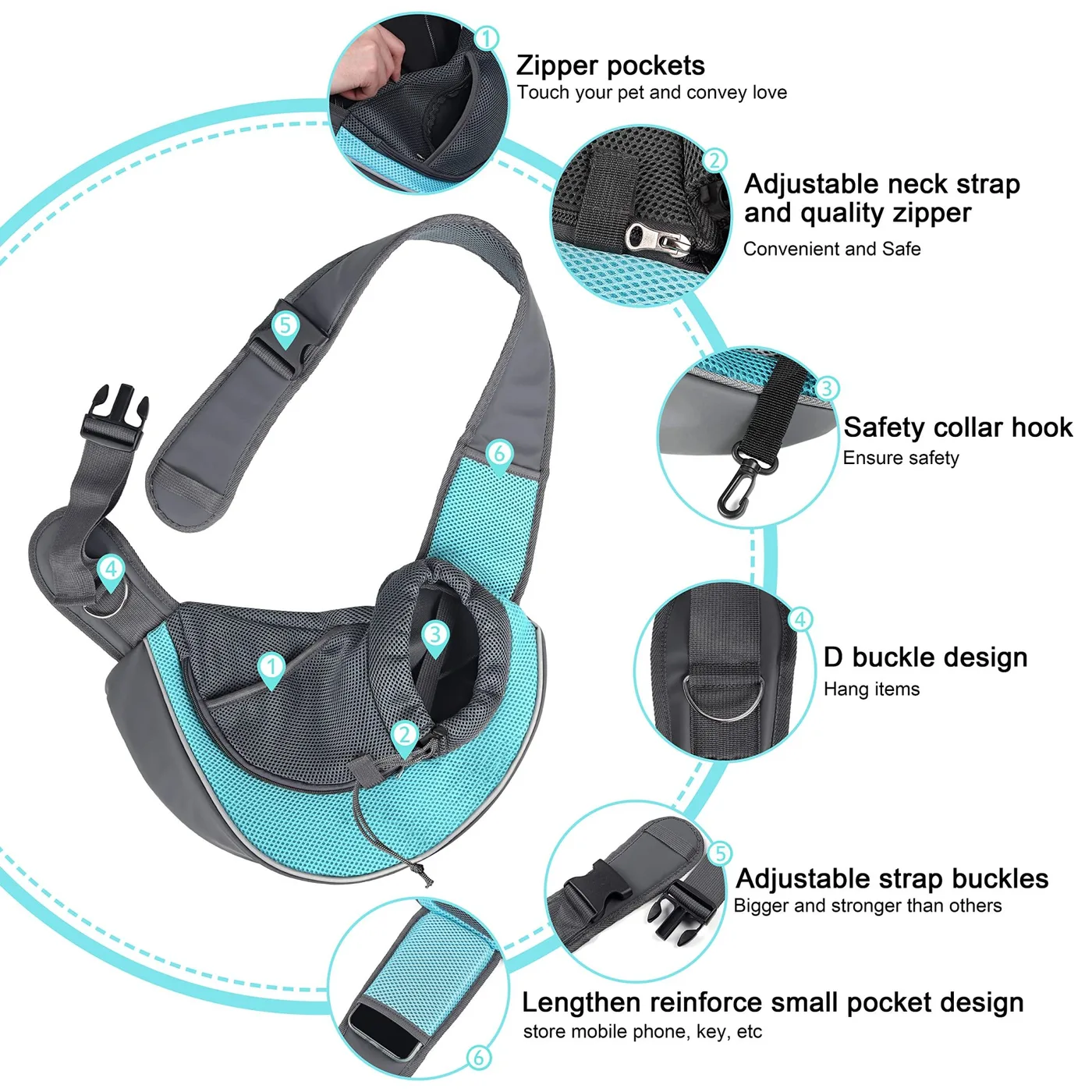
Standard small zip pullers are unusable with cold, wet or gloved hands. Specify oversized pullers with a cord or a moulded grip, hook-and-loop on pockets instead of snaps, and cam buckles rather than threaded adjusters. Test every closure on the first sample with genuinely wet hands; it is a five-minute test that prevents the most common usability complaint in the category.
The second usability requirement is one-handed operation while holding a rod, which rules out anything requiring two hands or fine motor control. Magnetic closures and wide hook-and-loop panels work; small snaps and narrow sliders do not. Watch someone actually use the sample rather than opening it yourself on a table.
The third is glove compatibility in cold-water markets. A puller that works with a bare wet hand may be unusable with a neoprene glove, and cold-water fishing is a substantial part of the market. Specify a puller with a cord loop or a large moulded grip and test it gloved before approving the sample.
The fourth usability point is that closures should be operable without looking at them. An angler watching a rod tip or a dog does not want to search for a fastening, which argues for closures at predictable positions - the same pocket in the same place with the same action every time - rather than for clever hidden fastenings that look tidy in a photograph.
Finally, keep the number of different closure types low. A bag with a zip, a buckle, a snap and hook-and-loop across four pockets requires the customer to learn four actions, and in the field they will simply use the one nearest to hand and complain about the rest.
Corrosion Resistance for Freshwater and Saltwater
Corrosion is the failure mode that ends fishing products, and it is entirely preventable at design stage. Saltwater accelerates it dramatically, but even freshwater programmes see hardware degradation when a bag is stored wet for months between seasons.
The specification answer is material and finish. Stainless steel or marine-grade coated alloy for rings, D-rings and buckle frames; coated or plastic sliders on zips; and no exposed mild steel anywhere, including inside rivets and springs. Ask the hardware supplier for a salt-spray test result with hours and rating stated, and put the figure in the tech pack.
Zips deserve separate attention because they are the component most likely to fail first. A standard nickel-plated zip will show corrosion after a handful of saltwater trips and will then jam. Options in ascending order of performance are a coated coil zip, a plastic-moulded zip, and a waterproof coated zip with a welded tape. For a mid-programme saltwater bag, the coated coil with a covered garage is the practical balance.
- Hardware: stainless steel or marine-grade coated alloy, salt-spray tested with the result stated.
- Zips: coated coil or plastic-moulded, with covered garages and oversized pullers.
- Rivets and springs: stainless or coated - these are the components suppliers quietly substitute.
- Thread: bonded polyester or nylon, which does not wick or rot.
- Fabric coatings: hydrolysis-resistant, because a bag stored wet will attack a standard coating.
Hydrolysis deserves emphasis because it is the least-known failure in this category. A polyurethane coating on a bag that is stored damp for months can break down and flake, and the flaking appears as a sticky, peeling interior. Hydrolysis-resistant coatings cost USD 0.20-0.50 more per unit and prevent a failure that usually surfaces after the return window has closed.
Verification should be independent and method-named. Physical and mechanical test methods are published by ASTM International, textile abrasion and colour-fastness behaviour is normally run to AATCC test methods, and a salt-spray result should state both hours and rating. A report that cites a method is enforceable; an adjective is not.
Tackle and Tool Organisation
Fishing gear is small, sharp, numerous and frequently damp. Organisation is therefore a functional requirement rather than a convenience, and it has rules that do not apply in other categories: sharp items need containment, wet items need separation, and nothing should be reachable by a curious dog.
The structure that works is a divided main cavity plus a dedicated wet pocket, two to four external tool pockets with drainage, and a removable pouch for small items. Hooks and lures should never be loose in a shared pocket - specify a removable, rigid or semi-rigid pouch with a closure, because a bag with hooks loose in a pocket is a hazard for the handler and for the animal.
| Zone | Volume | Contents | Construction note |
|---|---|---|---|
| Pet cavity | 14-18 L | Animal, removable pad, tether | Mesh floor, drainage sump, grommets |
| Dry compartment | 5-7 L | Phone, documents, first aid | Welded, sealed seams, covered zip |
| Wet pocket | 4-6 L | Damp clothing, catch bag | Coated lining, drainage grommet |
| Tool pockets | 2-3 L | Pliers, line, lures in a pouch | Drained, external, one-handed access |
Accessibility is the constraint that shapes the layout. An angler with a rod in one hand needs to reach pliers with the other, which means external pockets on the side facing the handler rather than internal pockets under the pet cavity. Put that requirement in the tech pack explicitly: external tool pockets, reachable without opening the pet cavity.
Safety separation is the second constraint. Anything sharp or toxic - hooks, weights, bait - must be in a closed container that the animal cannot reach from inside the cavity. Specify a rigid divider between the pet cavity and the gear zone, and state in the instruction insert that tackle should be stored closed.
Finally, consider a cutting-mat or flat working surface on the exterior: a coated panel that can be used as a small work surface is a feature fishing customers value and it costs little to add.
Freshwater and saltwater: specifying the right product
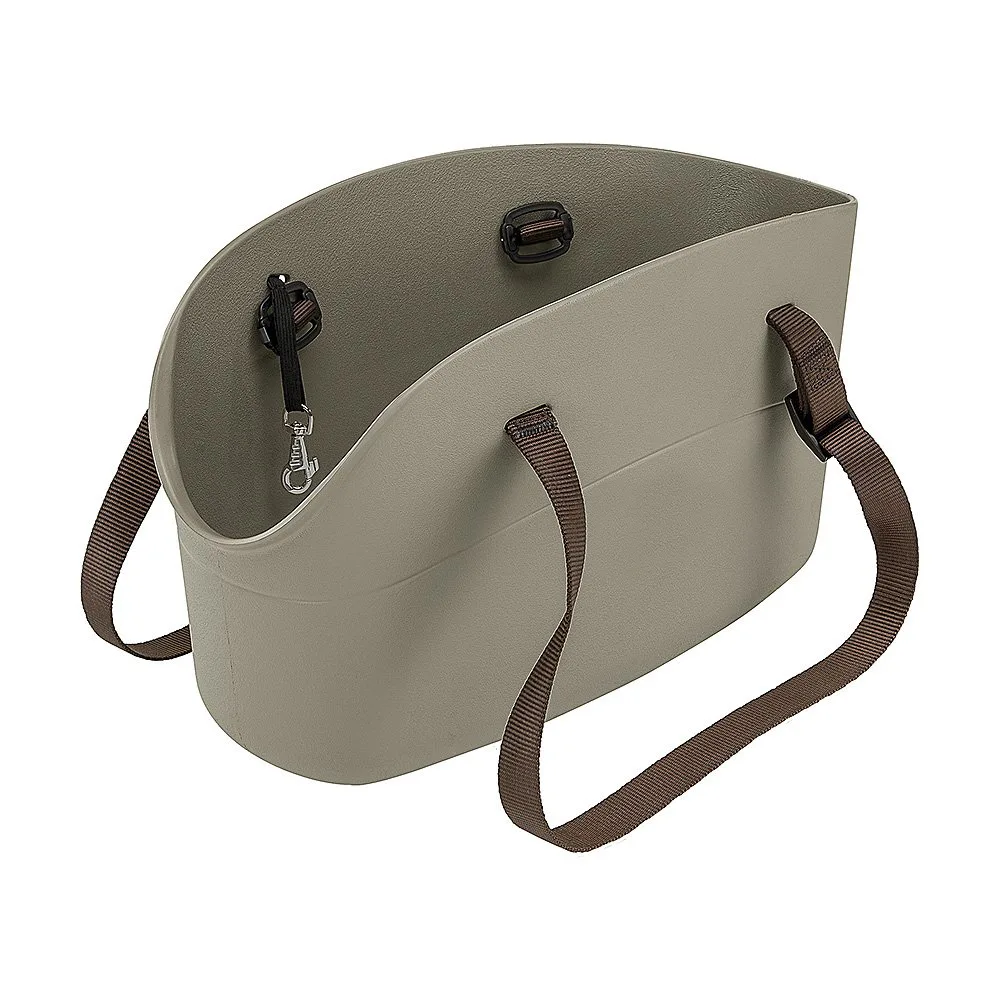
The freshwater and saltwater versions of this SKU are not the same product with different packaging, and treating them as one is the most expensive shortcut available in the category. Saltwater exposure changes the hardware requirement, the coating requirement and the UV requirement, and the difference is worth USD 2.40-5.10 per unit.
For freshwater, coated alloy hardware with a documented corrosion result and a standard hydrolysis-resistant coating are sufficient. For saltwater, stainless or marine-grade hardware, a coated or plastic zip system and a UV-stabilised fabric are all necessary, and the salt-spray test result should be stated in hours with the rating method named.
The commercial question is whether to run both versions or to build one product to the saltwater standard and sell it into both markets. Where volumes are modest, the single-specification approach is usually better: it avoids a split buy, it simplifies the document set, and the incremental cost is recovered in the retail price of a premium product.
The decision has a second dimension: documentation. A single specification means one chemical declaration, one test series and one inspection checklist, where two specifications mean two of everything. On a programme of 1,000 units, the duplicated documentation cost can be a meaningful share of the saving the split was supposed to deliver.
Where a range genuinely needs both price points, the better structure is usually to differentiate on features rather than on corrosion specification: one build to the saltwater standard, with the entry SKU differing in organisation, accessories and packaging rather than in hardware.
Stability on Boats, Banks and Jetties
A fishing bag is set down on surfaces that are wet, sloped and sometimes moving. Stability is therefore a safety requirement rather than a comfort one, and it is worth more engineering attention than it usually receives in lifestyle categories.
The base is the primary answer: a wide footprint relative to the bag's height, a coated bathtub panel with a turned-up perimeter, and six moulded feet rather than four. Six feet matter on an uneven bank where four will rock. A low centre of gravity - pet cavity at the base, gear above - keeps the bag upright when a boat moves.
Secondary stability comes from attachment. A bag on a boat should be securable: two webbing loops or a clip point rated for a lashing strap, positioned low and on opposite sides. That is a small addition that prevents a genuine hazard, and it is the kind of detail that specialist buyers look for and comment on.
- Base: wide footprint, coated bathtub panel, six moulded feet.
- Weight distribution: pet cavity low, gear above, centre of gravity below the midpoint.
- Lash points: two rated loops low on opposite sides.
- Non-slip: a textured or printed grip patch on the base panel.
- Buoyancy: closed-cell foam in the base adds marginal float and useful insulation.
Buoyancy is worth a considered sentence. A bag with closed-cell foam in the base will float briefly if it goes overboard, which is genuinely useful on a boat or a jetty, and the foam is needed for insulation anyway. It should not be marketed as a flotation device - it is not one - but it is a real secondary benefit.
Test stability on a slope and on a wet surface, loaded, before approving a sample. A bag that stands on a showroom floor tells you nothing about how it behaves on a wet bank at five in the morning.
Odour control after a day on the water
Odour is the complaint that ends fishing bags, and it has a specific cause in this category: organic residue - bait, fish slime, mud - left in a bag that is stored damp. It is a design problem rather than a customer-behaviour problem, and it is solvable.
The construction answers are the same ones the wet specification already wants: coated linings that wipe clean, no open-cell foam anywhere, drainage at every low corner and a removable pad that can be lifted out and dried. Adding a removable, welded drop-in liner for the wet pocket is the single most effective upgrade, at USD 0.90-1.70, because it turns a cleaning problem into a rinsing task.
An antimicrobial lining finish helps at the margin and should be claimed only with a test report behind it. The insert should state the cleaning routine plainly - hose out, drain, air open - because the bag will smell within a season if it is stored closed and damp regardless of how well it was built.
There is also a storage issue specific to this channel. Fishing bags are frequently left in a garage or a boat locker between trips, closed and damp, for weeks at a time. Designing for that reality means a bag that can be stored open: a stiffened top lip that holds the mouth open, and a cavity that airs rather than seals.
Buyers should treat that as a specification line rather than a tip. A bag that airs dry between trips lasts for years; one that seals damp fails in a season, and the customer will attribute the failure to the product rather than to the storage.
Cost Structure and Price Banding
Fishing programmes sit above general lifestyle in unit cost, driven by welded construction, corrosion-resistant hardware and coated fabrics. The margin available is correspondingly better, because the channel expects to pay for durability.
| Build level | Wet construction | Hardware | FOB band | Target retail |
|---|---|---|---|---|
| Entry, freshwater | Taped PU lining | Coated standard | USD 15.80-19.60 | USD 75-105 |
| Mid, freshwater or light salt | Welded TPU compartment | Coated alloy, salt-tested | USD 20.80-25.40 | USD 110-145 |
| Premium, saltwater | Welded throughout, drop-in liner | Stainless and marine-grade | USD 26.20-32.90 | USD 155-210 |
For a mid build around USD 22.80, the split is: coated shell and lining fabric 26-32%, welding and TPU material 12-17%, hardware 14-19% - higher than average because corrosion resistance costs money - foam and structure 8-11%, labour 21-26%, packaging 4-6%, factory margin 8-12%.
The saving levers, ranked by safety: consolidating volume, reducing colourways, standardising hardware across the fishing family, simplifying packaging, and then reducing the extent of welding. Cutting the welded dry compartment back to a taped lining saves USD 1.10-2.00 and removes the waterproof claim, which in this channel is one of the two features a customer is actually buying.
Freight is favourable relative to other outdoor categories: a fishing bag has no rigid frame and packs reasonably flat, and the specialist channel buys ahead of a known season and accepts sea freight. Volumetric weight is therefore less of a constraint here than for a camping or picnic build.
Accessories carry better margin than the bag in this channel as well - a matched removable liner, a tool pouch and a drainage mat are cheap to develop and retail well to a customer who is already buying a bag.
MOQ, Sampling and the Fishing Season Calendar
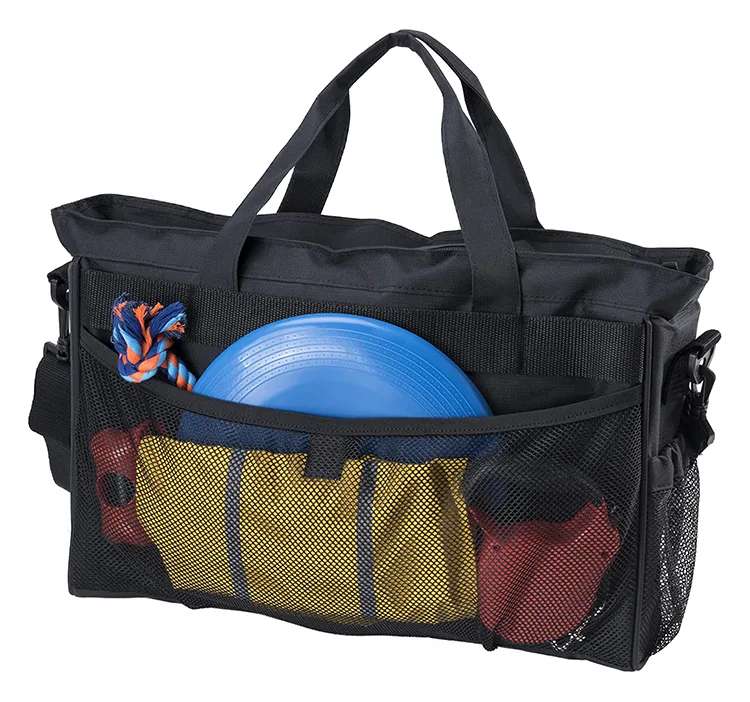
The working minimum is MOQ 500 pcs per colourway, with mixed colourways permitted in one order. Fishing programmes tend to run two colourways - a neutral and a high-visibility option - because a visible bag matters on a bank or a boat in poor light.
Sampling takes 6-10 working days per round, and this category needs two rounds plus two functional tests: a hose-out and drain test, and a stability test on a wet slope. Both are quick, both are decisive, and neither appears in a standard sample approval process unless the buyer asks for it.
| Milestone | Target | Note |
|---|---|---|
| Channel and saltwater or freshwater decision | July | Drives hardware specification |
| Tech pack locked | August | Includes welding drawings |
| Structure sample, hose and drain test | September | Watch where water settles |
| Branding and packaging sample | October | Golden sample sealed |
| Bulk production | November to December | 35-50 days |
| Freight and receipt | January to February | 30-45 days |
Fishing retail works to regional season openings rather than to a single national calendar, so the receipt date should be set against the earliest regional opening in the distribution area, not the average. A bag that arrives after the opening has missed the highest-velocity weeks of the year.
Pre-shipment inspection at AQL 2.5 should carry a fishing-specific defect list: weld integrity at compartment corners, grommet presence and position, hardware finish conformity to the salt-spray specification, drainage function and coating integrity. Those five are where this build fails, and none is on a generic bag checklist.
Reorders are straightforward once welding tooling and the hardware list exist, and because the channel replaces gear on a known cycle, a bag that is available unchanged next season is worth more than a redesigned one.
Compliance, Documentation and Channel Onboarding
A fishing pet bag carries the standard consumer-product documentation load plus a chemical-declaration requirement that is heavier than average, because coated and laminated fabrics, corrosion-resistant finishes and inks all appear in it. Resolve the declarations at quoting stage; a reformulation after production triggers re-testing.
For the US, general consumer-product obligations and recall traceability sit with the US Consumer Product Safety Commission, and the buyer-side requirement is a batch code on the product with retained production records. California exposure warnings are administered by OEHHA; coatings, hardware finishes and inks are the usual questions.
For the EU, REACH restrictions are administered by the European Chemicals Agency, and TPU laminates and DWR treatments attract specific attention. Ask for the coating chemistry at quoting stage and keep the declaration with the tech pack.
- Batch code on the product; production record retained for 24 months.
- Fibre composition, coating and ink declarations, country of origin.
- Instruction insert: pet weight rating, hose-out cleaning guidance, tackle storage warning, tether use.
- Test reports: salt-spray on hardware, coating integrity and hydrolysis, abrasion, colour fastness, weld integrity, chemical screens.
- Carton marking and barcode to the retailer's receiving specification.
Waterproof claims need the same discipline as any other measured claim. "Waterproof compartment" is defensible if the compartment is welded and tested; "waterproof bag" is not, because the zips, seams and openings are not. Write the claim to match the construction and keep the test report on file.
On the manufacturing side, an ISO 9001 quality management system is what keeps coating and hardware specification consistent across seasons, and independent verification through SGS testing and inspection gives the specialist buyer a recognised name on the file. Our production network operates under that system, with per-shipment inspection rather than annual verification.
Production capability
- SGS-verified production space of 4,950 m², 149 machines, 7 assembly lines
- Pet bag output since 2014 from a 137-person team
- 200,000 units shipped monthly under BSCI and ISO 9001 systems
People Also Ask
What size pet fishing bag do I need?
25-40 L for a pet of 6-12 kg plus tackle and clothing. Below 25 L there is no room for a separate wet pocket; above 40 L it becomes awkward on a bank or in a boat.
Do fishing pet bags need to be waterproof?
The dry compartment does. The rest of the bag should be designed to get wet and drain, which is a different and more honest specification than trying to make the whole bag waterproof.
How do you stop hardware rusting on a fishing bag?
Specify stainless or marine-grade coated hardware with a stated salt-spray result, avoid mild steel in rivets and springs, and use coated or plastic zip sliders.
What causes coating to peel on fishing bags?
Hydrolysis, driven by storing the bag damp for months. Hydrolysis-resistant coatings cost USD 0.20-0.50 more per unit and prevent a failure that usually appears after the return window.
Why do closure pullers matter?
Because they are operated with wet, cold or gloved hands. Oversized pullers with a cord or moulded grip, hook-and-loop pockets and cam buckles all work; small pullers and snaps do not.
Should a fishing bag have a wide base?
Yes. A wide footprint, a bathtub panel and six moulded feet keep the bag upright on a wet, sloped bank; four feet will rock on uneven ground.
When should a fishing order be placed?
Lock the tech pack in August for a November or December production slot, and set the receipt date against the earliest regional season opening in the distribution area.
Frequently Asked Questions
How is a pet fishing bag different from a pet hiking bag?
It is built around sustained water exposure: welded waterproof compartments, drainage at every low corner, corrosion-resistant hardware and hose-out cleanable materials, rather than harness sophistication and low weight.
Should the dry compartment be welded or stitched?
Welded. TPU-laminated fabric with sealed seams is waterproof for the life of the bag and costs USD 1.60-2.90 more than a stitched compartment, which is the best-value item in the specification.
What hardware is needed for saltwater?
Stainless steel or marine-grade coated alloy on rings and buckle frames, coated or plastic zip sliders, stainless rivets and springs, and a salt-spray test result stating hours and rating.
Is the saltwater version worth the extra cost?
Yes, at USD 2.40-5.10 per unit. Standard nickel-plated hardware corrodes after a handful of saltwater trips and then jams, which ends the product's life.
Where should drainage grommets be placed?
At the true low point of each cavity relative to the assembled base, two per cavity. Grommets placed by eye often sit 15-20 mm high and leave a permanent puddle - test by pouring water in.
What is the MOQ for a pet fishing bag?
MOQ is 500 pcs per colourway with mixed colourways permitted in one order. Two colourways - a neutral and a high-visibility option - is the common structure.
How long do samples and bulk take?
Samples take 6-10 working days per round, with two rounds plus hose-out and stability tests expected. Bulk runs 35-50 days after approval, plus 30-45 days for sea freight and customs.
How much does a wholesale pet fishing bag cost?
USD 15.80-19.60 FOB Xiamen for an entry freshwater build, USD 20.80-25.40 for a mid build with a welded compartment and salt-tested hardware, and USD 26.20-32.90 for a premium saltwater build.
Can the bag be hosed out?
Yes, if it is built for it: coated linings, no open-cell foam, drainage at every low corner and corrosion-resistant hardware. State it on the insert - it is a genuine selling point in this channel.
What inspection standard applies?
AQL 2.5 with a fishing-specific defect list: weld integrity at corners, grommet presence and position, hardware finish conformity to the salt-spray specification, drainage function and coating integrity.
Should tackle be stored in the same bag as the pet?
Only in a closed, rigid pouch behind a rigid divider. Hooks and weights should never be loose in a pocket reachable from the pet cavity, and the insert should say so.
Is the bag a flotation device?
No. Closed-cell foam in the base gives marginal buoyancy as a secondary benefit, but the product should never be marketed as a flotation aid.
Talk to QUANZHOU JUNYUAN BAGS about a wholesale pet bag order: MOQ 500 pieces per colourway, samples in 6-10 working days, bulk production in 35-50 days under AQL 2.5 inspection.
Get a free quote Request a sample