Pet Rescue Dog Bag: Bulk Sourcing for Rescue Fleets
A pet rescue dog bag for fleet use is a bleach-tolerant, machine-washable transport kit in the 14-30 litre band, quoted at MOQ 500 pieces per colour and FOB Xiamen USD 6.20-12.40 per unit depending on frame, ventilation layout and wash rating. Rescue fleets typically standardise on one intake size and one transport size rather than a full size range. Allow 6-10 working days for samples and 35-50 days for bulk production.
Executive summary for fleet and NGO buyers. Rescue work destroys bags differently from any other channel. The same unit may carry an intake animal in the morning, sit in a van through an afternoon of transports, be hosed down after a parvo-suspect case and be back in service the next day. That duty cycle sets the specification: bleach and potassium peroxymonosulfate tolerance, hot wash capability, sealed seams that do not trap organic matter, and a documented disinfection protocol that satisfies the organisation's veterinary advisor.
Standard commercial terms apply: MOQ 500 units per colour, samples in 6-10 working days, bulk production 35-50 days after sample approval and deposit, inspection to AQL 2.5 with a dedicated seam-integrity and wash-cycle check. Payment is T/T 30/70 against FOB Xiamen. Rescue buyers are usually grant- or donation-funded, so we structure quotes with a locked price validity window and a repeat-order specification that lets the same bag run unchanged across funding cycles. Our production team builds these through an SGS-verified production base operating to BSCI and ISO 9001, with chemical and wash-test reports retained on file so a re-order does not restart the compliance calendar. Buyers who specify one intake size and one transport size reach a better unit cost than buyers who order four sizes at a quarter of the volume each.
Pet bag market size estimates vary by whether accessories are counted in, which matters when Pet Bag Types & Styles plans are built on a growth assumption. Start a pet bag business with one clear channel rather than three, and pet bag wholesale business economics improve fastest when the reorder cycle is shorter than the selling season.
Why rescue duty cycles break ordinary pet bag specifications
A pet bag that survives weekend travel will not necessarily survive a rescue fleet. The failure modes are different in kind, not just in degree. Rescue bags meet bodily fluids, disinfectant concentrates, gravel, kennel flooring, and repeated high-temperature washing, often in the same week. Specifying against retail durability standards produces a bag that looks acceptable at delivery and fails inside a quarter, which for a grant-funded organisation means the replacement cost lands in a budget year that has already closed.
The dominant chemical exposure is the disinfectant protocol. Shelter medicine guidance typically requires a bleach dilution or potassium peroxymonosulfate for parvovirus and similar pathogens, and both are far more aggressive than a quaternary product used in a hospital corridor. A standard PU-coated polyester will lose coating integrity quickly under that regime. A TPU laminate or a solution-dyed nylon with a heavy coating tolerates it, and the cost difference is usually recovered inside the first replacement cycle.
The second exposure is mechanical. Rescue bags are dragged across concrete, stacked in vans, loaded with an animal that may be frightened and scratching, and sometimes carried one-handed while the handler manages a lead. Seam construction matters more here than fabric denier: a bound and sealed internal seam resists both fluid ingress and abrasion far better than an unbound one. Buyers should specify seam treatment explicitly in the tech pack because it is invisible in a product photo and is routinely value-engineered out of a low quote.
The third exposure is thermal. A bag that cannot be washed at 60 degrees cannot be reliably returned to service between placements, and organisations end up either over-consuming bags or accepting an infection-control compromise. Washability at temperature is therefore a procurement specification, not a care instruction, and it should be tested on a production sample rather than asserted on a spec sheet.
- Disinfectant: bleach dilution and peroxymonosulfate tolerance, documented by test.
- Wash: 60-degree machine cycle without delamination or coating haze.
- Seams: bound or sealed internally, no exposed raw edges in the animal compartment.
- Floor contact: abrasion-resistant base panel, no exposed stitching on the underside.
- Identification: writable or sleeved area for animal ID that survives washing.
Rescue bag specification tiers and cost comparison
Most rescue organisations do not need four sizes. They need an intake kit sized for the animals they actually receive and a transport kit sized for the largest animal their vans routinely carry. The matrix below is built on that two-SKU assumption, which is also the configuration that produces the best pricing because each SKU clears the fabric minimum comfortably.
| Parameter | Intake kit | Transport kit | Field response kit |
|---|---|---|---|
| Volume | 14-18 L | 22-30 L | 10-14 L hands-free |
| Shell | 600D solution-dyed, TPU | 900D Oxford, TPU laminate | 420D ripstop, TPU |
| Base | Coated, stitched off floor | Reinforced board, removable | Coated, fold-flat |
| Ventilation | Two mesh panels | Three-sided mesh plus top | Two mesh panels |
| Wash rating | 60 degrees, 50 cycles | 60 degrees, 50 cycles | 40 degrees, 30 cycles |
| Bleach tolerance | 1:32 dilution | 1:32 dilution | Quaternary only |
| ID system | Writable TPU sleeve | Sleeve plus clip card | Writable sleeve |
| MOQ per colour | 500 | 500 | 500 |
| FOB Xiamen band | USD 6.20-8.40 | USD 8.90-12.40 | USD 5.60-7.30 |
| Sample lead time | 6-10 working days | 6-10 working days | 6-8 working days |
| Bulk lead time | 35-45 days | 40-50 days | 35-42 days |
| Inspection gate | AQL 2.5 plus wash test | AQL 2.5 plus wash and load test | AQL 2.5 |
The transport kit row is where most first-time buyers overspend. If the fleet's vans already carry fixed crates, the bag's job is short-duration movement and waiting-room containment, not multi-hour containment, and the intake kit specification is sufficient. Buyers should map the bag to the actual duration of use before accepting a quote for reinforced boards and three-sided ventilation.
Conversely, the field response kit row is where buyers underspend. Hands-free rescue work puts the bag in contact with brush, fencing and vehicle edges, and a 420D ripstop shell at the light end of the range will abrade through at contact points within a season. Specifying a slightly heavier shell on the panels that contact the body and the ground costs little and prevents the most common field failure.
Note that all three rows assume the same MOQ of 500 per colour. Organisations that split 1,000 units across three colours pay three fabric minimums and take three colour-matching risks without gaining any operational benefit. Rescue fleets are better served by buying one colour and using the ID sleeve system to distinguish units, teams or partner organisations.
Disinfection protocol, wash testing and disease-control documentation
Rescue organisations operate under veterinary guidance, and the bag specification has to be defensible to whoever signs off that guidance. In practice this means three documents: a stated disinfectant tolerance with the concentration tested, a wash-cycle rating with the temperature and cycle count, and a cleaning protocol written so a volunteer can follow it without interpretation. Suppliers who provide all three remove a significant administrative burden from the buyer; suppliers who provide none create one.
Wash testing should be done on a production sample, not on a lab swatch, because delamination usually starts at a seam or a binding edge rather than in the middle of a panel. A practical protocol is fifty cycles at the stated temperature with an inspection for coating haze, seam creep and hardware corrosion after every ten cycles. Hardware is the usual surprise: a zinc alloy slider that looks fine dry will corrode visibly under repeated hot washing with a chlorine-bearing detergent, and specifying a corrosion-resistant finish is cheaper than replacing sliders in the field.
Disease-control thinking also shapes the interior layout. A bag with removable internal dividers creates crevices that must be cleaned; a single-compartment bag with a smooth interior wipes clean in a fraction of the time. Where a divider is operationally necessary, it should be removable and its attachment points should be wipeable. This is a design decision that shows up in every cleaning cycle for the life of the bag, and it is far cheaper to resolve at the specification stage than to work around after delivery.
Buyers transporting animals across state or national borders should confirm the documentation their veterinary advisor requires; movement rules and health certification are set by authorities such as the United States Department of Agriculture and, for air movement, by the live-animal regulations published through IATA. The bag itself is rarely the regulated article, but the cleanliness standard applied to it often is, and a specification that can be documented passes that review faster than one that cannot.
Fleet standardisation: sizing, colour and unit economics
Fleet buyers make money by reducing SKU count. Every additional size is another fabric cut, another pattern, another carton size and another line item of dead stock when the intake mix shifts. The organisations with the lowest cost per placement generally run two bag SKUs and one size of consumable, and they accept that a very large or very small animal occasionally needs an alternative solution.
Colour is a separate decision with an unexpected operational dimension. Rescue fleets benefit from a high-visibility or at least a highly identifiable colour because bags move between vehicles, partner organisations and volunteer homes. A distinctive colour reduces loss and makes it obvious which unit belongs to which programme. That operational argument usually beats the aesthetic argument for a neutral colour, and it also sidesteps the cost of a second dyelot.
Unit economics should be calculated per placement rather than per bag. A bag costing USD 8.40 that survives sixty placements costs fourteen cents per placement; a bag costing USD 6.20 that survives twenty placements costs thirty-one cents. Programmes that track this number almost always move up a specification tier, and they can defend the decision to a grant reviewer because the metric is objective. We encourage buyers to ask for the wash-cycle and abrasion data needed to build that calculation rather than comparing purchase prices alone.
Storage and handling costs complete the picture. A bag that folds flat consumes a fraction of the warehouse space of a framed one, which matters for organisations storing seasonal surge stock. Fold-flat construction is not free, because it removes some structure, but for a fleet holding two hundred units against a disaster-response season the space saving is real money.
Ventilation, containment and animal-handling requirements
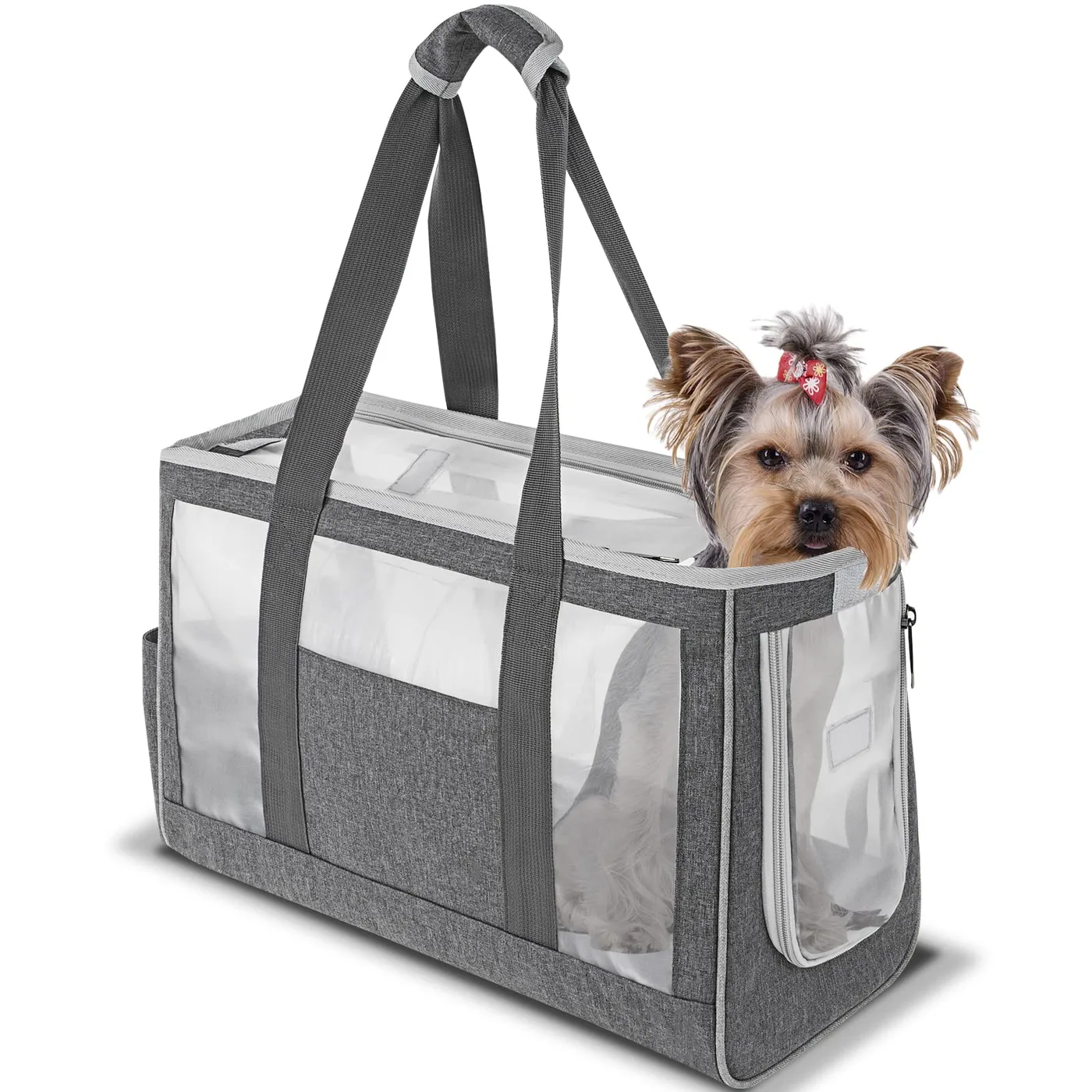
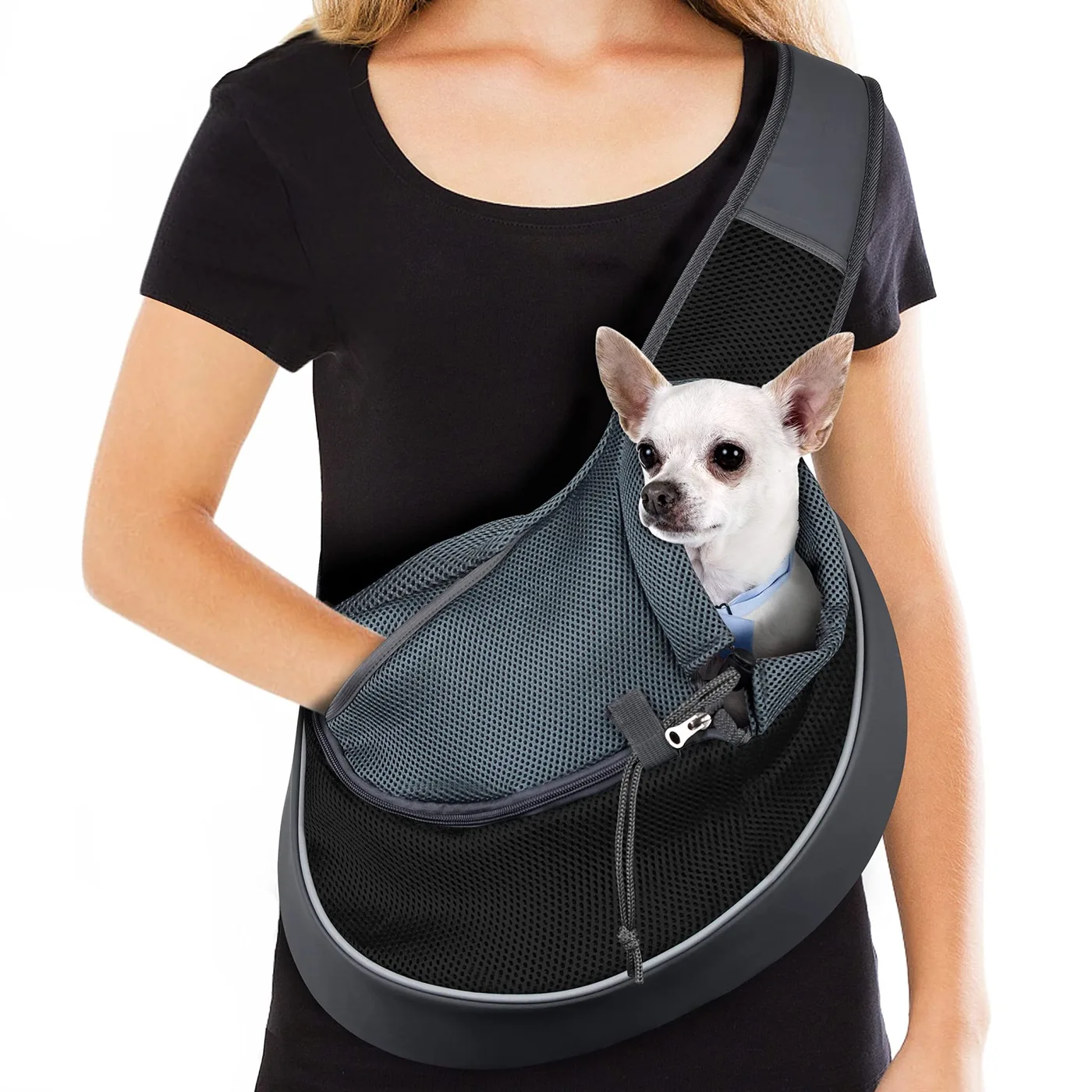
Ventilation on a rescue bag is an animal-safety requirement, not a comfort feature. Animals entering a shelter are frequently stressed, may be hyperthermic, and may be travelling in a van without climate control for the cargo area. Three-sided mesh plus a top panel on a transport kit is the standard answer, and the mesh should be specified by aperture as well as by appearance: an aperture that a paw or a tooth can engage is a hazard, while an aperture that is too fine restricts airflow.
Containment is the paired requirement. Rescue animals may be unsocialised, frightened or in pain, and the closure has to resist an animal pushing from inside while remaining operable one-handed by a handler holding a lead. A two-stage closure, where a zip is backed by a clip or a hook-and-loop safety strap, is the usual solution and costs very little. Buyers should test the closure under load on a sample rather than trusting a product photograph.
Internal attachment points matter more in rescue work than in any other channel because an animal may need to be secured during transport. A short internal tether with a clip rated appropriately for the animal size range keeps an animal from lunging at an opening and costs a fraction of a dollar. The tether anchor is a load-bearing point and must be specified as such, with bar-tack reinforcement, because it is the part most likely to be under-built in a competitive quote.
- Mesh aperture sized against paw and tooth engagement, not against appearance.
- Two-stage closure: zip plus a secondary mechanical safety.
- Internal tether anchor bar-tacked and load-tested for the target size range.
- No internal loops or dangling webbing that a limb can catch.
- Top access for loading an unwilling animal without lifting it through a side opening.
Handlers will tell a buyer within a week whether a bag works. Building that feedback into the second order is easy if the first order was a controlled pilot of 500 units and painful if the first order was a fleet-wide rollout of five thousand. A short pilot phase is therefore the cheapest form of product development available to a fleet buyer, and suppliers who resist small pilots are usually signalling that their specification is not actually validated for the duty cycle.
Weight is an underrated selection factor in this channel because handlers carry bags for extended shifts and often alongside other equipment. A transport kit approaching two kilograms empty is a real burden over a twelve-hour response day, and the weight usually comes from an oversized base board rather than from the shell. Specifying the board thickness needed for the actual load, rather than the thickest board available, protects the handler without weakening containment.
MOQ planning, budgeting and funding-cycle timing
MOQ 500 per colour is the floor, and for most rescue organisations the real question is how to reach it without over-buying. Two approaches work. The first is to consolidate with partner organisations in the same region, which is common and which suppliers can support by shipping split cartons to multiple addresses from a single production run. The second is to run a two-year specification and order the full quantity once, which removes price and colour-matching risk across funding cycles.
Funding cycles dictate timing more than demand does. Grant disbursement, corporate donation campaigns and municipal contract awards all land on calendars that have nothing to do with factory capacity. A buyer who places an order in the month the funds clear will frequently find the 35-50 day bulk window colliding with a seasonal peak. Reserving capacity at quotation stage, and confirming the sample approval date against the disbursement date, prevents the most common schedule failure in this channel.
Price validity matters as much as price level for grant-funded buyers. Fabric and freight markets move, and a quote that expires before the grant is awarded is not a budget number. Buyers should ask for a stated validity period and for the specific assumptions behind it, then treat any order placed outside that window as a fresh quotation rather than an expectation. Our production team holds quotes with a defined validity window and flags the inputs, such as fabric index and freight, that would trigger a revision.
Finally, plan for replacement from the first order. Rescue bags are consumable assets with a finite wash and disinfection life, and the organisations that budget a fixed annual replacement percentage never face the crisis of a fleet arriving at a disaster response with half its bags unusable. A practical approach is to tag each unit with an intake date at distribution, record wash cycles in the fleet log, and retire units on a cycle count rather than on appearance, because coating degradation is rarely visible until it is already advanced.
Buyers should also consider how the bag specification reads to an auditor. Funded programmes increasingly have to demonstrate that equipment purchases followed a documented process with defined criteria. A written specification that names disinfectant tolerance, wash rating, seam construction and closure type, with the test method for each, converts a subjective purchase into a defensible one and shortens the reporting cycle after every disbursement.
Inspection, sample validation and acceptance criteria
Inspection to AQL 2.5 covers appearance and workmanship, but rescue bags need additional gates that a general-purpose inspection protocol does not include. The first is the wash test: pull units from the production run, run the stated cycle, and inspect for coating haze, seam creep and hardware corrosion. The second is a closure endurance test: open and close every closure fifty times and confirm that the secondary safety still engages. The third is a load test on the tether anchor and strap anchors at the target animal weight.
Sample validation should happen before any of this. A 6-10 working day sample is an opportunity to run the full duty cycle in miniature: load it, wash it five times, disinfect it five times, drag it across concrete. Buyers who perform this validation catch coating and hardware problems while they are still cheap to fix. The most common finding is that the zip specified for the closure is not the zip that survives chlorine exposure, and that discovery is worth the sample cost ten times over.
Acceptance criteria should be written into the purchase order rather than left to the inspection report. A buyer who states that coating haze after fifty wash cycles is a rejectable defect has an enforceable position; a buyer who relies on a general AQL 2.5 appearance inspection does not. We recommend that fleet buyers add a short technical appendix to the order covering wash, disinfection, closure cycles and anchor load, with the test method named for each.
Documentation closes the loop. Wash-test reports, chemical compliance reports for the shell and lining, and a retained reference sample from the approved production run give the buyer an objective basis for comparing the next order. Retained samples cost nothing and end almost every dispute about whether the bulk shipment matched the approved specification.
Branding, packing and distribution for rescue organisations
Branding on rescue bags serves identification more than marketing. A sponsor logo is often a condition of funding, but the operational requirement is a writable or sleeved ID area that survives washing and a durable mark that lets lost units be returned. Woven labels and heat-transfer marks both work; heat-transferred marks on a TPU shell need a compatible ink system or they will lift under hot wash, and that compatibility should be confirmed on a sample.
Packing configuration depends on distribution. A national organisation shipping to a hundred partner shelters needs individual polybags and a shipper carton sized for parcel networks. A regional fleet distributing from one warehouse needs bulk packing with minimal packaging waste, which is both cheaper and better aligned with the environmental policies many funders now apply. Buyers should state the distribution model at quotation stage because it changes carton specification and unit cost.
Kitting is a meaningful margin opportunity for distributors serving this channel. A rescue starter kit combining the bag with a muzzle, a slip lead, a foil blanket and a printed intake card addresses a real operational need and sells at a multiple of the bag price. Kitting at the packing stage means the distributor receives a finished, shelf-ready unit rather than managing a second assembly step.
The last consideration is end-of-life. Organisations increasingly report on waste, and a bag built from a mono-material shell with a removable board is easier to dispose of responsibly than a multi-material laminate. That is not yet a purchasing requirement in most tenders, but it is appearing in corporate-funded programmes and is worth raising during specification.
Production capability
- SGS-verified production space of 4,950 m², 149 machines, 7 assembly lines
- Pet bag output since 2014 from a 137-person team
- 200,000 units shipped monthly under BSCI and ISO 9001 systems
People Also Ask
How many bags does a rescue fleet need per vehicle?
Most fleets allocate two intake kits and one transport kit per responding vehicle, plus a 20 percent reserve held at the base for soiled units waiting on a wash cycle.
What size bag suits an unknown intake animal?
An 18-22 litre intake kit covers the majority of adult dogs encountered by general rescue fleets, with the transport kit reserved for large-breed cases and multi-animal movements.
Why do rescue bags need writable ID areas?
Animals move between handlers, vehicles and partner organisations during a single day. A writable TPU sleeve that survives washing keeps the animal record attached to the bag throughout that chain.
Are mesh panels safe for frightened animals?
Yes when the aperture is specified against paw and tooth engagement. Too fine restricts airflow; too open creates a catch hazard for a stressed animal.
Can rescue bags be used for air transport?
Bags are suitable for ground movement and waiting-room containment. Air movement is governed by live-animal regulations that the carrier applies to the container, so confirm acceptance with the airline before planning air transport.
Frequently Asked Questions
What is the MOQ for rescue bags and can we split colours?
MOQ is 500 pieces per colour. Splitting a 1,000-unit order across two colours means two fabric minimums; most fleets buy one colour and use the ID sleeve to distinguish teams or partner organisations.
Which disinfectants can the shell tolerate?
TPU-laminated shells are tested against bleach dilution and potassium peroxymonosulfate at shelter-standard concentrations. Standard PU coatings are not suitable for parvovirus protocols and should not be specified for fleet use.
Can rescue bags be machine washed at high temperature?
Yes, on the TPU-laminated specifications. The stated rating is fifty cycles at 60 degrees for intake and transport kits, validated on a production sample rather than a fabric swatch.
How long does a bulk order take to produce?
Bulk production is 35-50 days after sample approval and deposit, with the longer end applying to reinforced transport kits and to orders scheduled in a seasonal peak.
What inspection standard do you work to?
Inspection is to AQL 2.5 for appearance and workmanship, plus defined wash, closure-cycle and anchor-load gates for fleet orders. Buyers should attach a technical appendix naming the test method for each gate.
Do we need three bag sizes for a mixed intake?
Rarely. Two SKUs, an intake kit and a transport kit, cover the overwhelming majority of cases and produce better pricing than four sizes at low volume each.
What hardware finish resists chlorine washing?
A corrosion-resistant finish on sliders and rings is required for chlorine-bearing wash regimes. Unfinished zinc alloy will show visible corrosion within roughly ten hot wash cycles.
Can you ship split cartons to multiple partner shelters?
Yes. A single production run can be packed and shipped to multiple addresses, which is how regional consortia usually reach the 500-unit minimum without over-buying.
What is the wash-cycle rating based on?
Fifty cycles at the stated temperature with inspection for coating haze, seam creep and hardware corrosion at ten-cycle intervals, performed on a production sample pulled from the run.
How should we budget for replacement?
Track cost per placement rather than cost per bag. A higher-specification bag surviving sixty placements usually beats a cheaper bag surviving twenty, and the metric is defensible to grant reviewers.
What payment terms apply to NGO orders?
Standard terms are T/T 30/70 against FOB Xiamen. Quotes carry a stated validity window with the fabric and freight assumptions flagged, which matters when funding is released on a grant calendar.
Is a hands-free field kit different from an intake kit?
Yes. Field kits trade volume for mobility and use a lighter ripstop shell, with a lower wash rating. They are specified for quaternary disinfection rather than the bleach protocol used on intake and transport kits.
Talk to QUANZHOU JUNYUAN BAGS about a wholesale pet bag order: MOQ 500 pieces per colourway, samples in 6-10 working days, bulk production in 35-50 days under AQL 2.5 inspection.
Get a free quote Request a sample