Wholesale Dog Carriers: Range Planning by Size Band
Short answer: plan wholesale dog carriers in four weight bands rather than as a list of SKUs: 3-6 kg, 6-11 kg, 11-20 kg and 20-30 kg. Interior length should run at roughly 1.35 times the animal's body length, and opening depth allocation of 20/40/25/15 percent across the bands matches most import markets.
A range built by adding SKUs until the spreadsheet looks full is a range that underperforms, because it spreads the opening order across variants nobody asked for and leaves the band that actually sells permanently out of stock. This guide is written for importers, distributors and chain buyers assembling a wholesale dog carriers range for a defined market and needing the first buy to match real demand rather than catalogue symmetry. QUANZHOU JUNYUAN BAGS has built pet bag programmes since 2014, with a founder in the trade since 2004, and works to a fixed commercial frame: MOQ 500 per colourway, samples in 6-10 working days, bulk production 35-50 days after sample approval and deposit, AQL 2.5 final inspection, T/T 30/70 and FOB Xiamen. Our production team operates from an SGS-verified production base of 4,950 square metres with 7 lines, 149 machines and 137 staff at around 200,000 pieces monthly under BSCI and ISO 9001. The sections below work from weight-band arithmetic through depth allocation, colourway strategy, minimum constraints, channel differences and reorder triggers. Get the band structure right and every subsequent order becomes a calculation rather than a guess.
Pet bag retail buyers and pet bag wholesale business owners look at the same unit cost from opposite ends, and Pet Bag Types & Styles is where those numbers meet. Pet bag procurement teams normally fix quality first and negotiate price second, which is why pet bag supplier selection is really a documentation exercise.
Why Size Bands, Not SKU Counts, Structure a Working Range
A SKU is a stock-keeping unit; a size band is a demand segment. The distinction matters because demand in this category is distributed by animal weight, and animal weight is not distributed evenly. In most import markets the middle of the distribution is heavier than new entrants assume, and the tails behave differently again: the small end sells fast and returns often, the large end sells slowly and returns rarely.
Ranges built by SKU count tend to produce one style in five sizes, which means five sets of patterns, five cutting nests, five carton specifications and five inventory lines, all sharing one aesthetic. When the aesthetic is wrong, the whole range fails together. When it is right, the range is still over-complex relative to the demand it addresses.
Ranges built by band start from the demand side. You decide how many dogs in your market fall into each weight interval, decide what share of the range each interval deserves, and then decide how many styles are needed to serve each interval. Often the answer is that one construction serves two adjacent bands with a size scale, and a different construction serves the top band, because the load case has changed rather than the aesthetics.
The band view also fixes the reorder problem. A SKU-based range reorders on whatever sold, which produces a lumpy, unpredictable buy. A band-based range reorders against a target distribution, which is a controlled buy. Over three seasons the difference in working capital and in stock-out frequency is substantial.
There is a final advantage in development cost. Each distinct size band needs its own sample, its own fit check and its own carton specification. Band planning tells you which of those are genuinely necessary and which are variations on an approved pattern, and that judgement is worth several sample rounds across a programme.
Weight Bands and the Interior Dimension Arithmetic
The arithmetic starts from the animal, not from the bag. A dog lying down occupies a length roughly equal to its body length measured from the base of the tail to the front of the chest, plus clearance. Practical interior length is about 1.35 times body length, and interior height should allow the animal to sit without compressing the top panel, which for most breeds is roughly 0.6 to 0.7 of body length.
| Weight band | Typical body length (cm) | Required interior length (cm) | Interior height (cm) | Suggested opening depth |
|---|---|---|---|---|
| 3-6 kg (small) | 36-44 | 50-58 | 30-34 | 20% |
| 6-11 kg (medium-small) | 44-56 | 58-72 | 34-40 | 40% |
| 11-20 kg (medium-large) | 56-70 | 72-90 | 40-48 | 25% |
| 20-30 kg (large) | 70-84 | 90-108 | 48-56 | 15% |
The depth column is the one that surprises buyers. The 6-11 kg band carries the largest share in most markets because it covers the widest set of common breeds and because the resulting bag is still portable by an average adult. The 3-6 kg band sells quickly but is heavily contested and price-sensitive, and it also carries the highest return rate, because owners of small dogs frequently discover the fit is marginal.
The 20-30 kg band is the one most often omitted and most often regretted. Volume is low, but so is competition, and the customers in that band are underserved enough to pay a meaningful premium. Because the band is small in units, it is also the one most likely to be cut by a minimum-order constraint, which is addressed below.
Interior height deserves more attention than it gets. Owners judge fit visually and returns are driven by the animal being unable to sit or turn. A bag with generous length and tight height fails more often than the reverse, and the fix is cheap at development stage and impossible after tooling.
General husbandry and transport guidance published by the American Veterinary Medical Association is a useful reference point for what constitutes adequate space, and restraint and containment performance data from the Center for Pet Safety is worth reading before committing to any load-bearing claim in the large band.
Depth Allocation: How Many Styles Each Band Actually Needs
Depth means distinct constructions within a band, not colourways and not sizes. A common error is to read a 40 percent depth allocation as 40 percent of the SKU count, when it should be read as 40 percent of the opening inventory value. Those are different numbers once unit costs differ, and they differ considerably across bands.
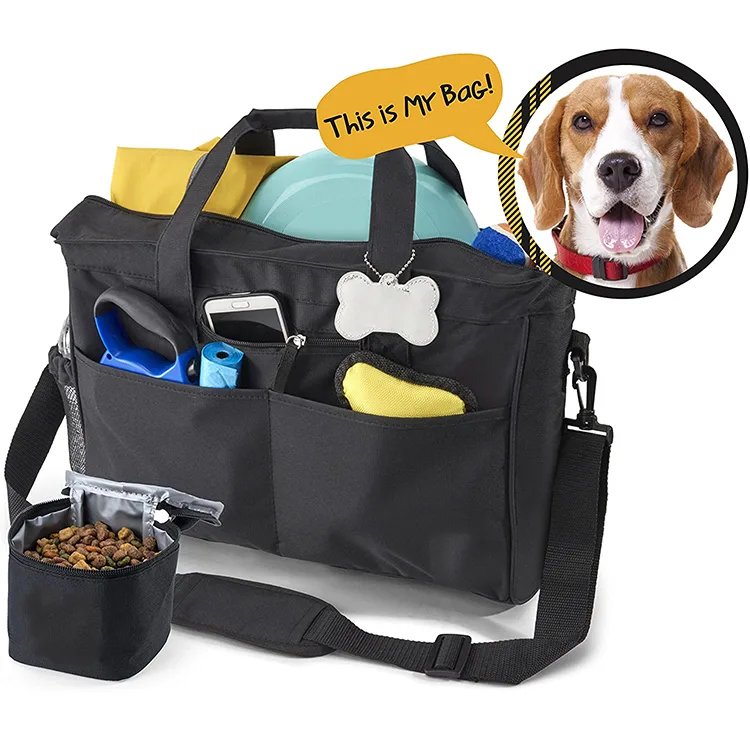
The 6-11 kg band usually justifies two constructions rather than one. One is a soft everyday carrier aimed at urban use and short trips; the other is a more structured travel format aimed at longer journeys and car use. The two serve different use cases at the same animal weight, and splitting them prevents the compromise product that serves neither well.
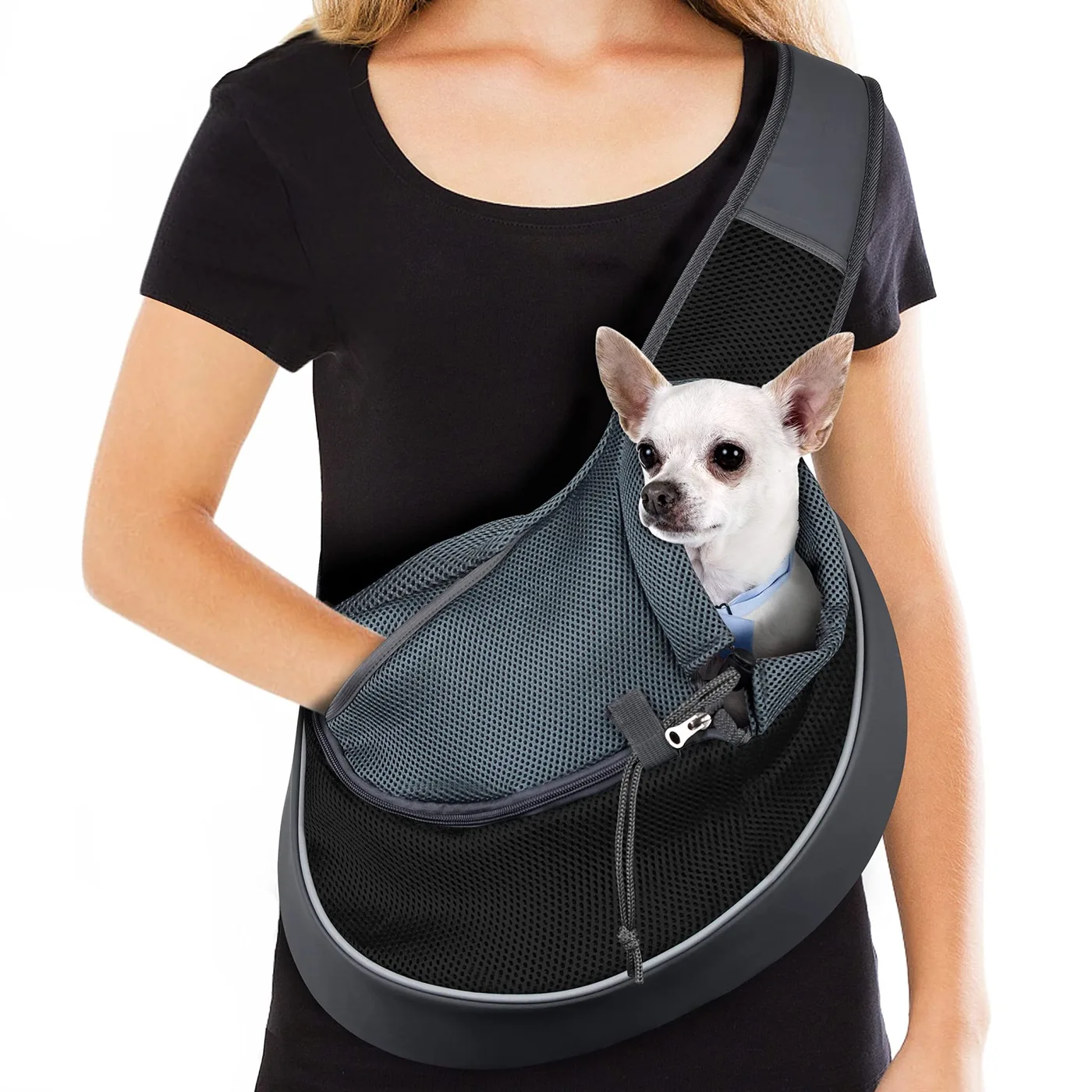
The 3-6 kg band justifies one construction with strong colourway breadth. Small-dog owners buy on appearance more than on specification, and the band rewards variety in colour and print rather than variety in structure. Spending development budget on prints rather than on a second shell is usually the higher return here.
The 11-20 kg band justifies one robust construction with a genuine reinforcement story. This is the band where load failures appear, where handle-root bar-tacks matter, and where a webbing rating below the load case produces warranty claims. Put the engineering money here rather than in the band below it.
The 20-30 kg band justifies one construction, shared with the band below wherever geometry allows. A large carrier is frequently a scaled medium carrier with heavier webbing, a reinforced base board and a wider strap. Sharing the pattern family across the top two bands halves the development cost of the top band and keeps the aesthetic consistent on shelf.
Colourway Strategy Inside a Size Band
Colourway is where range planning meets the minimum. A colourway is a dye lot, a line changeover and an inventory line, and each of those costs money whether or not the colour sells. The default error is to offer the same four colourways across all four bands, which produces sixteen inventory lines from four constructions and guarantees that several of them will be slow.
The better structure is asymmetric. Offer four colourways in the highest-volume band, three in the second, two in the third, and one or two in the top band. The reasoning is arithmetic rather than aesthetic: colour variety pays where turnover is high and costs where turnover is low, because slow colourways in slow bands are dead inventory with a dye lot attached.
Neutral tones should be present in every band. Black, grey and navy carry the majority of volume in most markets and they are the safe component of any buy. Fashion colours belong in the fast band, where a miss is absorbed by turnover, and should be tested in small quantity before being given a full allocation.
Prints and patterns are a separate decision from colourways and they behave differently. A print is a fabric purchase with its own minimum, often larger than a plain colour minimum because the print run is its own production event. Treat prints as a tested add-on in one band rather than as a range-wide option in the first season.
Finally, keep colourway naming and coding consistent across bands. A navy in the small band and a navy in the large band should be the same navy, matched to the same reference, because retailers and marketplace listings present them side by side and a visible mismatch reads as a quality problem even though no quality problem exists.
Where the 500-Piece Minimum Bites Hardest by Band
A minimum of 500 pieces per colourway is a production threshold, and its effect on a range plan is entirely determined by how many bands and colourways sit beneath it. Four bands with an average of 2.5 colourways each is ten colourway lines at 500 pieces, which is 5,000 pieces before a single unit has sold. That is a real commitment for a first season.
The constraint bites hardest in the top band, because the top band has the lowest turnover and the same minimum. A 20-30 kg carrier at 500 pieces in one colourway may represent two years of demand in a mid-sized import market. Buyers either omit the band, which loses the premium segment, or carry the inventory, which ties up capital for years.
Three mitigations exist. The first is to run the top band on a shared base fabric with the band below, which reduces the dye-lot argument for a reduced minimum. The second is to accept a higher unit price on a reduced quantity, which is often cheaper in total than carrying three years of stock. The third is to consolidate the two upper bands into one construction with a size scale, which halves the number of minimums in the low-turnover region.
The constraint bites least in the middle band, where 500 pieces may be a single month of demand. That asymmetry is the argument for concentrating colourway breadth in the middle and restricting it at the extremes, and it is also the argument for renegotiating the minimum per band rather than globally once the programme is established.
Buyers who buy dog carriers in bulk for more than one market can also pool: a colourway minimum applied across two destination markets is easier to satisfy than the same minimum applied twice, provided the specification is identical. Consolidating demand before negotiating the minimum is the cheapest structural saving in a multi-market programme.
Channel Differences: Specialty, Grocery and Marketplace
The same range plan produces different results in different channels, and the band distribution is one of the things that changes. Pet specialty retail skews towards the middle and upper bands, because customers shopping in a specialty store are more likely to own larger dogs and more likely to buy on specification. Discounted grocery and general merchandise skew smaller and more price-driven.
Marketplaces sit in between but with a distinct pattern: the small band sells in volume and generates the majority of reviews, returns and price competition, while the upper bands sell steadily at better margin with far less competition. A marketplace-only range that omits the upper bands is leaving the profitable part of the category to somebody else.
Presentation requirements differ by channel as well. Specialty and chain retail frequently require retail-ready packaging and a defined carton, which constrains carton cube per band and therefore constrains how much of the range fits in a container. Marketplace fulfilment requires individual polybagging, barcoding and a carton that survives piece handling.
Price architecture differs too. Specialty channels expect a good-better-best ladder within the range, which means three price points per band rather than one. Marketplace channels reward a single well-reviewed construction per band with strong variation in colour, because search results consolidate on the listing that has accumulated reviews.
The practical implication is that a range plan should state its primary channel at the top. Buyers running wholesale dog carriers into two channels simultaneously usually need two band distributions rather than one compromise, and the cost of the second distribution is lower than the cost of a range that fits neither channel well.
Reorder Triggers and Reading Sell-Through by Band
Reordering on aggregate sell-through hides the problem, because a healthy total can conceal an empty band and a full one. The read should be by band, at the SKU level within band, and it should use two measures rather than one: weeks of cover remaining and rate of sale against the opening plan.
Weeks of cover tells you when you will run out. Rate of sale against plan tells you whether the plan was right. A band at three weeks of cover and 140 percent of plan is an emergency. A band at twelve weeks of cover and 60 percent of plan is a markdown. The two require opposite responses and produce identical totals.
Set the trigger by lead time, not by convenience. With bulk production 35-50 days plus transit, the reorder decision has to be made when roughly twelve to sixteen weeks of cover remain, depending on the lane. Buyers who reorder at four weeks of cover are buying air freight or losing the season, and the cost of either exceeds the cost of carrying a little more stock.
Then correct the distribution rather than the total. If the small band is running at 140 percent of plan and the large band at 60 percent, the second buy should shift allocation between bands, not simply scale both up. Over two or three seasons this correction is what turns a plan into an accurate model of the market.
Finally, distinguish a band problem from a colourway problem. Slow movement concentrated in one colourway within a fast band is a colour issue and is fixed by dropping the colour. Slow movement spread across all colourways in a band is a band issue and is fixed by reducing depth or rethinking the construction. Buyers who buy pet carriers wholesale across several markets should keep the read per market, because band distribution genuinely differs by country.
Turning the Band Plan Into a Container and a Calendar
A band plan is not finished until it has been converted into cube and into dates. The conversion is straightforward and it is where most plans fail, because it is done last and done approximately. Take the planned units per band, multiply by carton cube per unit for the construction in that band, and add a loading allowance of 6-10 percent.
The result usually changes the plan. A range heavy in the upper bands will consume far more cube per unit than one weighted to the middle, and a container constraint may force a redistribution that the demand analysis would not have chosen. That is a legitimate constraint and it should be resolved deliberately rather than discovered at booking.
Then convert to dates. Sample rounds at 6-10 working days each, bulk production 35-50 days, inspection, transit and destination handling give a total cycle that has to be laid backwards from the on-shelf date. Working backwards is the only reliable method, because working forwards from today produces a delivery date rather than a plan.
Peak season is the complication. Production capacity in the months preceding the main shipping seasons is booked early, and a plan that assumes a slot will be available in six weeks is frequently wrong. Book the slot on a rolling forecast rather than order by order, and treat the booking as part of the plan rather than as an administrative step after it.
The final step is to write the band plan down as a one-page document with units, cube, dates and reorder triggers per band, and to keep it updated after each season. Programmes that do this make better decisions on the third order than programmes that start fresh each time, and the accumulated record is what makes a wholesale cat carriers or wholesale dog carriers line predictable rather than speculative.
Where Cat and Dog Band Plans Diverge, and Where They Can Share
Most importers run both species lines through the same production base, and the band arithmetic differs enough that a shared plan usually produces two wrong answers rather than one right one. Cats occupy a far narrower weight interval, typically 2-9 kg against 3-30 kg for dogs, so a cat range needs two or three bands where a dog range needs four. Applying a four-band dog structure to cats fragments demand below the minimum, which is the same failure that bulk pet carriers programmes hit when one colourway is spread across too many variants.
The opportunity is in the shared platform. The interior geometry that serves a 6-9 kg cat is very close to the geometry that serves a 3-6 kg dog, and where the construction is identical the two can share a pattern, a cutting nest and a carton specification. That is the most effective way to reduce the number of minimums in a combined programme, because one colourway minimum can then be satisfied across both lines rather than twice.
Buyers who buy pet carriers wholesale for a single market often find the shared platform works commercially as well, because a small-dog carrier and a large-cat carrier sit adjacent on shelf and a consistent aesthetic across the two reads as a range rather than as two unrelated products. The risk is labelling: a carrier sold for both species must be dimensionally honest about both, and the weight claim on the label should be the lower of the two where they differ.
Carton cube is the second divergence. Cat formats skew rigid and dog formats skew soft, and rigid formats carry a cube penalty of three to five times per unit. A bulk dog carriers container and a wholesale cat carriers container are not interchangeable plans, and a combined shipment calculated on dog cube will come up short if a third of the units are shells. Plan the two lines on separate cube rows within the same container calculation and apply the loading allowance once, at the end, rather than per line.
The reorder cycles differ as well. Cat lines turn faster in the small bands and have no large band to carry; dog lines turn slowly at the top and fast in the middle. Reading the two together hides both patterns, so keep separate rate-of-sale records per species even where production is pooled. A pet carrier wholesale programme that pools production and separates demand reporting keeps the manufacturing benefit without losing the planning signal, and the packing mechanics behind it are set out in ordering bulk pet carriers by carton volume and in bulk order minimums.
Production capability
- SGS-verified production space of 4,950 m², 149 machines, 7 assembly lines
- Pet bag output since 2014 from a 137-person team
- 200,000 units shipped monthly under BSCI and ISO 9001 systems
People Also Ask
How many size bands should a dog carrier range have?
Four is usually right: 3-6 kg, 6-11 kg, 11-20 kg and 20-30 kg. Fewer leaves the profitable large segment unserved; more fragments demand beneath the minimum without adding coverage that customers notice.
How do I calculate interior dimensions from dog weight?
Start from body length rather than weight, since breeds differ. Interior length should be roughly 1.35 times body length and interior height around 0.6 to 0.7 of body length, so the animal can lie down and sit without compressing the top panel.
Which size band sells most in import markets?
The 6-11 kg band in most markets, because it covers the widest set of common breeds while the resulting bag stays portable. Opening depth of roughly 40 percent of inventory value in that band is a common starting allocation.
Should I offer the same colourways in every size band?
No. Offer more colourways in faster bands and fewer in slower ones. Four in the 6-11 kg band, two in the 20-30 kg band, and a neutral tone present in every band keeps variety where turnover absorbs it.
How does MOQ affect a large-dog size band?
The minimum applies per colourway in every band, so the lowest-turnover band carries the heaviest inventory burden. Mitigate by sharing base fabric with the band below, accepting a higher unit price on a smaller quantity, or consolidating the two upper bands into one construction.
When should I reorder each size band?
When roughly twelve to sixteen weeks of cover remain, depending on transit. Measure weeks of cover and rate of sale against plan separately by band, because a healthy aggregate figure can hide an empty band and an overstocked one.
Frequently Asked Questions
What is the difference between a size band and a size scale?
A band is a demand segment defined by animal weight; a scale is the set of physical sizes within one construction. Two adjacent bands can often share one construction with a size scale, which halves development and tooling cost.
Do large dog carriers need different construction?
Usually yes at the top band. Load case changes above roughly 20 kg, so webbing rating, handle-root reinforcement, base board support and strap width all need to increase rather than simply scaling the pattern.
How do I test whether a band fits before bulk production?
Use the sample round to check interior length and height against a live animal or a weight-equivalent load, not by eye. Fit failures are the leading cause of returns in the small band and the large band.
Is it better to omit the 20-30 kg band on a first order?
Not if your channel is pet specialty or marketplace, where the segment is underserved and carries a premium. If the minimum forces two years of inventory, share the construction with the band below and reduce the colourway count instead.
How many colourways should a first season carry?
Roughly ten colourway lines across four bands, weighted towards the faster bands. That is about 5,000 pieces at a 500 minimum, which is a realistic first-season commitment for most importers.
Do prints count against the same minimum as plain colours?
Often a higher one, because a print run is a separate fabric production event. Treat prints as a tested addition in one high-turnover band rather than a range-wide option in the first season.
How does channel choice change band distribution?
Pet specialty skews towards middle and upper bands and buys on specification; grocery skews smaller and price-driven; marketplace sells volume in the small band and margin in the upper bands. State the primary channel at the top of the plan. A wholesale pet carrier range that shares hardware across species also reduces the component count and the effective minimum.
Should the same construction serve two bands?
Yes wherever geometry allows, particularly across the two upper bands. A large carrier is frequently a scaled medium with heavier webbing and a reinforced base, which keeps shelf aesthetics consistent and halves development cost. Buyers who buy dog carriers in bulk for two markets can usually pool the minimum across both once the specification is identical.
How much cube does the large band add to a container?
Materially more per unit. Large soft carriers commonly run two to three times the carton cube of small ones, so a range weighted to the upper bands will fill a container at a much lower unit count than a middle-weighted range. Bulk pet carriers plans should therefore model cube band by band rather than on a range average.
What is a realistic opening allocation across the bands?
20 percent small, 40 percent medium-small, 25 percent medium-large and 15 percent large is a common starting point. Correct it after the first season using rate of sale against plan per band rather than aggregate sell-through. A pet carrier wholesale range that includes cats usually recovers the volume elsewhere.
How far ahead should I book production for peak season?
Book on a rolling forecast rather than per order, because capacity ahead of the main shipping seasons fills early. Treat the slot booking as part of the plan rather than an administrative step after it.
What should a band plan document contain?
Per band: target weight range, required interior dimensions, construction, colourway count, opening units, carton cube, unit cost, and a reorder trigger expressed in weeks of cover. One page, updated after each season. Wholesale pet carrier programmes running two channels should keep one plan per channel, because band distribution differs by channel.
Talk to QUANZHOU JUNYUAN BAGS about a wholesale pet bag order: MOQ 500 pieces per colourway, samples in 6-10 working days, bulk production in 35-50 days under AQL 2.5 inspection.
Get a free quote Request a sample