Wholesale Heavy Duty Pet Carrier: Reinforcement Points
Short answer: reinforcement must be placed along load paths, not spread evenly. Six points carry most failure risk in a wholesale heavy duty pet carrier: floor assembly, handle roots, strap anchors, wall-to-base corner, door opening and buckle mounts — each specified by material thickness in millimetres and verified by pull testing in newtons.
"Heavy duty" on a hangtag is a claim; on a specification it is a list of numbers attached to named locations. Most pet carriers that fail in service do not fail because the shell fabric was too light — they fail because whatever held the floor, the handle or the strap was thinner, narrower or less stitched than the load required. This guide maps where force concentrates in a loaded carrier, then sets measurable minimums for each of those places: base plate material and thickness, webbing width against verified breaking force, stitch density and bar-tack geometry, hardware anchoring methods, and wall framing for larger formats. It closes with the test sequence — pull, drop and cycle — that converts a reinforcement drawing into evidence, and with what each tier costs. Commercial framing here is unchanged by reinforcement tier: MOQ 500 per colourway, samples in 6-10 working days, bulk production 35-50 days after approval, final random inspection at AQL 2.5, T/T 30/70 against FOB Xiamen. QUANZHOU JUNYUAN BAGS has engineered pet bag programmes since 2014, with its founder working in the trade since 2004, through an SGS-verified production base of 4,950 square metres running 7 lines and 149 machines with 137 staff at approximately 200,000 pieces of monthly output, certified to BSCI and ISO 9001.
Wholesale pet carrier vet visits and wholesale pet carrier grooming lines are small-basket, high-repeat business, while Material & Technology decides whether one shell can serve both. Wholesale pet carrier travel and wholesale pet carrier camping units need opposite vent geometry, so a single pattern rarely covers both.
Durability Is Distributed Along Load Paths, Not Added Everywhere
The instinct when specifying a tougher carrier is to upgrade the shell — heavier denier, thicker coating, more panels. It is also usually the wrong first move, because structural failures in this category overwhelmingly occur at joints rather than at panel centres. A pet concentrates its weight on a small area of floor; a strap pulls on four square centimetres of webbing root; a handle lifts the entire load through two stitch groups. Panels between those points rarely see meaningful stress.
Practical consequence: money spent upgrading the whole shell buys less durability than the same money concentrated on six locations. A wholesale 600d pet carrier body with a properly engineered floor and anchors outlasts a 1680D body with naive construction, and weighs less and costs less. The corollary is that reinforcement cannot be specified by adjectives either — it needs drawings, dimensions and test values.
Load paths also explain why failures cluster. Every force acting on a carrier travels somewhere before it reaches the fabric: handle load travels down the straps into the body and terminates at the wall-to-base join; floor load travels outward to the corners and then upward; door tension travels around the opening. Each path has a terminus, and the terminus is where specifications must be precise. The six critical locations named in the summary above are precisely the termini.
There is a second reason to think this way. Reinforcement anywhere except a load path adds weight, bulk and sewing time while contributing nothing measurable, and heavier products generate their own complaints — carriers that are difficult to lift into a car are returned regardless of how well they survive. Removing unnecessary reinforcement is often as valuable as adding necessary reinforcement.
The practical method for any new programme therefore begins before costing: build a rough load map on the initial drawing, mark where each force terminates, and write one line of specification per terminus. That single spreadsheet is the difference between a bag that survives three years and one that survives three months, and it costs an afternoon.
Mark every load-path terminus on the development drawing and attach a dimension and a tested newton value to each, because reinforcement specified anywhere else is weight without benefit.
Where Force Concentrates Inside a Loaded Carrier
Understanding concentrations requires thinking in terms of a loaded bag rather than an empty one, and in terms of dynamic rather than static load. A fifteen kilogram animal does not rest evenly: it shifts, stands, turns and presses against walls, so imposed forces exceed its body weight substantially.
The floor carries the largest share and receives the least engineering attention. Standard practice is to size the base assembly for three times the stated animal weight, since a settling animal momentarily imposes far more static load than its mass suggests. For programmes with heavy-dog positioning the working assumption is 45 kg regardless of stated maximum.
Handles and shoulder straps carry the second largest share, and they differ in character. A handle imposes a short, sharp impulse — lifting from the ground into a vehicle — with a peak considerably above static weight. A shoulder strap imposes sustained lower-grade load with abrasion at the contact areas, failing by gradual wear rather than sudden fracture.
Wall-to-base corners are the third. All floor load must eventually turn ninety degrees into the walls, and that turn concentrates force into the seam line and whatever reinforcement sits behind it. Corners also take abrasion from being dragged and set down, so they need both strength and protection.
Door openings are fourth, particularly on soft carriers where mesh or zipped panels sit under tension from an animal pressing outward. Tension at the opening pulls across the zipper line and down its ends, and both termini need reinforcement for zipper longevity. This is one reason heavy-duty programmes often specify binding rather than simple turning along the panel edge.
Finally, buckle and ring mounts — externally small but locally severe, because the hardware concentrates whatever load travels through the strap into a few millimetres of fabric. D-ring pull-out is the most common single defect found during destructive testing of otherwise reasonable carriers.
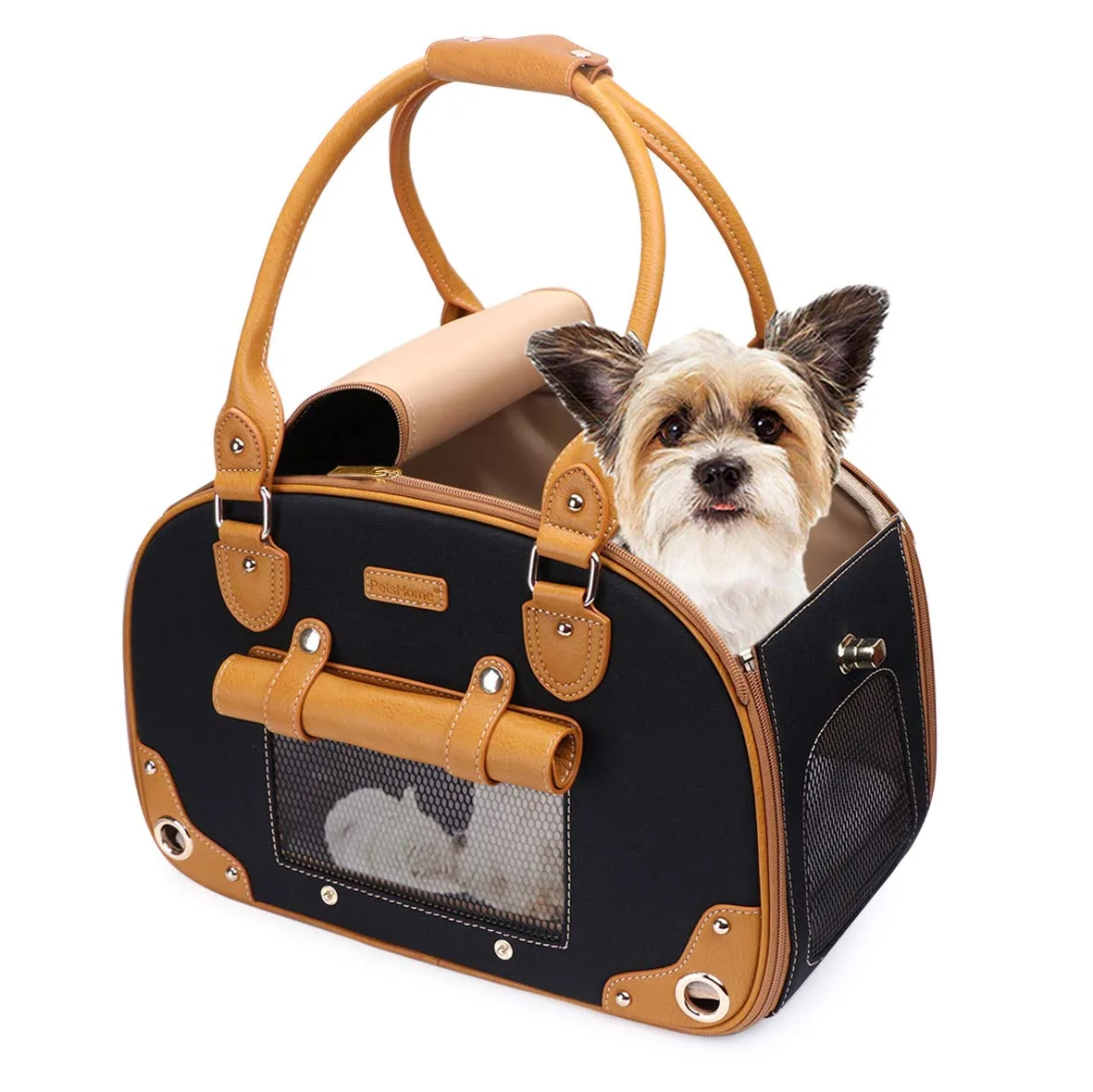
Floor Assembly: Substrate Thickness, Spread and Deflection Limits
The floor does two jobs: prevent deflection between support points and spread point loads. Both are functions of the substrate rather than the covering, and both are cheap to specify correctly.
| Substrate | Thickness (mm) | Density or grade | Deflection at 30 kg over 400 mm span | Typical pet weight band |
|---|---|---|---|---|
| PP hollow board | 4.0-5.0 | 600-900 g/m2 board | 10-16 mm | Up to 8 kg |
| EVA closed-cell sheet | 8.0-10.0 | 60-90 kg/m3 | 6-10 mm | Up to 12 kg |
| EVA plus PP laminate | 6.0 board + 6.0 foam | Composite | 4-7 mm | Up to 20 kg |
| Moulded HDPE tray | 2.5-3.5 wall, ribbed | Injection moulded | 3-6 mm | Up to 25 kg and working lines |
A deflection limit is the honest specification, because "rigid" means different things to different people. Measuring centre deflection under a stated load across a stated span is objective: loaded with the maximum stated pet weight, centre deflection should not exceed eight millimetres, and should recover to within two millimetres of original after ten minutes unloaded. Anything beyond that is felt by the animal as instability, and animals that feel unstable scratch.
Cover matters less than substrate but still matters. A removable cover with a stiffener pocket allows washing and keeps the board accessible for replacement, whereas a permanently sewn-in board traps moisture and eventually delaminates from the inside. For any programme with washability claims, insist on the removable pocket; on wholesale waterproof pet bags whose base seams are sealed, the board pocket must also be sealed independently, because a wet compartment wicks into the board long before the outer shell shows any sign of leaking.
Spread is the second function and is frequently ignored: a concentrated load on thin board punches through even when total deflection looks acceptable. A non-slip, slightly textured surface also reduces the animal's tendency to slide, which reduces the dynamic component of load by more than any material upgrade.
Corner construction decides whether the board stays where it should. A board simply dropped into a fabric sleeve migrates and eventually stands on one corner; a board retained by webbing tabs sewn into the walls, or by a fully bound internal sleeve, stays square for the life of the product.
Specify substrate thickness together with a measured deflection limit under a stated load and span, since "rigid" is unverifiable and eight millimetres is not.
Webbing Width and Verified Breaking Force
Webbing is the quiet workhorse of every heavy-duty design and the component most often undersized because it looks adequate. Specification should cover three things: width, base polymer and verified breaking force, with bartack-strength retention stated separately.
Polyester and polypropylene behave differently. Polyester retains strength when wet, resists ultraviolet degradation reasonably and takes dye well, but costs more. Polypropylene is cheaper and floats, yet loses strength with prolonged ultraviolet exposure and has lower melting point, which matters for programmes sold into hot climates with outdoor use. Nylon sits between on price, has excellent abrasion resistance, but absorbs water and loses some strength when saturated.
Width should follow load with an explicit safety factor. Working rules for strap and handle applications: 25 mm polyester for light lines up to 8 kg working load; 32 mm for 8 to 15 kg; 38 to 50 mm above 15 kg, or where the same strap serves as both handle and shoulder carry. Breaking force should be at least five times the maximum working load, since dynamic peaks, abrasion and stitching losses all eat into nominal strength.
| Webbing | Nominal breaking force (N) | Max working load at 5:1 (kg) | Typical application | Notes |
|---|---|---|---|---|
| 25 mm polyester | 1,200-1,800 | Up to 25 | Adjusters, light handles | Seam retention usually 70-80 percent |
| 32 mm polyester | 1,800-2,600 | Up to 40 | Standard handles, strap bodies | Balanced cost-to-strength |
| 38 mm polyester | 2,600-3,600 | Up to 60 | Large-breed handles | Needs #5 or larger hardware |
| 50 mm polyester | 3,600-5,000 | Up to 80 | Working lines, haul handles | Bar-tack area often becomes the limit |
The critical correction most specifications miss is joint efficiency. A webbing rated at 2,000 N does not deliver 2,000 N once it is stitched to a panel; stitch holes cut filaments and the joint typically retains 70 to 80 percent of nominal strength depending on pattern and thread. Specifying "webbing breaking force 2,000 N and sewn-joint retention not less than 70 percent of nominal" is the difference between a strap that holds and one that pulls off.
Hardware must be matched rather than merely attached. A 38 mm strap through a buckle rated for 25 mm will deform the buckle long before the webbing is remotely loaded, so specify the hardware load rating alongside the width, and remember that steel hardware is materially stronger than the acetal resin commonly used to save weight.
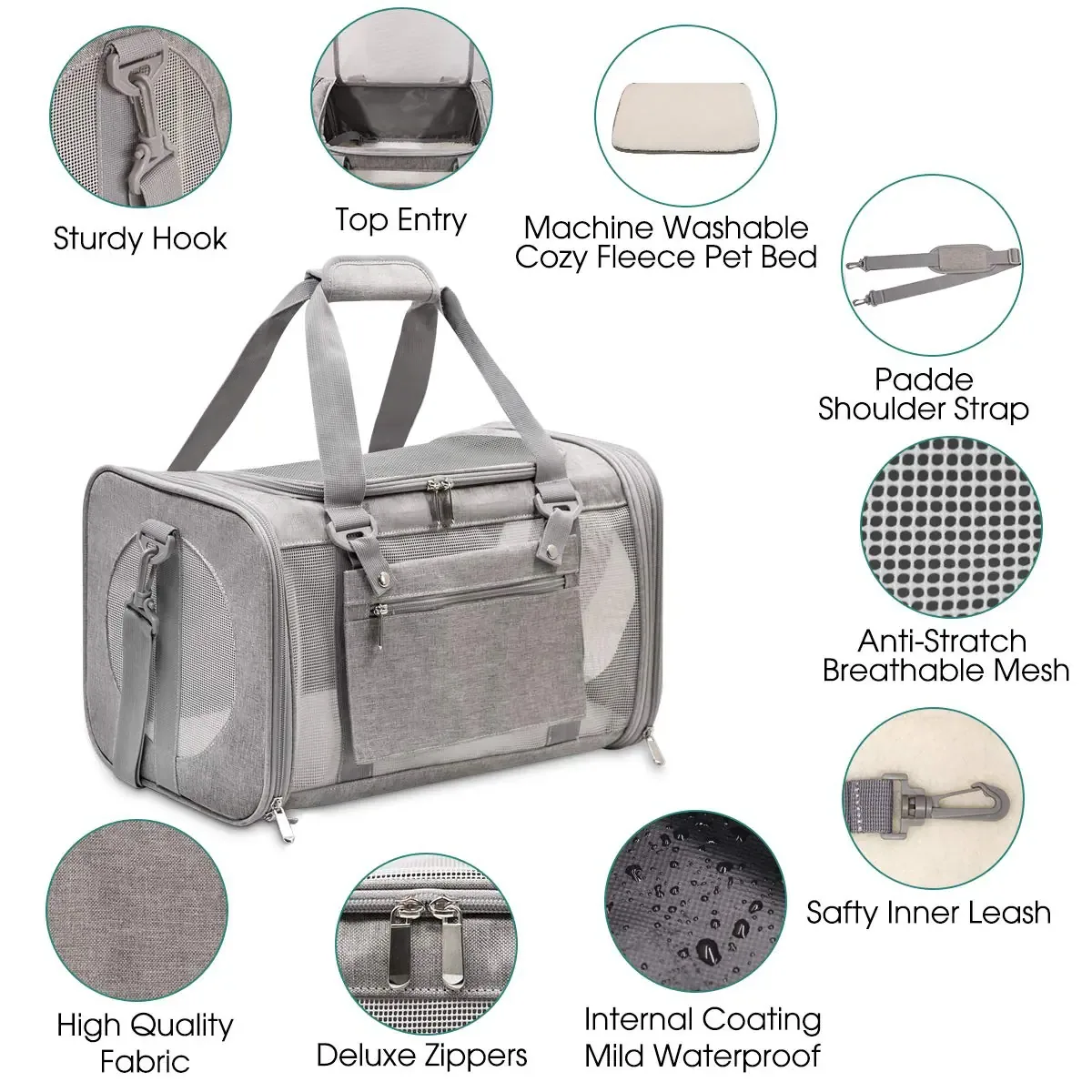
Stitch Density, Thread and Bar-Tack Geometry
Stitching converts material into structure, and most reinforcement failures are stitch failures wearing a different name. Three variables govern it: stitches per inch, thread specification and the geometry of the reinforcement stitches.
Stitch density interacts with fabric weight in a way that surprises buyers. Too few stitches per inch and the seams breathe apart under load; too many and the needle perforates so densely that it perforates the line, weakening the surrounding cloth — the classic case being seam slippage where a high-density seam tears out along its own perforations. For pet carriers in the 600D to 1200D range, eight to ten stitches per inch on structural seams is the working band, rising modestly for lighter cloth and falling for heavier.
Thread matters more than most specify. Bonded filament polyester or nylon in the Tex 45 to Tex 70 range suits structural work; cotton-wrapped or staple-spun threads abrade through far faster. Thread should also be specified for ultraviolet resistance where products may spend time outdoors, because thread degrades earlier than fabric in sunlight, and the complaint always reads as a seam coming apart rather than as degraded thread. These parameters are all measurable, and many of the governing procedures are published by ASTM International, so a clause can simply cite the method rather than describe it.
Bar-tack geometry is where the real work happens at anchor points. A bar tack should extend at least three millimetres beyond each edge of the webbing it secures, be sewn in an X or box pattern with sufficient stitch count, and terminate on the load-bearing side of the panel rather than merely on a facing. A 25 mm strap needs a bar tack spanning 31 mm; a 50 mm strap needs one spanning 56 mm, plus a return pass in most cases.
Corner reinforcement deserves particular attention. Rounded corners distribute stress better than square ones, and a radiused corner with a reinforcement patch behind it outperforms a square corner with heavy stitching at every load level we have tested. Where programme designers insist on a square aesthetic treatment, the hidden cost is usually an extra patch and an extra row of stitching.
Finally, specify Class-of-stitch where relevant. A 401 chainstitch has elasticity that helps absorb dynamic load but unravels if one thread breaks; a 301 lockstitch does not unravel but is less forgiving. Consider specifying that structural seams are lockstitch and that cosmetic topstitching may be chainstitch, rather than leaving the choice to whoever sets up the line that week.
Completed structural assemblies should then be pull-tested, and the natural next question is how to set acceptance criteria — which the test section below answers directly.
Hardware Anchors: Rings, Buckles and Handle Roots
Hardware is where specification most often stops short. A supplier will record the webbing width and the stitch pattern but frequently leave anchor construction to the line, which means it varies between operators and between production runs. Three anchor types cover nearly all cases, and each has a construction that works.
D-rings and O-rings should never be sewn directly onto a panel. The correct construction is a webbing loop passed through the ring, doubled back, and bar-tacked across its full width with the bar tack landing on a reinforcement patch rather than on the outer shell alone. Rings mounted this way typically survive well above the webbing's own rating, while a ring sewn direct to the shell may pull out below a third of that figure.
Buckle mounts are subject to repeated cyclic loading rather than single events, so fatigue governs. A side-release buckle should be mounted on doubled webbing with a box stitch immediately behind it, and the mating strap should pass through the buckle rather than terminating at it. Specifying a minimum number of mating cycles — 3,000 cycles without cracking or loss of retention is a reasonable baseline — removes ambiguity about whether durable hardware means anything. Wholesale pet bags usa retail buyers increasingly request that documented cycle count before accepting a line, so recording it from the start avoids a second round of testing later.
Handle roots carry the highest single-event load in most carriers, and are best constructed as a continuous webbing loop running under the body rather than as two separate webbing ends stitched to the top. A continuous loop converts a peel force into a shear force and typically doubles measured strength at almost no material cost. Where appearance prevents a full under-body loop, extend the webbing at least a third of the way down the wall and bar-tack it there. On wholesale waterproof pet bags whose seams are taped, apply the tape after the anchor is sewn: tape laid over a dense stitch block bridges rather than bonds and creates the leak path it was meant to close.
Rivets and grommets belong in the conversation with caution. Metal rivets concentrate load into a small perimeter and cut through fabric under sustained pull; fabric-compatible washers behind them mitigate this considerably. Where rivets cannot be avoided, specify backing washers and test the finished assembly rather than trusting either component's individual rating.
Specify anchor construction in the tech pack — loop length, patch presence, bar-tack span and the cycles a mating buckle must survive — because constructions left to the line are the ones that vary between batches.
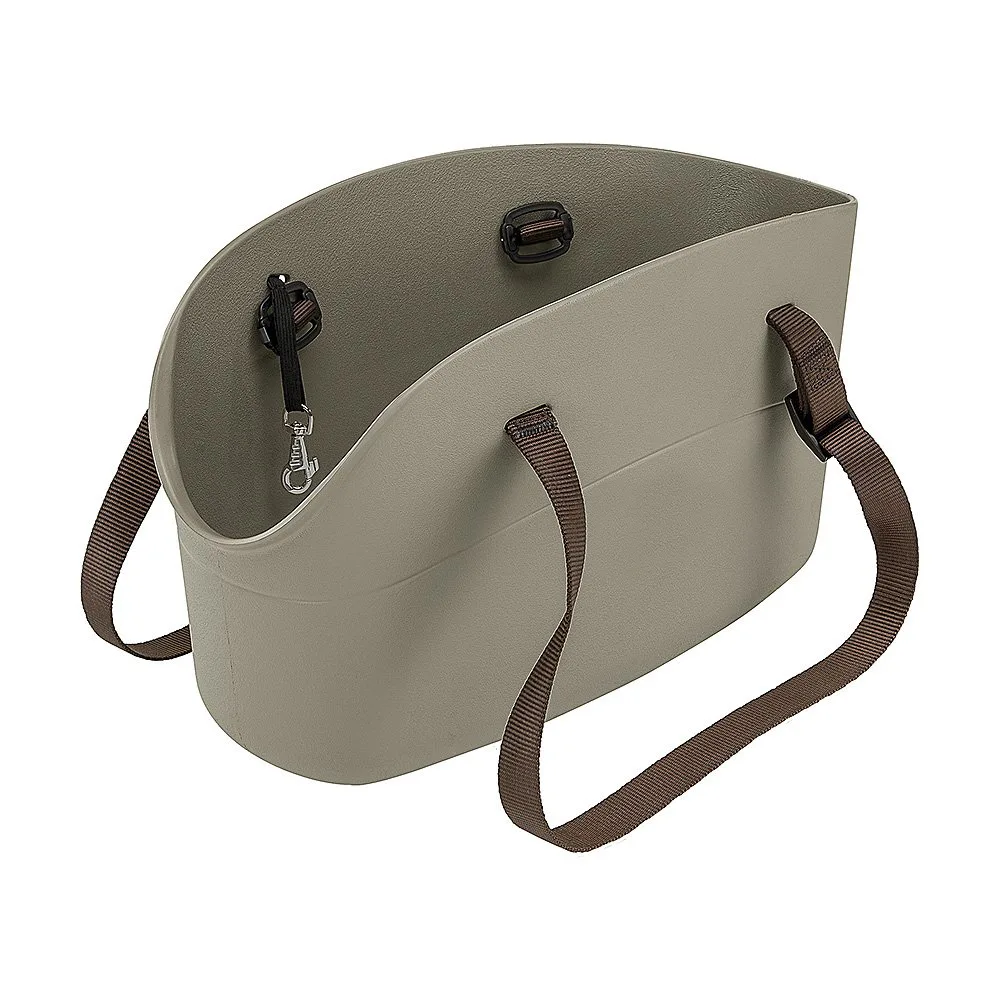
Wall Framing for Larger Formats
Above roughly 12 kg of carried weight, or above about 45 cm in any dimension, wall support stops being optional. Panels that look adequately stiff when empty bow noticeably once loaded, and bowing creates exactly the discomfort and instability that generates returns.
Three systems are in common use. The first is a perimeter frame: steel or plastic rod — often 3 to 5 mm diameter — set into bound channels at the top edge and sometimes around the base. It prevents collapse of the opening and keeps the silhouette rectangular. The second is internal framing members: flat plastic stays, commonly polypropylene or acetal, inserted into vertical sleeves at corners or panel centres. The third is a moulded tray integrated with base and lower walls, which gives the best load behaviour at highest tooling cost.
Corner posts deserve particular attention because they are the cheapest effective upgrade available. A 4 to 6 mm concealed post at each vertical corner roughly halves measured panel bow while adding negligible weight, and it also protects corners from abrasion when bags are set down hard.
The design tension is packability. Fully framed carriers hold shape beautifully and ship badly — they occupy their full volume in a container and cannot be compressed. A wholesale airline approved pet carrier range faces the constraint in its sharpest form, because the shell must compress into under-seat space while still protecting the animal, which is why removable rather than fixed stays are standard there. Programmes selling into channels where freight cube dominates the landed cost frequently choose partial framing plus removable base panels, accepting slightly less rigidity for a materially better container count. Where an entire range must fit inside a fixed shipping cube, our bulk container loading guide outlines how tested, framed SKUs compare with compressible ones.
Material choice for frames interacts with temperature and humidity. Hollow PP board softens in sustained heat; steel rod adds weight and corrodes if the finish is poor; acetal stays hold shape well but cost several times more than PP. Whichever is chosen, the specification should state the member diameter or cross-section so it can be verified rather than estimated.
Verification: Pull, Drop and Cycle Testing Before Release
Reinforcement that is drawn but never tested is decoration. The three test families below are inexpensive relative to what they prevent, and all can be run in-house or at modest cost by any competent laboratory.
Pull testing validates anchors and handles. The fixture is a simple frame and a slow-pull device; load the assembly gradually to three times maximum stated working load and hold for sixty seconds. Pet bags wholesale china programmes usually run this at the production partner rather than after shipment, because a failed result can still be corrected at that stage. Acceptance is no failure at the anchor, no permanent deformation greater than ten millimetres, and no visible thread breakage. Run at least five pieces per construction and record photographs, since records rather than recollections settle disputes.
Drop testing validates the floor and the corners together. Load each unit to maximum stated weight with a distributed mass, then drop from 500 millimetres onto concrete in three orientations — flat, on the longest edge and on a corner — once each. Acceptance is no seam opening, no substrate cracking and no hardware detachment. This test catches poorly retained floor boards and under-specified corner posts faster than anything else.
Cycle testing validates everything that moves. Two thousand cycles of opening and closing the main closure, five hundred cycles of buckle mating, and two hundred simulated lifts at maximum weight reveal fatigue failures that neither pull nor drop testing will find. Cycle testing is the one most often skipped and the one most predictive of year-two returns. Wholesale airline approved pet carrier lines need one further addition: a compression sequence that squashes the shell to under-seat depth and releases it repeatedly, with recovery required to within three millimetres of the original envelope, since that is the deformation end users notice first.
Test reporting should then be folded into the release process. Any reinforcement change triggers a retest; any new colourway using the same materials does not. Writing that distinction into the file prevents both unnecessary cost and unnecessary risk.
Finally, connect the results back to the defect classification used at final inspection, since reinforcement defects are frequently classified as minor workmanship rather than as critical structural failures, which is how a known weakness ships. The practical definition of each class is set out in our AQL acceptance quality limit note, alongside the sample sizes that keep inspection results honest across a 40HQ.
Why brands source here
- Pet bag programmes run since 2014; founding team in sewn goods since 2004
- SGS-verified production floor of 4,950 m² with 137 workers across 7 lines
- Monthly capacity of 200,000 units, audited to BSCI and ISO 9001
People Also Ask
What is the most reinforced part of a heavy duty pet carrier?
The floor assembly, because it carries the largest share of load and because point contact from claws concentrates force further. Specify substrate thickness plus a measured deflection limit under stated load, and size the whole assembly for roughly three times the maximum stated pet weight.
How do I test whether a handle will hold?
Pull-test to three times maximum working load and hold for sixty seconds, then check for anchor failure, permanent deformation above ten millimetres and thread breakage. Construct handles as a continuous loop running under the body wherever possible.
How thick should a pet carrier floor board be?
Around 4 to 5 mm for polypropylene hollow board up to roughly 8 kg carried weight, 8 to 10 mm of closed-cell foam up to 12 kg, and a composite or moulded tray above that — provided centre deflection stays within eight millimetres under maximum load.
What safety factor should pet carrier webbing carry?
Breaking force of at least five times maximum working load, remembering that the sewn joint commonly retains only 70 to 80 percent of the webbing's nominal strength, so both figures must appear on the specification.
Do I need framing in a soft pet carrier?
Above roughly 12 kg carried weight or 45 cm in any dimension, yes. Concealed corner posts of 4 to 6 mm are the cheapest effective upgrade, halving panel bow for negligible added weight and container cube.
How many bar-tacks does a strap anchor need?
One bar tack extending at least three millimetres beyond each edge of the webbing, sewn in a box or X pattern onto a reinforcement patch, plus a return pass for anything wider than 38 mm. Two smaller tacks are worse than one properly sized one.
Frequently Asked Questions
What makes a pet carrier genuinely heavy duty rather than marketed as such?
A load map with six named termini, each carrying a dimension and a tested newton value, verified by pull, drop and cycle testing on production samples rather than on prototypes alone. Most pet bag procurement teams adopt these three families as a fixed gate, and standards bodies such as ISO publish the quality-management framework that keeps the records auditable.
What stitch density should structural seams use?
Eight to ten stitches per inch for cloth in the 600D to 1200D range. Denser stitching does not mean stronger: over-perforating the seam line can cause the seam to tear out along its own needle holes.
Should I use chainstitch or lockstitch on load-bearing seams?
Lockstitch for structural seams, because it does not unravel if one thread breaks even though it is less elastic. Reserve chainstitch for cosmetic topstitching where its elasticity is harmless.
What thread should be specified for pet carrier reinforcement?
Bonded filament polyester or nylon in the Tex 45 to Tex 70 range, with ultraviolet resistance stated for products likely to spend time outdoors. Staple-spun threads abrade through far sooner.
Is polyester webbing better than polypropylene?
For most programmes yes: polyester retains strength when wet and resists ultraviolet degradation better. Polypropylene is cheaper and floats but degrades in sunlight and has a lower melting point, which matters in hot-climate outdoor use.
Why did a D-ring pull out of my carrier?
Almost always because the ring was sewn directly to the shell rather than mounted on a webbing loop passed through the ring, doubled and bar-tacked onto a reinforcement patch. The second construction typically survives several times the load.
Should I specify rivets for anchor points?
Only with fabric-compatible backing washers, because rivets concentrate load over a small perimeter and can cut through cloth under sustained pull. Always test the finished assembly rather than trusting either component's individual rating.
What drop test height is appropriate?
Five hundred millimetres onto concrete with the unit loaded to maximum stated weight, in flat, long-edge and corner orientations. Acceptance is no seam opening, no substrate cracking and no hardware detachment.
How many cycles should buckles survive?
At least three thousand mating cycles without cracking or loss of retention, together with two thousand openings of the main closure and about two hundred simulated lifts at maximum weight.
Does reinforcement change my container loading?
Yes. Framed units hold full volume and cannot be compressed, while partial framing allows nesting and materially improves units per container. Wholesale pet bags usa importers usually book a 40-high cube on volume long before they approach its weight ceiling, so anything that improves packability lands directly in the landed cost.
Do heavier constructions need different machinery to assemble?
Yes. Wall thickness above about 6 mm of board or multiple plies needs heavier needle sizes and stronger feed, which slows cycle time and raises labour cost, and neither appears in the material quotation. Pet bags wholesale china assembly lines typically keep a dedicated heavier-needle setup for exactly this reason.
Should reinforcement be re-tested after a colour change?
No, provided materials and construction are unchanged, since colour does not affect load paths. Retest whenever any component, dimension or stitch pattern changes, and record the distinction in writing to avoid unnecessary cost. Pet bag procurement teams that adopt that rule early spend markedly less on duplicated testing across a multi-season range.
Talk to QUANZHOU JUNYUAN BAGS about a wholesale pet bag order: MOQ 500 pieces per colourway, samples in 6-10 working days, bulk production in 35-50 days under AQL 2.5 inspection.
Get a free quote Request a sample