Neoprene Pet Bag: Warm and Flexible
A neoprene pet bag occupies the middle of the assortment: warmer and softer than a synthetic shell, lighter and more forgiving than leather or canvas, and priced between the two. It delivers meaningful comfort for small animals in cool weather, retains shape without stiff framing and resists light rain. It does not replace an insulated liner in genuine cold, and it should not be sold with a strong thermal claim.
Executive summary. Neoprene products work commercially when they are positioned honestly as comfort-focused rather than technical. Buyers who try to sell neoprene against an insulated competitor on thermal grounds lose on both performance and credibility; buyers who sell it on tactile quality, shape retention and quiet handling routinely achieve higher margins than either alternative. Our production team develops these programmes from format first, then sets thickness and grade to match, sampling in 6-10 working days after the tech pack is frozen.
Bulk production runs 35-50 days after sample approval, and that window contains foam booking, which must begin before cutting rather than after approval if the schedule is to hold. Inspection follows AQL 2.5 with zero tolerance for critical defects, and neoprene-specific defects - delamination, compression set, residual odour and visible seam stepping - are classified and counted separately so trends are visible across reorders. Quotations are built on MOQ 500 pieces per colourway.
The most useful decision a buyer can make early is how many neoprene styles the range actually needs. Two well-executed formats usually outperform five, because carton volume, minimum bookings and marketing focus all concentrate rather than fragment.
Pet bag market size estimates vary by whether accessories are counted in, which matters when Material & Technology plans are built on a growth assumption. Start a pet bag business with one clear channel rather than three, and pet bag wholesale business economics improve fastest when the reorder cycle is shorter than the selling season.
Positioning neoprene inside a wholesale assortment
A neoprene pet bag is not a cheaper version of anything and not a premium version of anything else; it is a distinct step in the range ladder with its own price band and its own customer. Buyers get into trouble when they position it as a substitute rather than as a choice, because substitution invites direct comparison against whichever material the customer already owns.
In ascending price architecture, the typical ladder runs printed polyester, structured canvas, neoprene, then fully insulated or technical constructions. Neoprene sits comfortably above canvas on perceived quality because of its smooth surface, uniform appearance and soft touch, while remaining below insulated products because it lacks their performance story. That is a wide, profitable band, and it is where most mid-market shoppers actually land.
The tactile argument is the one that converts. Neoprene feels dense, quiet and warm to the hand in a way that neither woven polyester nor coated fabric achieves, and it signals quality on a shelf before a single feature is read. If your channel sells offline, this matters more than any specification; if it sells online, it translates into close-up product photography that reads as expensive.
Second, neoprene photographs consistently. Its uniform surface shows no weave, no print registration issues and minimal batch variation, which reduces the photography and retouching cost across a multi-colourway range, and keeps listings looking coherent when several SKUs share a search page.
Third, it solves the shape problem. Because foam returns to form after compression, a neoprene bag looks good after being packed in a carton and shipped to a customer, whereas softer textile constructions often arrive creased and require steaming before they look presentable.
Placement inside the range also determines how the material should be presented. Foam sits naturally between a basic polyester build and a technical insulated one: more expensive than the first, cheaper and softer than the second, and easier to merchandise on comfort than either. Buyers who position it as a premium comfort tier rather than as a performance tier set expectations the product can actually meet, and they avoid the comparison with purpose-built thermal constructions that foam does not win.
Format by format: slings, totes and backpacks
Neoprene suits some formats far better than others, and matching format to material behaviour is the highest-leverage design decision in the range. Three formats cover most of the opportunity.
Slings and small cross-body styles are the natural fit. The material's flexibility lets the body conform around a small animal, the low weight keeps shoulder strain manageable, and the absence of rigid structure means the bag folds flat for storage when not in use. Thin 3 mm sheet is usually sufficient, because the animal's weight is modest and carried close to the body.
Structured totes are the volume opportunity. A 5 mm sheet holds a rectangular form without internal framing, gives a premium feel with simple construction and supports higher price points. This is where neoprene converts most effectively because the apparent quality to construction cost ratio is unusually favourable.
Backpacks are the caution case. Larger panels become heavy, seam bulk increases, and load paths under a heavier animal stress bonded joints in ways flat small panels never do. Where a neoprene backpack is commercially necessary, we recommend hybrid construction: neoprene body panels with woven reinforcement at strap attachments and a structured base.
Format selection should also be tested against the animal weight band it is sold into, because foam changes the relationship between external size and usable interior. A sling that looks generous from outside can be tight once 4 mm of foam and a laminated face are deducted from every dimension, and that gap is the most common cause of size-related returns in foam assortments. Buyers should specify internal length and internal volume as the controlling dimensions in the tech pack and let the external pattern follow, rather than the reverse.
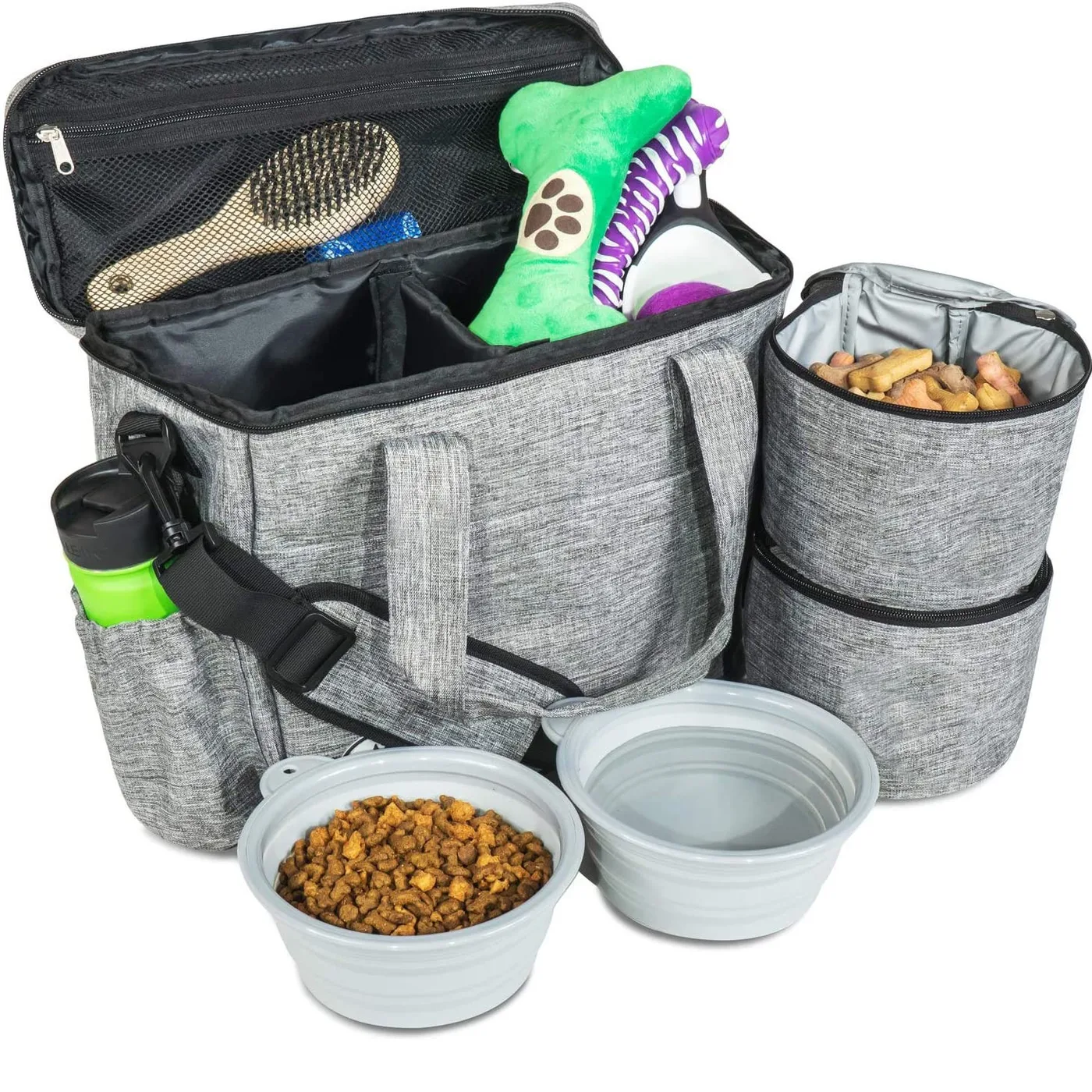
Neoprene formats compared on build and margin
The table below compares the three principal formats on construction complexity, typical retail positioning and indicative margin behaviour. Cost index anchors a printed polyester sling at 1.00, and units are deliberately relative rather than absolute because specification detail moves real figures considerably.
| Format | Sheet thickness | Panel count | Cost index | Typical retail band | Margin character |
|---|---|---|---|---|---|
| Sling / cross-body | 3 mm | 2-4 panels | 1.45 | Mid | Strong, low return rate |
| Structured tote | 5 mm | 4-6 panels | 1.85 | Mid-upper | Best absolute margin |
| Hybrid backpack | 5 mm plus woven reinforcement | 8-12 panels | 2.60 | Upper | High value, higher defect risk |
| Removable neoprene mat insert | 7 mm | 1 panel | 1.30 | Accessory | Add-on and reorder driven |
Two patterns emerge consistently across buyers. Absolute margin is highest on structured totes, because the price ceiling is high while panel count stays low. Return rates are lowest on slings, because there is less that can be perceived as wrong, and the product is closer to an accessory purchase.
The accessory row deserves particular attention. A neoprene base insert sold alongside a textile bag captures the material's comfort benefit at entry cost, and it creates a reorder line with higher frequency than the bag itself.
Warmth: what the material does and does not deliver
Neoprene genuinely retains more warmth than a single-layer textile shell, because trapped gas in closed cells slows conductive heat transfer. In practical terms, a neoprene body measurably reduces heat loss to cold ground when a bag is set down, and it takes the chill off against a cold floor tile or car seat. That benefit is real and worth selling.
But it is not insulation in the engineered sense. It has no reflective barrier, no lofted wadding and no sealed thermal envelope, and it does not manage humidity. In genuinely cold conditions the animal's own metabolic heat is the primary heat source and the bag only slows its escape; performance drops considerably once the bag is set on frozen ground or exposed to wind.
The honest positioning therefore has two legs. Sell warmth as comfort - a softer, warmer resting surface - rather than as temperature control, and reserve stronger thermal claims for genuinely insulated constructions. Buyers who follow this distinction protect themselves from misleading claim exposure and from the review pattern that follows when expectations exceed delivery.
Where winter performance genuinely matters, the better route is a hybrid: neoprene body for feel and shape, plus a removable insulated base insert. Independence test programmes such as those run by the Center for Pet Safety emphasise measurable, repeatable criteria over marketing language, and that discipline applies here.
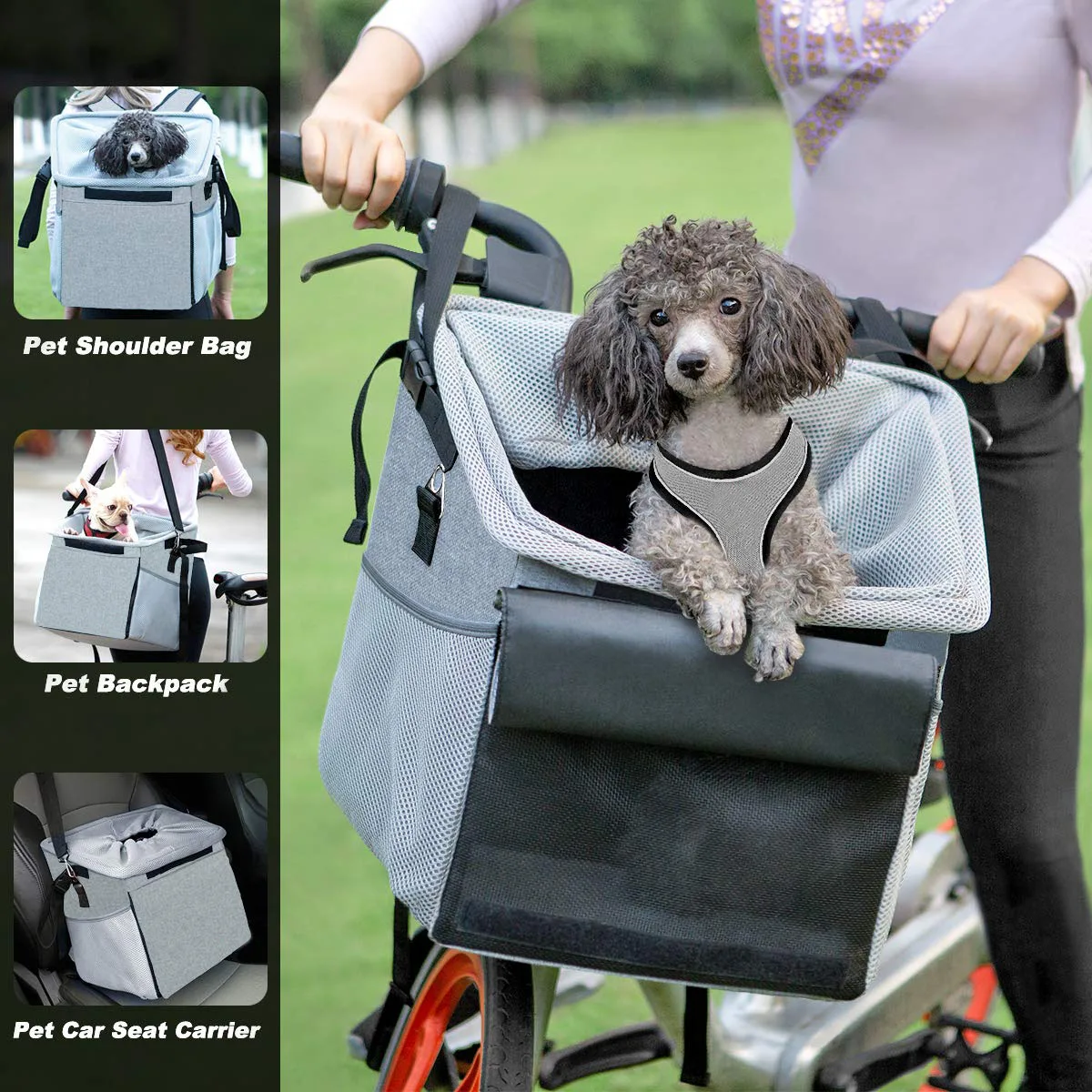
Flexibility versus support: engineering around foam limits
Foam's softness is its selling point and its structural weakness, because it cannot carry sustained tension. Every successful neoprene programme therefore transfers load away from the foam into webbing, binding and reinforcement, and every failed one asks the foam to behave like a woven panel.
The practical rules are simple. Straps attach at reinforced points rather than stitched directly to body panels. Base panels sit on a stiffer insert or heavier board where the product carries weight. Openings are bound rather than simply folded, so raw edges do not curl. And any closure that creates tension - zips under load, magnetic clasps pulling against the body - gains a backing tape.
Flexibility also brings a real benefit that compensates: neoprene tolerates being compressed in transit and returns to shape, so products ship looking good and survive rough handling better than rigid constructions that crack or deform permanently. Published physical test methods from ASTM International provide objective references for compression set and recovery, which our team quotes against where buyers require them.
The balance point is usually reached through thickness rather than through added components, since increasing stiffness by adding panels raises cost and defect exposure, while going from 3 mm to 5 mm adds structure cheaply and improves perceived quality at the same time.
The engineering answer is usually to let the foam do what it does well and assign the remaining jobs to other components. Foam provides cushioning and a forgiving fit; a base insert provides the flat, stable surface an animal needs in order to settle; webbing and a structured strap distribute load. Buyers who try to obtain all three properties from one thickness of foam end up with a product that is either too stiff to be comfortable or too soft to hold shape, and the fix is almost always a component rather than a material change.
The cost stack, and where buyers misjudge it
Neoprene costing surprises buyers twice, and both surprises are avoidable with an accurate mental model. The first is that sheet area consumed exceeds apparent surface area, because panels must be cut oversized for seam allowances and because three-dimensional forms contain hidden surfaces. A tote that looks like two-thirds of a square metre may consume considerably more.
The second surprise is freight by volume. Neoprene is light for its bulk, so cartons cube out before they weigh out, particularly on larger formats. When comparing landed cost against a textile alternative, always calculate at the container or pallet volume level rather than at unit weight, or the comparison will be flattering to neoprene and wrong.
Labour sits between these two. Cutting thick sheet is slower, seams require heavier thread and needle set-up, and finishing takes longer because seam bulk must be managed rather than simply pressed flat. The total labour content typically runs above a comparable polyester build, and discounting that fact during costing is how first orders become less profitable than second ones.
Offsetting all of this is a higher achievable retail price. Buyers routinely report that neoprene SKUs carry a comfortable premium over their textile equivalents with less promotional pressure, and that having narrowed the range, total margin contribution improves even as volumes fall.
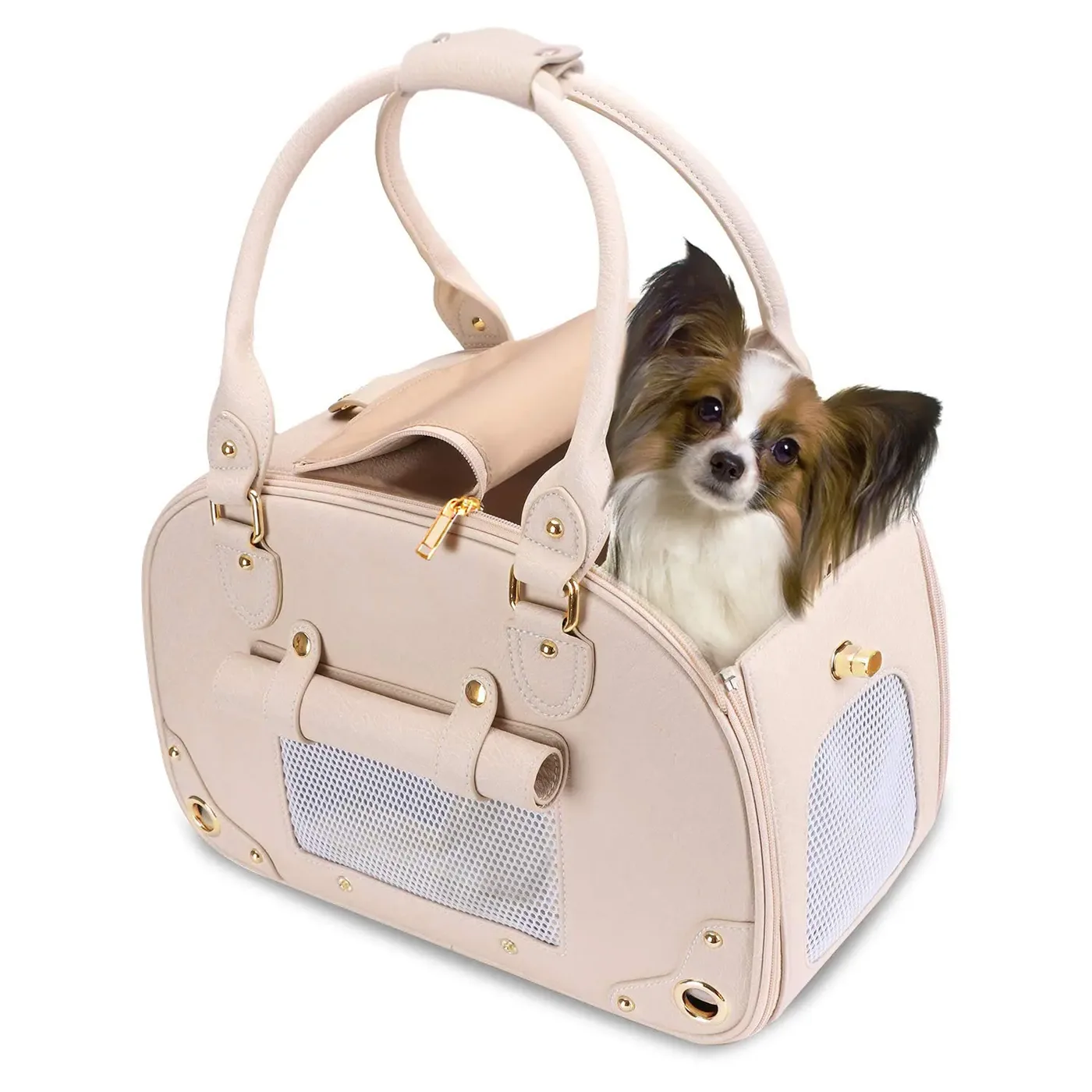
Lead time, sampling rounds and production scheduling
A foam programme carries a longer development tail than a textile one, and the tail is where budgets disappear. The reason is not that foam is slow to cut; it is that foam forces decisions in a fixed order, and every decision gate is a place where a schedule can stall.
The sequence runs: format and thickness first, because they drive the foam order; pattern and nesting second, because they determine yield and therefore the sheet quantity; face fabric and colour third, which is the least time-critical item; hardware and trim fourth; then sample build. Buyers who hold everything until a complete design exists add two to three weeks that no amount of production urgency later recovers.
| Gate | Working days | Decision required | Cost of deciding late |
|---|---|---|---|
| Format and foam thickness | 0-3 | Panel thickness and polymer | Foam re-ordered; +10-20 days |
| Pattern and nesting | 3-8 | Panel geometry and yield | Sheet quantity ordered wrong |
| Face fabric and colour | 2-5 | Lamination choice | Usually no schedule impact |
| Hardware and trim | 3-7 | Slider and strap grade | Bulk slips past day 50 |
| Sample build | 6-10 | Frozen tech pack | Amendment restarts the window |
| Bulk production | 35-50 | Approved sample | Peak season congestion |
| Inspection and release | 2-4 | AQL 2.5 report | Re-inspection loop |
Sampling rounds deserve particular attention. The 6-10 working day figure applies to one round against a frozen specification; an amendment round costs the same window again, and two amendment rounds are common whenever fit or internal volume was not resolved on paper beforehand. The cheapest schedule insurance is therefore an agreed dimensional sketch before the first sample rather than a faster sewing line.
Seasonality shapes the remainder. Foam-led assortments sell into cold weather, so bulk capacity in the preceding quarter is contested, and buyers who place orders outside that window receive better attention and a shorter effective lead time. Payment follows T/T 30/70 with FOB Xiamen, and because the deposit is what books the foam, the payment date rather than the purchase order date is what the schedule actually runs from.
Our production team schedules these programmes across 7 lines with 149 machines and monthly output near 200,000 pieces at the SGS-verified production base, which is what allows a 500-piece first order to be slotted in without a small-lot penalty. BSCI and ISO 9001 certification cover the social compliance and quality management systems that retailers audit, and third-party verification through SGS is available where a buyer's channel requires an accredited report rather than an internal one.
Inspection, documentation and channel listing requirements
Inspection on a foam build differs from inspection on a textile bag in three specific ways, and a generic checklist will pass units that a customer then rejects.
First, foam thickness must be measured on the finished unit rather than assumed from the sheet, because lamination, quilting and seaming compress the foam unevenly across a panel. Second, bonded seams should be checked for voids and for adhesive squeeze-out - both invisible in a photograph and obvious in the hand. Third, the product should be checked for permanent compression set after packing, since a bag folded tightly for a long transit can retain a crease that never fully recovers.
Classification follows the standard structure: critical defects at zero tolerance, major defects assessed at AQL 2.5, and minor appearance issues at the same level unless a tighter plan is specified. For foam, the critical list normally includes delamination at a load-bearing seam, a broken strap attachment and anything that compromises containment. A crease that recovers within a stated period is usually a minor; one that does not is a major.
The documentation file should be assembled once and maintained rather than rebuilt for each shipment. It contains composition declarations for the foam and the face fabric, restricted-substance reports covering both plus the adhesive, the pre-shipment inspection report with photographs, and the test report behind any published claim. Component-level certificates issued under scheme criteria published by OEKO-TEX are the form most retailers accept without further questions, and holding them inside a system maintained to recognised quality management standards is what keeps them current across repeat lots.
Listing requirements are then mostly about dimensional honesty and claim restraint. Publish internal dimensions measured on a finished production unit, publish the weight, and avoid waterproof and warmth promises that depend on the animal rather than the product. Where a thermal or cushioning claim is made, the file must contain the report supporting it; where an animal-welfare outcome is implied, no supporting report exists and the listing itself becomes the liability.
Buyers should also settle at specification time whether their channel requires accredited laboratory reports instead of internal ones. Declaring that before sampling costs nothing and avoids the slowest possible remedy, which is re-making samples to satisfy a test protocol discovered after approval.
One documentation habit pays disproportionate returns: archive the approved sample. A sealed reference unit retained against the style number settles disputes about shade, thickness, hand and seam appearance faster than any written description, and it gives the second season a physical benchmark rather than a memory. Buyers who reorder after a gap frequently find that neither side can recall exactly what was approved, and the reference unit removes that conversation entirely.
Returns profile and the defects that drive it
Every material has a signature returns pattern, and understanding neoprene's before launch lets you write the product page pre-emptively. Four causes dominate.
- Odour perception. A faint residual smell is normal and dissipates, but customers interpret it as a defect. Aeration before packing and a short line in the listing remove most of it.
- Seam stepping. Thick material shows visible offset at joins. Clear specification and graded seaming keep it cosmetically acceptable.
- Delamination after washing. Usually caused by heat. Explicit cold-wash instructions and no tumble-dry guidance protect both the product and your review score.
- Size expectation. Thick walls reduce internal volume versus external dimensions, so publish internal measurements prominently.
Each of these has a cheap mitigation and an expensive consequence. Addressing them in the listing costs a paragraph; addressing them through returns costs the unit, the freight and the review.
Our inspection regime classifies these defects specifically so that a trend is visible in the AQL 2.5 report rather than emerging later as a rising return rate with no identified cause.
Returns data belongs in the specification rather than in an overhead account. Two failure patterns dominate foam assortments - fit disappointment and creasing acquired in transit - and both are specification problems rather than manufacturing defects. Publishing internal dimensions and weight addresses the first; specifying carton density, fold pattern and a recovery period before dispatch addresses the second. Programmes that have made those two changes generally see returns fall without changing the material at all.
Launching a first neoprene order without wasting budget
First orders go wrong predictably when buyers treat neoprene like fabric. Four disciplines keep them on track.
- Open narrow. One or two colourways and one format. Each additional variant multiplies foam bookings.
- Freeze decisions early. Thickness, grade and colour must be settled before foam is booked, not adjusted afterwards.
- Photograph production samples, not prototypes. The material's visual consistency is the selling point; show the real thing.
- Plan cartons before costing. Volume-based freight changes landed economics, and carton design is cheaper to fix before the order than after.
Executed this way, a first programme typically ships on the standard calendar - sampling in 6-10 working days, bulk in 35-50 days - and generates enough data to decide whether the material deserves a second season. Executed casually, it usually produces excess inventory in the wrong colourways and a schedule nobody wants to repeat.
Buyers still deciding between constructions will want to compare these notes with the material-level neoprene guide and the analysis of insulated temperature control, which together define the boundary between comfort positioning and performance positioning.
The last discipline is to treat the first order as a test of the specification rather than as a bet on the format. One thickness, one polymer, one face fabric and two colourways generate enough market signal to plan a second season without committing inventory across an entire matrix. Buyers who launch four formats at once learn the same lesson four times more expensively and rarely learn it faster.
Why brands source here
- Pet bag programmes run since 2014; founding team in sewn goods since 2004
- SGS-verified production floor of 4,950 m² with 137 workers across 7 lines
- Monthly capacity of 200,000 units, audited to BSCI and ISO 9001
People Also Ask
Is neoprene good for pet carriers?
Excellent for small animals where comfort, quiet handling and shape retention sell the product, and less suitable where maximum ventilation or heavy load carrying is required.
Do neoprene pet bags keep pets warm in winter?
They reduce heat loss to cold surfaces and feel warm to the touch, improving comfort. Genuine cold-weather performance requires an insulated construction or a removable thermal insert.
Are neoprene bags flexible?
Yes. The foam bends and recovers repeatedly without permanent deformation, which is why slings and soft totes suit it so well.
How do you clean a neoprene pet bag?
Wipe with a damp cloth, or wash cold on a gentle cycle without tumble drying. Heat is the main enemy of both adhesive bonds and foam longevity.
Do neoprene bags hold their shape?
They do better than most soft textiles, particularly at 5 mm thickness, because the foam returns to form after compression rather than creasing.
Is neoprene worth the wholesale price premium?
Usually yes for mid-to-upper positioned ranges, because achievable retail prices rise faster than unit cost and return rates tend to fall.
Frequently Asked Questions
Are neoprene pet bags warm?
They provide moderate warmth by slowing conductive heat loss, which noticeably improves comfort on cold surfaces. They do not control temperature the way an insulated construction does, and should not be marketed with strong thermal claims.
What size animal suits a neoprene bag?
Small to medium animals, typically up to around 8 kg. Above that, larger panels and load paths make hybrid construction with woven reinforcement the safer choice.
Is a neoprene bag machine washable?
Cold gentle washing is generally acceptable; tumble drying is not. Heat degrades adhesive bonds and accelerates foam ageing, so care instructions are part of the specification.
Why does my neoprene bag have a smell?
Residual volatile compounds from foam manufacture, which dissipate over time. Aeration before packing largely resolves it and a line in the listing prevents most misinterpretation.
Does neoprene make the bag waterproof?
The material sheds water well and absorbs very little. Seams are the weak path, so water resistance depends on seam construction rather than the foam itself.
How much more does neoprene cost than polyester?
Commonly 45-85% more per unit at the sling and tote level, rising significantly for complex reinforced formats. The gap narrows when higher achievable retail prices are included.
Which format sells best in neoprene?
Structured totes and slings. Both use the material's strength - shape without framing - while avoiding its weakness under sustained load.
Do neoprene bags crease in shipping?
Rarely, and this is one of the material's advantages. Foam recovers from compression, so goods arrive looking closer to photography than most textile alternatives.
Can neoprene bags be printed with branding?
Yes, by sublimation onto the polyester face. Branding is durable and does not crack along flex lines the way surface prints can.
What defects should inspection look for?
Delamination, seam stepping, compression set, odour and size deviation. These should be classified separately from structural defects so trends are visible across reorders.
Can neoprene bags be used year round?
Yes in temperate climates. In very hot conditions the material's low breathability argues for generous ventilation panels, while in cold conditions it contributes useful comfort rather than full insulation.
Do you offer removable neoprene inserts?
Yes, and they are commercially attractive: they capture the comfort benefit at lower unit cost, sell as accessories and generate higher-frequency reorder demand.
How many sampling rounds should a first foam order budget for?
Plan for two. The 6-10 working day figure covers one round against a frozen specification, and an amendment round costs the same window again. Agreeing internal dimensions on paper before the first sample is the cheapest way to avoid the second.
Which defects are critical on a neoprene bag inspection?
Delamination at a load-bearing seam, broken strap attachments and anything that compromises containment, all at zero tolerance. Compression set that does not recover is treated as a major under AQL 2.5.
Talk to QUANZHOU JUNYUAN BAGS about a wholesale pet bag order: MOQ 500 pieces per colourway, samples in 6-10 working days, bulk production in 35-50 days under AQL 2.5 inspection.
Get a free quote Request a sample