Pet Bag Industry Growth: 2026 Trends for Wholesale Buyers
Pet bag demand in 2026 is growing through mix rather than through volume: buyers are shifting spend toward documented materials, higher price tiers, and channels that require compliance files. The practical effect on sourcing is six trends, of which three raise cost, one lowers it, and two change lead time. Programs planned now should assume MOQ 500 per colourway, samples in 6-10 working days, and bulk in 35-50 days.
Trend commentary is only useful to a buyer when it changes an order decision, so this review is organised around what each 2026 trend does to cost, compliance, and calendar. Our production team runs pet bag programs at MOQ 500 pieces per colourway, with samples in 6-10 working days and bulk production in 35-50 days after approval, inspected to AQL 2.5 before release, and those are the parameters each trend is measured against. The six trends that matter are recycled and documented materials reaching mainstream volume, compliance becoming a market access condition rather than a formality, channel mix shifting toward marketplace and direct-to-consumer, premiumisation driven by service life rather than styling, a set of feature requests that add cost without adding value, and a lead-time environment that rewards early commitment. Three of those raise unit cost, one lowers it, and two change the calendar, which is why a 2026 plan should be built around a narrow core assortment with a defined expansion path rather than a wide speculative launch. The sections below work through each trend and translate it into what a buyer should actually do at specification, quotation, and order placement.
Wholesale pet bags uk and wholesale pet bags australia share most of the same test file, but Market & Business Strategy still has to be matched to the retailer's own checklist. Pet bags wholesale china terms are usually quoted FOB, so pet bags import export cost is a separate line the buyer has to model.
Why 2026 Is a Planning Year Rather Than a Boom Year
The pet bag category enters 2026 with steady underlying demand and a much less forgiving operating environment. Unit demand continues to grow in most mature markets, but the growth is uneven by segment and by price tier, and the channels capturing it are changing faster than the products are. For a buyer, that combination rewards planning discipline over optimism.
What has changed most is not demand but the cost of being wrong. Compliance documentation, marketplace claim rules, and freight volatility all punish a speculative order more severely than they did a few years ago. A wide first assortment that was merely inefficient before is now actively expensive, because each additional colourway carries testing cost and each additional SKU carries a listing compliance burden.
The second change is that the winners and losers inside the category have diverged. Value-tier volume continues, premium tiers continue to grow faster, and the middle is squeezed. Buyers who plan a single mid-tier assortment are competing in the hardest part of the market, and the more defensible plan is a clear position at one end with a deliberate step up.
The third change is calendar pressure. Production and shipping rhythms have not returned to their pre-disruption predictability, and a buyer who plans to the last responsible date will occasionally miss it. Building buffer into the plan is now a normal cost of doing business rather than an inefficiency.
2026 rewards a narrow core assortment with a defined expansion path, because the cost of a wrong wide launch now includes compliance, listing, and calendar exposure rather than only inventory.
Trend One: Recycled and Documented Materials Reach Mainstream Volume
Recycled-content fabrics have moved from a premium story to a volume requirement in several channels, and the change is procurement-driven rather than consumer-driven. Retailers set recycled-content targets for their own reporting, and those targets flow down to the products they list. A buyer who cannot supply a transaction certificate is excluded from the conversation before price is discussed.
The cost picture has improved as volume has grown. Recycled polyester carried a substantial premium a few years ago; it now sits at a modest premium over virgin equivalent in most specifications, and the gap continues to narrow. What has not narrowed is the documentation cost, which is fixed per program and rewards concentration over spread.
The practical implication is that a buyer should decide now whether recycled content is a requirement or an option for their target channel. If it is a requirement, the material should be specified at quotation so that the transaction certificate chain is arranged before production, because retrofitting a certificate after goods are made is usually impossible.
Our notes on GRS recycled standard sourcing set out the certificate chain in detail, and the key point for 2026 planning is the lead time: arranging the chain takes longer than the sampling window, so it belongs on the critical path from day one.

Trend Two: Compliance Becomes a Market Access Condition
Compliance is no longer a box a buyer ticks after choosing a product; it determines which products can be listed at all. Chemical restriction lists expand, marketplace claim policies tighten, and retail vendor requirements increasingly demand documented evidence before a line review rather than after a complaint. For the buyer, that changes the sequence: compliance questions belong at specification stage, not at pre-shipment.
The cost effect is asymmetric. A buyer with a working documentation process pays the cost once and reuses it across seasons; a buyer without one pays repeatedly in relabelling, relisting, and re-testing. That asymmetry is the strongest argument for consolidating a program with a supplier that maintains current files, and it is a more important selection criterion than a small price difference.
Three files carry most of the weight in 2026: restricted-substance screening for the destination market, textile safety certification where the channel expects it, and claim substantiation for any positioning statement on packaging or listing. Buyers should check all three exist before placing an order, and should check the dates on each.
Testing cadence is part of the same trend. Annual retesting is becoming the expected norm rather than an optional diligence step, and reviewers increasingly check report dates. Buyers should budget for it as a recurring program cost rather than treating it as a one-time launch expense.
Where a claim covers material origin or chemical content, the verification route matters as much as the test. The same discipline that applies to animal-free material claims applies here: component-level declarations matched to specification lines, collected before production.
Buyers who want an external reference point for the restricted-substance side of the file usually start with ECHA chemical requirements for European destinations and a finished-article certificate such as OEKO-TEX textile safety testing where the channel expects one. Keeping both current is a small recurring cost and it is the difference between a program that survives a vendor review and one that is quietly delisted during a policy update.
Trend Three: Channel Mix Shifts Toward Marketplace and Direct
Channel mix is shifting toward online marketplaces and direct-to-consumer brands, and each shift has a specific sourcing consequence. Marketplace selling rewards dimensional accuracy, photographic clarity, and review performance, which means the packaging and the listing content are part of the product specification. Products that photograph badly or arrive crushed underperform regardless of build quality.
Direct-to-consumer selling rewards a distinct product story and a defensible price point, and it penalises anything that generates returns. Because a direct seller carries the return cost, specification decisions that reduce returns, such as accurate sizing and robust closures, are worth more in that channel than they are in wholesale.
Packaging requirements follow the channel. Marketplace fulfilment imposes its own packing and labelling rules, and a product that fails them incurs fees rather than just inconvenience. Buyers should confirm the fulfilment requirement before specifying carton quantities and labelling, because changing them after production is expensive.
The freight implication is different too. Direct and marketplace sellers ship in smaller, more frequent consignments, which favours products with good cube efficiency and suppliers comfortable with split shipments. Buyers planning for these channels should raise split-shipment capability during qualification rather than assuming it.
Returns policy deserves its own line in the plan, because it is the cost that most often breaks a direct-to-consumer program. Sizing inaccuracy, crushed arrivals, and misunderstood features drive the majority of avoidable returns, and each has a specification-side remedy: a three-measurement sizing chart, pack-out that protects shape, and listing copy that describes the product plainly. Buyers should model a return rate explicitly rather than discovering it in the first quarter, and should treat a high rate as a product defect rather than a marketing problem.
Finally, review dynamics change the defect calculus. A defect that would pass in a store becomes a one-star review online, and a systematic issue generates a review problem long before it generates a return problem. Inspection standards should be set with that asymmetry in mind.
Trend Four: Premiumisation Driven by Service Life
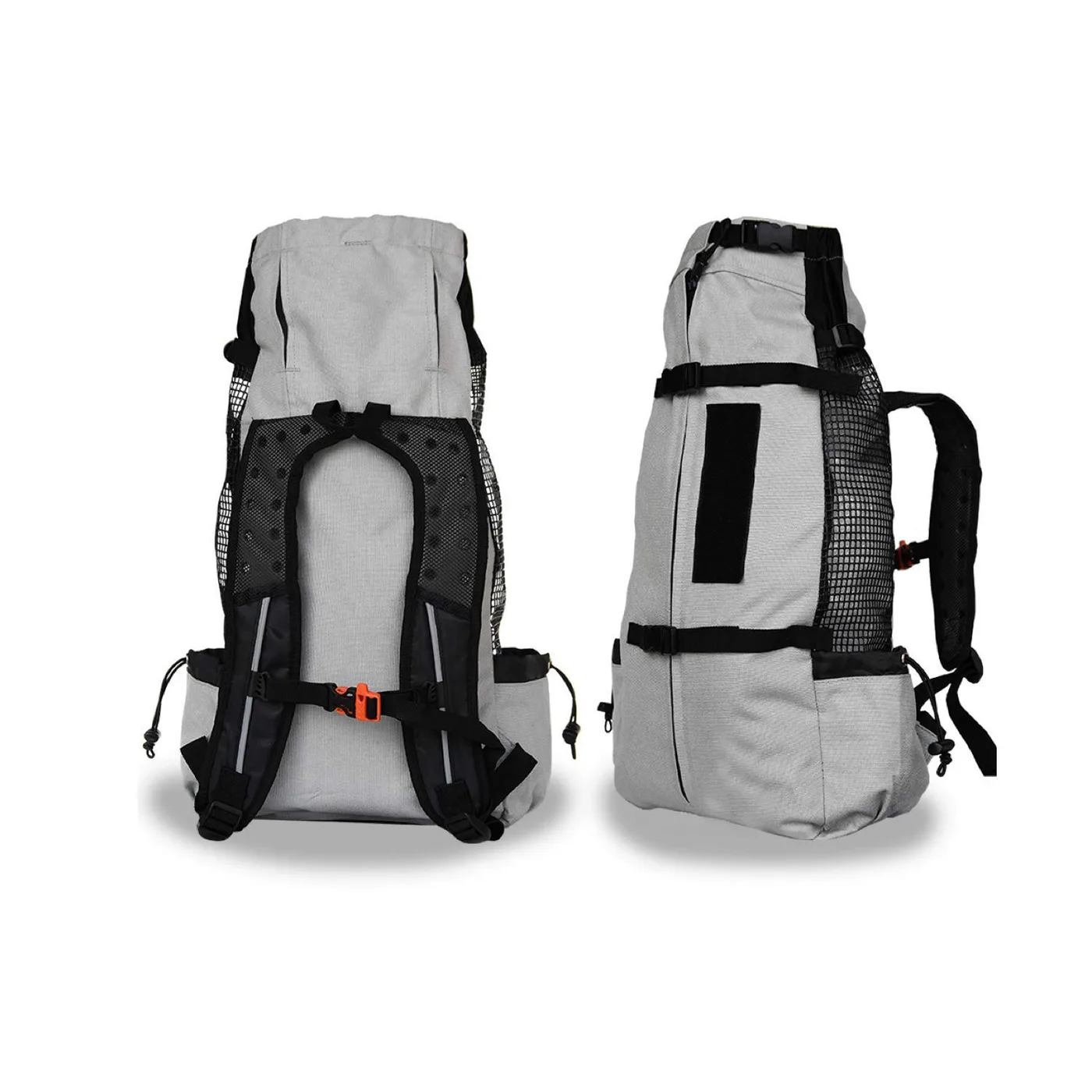
Premium tiers are growing, and the driver is service life rather than styling. Shoppers who have replaced a cheap pet bag twice will pay more for one that lasts, and they say so in reviews. That is a sourcing opportunity, because service life is a specification outcome: abrasion resistance, seam strength, hardware quality, and coating durability are all purchasable.
The commercial arithmetic favours it. Moving from a value build to a durable build typically adds a modest amount at FOB and supports a full price-tier step at retail, because the shopper is comparing against the cost of replacement rather than against the cheapest option. Buyers who model the premium against the price step usually find it accretive.
Service life also changes what the buyer should ask for at quotation. Rather than accepting a generic durability statement, the buyer should name the tests: abrasion cycles against a stated method, seam strength at load points, coating adhesion after ageing, and hardware cycle testing on closures. Each of those produces a number that can be compared between quotations, and a supplier unwilling to quote against them is signalling something useful about how the program will go.
The specification work is specific. Abrasion cycle targets should be raised, hardware should be specified for the duty cycle rather than for appearance, and coating adhesion should be tested rather than assumed. Each of those is a line in the specification and a line in the inspection worksheet.
Warranty positioning is part of the same trend. A buyer confident in service life can offer a warranty, which is a conversion asset in online channels and a forcing function internally on quality. Offering one without the specification behind it is a fast route to a margin problem.
Buyers should also note what premiumisation does to the material mix: it favours coated and laminated constructions and better hardware, which are exactly the inputs where supplier capability matters most. Qualifying on capability therefore becomes even more important at the premium end.
Trend Five: Features That Add Cost Without Adding Value
Not every trend is worth following, and 2026 has a clear list of features that raise cost without moving the shopper. Decorative hardware, excessive pocket counts, and complex multi-material panelling all add labour and trim cost while adding little that a buyer can charge for. The test is whether the feature appears in review text; if shoppers never mention it, it is not earning its cost.
Electronics are the clearest example. Integrated fans, lights, and sensors add component cost, certification scope, failure modes, and return exposure. A small number of programs justify that; most do not, because the benefit is hard to demonstrate and the failure is easy to experience.
Over-engineered closures fall into the same category. A closure that is clever rather than reliable generates returns, and reliability is what the shopper actually values. Buyers should specify closures for one-handed operation under load and let the design be simple.
There is a second category worth separating: features that add value in one channel and not in another. A structured base that photographs well and holds shape on a shelf is worth its cost in a marketplace listing and is close to worthless in a wholesale program where the buyer packs flat. Rather than deleting such features outright, the buyer should map each one to the channel where it pays, and then decide whether a single specification can serve both or whether two versions are justified.
The discipline is to run a feature cost review at specification stage: list every feature, assign its cost, and delete anything that cannot be tied to a price step or a review benefit. That review typically removes five to twelve percent of FOB without changing how the product presents.
A feature should earn its cost through a price step or a review benefit, and any feature that does neither should be deleted at specification stage rather than negotiated on price later.

Trend Six: Lead Time and Origin Strategy
Lead time is the trend that quietly determines whether a 2026 plan succeeds. Production rhythm has become less predictable at the margins, freight remains volatile, and the buyers who perform best are the ones who commit earlier rather than the ones who negotiate hardest. Early commitment buys line time, material reservation, and calendar buffer, all of which are worth more than a small price concession.
Origin strategy is part of the same decision. Concentrating a program in one origin keeps quality consistent and documentation simple; adding a second origin provides contingency and sometimes a duty advantage. For most mid-size buyers, the right answer is a single primary origin with a qualified alternative held in reserve rather than a live split.
Trade policy is the second variable inside lead time, because duty treatment for textile travel goods moves and each move changes the landed-cost model. Buyers should treat duty as a variable with a downside case rather than as a fixed input, and the World Trade Organization tariff and trade framework is the right starting point for building that model. A program whose margin disappears under an adverse duty case is not a viable program, and discovering that after the goods ship is the worst time to find out.
Material reservation is the cheapest buffer available. Confirming fabric and hardware at quotation rather than at sample approval protects the 35-50 day bulk window from the most common cause of slippage, which is waiting on a component. Buyers who reserve early rarely need air freight; buyers who reserve late frequently do.
| 2026 trend | Demand effect | Cost effect | What the buyer should do | Time horizon |
|---|---|---|---|---|
| Recycled materials mainstream | Access condition in some channels | Small premium, fixed documentation | Specify at quotation, arrange certificate chain early | Now |
| Compliance as market access | Excludes undocumented programs | Fixed, amortises on reorder | Check three files and their dates before ordering | Now |
| Marketplace and direct shift | Packaging and listing become product | Packing and labelling cost | Confirm fulfilment rules before specifying cartons | 12 months |
| Service-life premiumisation | Supports a full price step | Modest FOB increase | Raise abrasion, hardware, and adhesion targets | 12-24 months |
| Low-value features | No shopper response | +5-12% FOB for nothing | Run a feature cost review at specification | Now |
| Lead time volatility | Missed resets | Air freight and lost season | Reserve material early, qualify a backup origin | Now |
The table is most useful read as a sequence. Three actions are immediate, one is a twelve-month change, and one is a two-year structural shift, and doing the immediate ones first is what makes the longer ones affordable.
What Each Trend Means for a 2026 Order Plan
Translating trends into an order plan means making three decisions explicitly. The first is the core assortment: one anchor SKU and one premium SKU, each in a single colourway at 500 pieces, with an optional filler SKU for freight efficiency. That is a manageable opening commitment and it leaves room to respond to what actually sells.
The second decision is the compliance set. Before ordering, the buyer should be able to name the destination market, the required screening, the claim substantiation file, and the retest date. If any of those is unknown, the specification is not ready, and the order should wait rather than ship into a documentation gap.
The third is the calendar. Working backwards from the target on-shelf or listing date: transit time, then 35-50 days of bulk, then 6-10 working days of sampling, then material reservation, then specification approval. Buyers who build the plan backwards consistently hit their dates; buyers who work forwards from today consistently do not.
Budgeting should follow the same logic. A 1,000 to 1,500 unit opening order at typical landed cost, plus the fixed compliance and testing spend, plus a contingency for freight, is the honest number. Buyers who omit the fixed costs from the model are the ones surprised at the end of the season.
Finally, the plan should state the expansion path. Which colourway gets added on reorder, which size gets added after that, and what sell-through trigger releases each step. A written expansion path turns a trend review into an operating plan.
Building a Trend-Resistant Assortment
A trend-resistant assortment is boring by design. It concentrates on segments with replacement demand, uses materials that are widely documented, avoids features that cannot be justified, and keeps the colourway count low enough that compliance cost stays proportionate. It will not win a design award, and it will outlast the ones that do.
The two properties that make an assortment resistant are service life and documentation. Service life protects the review record and supports a price step; documentation protects the listing and the account relationship. A program with both can absorb a channel change, a regulation change, or a freight spike without being delisted or repriced.
Buyers should also build in optionality where it is cheap. Reserving a second colourway for reorder, keeping a specification version that can accept recycled content, and qualifying one alternative hardware finish are all low-cost moves that create room to respond to a trend rather than being caught by it.
One more element deserves a place in the assortment: a documented baseline. Before changing anything, the buyer should record the current specification, the current test results, and the current return and review performance, so that the effect of any change can be measured. Without a baseline, a buyer cannot tell whether a material upgrade improved anything or whether a cost reduction quietly hurt, and the program drifts on opinion rather than evidence. Recording the baseline costs an hour and turns every later decision into a comparison rather than a guess.
The final discipline is review cadence. A quarterly look at sell-through by SKU, return reasons, and review text tells a buyer more about which trends matter than any industry report, because it describes their own demand rather than an aggregate. Buyers who read their own data quarterly adjust in time; buyers who read industry commentary annually adjust late.
Where a 2026 plan involves a compliance-heavy segment, the market size overview and the notes on sample and lead time cost extend this framework into the two numbers that decide whether the plan is executable.
The most trend-resistant assortment concentrates on replacement demand, documented materials, and service life, and keeps colourway count low enough that compliance cost stays proportionate.
Why brands source here
- Pet bag programmes run since 2014; founding team in sewn goods since 2004
- SGS-verified production floor of 4,950 m² with 137 workers across 7 lines
- Monthly capacity of 200,000 units, audited to BSCI and ISO 9001
People Also Ask
What are the main pet bag industry trends for 2026?
Six: recycled and documented materials reaching mainstream volume, compliance becoming a market access condition, channel mix shifting toward marketplace and direct, premiumisation driven by service life, a group of features that add cost without adding value, and lead-time volatility that rewards early commitment.
Is recycled content now required for pet bags?
It depends on the channel. Several retailers set recycled-content targets for their own reporting and require a transaction certificate from suppliers. Buyers should confirm the requirement with the target account before specifying, because arranging the certificate chain takes longer than sampling.
How does compliance affect a 2026 sourcing plan?
Compliance now determines which products can be listed, so it belongs at specification stage rather than at pre-shipment. Buyers should verify restricted-substance screening, textile safety certification, and claim substantiation files, and check the dates on each, before placing an order.
Which pet bag features are not worth the cost?
Decorative hardware, excessive pocket counts, complex multi-material panelling, and most integrated electronics. Each adds labour, component, and certification cost without appearing in review text or supporting a price step.
Does premiumisation justify a higher FOB?
Usually yes. A durable build adds modestly at FOB and supports a full retail price step, because the shopper compares against the cost of replacing a cheaper product rather than against the cheapest option.
How should buyers handle lead time volatility in 2026?
By committing earlier rather than negotiating harder. Reserving fabric and hardware at quotation protects the 35-50 day bulk window, and holding a qualified alternative origin provides contingency without splitting live production.
How many colourways should a 2026 launch carry?
One per SKU at 500 pieces, with expansion on reorder. A wider first palette multiplies fixed compliance and testing cost and produces thin coverage, which is the most common cause of a disappointing first season.
Frequently Asked Questions
Is the pet bag category growing in units or in value?
Mostly in value, through mix. Premium tiers grow faster than volume tiers while the middle is squeezed, which is why a clear position at one end of the price ladder beats a mid-tier assortment.
Should a buyer offer a warranty in 2026?
Only with the specification behind it. Raised abrasion targets, hardware specified for duty cycle, and tested coating adhesion make a warranty a conversion asset; without them it becomes a margin problem.
How does marketplace selling change product specification?
Dimensional accuracy, photographic clarity, and arrival condition become specification requirements rather than marketing concerns. A product that photographs badly or arrives crushed underperforms regardless of build quality.
Should production be split across two origins?
For most mid-size buyers, no. A single primary origin with a qualified alternative held in reserve gives contingency without the quality and documentation complexity of a live split.
What is the cheapest buffer against a late season?
Material reservation. Confirming fabric and hardware at quotation protects the bulk window from the most common cause of slippage and costs nothing, unlike air freight, which is the usual alternative.
How often should compliance files be refreshed?
Annually as the working norm, and immediately after any material, component, or process change. Reviewers increasingly check report dates, so a stale report is a weak answer even when nothing has changed.
Do electronics in pet bags pay back?
Rarely. Fans, lights, and sensors add component cost, certification scope, failure modes, and return exposure, while the benefit is hard to demonstrate to a shopper reading a listing.
What should a 2026 order plan state explicitly?
The core assortment, the compliance set with dates, the backward-built calendar, the budget including fixed costs, and the expansion path with sell-through triggers. Missing any one of those usually shows up as a problem in the first season.
How should a buyer read their own demand data?
Quarterly, by SKU sell-through, return reasons, and review text. That data describes the buyer's own demand and gives an earlier and more actionable signal than aggregate industry commentary.
What is the standard production rhythm for 2026 programs?
Samples in 6-10 working days, bulk production in 35-50 days after approval, AQL 2.5 inspection, T/T 30/70 terms, FOB Xiamen, at MOQ 500 pieces per colourway.
Does premiumisation change which suppliers qualify?
Yes, because premium builds concentrate on coated and laminated materials and better hardware, which are exactly the areas where production capability varies most. Qualifying on capability matters more at the premium end.
What is the first action a buyer should take this quarter?
Check the compliance files and their dates for every SKU planned for the coming season. It is free, it is fast, and it is the action most likely to prevent an expensive problem later in the year.
Talk to QUANZHOU JUNYUAN BAGS about a wholesale pet bag order: MOQ 500 pieces per colourway, samples in 6-10 working days, bulk production in 35-50 days under AQL 2.5 inspection.
Get a free quote Request a sample