Pet Cycling Bag: Bike Bag Sourcing Specs, Cost & MOQ
A wholesale pet cycling bag program starts at MOQ 500 pieces per colorway, with samples finished in 6-10 working days and bulk production in 35-50 days after sample sign-off. Budget USD 6.80-14.50 per unit FOB Xiamen for bike-mounted pet bags, depending on frame structure, mounting hardware and weatherproofing level.
Cycling pet bags sit in a narrow band of the market: they are load-bearing accessories that attach to a moving vehicle, so the buying decision is driven by hardware tolerance, load rating and return risk rather than by print or color. This guide is written for wholesale buyers building a bike pet bag assortment, not for end users comparing products on a shelf.
Standard commercial terms for this category are consistent with the rest of our pet bag range: MOQ 500 pieces per colorway, samples in 6-10 working days, bulk production in 35-50 days, and pre-shipment inspection at AQL 2.5 with T/T 30/70 payment and FOB Xiamen quotation. The production team works from an SGS-verified production base running 7 lines and 149 sets of equipment, with monthly capacity around 200,000 pieces, so mixed-category containers are realistic when a cycling program is combined with walking or travel styles.
The practical question for a bike bag program is how much engineering you buy. A soft basket with a steel ring frame costs far less than a rear-rack pannier with an aluminium sub-frame and quick-release bracket, but the bracket is what determines whether the unit comes back as a return after three months of road vibration.
Wholesale pet carrier vet visits and wholesale pet carrier grooming lines are small-basket, high-repeat business, while Pet Bag Types & Styles decides whether one shell can serve both. Wholesale pet carrier travel and wholesale pet carrier camping units need opposite vent geometry, so a single pattern rarely covers both.
What a Bike-Mounted Pet Bag Actually Has to Survive
A pet bag that lives on a bicycle is exposed to a stress profile unlike any other soft pet product. A backpack carrier sees vertical load and occasional knocks; a bike-mounted unit sees continuous high-frequency vibration, lateral sway through corners, road spray from below and direct UV exposure from above. When a buyer evaluates samples on a desk, none of these forces are present, which is why field testing matters more than the initial sample look.
Vibration is the dominant failure mode. A dog or cat in the 5-9 kg range creates a dynamic load, not a static one: every pothole multiplies the effective weight on the mounting points. On a rear rack, that means the bracket-to-rail joint and the stitching that anchors the bag to its stiffener are the two places where failure begins. Our production team specifies bar-tack reinforcement and a load path that transfers weight into the frame rather than into the fabric panel, because a fabric-only load path will creep and eventually tear.
Weather is the second factor. Bike bags are used in conditions where a walking bag would simply not be taken out, and they are frequently left on the bike between rides. That drives three specification decisions that show up directly in cost: a coated shell rather than a plain weave, taped or laminated seams at the base, and corrosion-resistant hardware instead of standard zinc alloy. Each of these adds between USD 0.40 and USD 1.60 per unit, and each removes a predictable cause of field failure.
The third factor is the animal's own behavior in motion. A pet in a moving bag shifts its weight, stands up, and paws at the rim. That is why internal tether anchor points and a semi-rigid base board are non-negotiable for this category, and why a collapsible laundry-style tote is not an acceptable substitute even though it costs half as much.
Buyer Segments and the Assortment Each One Orders
Wholesale demand for cycling pet bags splits into four recognizable buyer types, and each one wants a different spec and a different price point. Understanding which segment you are buying for is the fastest way to avoid over-specifying a program and losing margin.
Bicycle and outdoor specialty chains are the most demanding segment. They want documented load ratings, a bracket that fits a defined rack standard, and packaging that can be displayed on a peg hook with the hardware visible. Their orders are moderate in volume but high in specification detail, and they will ask for test reports before placing a repeat.
Online own-brand sellers are the volume segment. They typically order a single hero SKU in three colorways, want the unit cost competitive enough to support a retail price with advertising spend attached, and care most about review-generating details: a removable washable liner, a reflective strip, and a base that does not sag. They are the segment most likely to accept a simplified bracket if it lowers landed cost.
Pet specialty retailers and veterinary-adjacent channels treat the cycling bag as an accessory add-on rather than a core category. They buy shallow assortments, prefer neutral colors, and reorder slowly. For them, the commercial risk is not product failure but shelf stagnation, which argues for lower MOQ commitments and a shared colorway across several bag types so that a slow mover can be re-merchandised.
Promotional and corporate-gift buyers are the fourth group. They want a lightweight, low-cost unit with a large decoration area and a short production window. They are the only segment where a welded-seam PVC build without a metal bracket makes commercial sense, because the unit is not expected to survive a full season of daily riding.
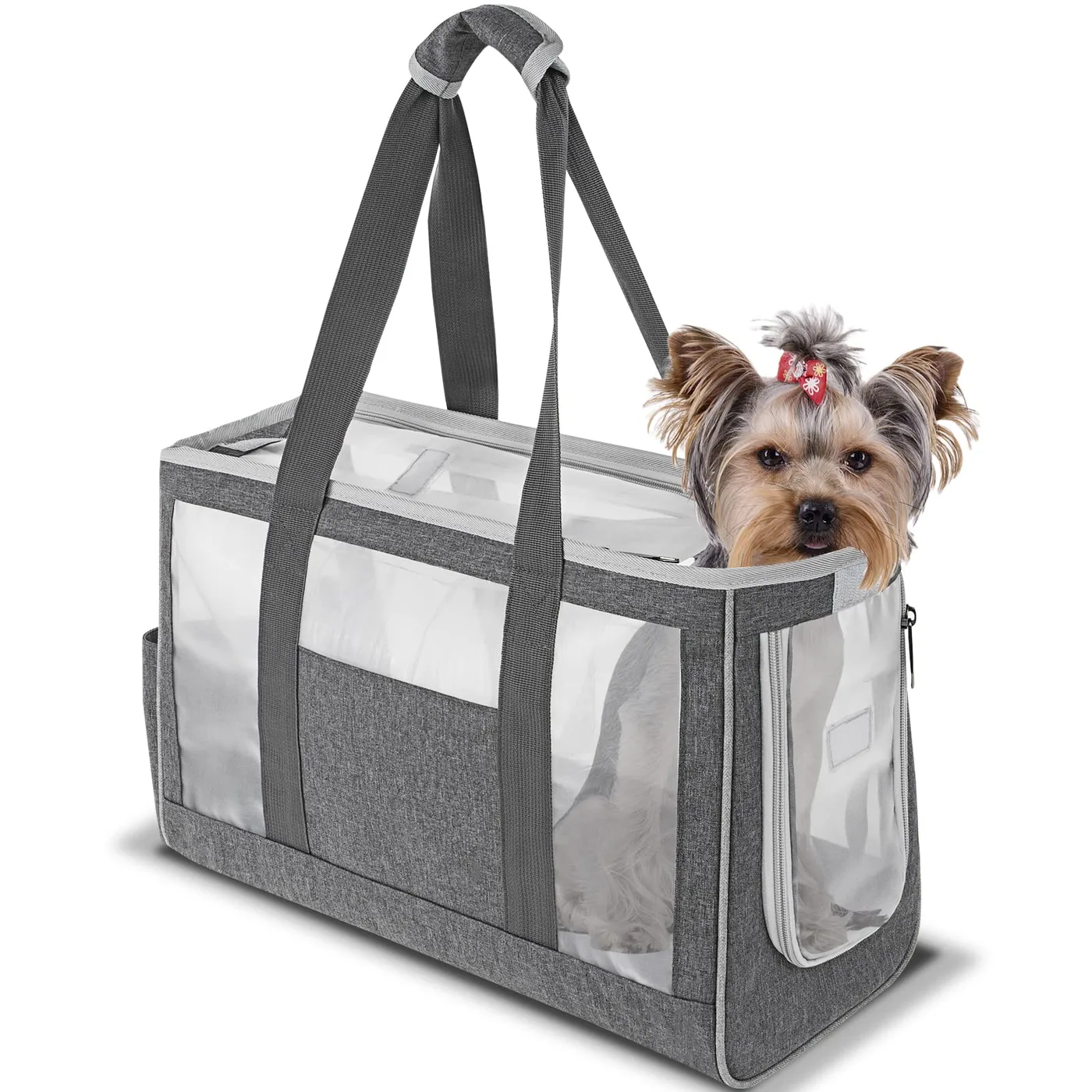
Matching order size to segment
As a working rule, a 500-piece first order suits a single-SKU online launch or a pet-chain test; 1,500-3,000 pieces across three colorways suits a specialty bike chain rollout; and 5,000-plus pieces is where a full tooling package for a custom bracket becomes economically sensible. Buyers who skip the test order and go straight to a 5,000-piece custom bracket program take on tooling cost and engineering risk at the same time, which is the single most common cause of a stalled first season.
Mounting Hardware and Load Ratings: The Spec Sheet That Decides Returns
Mounting hardware is where cycling pet bag programs succeed or fail commercially. The bag body is a sewing problem that most suppliers solve acceptably; the bracket is a mechanical problem that fewer solve well. When a buyer writes a specification, the bracket should be described with the same rigor as the fabric, because it is the part that generates warranty claims.
Start with the interface standard. Rear-rack panniers are commonly built around an 8-16 mm rail diameter range, and a bracket that only fits one tube diameter will not survive contact with the installed base of racks in a given market. The safer commercial choice is an adjustable clamp with a documented range and a torque figure, because it fits more racks and it gives the retailer a defensible answer when a customer asks whether it fits their bike.
Load rating should be stated as a working load, not a static test maximum. A rear pannier rated for 8 kg should carry 8 kg of pet plus 1-2 kg of contents through normal road vibration without measurable deformation of the bracket. Our production team tests to a multiple of the working load and records the deformation figure, so a buyer can put a real number on the product page rather than a vague "for small pets" claim.
Quick-release mechanisms deserve specific attention. They are the feature customers like most and the feature that fails most often. A cam-lever release with a metal pivot is materially more reliable than a plastic spring clip, and the difference in unit cost is roughly USD 0.90-1.40. For a product sold at retail with review visibility, that is usually money well spent.
Material and Weatherproofing Choices for Two-Wheel Use
Material selection for a cycling pet bag is a trade-off between abrasion resistance, weight and cost, and the right answer differs by mounting position. A handlebar bag is seen up close and carries little weight, so appearance and shape retention matter more than abrasion. A rear pannier is out of sight and carries the load, so abrasion and seam integrity matter more.
The shell fabric is usually 600D polyester with a PU or PVC backing at the entry price point, 900D or 1680D for premium programs, and coated nylon for buyers who want a lighter hand-feel. The backing matters more than the face denier for weather performance; a 600D with a good PU coating will outperform a 900D with a thin one in a rain test. Buyers comparing quotes should ask for the coating weight in grams per square meter, not just the denier, because denier alone says nothing about water resistance.
The base is the second decision. A PE board insert is cheap and adequate for a pet under 5 kg; a moulded EVA or PP base with drainage channels is better for repeated wet use and holds its shape after months of loading. For any unit intended for dogs above 7 kg, our production team recommends a moulded base as standard, because a flat board eventually bows and the bag then rocks on the rack.
Hardware finishes should be specified explicitly. Standard zinc alloy will show white corrosion after a season of road spray. Nickel or black electrophoretic finishes cost roughly USD 0.20-0.35 more per unit and remove that failure mode. Reflective piping and a reflective logo patch cost little and are frequently cited in retail reviews, which makes them a high-return addition for online sellers.
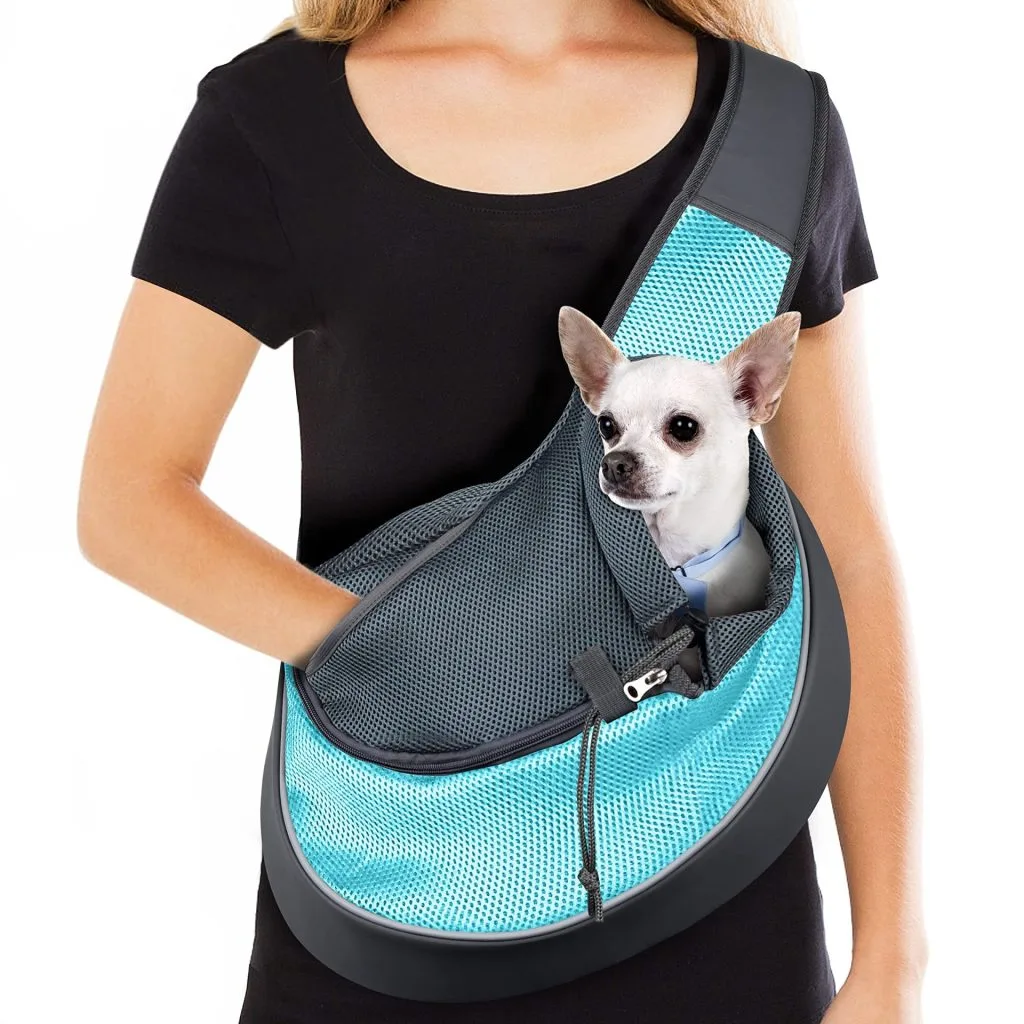
Liners, ventilation and cleanability
A removable, washable liner is now close to standard expectation in this category and is one of the few features that reliably shows up in positive reviews. Ventilation should be engineered rather than decorative: mesh panels placed on two opposing faces create cross-flow, while mesh on a single face behind the animal's body does almost nothing at road speed. Zip garage covers and storm flaps over the main entry add roughly USD 0.30 and extend the usable season in wetter markets.
Safety, Testing and the Compliance File Buyers Ask For
Cycling pet bags occupy an awkward regulatory position: they are not child carriers, and there is no single mandatory standard that governs them in most markets. That does not mean they are untested. Buyers who sell into the US and EU are expected to produce a defensible safety file, and the cost of assembling it should be built into the sourcing budget rather than discovered late.
The practical core of that file is chemical compliance plus mechanical performance. Chemical compliance typically means REACH and, for California, Prop 65 awareness on the coated fabric and hardware; the European Chemicals Agency maintains the substance list that EU buyers reference, and OEKO-TEX certification on textiles is the fastest way to satisfy a retailer's chemical question without a per-SKU test. Independent certification bodies such as SGS are commonly named in buyer requirements for both testing and factory audit.
Mechanical performance is usually documented through a load test and a cycle test defined by the buyer or by an external lab. Useful benchmarks come from textile and product test methods published by organizations such as ASTM International, and pet-specific safety testing guidance is available from the Center for Pet Safety. A supplier that can quote a test method and a pass figure is materially easier to onboard than one that can only say the product is strong.
Quality management certification is the third element. BSCI and ISO 9001 coverage, as described in the ISO 9001 overview, is what allows a large retail buyer to approve a production base without sending its own audit team first. Programs supplied from an SGS-verified base with current BSCI and ISO 9001 coverage typically clear buyer onboarding several weeks faster than programs that require a fresh audit.
Cost Structure: Where the Money Goes in a Cycling Pet Bag
Understanding the cost build-up is what separates a buyer who negotiates effectively from one who simply asks for a lower price. A typical mid-spec rear pannier-style pet bag at USD 10.20 FOB breaks down roughly as follows: shell fabric and coating USD 2.30, base board and stiffeners USD 1.10, hardware and bracket USD 2.60, lining and mesh USD 0.90, zips and webbing USD 0.75, sewing and assembly labor USD 1.85, QA and packing USD 0.40, and factory overhead and margin USD 0.30.
Two conclusions follow. First, hardware and structure account for close to 36 percent of the unit cost in this category, compared with perhaps 18 percent in a simple tote. That means the fastest way to reduce price is to reduce structure, and the fastest way to create returns is also to reduce structure. Second, fabric is a smaller lever than most buyers assume, so arguing about denier is usually less productive than arguing about the bracket and the base.
Volume moves the number, but less than buyers expect. Going from 500 to 3,000 pieces typically improves unit price by 6-11 percent, because the dominant costs are material and labor rather than setup. The larger savings come from specification decisions: dropping a custom bracket for a proven standard one, consolidating three colorways into two, or accepting a stock fabric instead of a custom dyed lot. Each of those can remove USD 0.50-1.80 without touching performance.
Landed cost needs the same discipline. A bulky bike bag with a rigid base cube-outs a container faster than its weight suggests, which is why freight per unit on a pannier can be 25-40 percent higher than on a soft walking bag of similar invoice value. Buyers should model cost per container position, not cost per kilogram, when comparing styles for a mixed shipment.
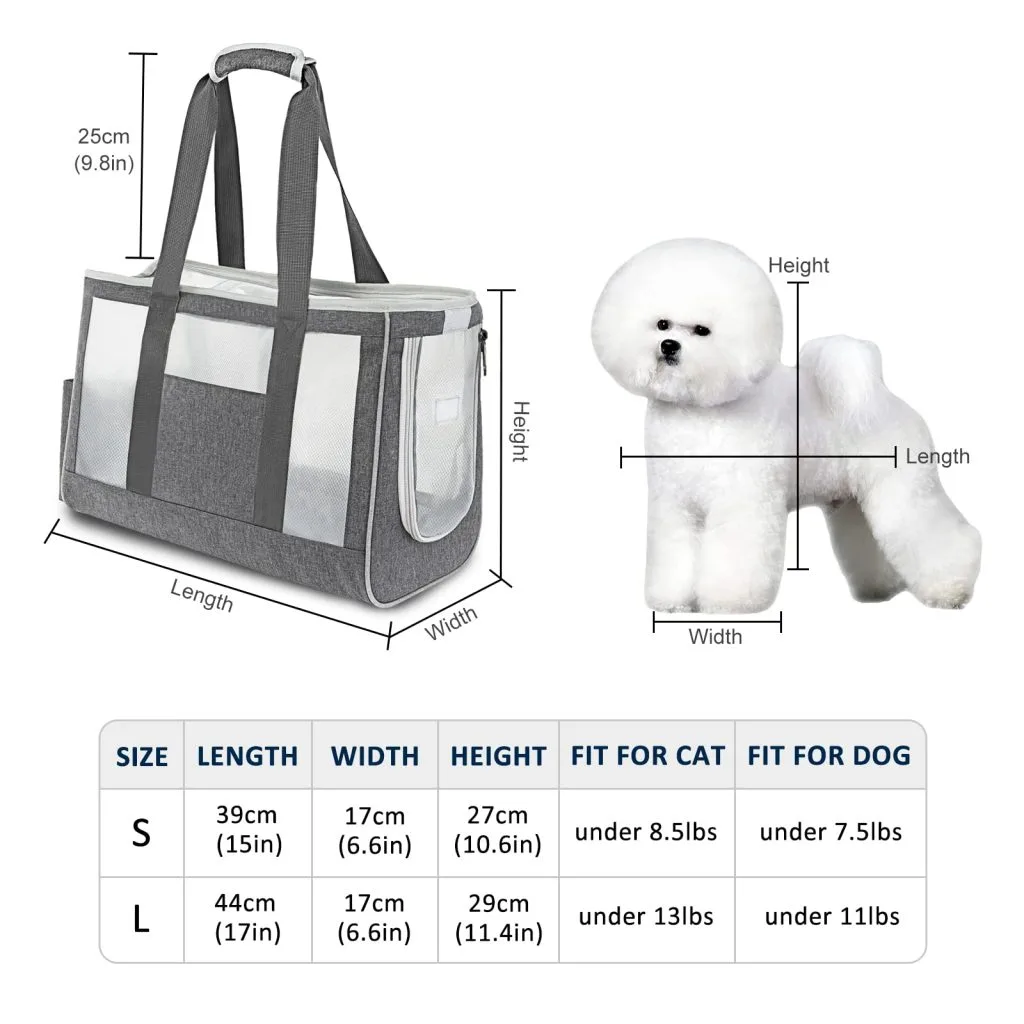
MOQ, Sampling and the Production Calendar
Commercial terms for this category follow the standard pet bag framework: MOQ 500 pieces per colorway, samples in 6-10 working days, and bulk production in 35-50 days after sample approval. Payment is T/T 30/70 and quotation is FOB Xiamen unless otherwise agreed. These figures are the planning baseline, and the variables that move them are worth understanding before a season is committed.
Sampling is faster when the buyer can specify by reference. Sending a bracket sample or a dimensioned drawing removes two or three correction rounds from the 6-10 working day window. Where a buyer wants a fresh design, the first sample usually meets the visual brief and misses the fit, and the second round usually resolves it; planning for two rounds is realistic and still fits inside the stated window.
Bulk lead time is driven mainly by hardware. Standard brackets are stocked and add nothing; custom brackets requiring tooling add 15-25 days before the 35-50 day production window begins. Custom dyed fabric adds a similar block. A buyer who needs goods on a specific retail date should work backwards from that date and place the order before hardware tooling is approved, not after.
Capacity is rarely the constraint. The production network runs 7 lines with 149 sets of equipment and around 200,000 pieces of monthly capacity, so a 3,000-piece cycling program can usually be slotted alongside other categories in a shared container. The real constraint is always the approval calendar on the buyer's side: sample sign-off, artwork approval and packaging approval are the three steps that most often consume the schedule.
QC Checklist and AQL 2.5 Acceptance for Load-Bearing Pet Bags
Pre-shipment inspection for this category should be weighted toward the failure modes described earlier. Standard AQL 2.5 sampling is the baseline, but the defect classification is what determines whether inspection catches the problems that matter. Our production team recommends that buyers define structural and hardware defects as critical regardless of their visual severity.
The inspection checklist should cover: bracket-to-rail fit on a test rack, clamp torque retention, bracket deformation after a defined static load, base board seating and absence of creasing, bar-tack coverage at every anchor point, seam integrity at the base corners, coating adhesion on the shell, hardware corrosion resistance by salt spray where specified, mesh attachment strength, zip cycle operation under load, tether anchor pull strength, and reflective element placement. Packaging checks should confirm that hardware is protected in transit and that any warning or load-rating label is present and legible.
| Style | Mounting | Working load | Typical FOB | Best channel |
|---|---|---|---|---|
| Front handlebar bag | Adjustable clamp, 22-32 mm | 3-5 kg | USD 6.80-9.20 | Online, pet chain |
| Rear rack pannier | Rail clamp, 8-16 mm | 6-9 kg | USD 9.50-14.50 | Bike specialty, online |
| Wire basket with liner | Handlebar bracket | 4-6 kg | USD 8.20-11.80 | Pet specialty |
| Rear seat-top bag | Rack strap system | 4-7 kg | USD 8.90-12.40 | Online, gift |
| Convertible backpack-bike unit | Strap plus rack plate | 5-8 kg | USD 12.80-18.60 | Premium online |
AQL 2.5 means that for a 3,000-piece shipment the sample size and acceptance numbers are defined by the standard sampling table, and a shipment passes when defect counts fall inside them. Buyers should agree in advance which single defect will cause automatic rejection; for cycling bags, the usual answer is any failure of a load-bearing joint or any missing safety label.
Building a First Season Assortment That Actually Reorders
A first cycling pet bag season should be narrow. The most reliable structure is one hero SKU at the volume price point, one premium SKU with a documented load rating for the specialty channel, and optional depth in color rather than in style. Buyers who launch five styles at once almost always end the season with two winners and three slow movers that consume working capital.
Color strategy matters more here than in most pet bag categories because the product is sold alongside outdoor gear. Black, charcoal and olive are safe across markets; bright accent versions sell in summer and stall in winter. A two-colorway opening keeps the MOQ commitment at 1,000 pieces total and leaves room to add a third colorway on reorder once the sales mix is known.
Content and packaging are part of the product in this category. A bike bag needs a clear fit statement, a load rating, and a photograph showing the bracket on a rack, because those three elements are what convert an online shopper and what reduce the return rate. Buyers should budget for the fit illustration in packaging artwork at the sampling stage, not after bulk production.
Finally, plan the reorder before the first order ships. If the first container moves through in eight weeks, a 35-50 day production cycle plus transit means the reorder decision has to be made around week five. Buyers who wait for a full sell-through before reordering routinely lose the season's peak. Related categories such as daily walk pet bags and hiking pet bags share colorways and hardware, so a consolidated reorder across styles is usually both cheaper and faster to schedule.
One more commercial point deserves attention: warranty exposure in this category is concentrated in the mounting system rather than in the bag body. A buyer who negotiates a spare-parts arrangement for brackets and clamps at quotation stage can resolve most field complaints with a low-cost part shipment instead of a full product return, which protects both margin and review scores. Our production team can pack a defined percentage of spare hardware against the bulk order when that is agreed before production begins, and the cost is normally absorbed inside a fraction of a percent of the unit price.
Order and quality terms
- MOQ 500 pieces per colourway; samples in 6-10 working days
- Bulk production 35-50 days after approval; AQL 2.5 inspection standard
- T/T 30/70 terms, FOB Xiamen, full document set per shipment
People Also Ask
How much does a wholesale pet bike bag cost?
FOB Xiamen pricing for bike-mounted pet bags typically runs USD 6.80-14.50 per unit, depending on the mounting system, base structure and coating specification. Hardware and structure account for roughly a third of the unit cost.
What size pet fits a bicycle pet carrier bag?
Most bike-mounted pet bags are rated for animals up to 5-9 kg depending on the mounting position, with front handlebar units at the low end and rear rack panniers at the high end. The working load rating should include the pet plus contents.
Are bike pet bags safe for dogs?
They are safe when the load rating is respected, the bracket fits the rack, and the internal tether is used. Independent guidance on pet product safety testing is published by the Center for Pet Safety.
What is the difference between a handlebar bag and a pannier?
A handlebar bag mounts forward, carries less weight, and affects steering feel more; a rear pannier mounts low on a rack, carries more weight, and is the better choice for animals above 5 kg.
Do bike pet bags need to be waterproof?
Full waterproofing is not required, but a coated shell, storm-flapped zips and a drainage-capable base are expected because bike bags are often left on the bike between rides.
Can one pet bag work both as a backpack and on a bike?
Convertible units exist and typically cost USD 12.80-18.60 FOB. They suit premium online channels but add weight and complexity compared with a dedicated bike-mounted bag.
What should be checked during inspection of bike pet bags?
Bracket fit and torque retention, deformation under static load, bar-tack coverage at anchors, base board seating, seam integrity at base corners and the presence of the load-rating label.
Frequently Asked Questions
What is the MOQ for a wholesale pet cycling bag program?
MOQ is 500 pieces per colorway for standard cycling pet bag styles. Programs that require a custom bracket or a custom dyed fabric carry a higher first-order quantity because of tooling and dye-lot minimums.
How long does sampling take for a bike pet bag?
Samples are completed in 6-10 working days from specification sign-off. Providing a reference bracket sample or a dimensioned drawing usually keeps the program at the short end of that range.
What is the bulk production lead time?
Bulk production runs 35-50 days after sample approval. Custom hardware tooling adds 15-25 days ahead of that window, so it should be scheduled as a separate block in the calendar.
Which inspection standard is used before shipment?
Pre-shipment inspection is carried out at AQL 2.5. Structural and hardware defects are classified as critical, and buyers may nominate any load-bearing joint failure as an automatic rejection trigger.
Can a cycling pet bag be supplied with a documented load rating?
Yes. The production team tests to a multiple of the stated working load and records deformation figures, so the rated capacity on the retail packaging reflects a tested value rather than an estimate.
What payment and trade terms apply?
Standard terms are T/T with 30 percent deposit and 70 percent balance before shipment, quoted FOB Xiamen. Other Incoterms can be quoted on request for buyers consolidating through their own forwarder.
Are branded or own-brand versions available?
Own-brand support is available for logos, labels, packaging and colorways on standard styles. Custom and own-brand work is handled as a development track alongside the core wholesale range rather than as the headline offer.
Which fabrics work best for a bike-mounted pet bag?
Coated polyester in the 600D to 900D range covers most programs, with 1680D for premium abrasion resistance. Coating weight matters more than face denier for water resistance and should be specified in grams per square meter.
How is corrosion on mounting hardware prevented?
Hardware should be specified with a nickel or electrophoretic finish rather than standard zinc alloy. The added cost is roughly USD 0.20-0.35 per unit and it removes the white corrosion that appears after a season of road spray.
Can cycling pet bags share a container with other pet bag styles?
Yes. Mixed-category containers are common because colorways and hardware are shared across styles. Note that rigid-base bike bags cube out faster than soft styles, so container planning should be done by position rather than by weight.
What compliance documents can be supplied with the shipment?
Chemical compliance documentation covering REACH and OEKO-TEX requirements can be arranged on the fabric and hardware, and testing through third-party laboratories is available. Certificates should be requested at quotation stage so they are ready with the goods.
Is a removable washable liner standard?
A removable liner is available on most cycling styles and is strongly recommended for retail channels where reviews drive repeat sales. It adds modest cost and is one of the most frequently cited positive features in customer feedback.
How should a first-season order be structured?
One hero SKU plus one premium SKU in two colorways is the most reliable opening structure. It keeps the commitment at around 1,000 pieces and leaves room to add depth on reorder once the sales mix is known.
Talk to QUANZHOU JUNYUAN BAGS about a wholesale pet bag order: MOQ 500 pieces per colourway, samples in 6-10 working days, bulk production in 35-50 days under AQL 2.5 inspection.
Get a free quote Request a sample