Pet Walking Bag: Daily Walk Styles, Cost and MOQ Guide
A wholesale pet walking bag program starts at MOQ 500 pieces per colorway, with samples in 6-10 working days and bulk production in 35-50 days. Daily walk styles price from USD 3.20 to USD 12.60 FOB Xiamen, and the category carries the highest reorder frequency of any pet bag line.
Daily walk bags are the volume engine of a pet bag assortment. They are bought more often, replaced more often and reordered more predictably than any other style, which makes them the category where specification discipline pays back fastest and where a poor first order costs the most in tied-up working capital.
Commercial terms are consistent across the range: MOQ 500 pieces per colorway, samples in 6-10 working days, bulk production in 35-50 days after sample approval, pre-shipment inspection at AQL 2.5, T/T 30/70 payment and FOB Xiamen quotation. Production runs through an SGS-verified production base with BSCI and ISO 9001 coverage, 7 lines, 149 sets of equipment and around 200,000 pieces of monthly capacity, so replenishment orders can be scheduled inside a predictable window.
The buying decision in this category is not which single product to source but how to build a ladder: an opening price point that wins shelf space, a mid-tier that carries margin, and a premium tier that lifts the perceived quality of the whole line. Getting the ladder right matters more than optimizing any individual unit, and it is where most first-time programs either succeed or stall.
How to source pet bags is mostly a question of sequence - spec, sample, test, then price - and Pet Bag Types & Styles sits in the second step. Pet bag sourcing that begins with a photograph rather than a technical pack tends to add two rounds before anyone can quote.
Where Daily Walk Bags Sit in a Pet Bag Assortment
Walking products are the base layer of the market. They are used every day rather than occasionally, they are bought by owners of every breed size, and they are replaced on a cycle measured in months rather than years. For a wholesale buyer, that combination produces a category with lower unit margin than specialist styles but far higher stock turn and far more predictable replenishment.
Because the category is broad, the risk is not demand but definition. "Walking bag" covers treat pouches, waist units, crossbody bags, sling totes and small structured carriers, and those products have almost nothing in common in terms of construction cost, packaging format or retail placement. A buyer who treats them as one category ends up with an assortment that does not ladder and a price structure that confuses the shopper.
The way to avoid that is to assign each SKU a role before writing the specification. Roles should be defined by customer job rather than by product shape: what is the customer carrying, how far, and with what hands free. Once roles are assigned, price points can be set deliberately, and the specification work becomes straightforward because each product has a defined job to do. Roles also make the range easier to defend internally: when a slow-moving SKU has to be cut, the decision can be taken on whether the role still matters rather than on attachment to a particular design, and the replacement can be briefed against the same role definition.
Finally, walking lines are the easiest category in which to consolidate. Because fabrics, webbing, buckles and zip types are shared across roles, a buyer can build a four-SKU line that uses two fabric qualities and one hardware family, which reduces component inventory, simplifies inspection and improves negotiating position on future orders. That consolidation also has a calendar benefit: because the components are already approved and in stock, a repeat order on an established walking line can normally be scheduled at the short end of the 35-50 day window, whereas a new style in the same category would need the full window plus a fresh sampling round.
The Four Product Roles in a Walking Line and Their Specifications
A working walking assortment normally contains four roles. Each has a distinct specification profile and a distinct cost floor, and understanding those floors prevents the common mistake of over-specifying the entry product and under-specifying the premium one.
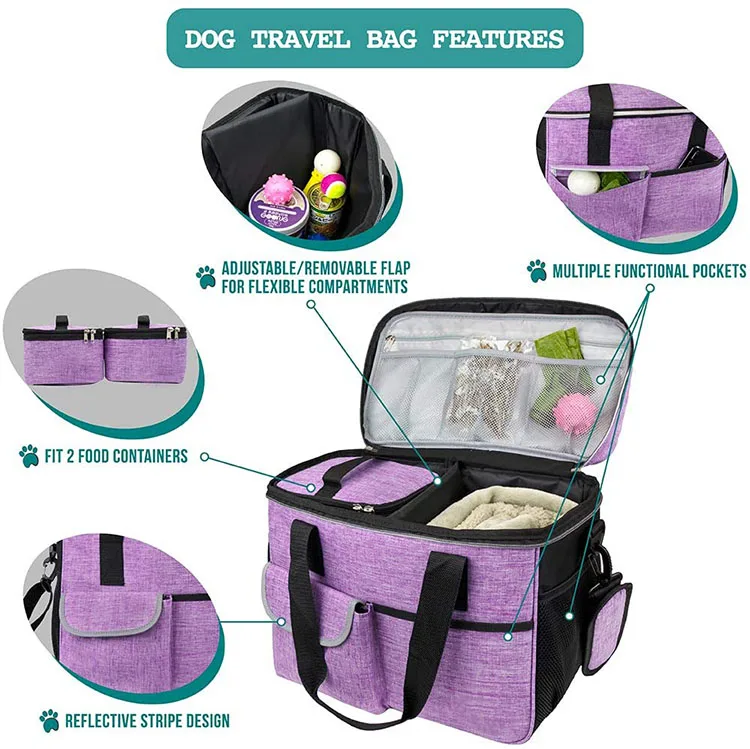
The treat and essentials pouch is the entry role. It is small, clip-on or belt-mounted, and its specification priorities are a wipe-clean lining, a secure closure that works one-handed, and a dispenser outlet for waste bags. Construction is simple, but the closure is the detail that decides repeat purchase, because a pouch that opens in a pocket is a pouch the customer replaces. Realistic FOB for this role is USD 3.20-5.40.
The waist or hip unit is the volume role. It carries treats, a phone, keys and waste bags, and it is the product most owners use on every outing. Specification priorities are strap stability, pocket layout and washability. Because it is worn rather than carried, body-contact comfort matters, and a padded or mesh-backed waistband is worth the additional cost. FOB typically falls at USD 5.80-9.20.
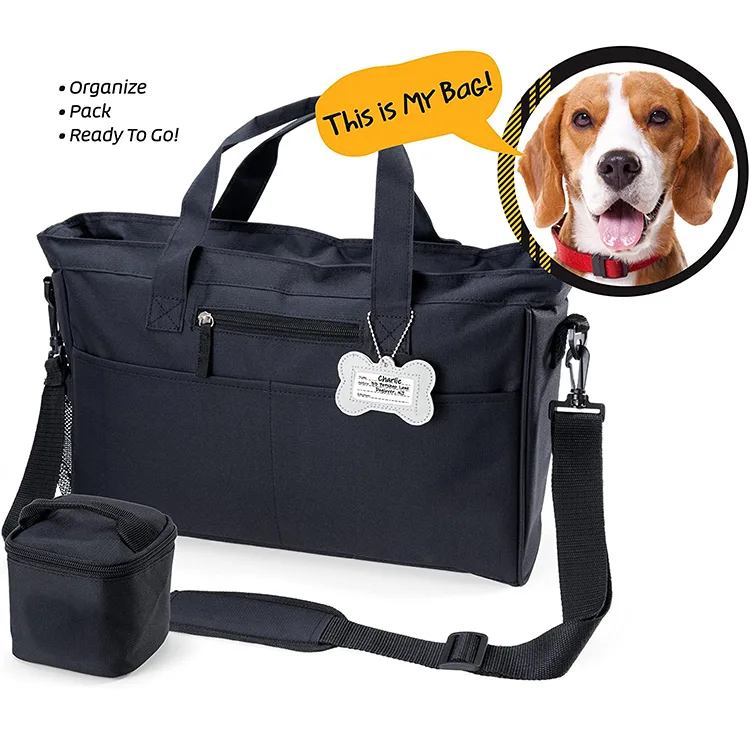
The crossbody or sling tote is the mid-tier role and carries the highest margin. It holds more, is used for longer outings, and is the style where appearance influences purchase most strongly. Specification priorities are shape retention, lining quality and hardware finish, because this is the product the customer looks at closely in store. FOB is usually USD 7.40-12.60.
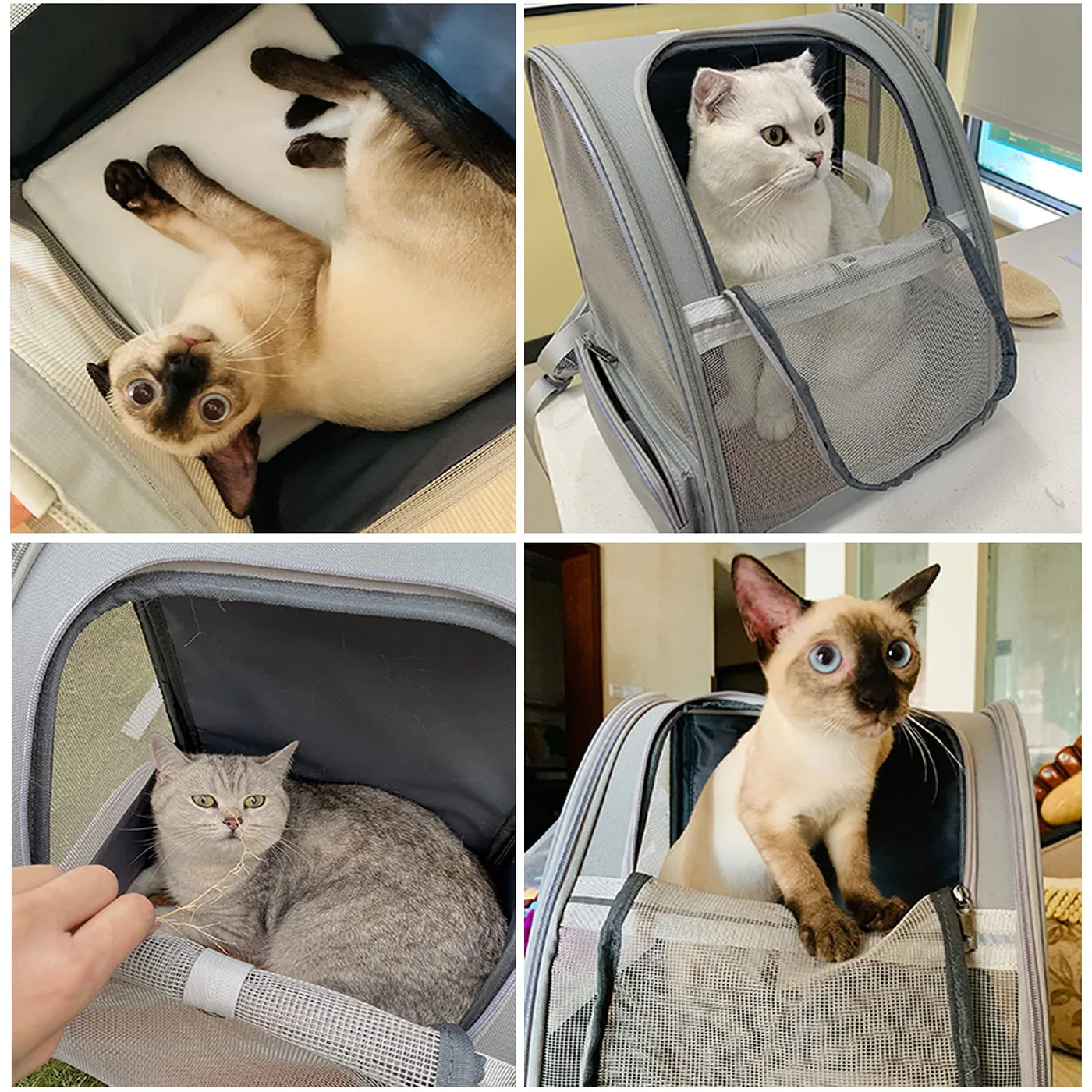
The small structured carrier is the specialist role within walking. It is used for small breeds, for older animals, and for vet visits, and it requires a rigid base, ventilation on two faces and an internal tether. It is the most expensive unit to build and the most defensible, because it cannot be substituted by a general-purpose bag. FOB is typically USD 9.80-16.40 depending on structure.
Setting the ladder
A clean ladder leaves visible gaps between price points so that each tier has an obvious reason to exist. In retail terms, roughly a 1.6 to 1.8 times step between tiers works: a USD 4.60 pouch, a USD 7.90 waist unit, a USD 12.90 sling and a USD 19.90 structured carrier read as four deliberate choices rather than as four similar products at confusing prices.
Hardware and Wear Points That Generate Warranty Claims
Daily use produces a wear profile that occasional-use products never see. A walking bag is opened and closed dozens of times a day, clipped and unclipped, set down on wet ground, and washed more often than any other pet product. The components that fail are predictable, and specifying them properly is the cheapest available reduction in warranty cost.
Zips are the first failure point. The slider and the tape both matter: a brass or nickel slider with a self-locking pull lasts far longer than a generic alloy one, and a woven tape with a covered top resists grit better than an open coil. Specifying a branded or tested zip and a zip garage adds roughly USD 0.35-0.70 per unit and removes the most common single cause of product return in the category.
Clip hardware is the second. Spring clips lose tension, and a clip that releases under load is a safety issue rather than a convenience issue. Specifying a rated buckle with documented retention, and testing retention after a defined number of cycles, is standard practice for a serious program. Our production team records cycle-test results for buckles used on load-bearing positions.
The third wear point is the base. Walking bags are set down on pavements constantly, and an unprotected fabric base abrades through within months. A reinforced base panel, or a moulded foot set, costs USD 0.25-0.60 and extends the visible life of the product substantially. For the mid and premium tiers this should be treated as standard rather than optional.
Stitching at strap roots is the fourth. Every strap is a lever, and the stitches at its base carry the whole load. Bar-tack reinforcement at strap roots, pocket corners and clip anchorages is a low-cost specification that prevents the most visible structural failure in the category.
The fifth and least discussed wear point is the waste-bag dispenser itself. On any walking product that integrates a dispenser, the outlet grommet and the internal roll holder take repeated pulling loads, and a grommet that tears out renders the whole product unusable even though the bag body is intact. Specifying a moulded grommet rather than a stitched or bound opening costs about USD 0.12 per unit and removes a failure that otherwise shows up in reviews as a complaint about the entire product rather than about one component.
Fabric, Trim and Cleaning Requirements for Everyday Use
Fabric selection for walking bags should be driven by cleanability and abrasion rather than by hand-feel. The product will be wiped, sponged and occasionally machine washed, and it will be exposed to mud, water and pet hair on a daily basis. A fabric that looks excellent on a sample board and stains permanently is a poor commercial choice in this category.
Coated polyester in the 300D to 600D range is the practical default, with a PU backing that can be wiped clean. Nylon offers better abrasion resistance at a higher price and is worth considering for the premium tier. Canvas and cotton blends are attractive but stain, which makes them a poor fit for the entry and volume tiers even though they photograph well.
Linings matter as much as shells because the lining is what contacts treats, waste bags and occasionally a wet pet. A wipe-clean TPU or PVC lining is standard in the volume tier and should be taped rather than merely sewn at the base, so that leaks do not escape into the shell. A removable liner is preferable where the price point supports it.
Trim and finishing decisions have outsized influence on perceived quality. Binding rather than raw edges, colour-matched webbing, and a consistent stitch count all signal a better product without adding meaningful cost. Conversely, visible glue marks, mismatched thread and loose binding threads are the defects customers notice first and mention in reviews, which is why they should be written into the inspection criteria explicitly.
Chemical compliance applies to all of these components. OEKO-TEX certification on fabrics is the most efficient way to satisfy retailer chemical requirements, and the substance framework buyers reference in the EU is maintained by the European Chemicals Agency. Textile test methods for colour fastness and abrasion are published by AATCC.
Cost Laddering Without Paying for Three Tooling Sets
The most common cost mistake in a walking line is developing three apparently different products that each require separate tooling, separate patterns and separate component inventories. The alternative is to design the ladder so that tiers share structure and differ in visible specification, which produces the same retail price ladder at a fraction of the development cost.
In practice that means fixing a common platform: one webbing width, one buckle family, one zip gauge and one lining quality across the line. Tiers then differ in shell fabric, hardware finish, pocket count and packaging. A customer sees four distinct products; the factory sees one component set. The saving is typically USD 0.40-0.90 per unit and, more importantly, a substantially simpler inspection and replenishment process.
| Role | Typical size | FOB band | Key spec | Retail price range |
|---|---|---|---|---|
| Treat pouch | 12 x 14 cm | USD 3.20-5.40 | Wipe-clean lining, one-hand closure | USD 9-15 |
| Waist unit | 22 x 16 cm | USD 5.80-9.20 | Stability, padded waistband | USD 18-29 |
| Crossbody sling | 30 x 22 cm | USD 7.40-12.60 | Shape retention, hardware finish | USD 24-39 |
| Structured mini carrier | 38 x 26 cm | USD 9.80-16.40 | Rigid base, twin ventilation | USD 39-69 |
| Walking bundle set | Mixed | USD 11.20-18.90 | Shared shell, retail-ready pack | USD 34-59 |
Bundling is the second lever. A pouch plus waist unit sold as a set uses the same components as the individual SKUs, costs marginally more to pack, and retails at a price that supports a materially better margin than either product alone. Bundles also solve the shelf-space problem in channels where a retailer will only give a brand a single facing.
Finally, packaging should be costed as part of the ladder rather than as an afterthought. A hanging card, a printed band and a polybag are three very different cost outcomes, and the choice should match the channel: value retail needs a carded format, online needs protective packing, and specialty retail needs a format that allows handling.
One further lever is worth stating explicitly because it is regularly overlooked: component re-use across seasons. If a buyer keeps the same webbing colour, buckle family and zip gauge from one season to the next, leftover component inventory carries forward and the second season's first order can be placed at 500 pieces per colorway without absorbing any new tooling or minimum-dye cost. Programs that restyle completely every season pay for that novelty in both cash and lead time, and in a replenishment category the return on novelty is rarely sufficient to justify it.
MOQ, Sampling and Setting a Replenishment Cadence
Standard terms apply: MOQ 500 pieces per colorway, samples in 6-10 working days, bulk production in 35-50 days after sample approval, AQL 2.5 inspection, T/T 30/70 and FOB Xiamen. For a walking line, the more important question is cadence, because this is a replenishment category rather than a seasonal one.
A practical cadence starts with a first order that establishes the ladder, followed by replenishment at intervals driven by sell-through rather than by calendar. Because production is 35-50 days plus transit, a buyer selling through in ten weeks needs to place the reorder around week four. Programs that wait for full sell-through consistently lose two to three weeks of shelf presence per cycle.
Sampling in this category benefits from a component-led approach. Rather than sampling a finished design from a sketch, buyers often get better results by approving a component set first and then sampling the silhouettes against it. The 6-10 working day window accommodates this comfortably and reduces the number of correction rounds, because components are already confirmed.
Capacity planning is straightforward. The production network runs 7 lines with 149 sets of equipment and around 200,000 pieces monthly, so a walking program of 3,000-8,000 pieces per cycle sits well inside available capacity and can share container space with other categories. The binding constraint for replenishment is almost always artwork and packaging approval on the buyer's side, not production availability.
Compliance, Labelling and the Retail Onboarding File
Walking bags are low-risk products in regulatory terms, but retail onboarding still requires a documentation file, and assembling it late is a common cause of delayed launches. The file should be requested at quotation stage so that it is ready when goods are.
The core is chemical compliance. OEKO-TEX certification on fabric and webbing satisfies the majority of retailer requirements in one document, and REACH coverage addresses the EU substance framework. Where a program is sold in California, Prop 65 considerations apply to hardware and coated materials, and the state maintains its own list through the Office of Environmental Health Hazard Assessment. For children's product channels, CPSIA requirements are administered by the US Consumer Product Safety Commission, though pet products generally fall outside its scope.
Factory compliance is the second part of the file. BSCI and ISO 9001 coverage is what allows a large retail buyer to approve a production base without commissioning its own audit, and the quality management framework is summarised by ISO. Social compliance audits and factory verification are commonly arranged through SGS, which many retailers name directly in their supplier requirements.
Labelling is the third part and is frequently overlooked. Retailers require a scannable barcode in a defined position, country-of-origin marking, fibre content where applicable, and care instructions that survive laundering. Getting these wrong does not stop a shipment leaving the factory, but it stops it being received at a distribution centre, which is a far more expensive place to discover the problem.
AQL 2.5 Inspection Priorities on High-Volume Walking Orders
Walking lines ship in larger quantities than specialist styles, so the inspection plan needs to be efficient while still catching the defects that generate returns. AQL 2.5 sets the sample size and acceptance numbers; the defect definitions are what make it effective.
The classification should place functional defects above cosmetic ones. A buckle that does not retain, a zip that jams, a strap root with insufficient bar-tack coverage and a lining seam that leaks are critical defects regardless of how they look. Minor cosmetic issues such as slight thread variation should be recorded but should not hold a shipment.
Dimensional checks should focus on consistency within the shipment rather than against the golden sample, because drift across a large run is what produces customer-visible variation. Checking five units per carton across the sampling plan gives a reliable picture of dimensional stability.
Packaging inspection deserves explicit attention in this category. Walking bags are frequently shipped retail-ready, which means barcode placement, label legibility and carton count accuracy are as important as product quality. A shipment with perfect product and mislabelled cartons will still be rejected at a distribution centre.
Buyers should also agree the rejection remedy in advance. Whether a failed inspection triggers re-work, a partial shipment or a full re-run should be settled at the quotation stage, because negotiating it after a failure has occurred is slow and expensive for both parties.
Freight, Container Planning and Total Landed Cost
Walking bags are light and packable, which makes them unusually favourable in freight terms compared with structured pet products. They are the category most often used to fill container space left over from bulkier styles, and they can materially improve the landed cost of a mixed shipment.
That said, buyers should model landed cost per container position rather than per kilogram. A pouch that weighs very little but is packed on a carded header occupies more space than its weight implies, and a program built entirely on carded packaging can cube out a container before it reaches the weight limit.
Consolidation is where the savings are. Combining a walking replenishment order with slower-moving categories in one container spreads fixed freight and documentation costs across more units. Because the production network produces across categories, orders can be synchronised to finish within the same window when that is planned at the quotation stage.
Duty and classification should be confirmed early. Pet bags classify differently depending on material and construction, and a misclassification discovered at customs is expensive. Buyers importing regularly should confirm the classification with their broker before the first shipment rather than relying on a supplier's suggestion.
Inventory economics deserve the same attention as freight. A walking program with four SKUs and two colorways carries eight inventory lines, and slow-moving combinations consume working capital just as surely as slow-moving styles do. The practical discipline is to review the SKU-by-colorway matrix every cycle and cut the bottom line rather than reordering it automatically, because a ladder that is never pruned accumulates unproductive inventory quietly across two or three seasons.
For buyers planning a full assortment, adjacent categories such as errands pet bags and grocery pet bags share fabrics and trim with walking styles and are the natural second and third additions to a replenishment program.
Production capability
- SGS-verified production space of 4,950 m², 149 machines, 7 assembly lines
- Pet bag output since 2014 from a 137-person team
- 200,000 units shipped monthly under BSCI and ISO 9001 systems
People Also Ask
How much does a wholesale pet walking bag cost?
Daily walk styles generally price between USD 3.20 and USD 12.60 FOB Xiamen, with structured mini carriers reaching USD 16.40. Sharing components across tiers reduces cost without flattening the retail ladder.
What is the most popular pet walking bag style?
The waist or hip unit is the volume role in most markets because it is worn on every outing, while treat pouches are the highest-frequency replacement purchase.
What fabric is best for a dog walking bag?
Coated polyester in the 300D to 600D range is the practical default for wipe-clean performance. Nylon offers better abrasion resistance for premium tiers; canvas stains and suits only limited programs.
How often should a walking bag program reorder?
Most programs sell through in eight to twelve weeks. With 35-50 day production plus transit, the reorder should be placed around week four of the cycle.
Do pet walking bags need certification?
No product certification is mandatory in most markets, but OEKO-TEX on fabrics and REACH coverage are the documents retailers ask for during onboarding.
What is a good retail price ladder for a pet bag line?
A step of roughly 1.6 to 1.8 times between tiers works well, so that each tier reads as a deliberate choice rather than a confusing variation on the same product.
Can a walking bag be machine washed?
Wipe-clean linings are standard; full machine washing depends on structure. Units without a rigid base and with a removable liner are the ones that tolerate machine washing best.
Frequently Asked Questions
What is the MOQ for wholesale pet walking bags?
MOQ is 500 pieces per colorway across standard walking styles. A four-SKU ladder is therefore typically a 2,000-piece first commitment, which can be split across roles when planned in advance.
How long does sampling take?
Samples are completed in 6-10 working days from specification sign-off. Approving a shared component set first generally keeps the program at the short end of that window.
What is the bulk lead time for a walking bag order?
Bulk production runs 35-50 days after sample approval. Replenishment orders should be placed around week four of a ten-week sell-through cycle to avoid losing shelf presence.
Can one walking line share components across price tiers?
Yes, and it is recommended. Fixing a common webbing width, buckle family, zip gauge and lining across the line reduces development cost and unit cost while still producing visibly distinct retail tiers.
Which components fail most often in daily use?
Zips, clip hardware, unprotected bases and strap-root stitching are the four predictable failure points. Specifying tested zips, rated buckles, a reinforced base and bar-tacked strap roots addresses all four.
Is a wipe-clean lining standard?
A wipe-clean TPU or PVC lining is standard in the volume tier. Taping the lining seams at the base prevents leaks escaping into the shell and should be specified explicitly.
What inspection basis is used?
Pre-shipment inspection is at AQL 2.5, with functional defects classified above cosmetic ones. Dimensional checks focus on consistency within the shipment rather than only against the golden sample.
Are bundles or sets available?
Yes. Bundle sets combining a pouch and a waist unit use the same components as the individual SKUs and retail at a materially better margin, while also solving shelf-space limits in value channels.
What packaging formats can be supplied?
Carded hanging formats, printed bands and plain polybag packing are all available. The format should be selected by channel: carded for value retail, protective packing for online, and openable formats for specialty retail.
Which certifications cover the production base?
Production runs through an SGS-verified base with BSCI and ISO 9001 coverage. OEKO-TEX certification can be arranged on fabrics and webbing, with REACH coverage for EU buyers.
What are the payment and trade terms?
Standard terms are T/T with a 30 percent deposit and 70 percent balance before shipment, quoted FOB Xiamen. Alternative Incoterms can be quoted on request.
Can walking bags be consolidated with other categories?
Yes. Walking styles are light and packable, so they are commonly used to fill space in mixed containers alongside structured styles, which improves the landed cost of the whole shipment.
How should barcodes and labelling be handled?
Barcode placement, country-of-origin marking and care labelling should be specified at quotation stage. Errors here do not stop production but do cause rejection at a retail distribution centre.
Talk to QUANZHOU JUNYUAN BAGS about a wholesale pet bag order: MOQ 500 pieces per colourway, samples in 6-10 working days, bulk production in 35-50 days under AQL 2.5 inspection.
Get a free quote Request a sample