Pet Senior Bag for Older Pets: Wholesale Buyer Guide
A wholesale senior pet bag is a low-entry, pressure-relieving carry product in the 12-22 litre band, specified at MOQ 500 pieces per colour and FOB Xiamen USD 7.40-14.80 per unit depending on base construction and liner specification. The two numbers that decide cost are foam density and step-in height, not overall volume. Samples take 6-10 working days; bulk production takes 35-50 days.
Executive summary for senior pet product buyers. Products for older animals are bought by owners who are already spending heavily on veterinary care and who judge a purchase by whether it reduces effort for an animal in discomfort. That buyer is less price-sensitive than any other segment in the pet trade and considerably less forgiving. The specification therefore has to prioritise the two things an older animal cannot do for itself: stepping up into a bag and lying comfortably on a hard surface.
Commercial baseline: MOQ 500 units per colour, samples in 6-10 working days, bulk production 35-50 days after sample approval and deposit, inspection to AQL 2.5 with a compression and base-recovery gate, payment T/T 30/70 against FOB Xiamen. Foam and liner specifications carry their own minimums and should be locked with the bag rather than after it. Our production team specifies these through an SGS-verified production base operating to BSCI and ISO 9001, with foam density and compression data recorded per run. Buyers who write foam density, thickness and recovery into the tech pack receive comparable quotes; buyers who ask simply for a padded base do not, and the difference appears as flattening within weeks of first use.
Pet bag lead time is quoted from sample approval, not from enquiry, and Pet Bag Types & Styles choices are the main variable inside that window. Pet bag production time stretches when a colourway is added late, so pet carrier lead time and pet bag wholesale cost should be agreed in the same email.
What changes when the animal is old
The specification implications of an ageing animal are physical and specific. Joints lose range of motion, so a high step-in becomes a barrier. Muscle mass reduces, so a hard surface becomes uncomfortable within minutes. Bladder control becomes unreliable, so an absorbent or washable interior becomes necessary rather than optional. And thermoregulation becomes less efficient, so both overheating and chilling become real risks in a product that would be comfortable for a younger animal.
Step-in height is the first specification to fix. An older animal that has to climb into a bag will either refuse or will be lifted, and lifting an animal with joint pain is unpleasant for both parties and a genuine injury risk for the owner. A low or fully opening front, or a top opening that can be laid flat, removes the step entirely. This single design decision drives more satisfaction in this category than any other.
Surface pressure is the second. An older animal lying on a thin board over a hard floor experiences pressure at the hip and shoulder, and will shift, stand and settle repeatedly. A base that distributes pressure reduces that behaviour measurably. The specification therefore needs a foam layer with a stated density and thickness, plus a board stiff enough that the foam is not compressed to nothing by the frame.
Containment and security matter differently here too. An older animal is usually calmer, which means a less robust closure is acceptable, but it may also be unsteady, which means the interior should not slide or shift under it. A non-slip base and a stable interior are worth specifying explicitly.
- Low or eliminated step-in, prioritised over every other feature.
- Pressure-distributing base with stated foam density and thickness.
- Absorbent or fully washable interior as standard, not as an upgrade.
- Non-slip base and a stable, non-shifting interior floor.
- Thermal balance: warmth without trapping heat.
The buyer for these products is also worth understanding. In the majority of cases the purchaser is an owner managing a chronic condition, and they will read the specification carefully. Stating foam density, internal dimensions and the cleaning method in the product information is a genuine commercial advantage in this segment.
That reading behaviour has a direct consequence for how a range should be presented. Products in this category convert better when the listing leads with the measurable facts an owner is comparing: entry height in centimetres, internal length, foam thickness and the stated weight band. A listing that leads with lifestyle language and hides the numbers is typically outsold by a plainer competitor that publishes them, which is unusual in the pet trade and worth exploiting.
There is also a channel-timing point that shapes the order calendar. Senior pet products are bought at the point of diagnosis or decline rather than on a seasonal cycle, so demand is comparatively flat through the year. That makes the category attractive to wholesalers precisely because it fills the quiet months between gift seasons, provided the range is held in stock rather than ordered to order.
Senior bag specification matrix
The matrix below sets out three specifications covering the main wholesale briefs in this category. The tiers differ almost entirely in base construction and liner, which together account for the majority of the cost difference.
| Parameter | Comfort basic | Veterinary channel | Premium care |
|---|---|---|---|
| Volume | 12-16 L | 16-20 L | 18-22 L |
| Entry height | Under 12 cm | Under 8 cm | Flat-opening side |
| Base foam | 15 mm, low density | 25 mm, medium density | 30 mm, dual layer |
| Base board | 3 mm board | 4 mm board, removable | 5 mm board plus frame |
| Liner | Wipeable 210D | Removable washable | Removable absorbent liner |
| Non-slip base | Printed dots | Coated panel | Coated panel plus feet |
| Opening | Top, three-sided zip | Flat-opening plus top | Flat-opening, two-stage |
| Weight band | Up to 8 kg | Up to 12 kg | Up to 14 kg |
| MOQ per colour | 500 | 500 | 500 |
| FOB Xiamen band | USD 7.40-9.20 | USD 9.60-12.10 | USD 12.40-14.80 |
| Sample lead time | 6-8 working days | 6-10 working days | 8-10 working days |
| Bulk lead time | 35-45 days | 38-48 days | 40-50 days |
| Inspection gate | AQL 2.5 | AQL 2.5 plus compression | AQL 2.5 plus compression and wash |
The entry height row is the one buyers should read first. Under eight centimetres is the practical threshold at which most older animals will step in unaided, and under twelve centimetres is the point at which many still will. A product marketed for senior animals with a fifteen-centimetre step-in fails its own premise, and this is the most common gap between marketing and specification in the category.
Base foam is the second. A foam specification without a density figure is meaningless: low-density foam of twenty-five millimetres will flatten faster than medium-density foam of fifteen. Buyers should specify density, thickness and a compression recovery figure, and should ask for recovery data after a defined number of compression cycles.
The premium row adds an absorbent liner, which is the right specification for products sold explicitly into incontinence care. That is a meaningful market and a defensible price point, but the liner has to be genuinely absorbent and genuinely washable, and buyers should test both claims rather than accept them.
Base construction: foam, board and pressure distribution
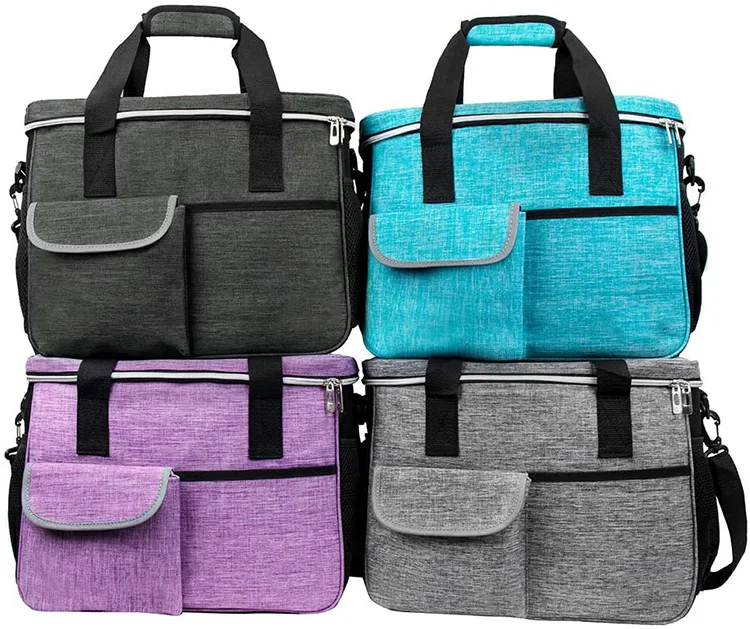
The base is the product in this category. Everything else is a bag; the base is what makes it a senior product, and it is also where a low quote hides its compromise. Three layers matter: a board that gives the base shape, a foam layer that distributes pressure, and a cover that is washable and non-slip on the underside.
Board thickness should be specified in millimetres and matched to the weight band. A board that is too thin flexes and defeats the foam; a board that is too thick adds weight the owner has to carry. The board should also be removable, because it otherwise prevents the bag from being washed properly and makes the whole product harder to clean after an accident.
Foam specification needs three numbers: density, thickness and compression recovery. Density determines how long the foam keeps its loft, thickness determines how much pressure is distributed, and recovery determines whether it returns after a night of use. A supplier quoting a padded base without these numbers is quoting an unknown, and the usual outcome is a product that is comfortable for two weeks and flat thereafter.
Compression testing is the practical control. A defined load applied for a defined period, with a recovery measurement after a defined interval, gives a number a buyer can hold a supplier to. Our production team records compression data per run for products in this category, which is what makes a flattening complaint traceable rather than arguable.
- Board: thickness in millimetres, matched to the weight band, removable.
- Foam: density, thickness and compression recovery, all stated.
- Cover: removable and washable, with a non-slip underside.
- Frame: stiff enough that the foam is not compressed by the structure.
- Test: compression and recovery recorded per production run.
Openings, step-in height and handling for the owner
Opening design serves two users at once: the animal that has to get in and the owner who has to lift or guide it. A three-sided top zip that opens almost flat serves both, because it removes the step and gives the owner full access from above. A front opening with a low sill works well for animals that will walk in, and is usually paired with a top access for animals that will not.
Two-stage openings are worth specifying even in this calm-animal category, because an unsteady animal can lean against a partly closed opening and push it open. The secondary closure does not need to be heavy; it needs to hold against a lean rather than against a determined escape.
Handles and straps should be specified for the owner's situation, which often involves carrying an animal plus supplies plus their own bag. A padded shoulder strap that distributes load and a short grab handle for lifting in and out of a car are the pair that works. Strap width below 38 millimetres is uncomfortable at the weight bands in this category.
Stability when set down matters more than in most categories. An unsteady animal stepping into a bag that slides is a genuine hazard, which is why the non-slip base is specified rather than decorative. Buyers should test the base on both hard flooring and carpet, because some coatings grip one and slip on the other.
Grab handles deserve separate specification from the carrying strap. An owner lifting an animal that cannot step in needs a short, rigid, well-anchored handle at each end rather than a soft webbing loop, and the anchor points should be bar-tacked and load-tested at the top of the weight band. This is the load path most likely to be under-built in a competitive quote and the one where failure causes an injury rather than a complaint.
Finally, weight of the empty bag matters to this buyer. An owner lifting an animal plus a heavy bag is doing more work than necessary, and trimming structure where it is not load-bearing is a real design benefit rather than a cost saving.
Incontinence management and washability
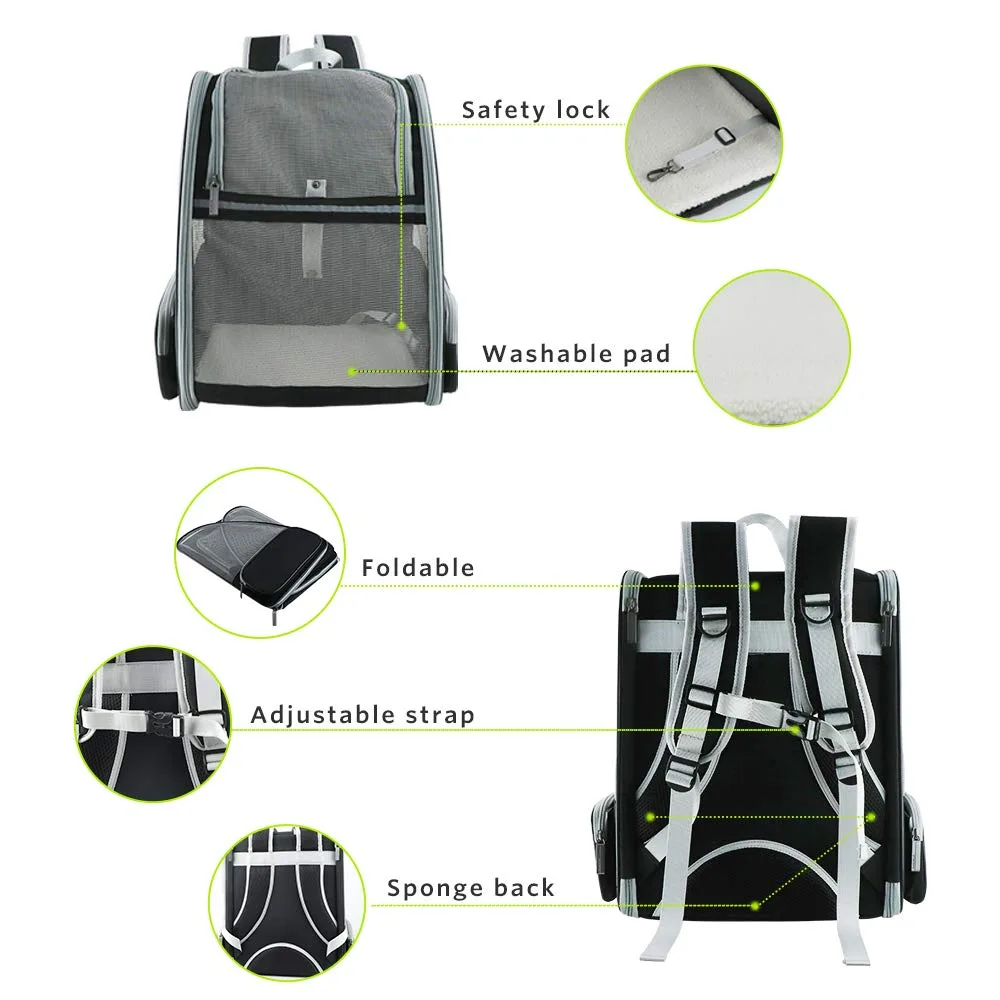
Incontinence is the defining practical problem in senior pet products and the one most specifications avoid. It should not be avoided: a senior bag that cannot be cleaned quickly will be used once and then stored. The specification answer is a removable, washable liner plus a wipeable shell, so an accident costs a liner wash rather than a whole-bag wash and the product returns to service the same day.
Liner construction should be specified with the same rigour as the shell. A bonded absorbent layer inside a wipeable outer, with a seam-sealed edge, is the standard construction for products that make an absorbency claim. A simple wipeable liner is adequate where the product does not claim absorbency, and is cheaper and easier to wash.
Claims need care. A product described as waterproof should be tested as waterproof, and the test should cover the seams rather than only the fabric. A liner that leaks at the seam is worse than no liner at all, because it gives the owner false confidence. Buyers should specify a seam-sealed construction and ask for a simple water-column or standing-water test result.
Drying time is the companion metric. A thick absorbent liner that takes a day to dry means the owner needs two, which doubles the accessory cost and is a common source of dissatisfaction. Buyers should specify drying time under stated conditions and consider offering a second liner as part of the kit.
Washing instructions should be written for the owner and printed on the product or the hangtag. This is a category where the buyer reads instructions, and a clear instruction set reduces returns more effectively than any other single measure.
Spare liners are a commercial opportunity that most ranges miss. An owner managing incontinence needs at least two, and a liner sold separately carries a far better margin than the bag while costing a fraction of it to produce. Buyers should specify the liner as a stocked spare part from the first order rather than discovering the demand after the range has launched.
Fabrics, warmth and comfort without overheating
Older animals regulate temperature less well, which makes fabric choice a comfort question rather than an aesthetic one. A heavily coated shell traps heat; a thin shell lets an animal lose heat to a cold floor. The usual resolution is a moderate shell with an insulated or fleece-lined interior panel that can be removed in warm weather.
The interior surface should be soft and low-friction. An older animal with thin coats and prominent joints is more sensitive to abrasion, and a rough lining causes the animal to shift and stand. A brushed or fleece interior is the standard answer, and it should be specified for washability as well as for softness because it will be washed often.
Ventilation should not be sacrificed for warmth. A senior animal still needs airflow, and an over-insulated bag on a mild day is uncomfortable and potentially unsafe. Two mesh panels plus a removable insulated liner gives the owner control across seasons at a modest cost.
Colour choice has a small practical dimension: lighter interiors make it easier to see soiling, which matters in a product used by an incontinent animal. Mid-tones remain the best compromise between visibility and appearance after repeated washing.
Finally, avoid strong chemical odours in finishes. Older animals are frequently more sensitive, and an owner who notices an odour on a product intended for a compromised animal will return it. Buyers should request low-odour finishing and should smell a production sample as well as the approval sample.
Hardware placement also deserves attention in this category. An older animal resting in a bag should not have a buckle, a slider or a strap anchor pressing into its flank, and internal hardware should be either absent or recessed. This is a comfort detail that costs nothing at specification stage and cannot be corrected afterwards, and it is one of the details a veterinary reviewer notices immediately when assessing a sample.
Compliance and documentation for the veterinary channel
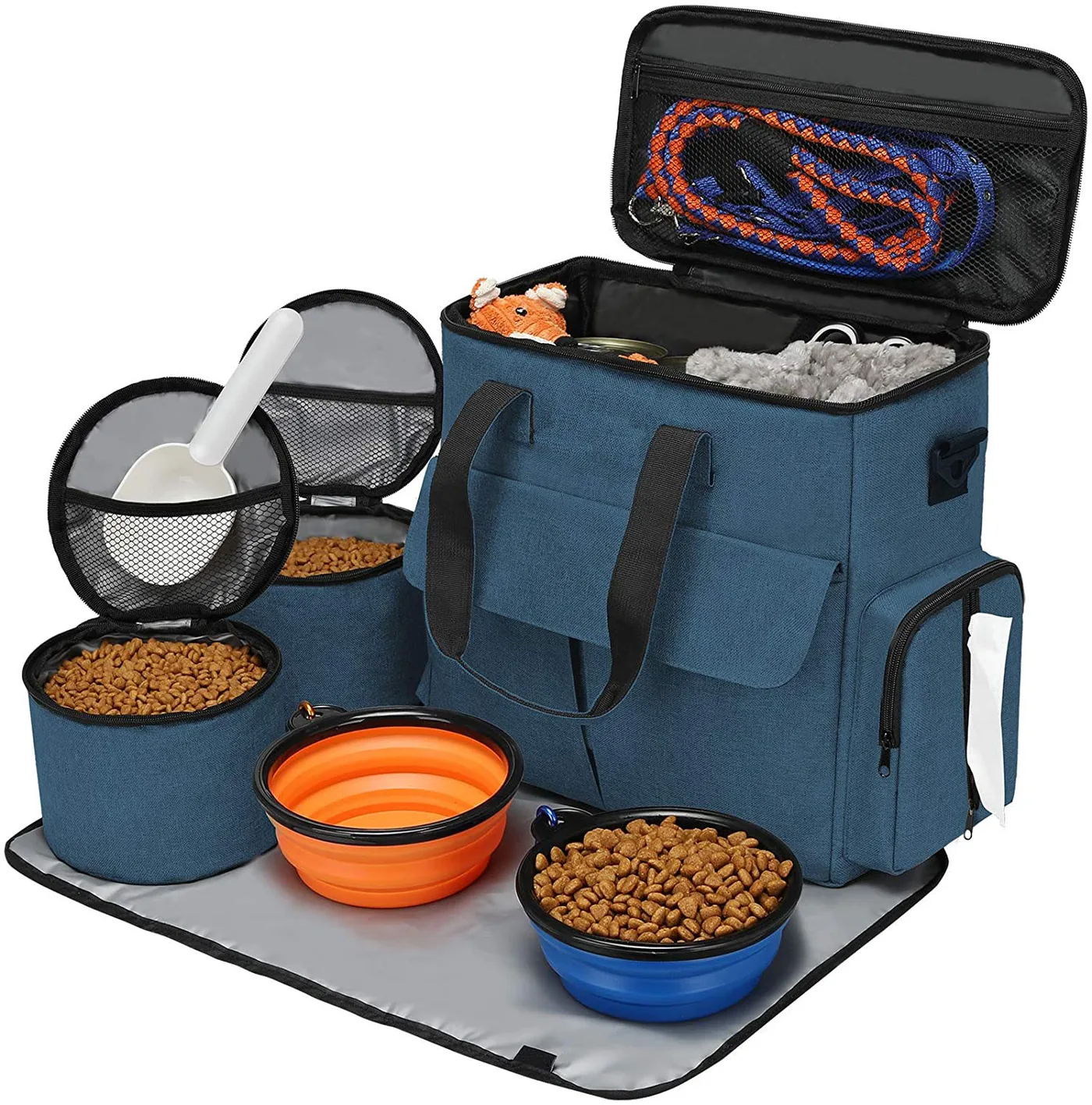
Senior pet products sell disproportionately through veterinary practices and veterinary distributors, and that channel applies documentation standards that general pet retail does not. A technical sheet stating the weight band, internal dimensions, foam specification, cleaning protocol and materials is frequently a precondition of listing, and preparing it at specification stage costs a fraction of assembling it later.
Product compliance follows the standard expectations: CPSIA lead and phthalate reports on accessible substrates for United States distribution, a Prop 65 assessment for California, and REACH SVHC declarations for Europe. An OEKO-TEX certificate on the fabrics is efficient and widely accepted. Where a product makes an absorbency or waterproof claim, supporting test data should be held on file.
Animal welfare guidance shapes how veterinary partners evaluate comfort claims. Veterinary associations publish widely on senior animal care and mobility, and resources from the American Veterinary Medical Association are commonly referenced in these conversations. Buyers should keep product claims descriptive rather than therapeutic: a bag can support comfort and mobility, and it should not be presented as a treatment.
Independent testing bodies publish approaches to pet product safety evaluation that buyers can use to set internal acceptance criteria, including work available through the Center for Pet Safety. Even where their programmes do not cover a given product type, their published test methodology is a useful template for writing a specification that a distributor will accept.
The retained sample and the compliance file complete the documentation set. In a channel where listings are reviewed and renewed, having both ready is a commercial advantage as much as a compliance one.
Pricing, MOQ and range planning
MOQ 500 per colour applies as standard, and in this category the more important constraint is usually the foam and liner minimums. A custom foam density or a bespoke absorbent liner carries its own production minimum, which can exceed the bag minimum. Buyers should ask whether the foam and liner specifications are stock items or custom, because choosing stock variants is often the single largest available saving.
Price in this category is dominated by base construction and liner, and buyers should expect the premium tier to cost roughly twice the entry tier. That is defensible, because the product is genuinely different, but buyers should verify that the difference is in the base and the liner rather than in decoration. A premium bag with an entry-level base is the most common mis-specification in the segment.
Range planning should be conservative. Senior products sell in fewer, larger sizes and in fewer colours than general pet products, and a tight range reduces inventory risk in a category where the buyer is specialist. Two sizes and one colour is usually the right starting structure.
Sampling takes 6-10 working days and should include compression testing and a wash cycle. Bulk production takes 35-50 days after sample approval and deposit, and inspection to AQL 2.5 should be supplemented with a compression and a wash gate. As elsewhere, a retained production sample is the basis for comparing re-orders.
Re-order discipline matters more here than in most categories because the buyer is a specialist retailer with a long memory. A specification that holds steady across years, with foam performance verified each run, is what keeps a product listed in a veterinary channel.
Freight planning deserves a final note because this is a bulky category. A bag with a thick foam base and a structured frame does not compress much in a carton, and the cost per unit shipped is correspondingly higher than for a flat-packed accessory bag. Buyers should ask for units-per-carton and carton dimensions at quotation and compare landed cost rather than FOB price, because the ranking between two suppliers frequently reverses once freight is included.
Production capability
- SGS-verified production space of 4,950 m², 149 machines, 7 assembly lines
- Pet bag output since 2014 from a 137-person team
- 200,000 units shipped monthly under BSCI and ISO 9001 systems
People Also Ask
What size bag suits an older dog?
A 16-22 litre bag with a flat-opening side and a low or eliminated step-in covers most medium and large senior dogs, with internal length being the dimension that matters most.
Why does step-in height matter so much?
Joints lose range of motion with age. An animal that cannot step in must be lifted, which is unpleasant for the animal and a genuine injury risk for the owner.
What foam density should a senior pet bag use?
Medium density with a stated compression recovery figure. Low-density foam of greater thickness flattens faster than medium-density foam of less thickness.
Are senior pet bags washable?
They should be. A removable washable liner plus a wipeable shell means an accident costs a liner wash rather than a whole-bag wash and the product returns to service the same day.
Do older pets overheat in carry bags?
They can. Thermoregulation becomes less efficient with age, so specify two mesh panels plus a removable insulated liner so the owner can adjust by season.
Frequently Asked Questions
What is the MOQ for a senior pet bag?
MOQ is 500 pieces per colour on the bag body. Foam and liner specifications may carry their own minimums, so confirm whether they are stock or custom items at quotation.
What step-in height should a senior bag have?
Under eight centimetres for most older animals, and under twelve as an absolute ceiling. A product marketed for senior animals with a fifteen-centimetre step-in fails its own premise.
How should the base foam be specified?
By density, thickness and compression recovery. A padded base without those three numbers is an unknown, and the usual outcome is flattening within weeks.
Should the base board be removable?
Yes. A fixed board prevents proper washing and makes the product harder to clean after an accident, which is a routine event in this category.
What liner specification suits incontinence care?
A removable washable liner as standard, and a bonded absorbent layer with seam-sealed edges where an absorbency claim is made. Test the seams, not just the fabric.
How long do samples and bulk production take?
Samples take 6-10 working days and should include compression and wash testing. Bulk production is 35-50 days after sample approval and deposit.
What inspection gates apply beyond AQL 2.5?
A compression and recovery check on the base foam and a wash-cycle check on the liner. These catch the substitutions and shortcuts a visual inspection misses.
How important is the non-slip base?
It is a safety feature rather than a decoration. An unsteady animal stepping into a bag that slides is a genuine hazard, and coatings should be tested on both hard floors and carpet.
Which compliance documents do veterinary distributors ask for?
A technical sheet with weight band, dimensions, foam specification and cleaning protocol, plus CPSIA reports for the US, REACH declarations for Europe and ideally an OEKO-TEX certificate on the fabrics.
Can the product be marketed as therapeutic?
No. Keep claims descriptive: the bag supports comfort and mobility. Presenting it as a treatment creates regulatory and channel risk for no commercial gain.
Should we offer two liners per bag?
Consider it. A thick absorbent liner with a long drying time means the owner effectively needs two, and supplying both removes a predictable source of dissatisfaction.
How many sizes and colours should a range carry?
Start with two sizes and one colour. Senior products sell in fewer, larger variants than general pet products, and a tight range reduces inventory risk.
Talk to QUANZHOU JUNYUAN BAGS about a wholesale pet bag order: MOQ 500 pieces per colourway, samples in 6-10 working days, bulk production in 35-50 days under AQL 2.5 inspection.
Get a free quote Request a sample