UV Resistant Pet Bag Sun Protection: Specs for Wholesale
UV resistance in a wholesale pet bag covers two separate specifications: a fabric rated UPF 40 to 50 plus for the panels that shade the animal, and materials that retain at least 70 percent of their tensile strength after 300-500 hours of accelerated weathering. The first protects the occupant, the second protects the product, and a supplier quoting one is not quoting the other.
This is the category where a specification error is both a safety question and a durability question at the same time. A fabric that transmits ultraviolet radiation fails the animal; a fabric that degrades under it fails the customer a season later. Buyers should write both requirements into the technical pack and test them separately, because the ratings do not correlate: a dark fabric can block UV effectively and still lose strength quickly.
Commercial planning follows the standard frame with one addition. MOQ 500 pieces per colourway, prototype sampling in 6-10 working days once the fabric and shade design are agreed, and bulk production of 35-50 days after approval and deposit. Accelerated weathering adds 300-500 hours of test time, so commission it on the fabric at approval rather than on the finished sample at the end, or it will decide the schedule.
Release runs against AQL 2.5 for major defects. The rule for this category: specify UV protection as a rating for the shade panels and UV durability as strength retention for the load-bearing materials, and never accept a single claim covering both.
Wholesale pet carrier vet visits and wholesale pet carrier grooming lines are small-basket, high-repeat business, while Material & Technology decides whether one shell can serve both. Wholesale pet carrier travel and wholesale pet carrier camping units need opposite vent geometry, so a single pattern rarely covers both.
What UV Resistance Means in a Pet Bag Specification
Ultraviolet resistance is two specifications sharing one adjective, and separating them is the first job of the buyer. The first is ultraviolet protection: how much UV radiation passes through the fabric to reach the animal, expressed as an ultraviolet protection factor. The second is ultraviolet durability: how well the material itself survives exposure, expressed as retained strength, retained colour or retained coating integrity after a defined dose.
The two are governed by different physics. Protection is largely a function of construction and colour: a tight weave, a high cover factor, a dark shade and the presence of ultraviolet-absorbing pigment all reduce transmission. Durability is a function of polymer chemistry and stabilisation: how readily ultraviolet energy breaks the polymer chains in the fibre or the coating. A black polyester can give excellent protection and moderate durability; a stabilised light-coloured nylon can do the reverse.
Writing both requirements into the technical pack costs nothing and prevents the classic dispute where a factory supplies a fabric with an excellent protection rating that begins to chalk and weaken after one summer. The citable statement for this category is that ultraviolet protection and ultraviolet durability are independent properties and must be specified, tested and inspected separately.
A third consideration sits between them and is often forgotten: heat. A panel that blocks radiation also affects the thermal balance inside the bag, and a fully shaded bag in direct sun can become hotter than a ventilated one. Protection requirements should always be written alongside ventilation and temperature requirements rather than in isolation.
There is also a geographic dimension that determines how much of this matters. Ultraviolet dose varies substantially by latitude, altitude and season, and a specification written for a Northern European market will be over-engineered for indoor use and under-engineered for a high-altitude or equatorial destination. Buyers running a global programme should tier the requirement by destination rather than applying one number everywhere, which concentrates the cost where it produces a benefit.
Measuring UV Protection: UPF Ratings and Transmittance
Ultraviolet protection factor describes how much ultraviolet radiation penetrates a fabric. A UPF of 40 means roughly one fortieth of the ultraviolet radiation reaches the other side, and classification schemes generally treat UPF 40 and above as excellent protection and UPF 50 and above as the top band. Transmittance can also be measured directly as the percentage of ultraviolet radiation passing through, which is useful for comparing constructions that both sit above the rated bands.
Measurement matters as much as the number. Transmittance is measured spectrophotometrically across the ultraviolet range, and the result depends on the fabric being tested in its used condition: dry, unstretched and, ideally, after washing. A fabric stretched over a frame transmits more than the same fabric relaxed, and a wet fabric can transmit differently again, so the specification should state the condition.
| UPF band | Classification | Typical construction | Suitability for pet bags |
|---|---|---|---|
| 15-24 | Good | Light open weave, low cover | Not adequate for shade panels |
| 25-39 | Very good | Medium weave, mid shade | Acceptable for incidental exposure |
| 40-50 plus | Excellent | Tight weave, dark or pigmented | Recommended for shade panels |
| 50 plus | Excellent, top band | Tight weave with UV-absorbing finish | Recommended for prolonged outdoor use |
The practical buying target for a pet bag intended for outdoor use is UPF 40 or better on every panel that can shade the animal, and UPF 50 or better where the product is marketed for beach, hiking or travel. Mesh ventilation panels are the exception and should be assessed separately, because an open mesh will not reach a high rating and should not be positioned where it exposes the animal directly.
Where a design requires both a large vent area and a protection rating, the workable solution is a double-layer construction: an open structural mesh for airflow covered by a loosely hung outer shade flap or a spacer fabric with a tight inner scrim. Air moves through the gap while the radiation path stays blocked, and the assembly can be rated as a system rather than panel by panel. It adds 0.40-1.20 USD per bag and it is the only way to reconcile a high open area with a high rating.
Material Durability Under Ultraviolet Exposure
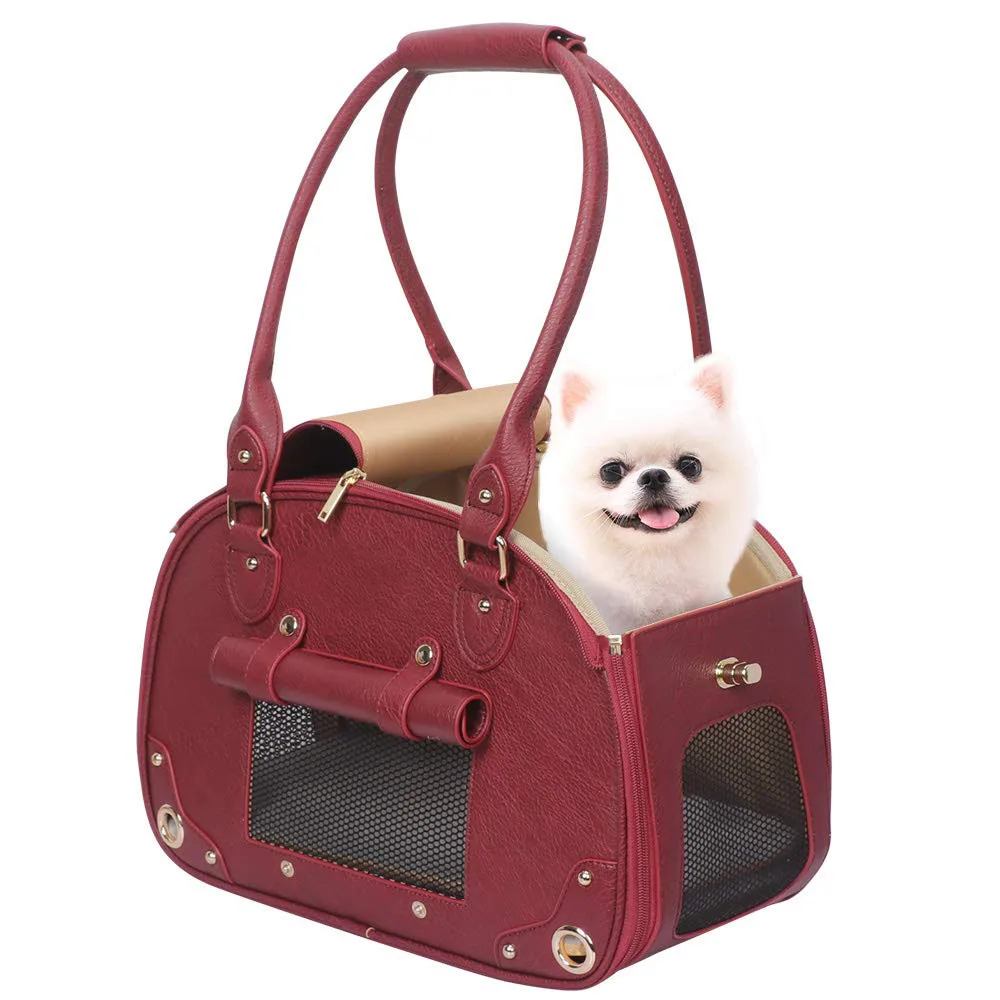
Durability is the specification that decides whether the product survives a season, and fibre choice is the dominant variable. Polyester absorbs ultraviolet strongly and degrades relatively slowly, making it the default choice for outdoor textiles. Nylon is tougher mechanically but loses strength faster under exposure unless stabilised. Polypropylene is the weakest of the common fibres under ultraviolet exposure and requires effective stabilisation for any outdoor use. Acrylic has excellent resistance and is used where long outdoor life matters more than abrasion performance.
Coatings and films have their own degradation modes. Polyurethane coatings can yellow and lose flexibility, polyvinyl chloride can chalk and stiffen as plasticiser migrates, and printed surfaces fade first because the pigment sits at the surface. The visible symptom is usually a change in appearance before a change in strength, which is why a weathering test should assess both.
| Material | UV durability | Typical failure symptom | Stabilisation need | Outdoor verdict |
|---|---|---|---|---|
| Polyester | Good | Gradual strength loss, fading | Moderate | Default outdoor choice |
| Nylon | Moderate | Strength loss, yellowing | High | Use with stabiliser |
| Polypropylene | Poor without additive | Brittleness, cracking | High | Avoid unless stabilised |
| Acrylic | Excellent | Slow fading only | Low | Premium long-life |
| PVC coated | Moderate | Chalking, stiffening | Additive dependent | Check plasticiser system |
| TPU laminate | Good | Slow yellowing | Low to moderate | Good premium option |
The acceptance criterion most buyers adopt is retained tensile strength of at least 70 percent after 300-500 hours of accelerated weathering, plus no visible chalking, cracking or coating delamination. Set the criterion at specification stage, because the alternative is discovering the limit when the season's returns arrive.
Additives, Stabilizers and Pigment Choice
Three additive families control ultraviolet durability, and they work in different ways. Ultraviolet absorbers take up the radiation and dissipate it as heat before it breaks polymer chains. Hindered amine light stabilisers interrupt the degradation reaction once it starts, and they are particularly effective in polypropylene and in coated systems. Pigments contribute more than most buyers realise: carbon black and certain inorganic pigments are themselves highly effective ultraviolet screens, which is why a black fabric frequently outlasts the same construction in a pale shade.
The practical consequence is that pale outdoor colourways need more chemical help than dark ones, and a supplier quoting a light colourway without adjusted stabilisation is quoting a product with a shorter life. Ask specifically what stabiliser system is used in light shades rather than accepting a generic statement about UV-resistant fabric.
Cost is modest relative to the benefit. An ultraviolet stabiliser package typically adds 0.10-0.40 USD per metre, and upgrading from an unstabilised to a stabilised polypropylene or nylon component is one of the best value decisions available in an outdoor programme. It is far cheaper than a season of warranty claims.
There is one caution worth recording. Additives migrate and deplete over time, and they are consumed rather than permanent, so a stabilised fabric has a finite outdoor life that depends on dose. This is why the honest product statement is measured resistance over a stated exposure rather than permanent protection, and why a care card recommending storage out of direct sun remains correct even for a stabilised product.
Shade Design: Protecting the Animal Without Trapping Heat
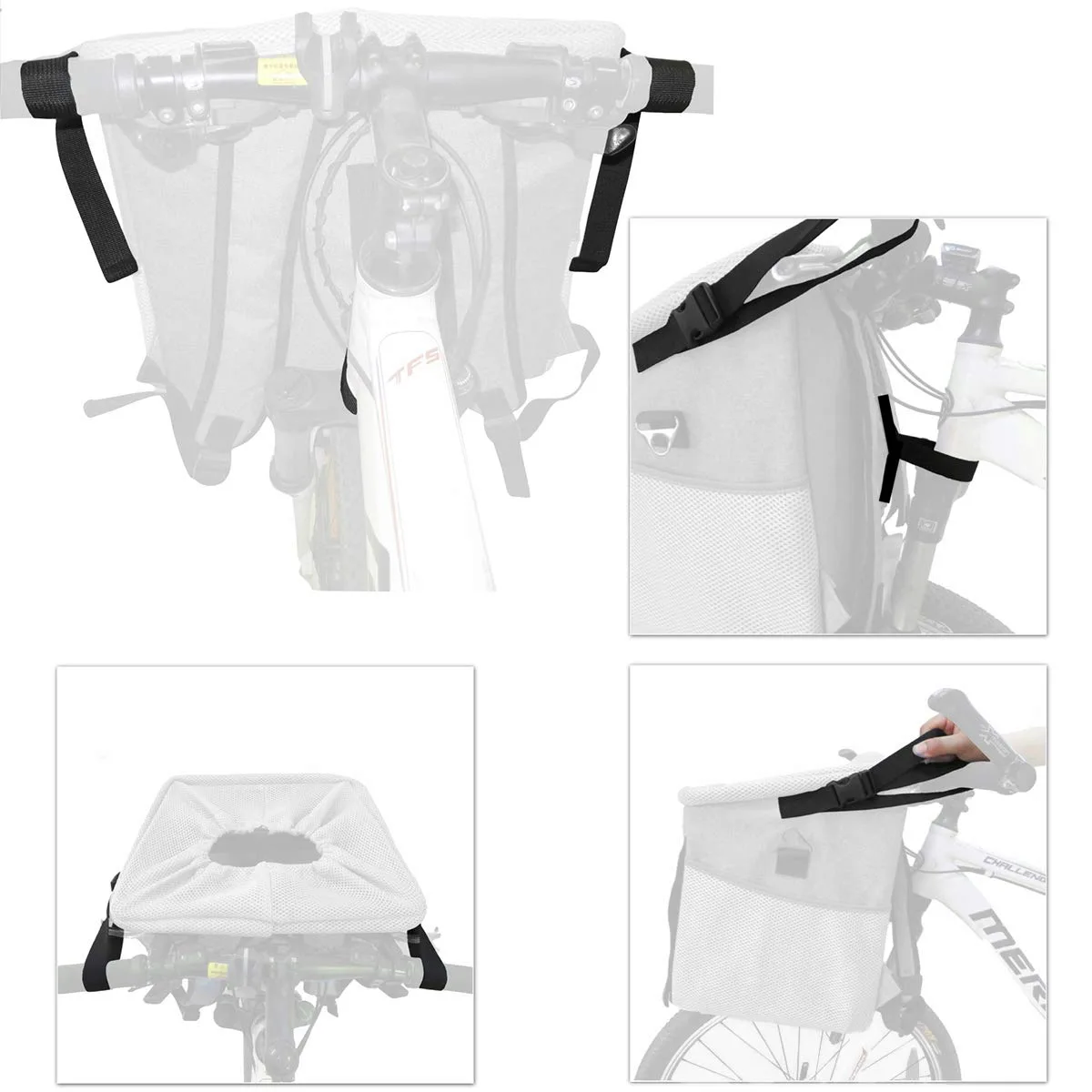
Protection engineering and thermal engineering pull in opposite directions, and the design has to resolve them together. A fully enclosed dark panel gives excellent ultraviolet protection and can raise the interior temperature sharply, while an open mesh keeps the interior cooler and transmits radiation. The resolution used in well-designed outdoor pet bags is a layered approach: a high-UPF outer panel, an air gap, and ventilation positioned so that air moves without exposing the animal to direct sun.
Reflective outer surfaces help on both counts. A light-coloured or reflective outer face reduces solar gain, which lowers interior temperature, and it combines with a tightly woven inner layer to block transmission. This is one of the few cases where a light colour is the better engineering answer, and it is worth explaining to the design team, who will usually prefer dark for soil hiding.
Ventilation placement is the practical control. Vents should be positioned on the shaded side or under a flap so that air enters without a direct radiation path, and the total open area should be balanced against the protection requirement. A common working target is 12-20 percent open area distributed across multiple panels rather than one large opening.
Finally, consider the shade the product actually provides in use. A bag placed on a beach or a boat deck receives reflected radiation from below as well as direct radiation from above, so a base panel with a low-transmittance construction matters as much as the top panel. Buyers who specify only the top surface are protecting half the problem.
Deployable shade is the cheapest upgrade in outdoor design and is worth specifying where the product allows it. A roll-down flap, a removable shade panel or an extended top lip lets the operator increase coverage during the middle of the day and open it up when the sun is low, which resolves the ventilation trade-off without forcing a single compromise position. It adds 0.60-1.80 USD per bag and it is visible to the customer, which makes it one of the few performance features that also photographs well in a listing.
Test Methods and Acceptance Criteria
Protection and durability are measured with different instruments and different standards, and naming both is what makes the specification enforceable. Ultraviolet transmittance through fabric is measured spectrophotometrically under methods maintained by AATCC and under national sun-protective clothing standards, while resistance of the material to weathering is assessed with accelerated exposure methods in the ISO system using xenon-arc or fluorescent ultraviolet apparatus.
A sensible test plan for an outdoor pet bag programme is: ultraviolet transmittance on each fabric and each colourway at approval, accelerated weathering on the shell and on the coating with strength retention measured after 300-500 hours, colour change assessed on the grey scale after exposure, and a per-lot transmittance check on the shade panels for repeat orders.
| Property | Method family | Acceptance | Stage |
|---|---|---|---|
| UV transmittance | AATCC 183 or national standard | UPF 40 plus, 50 plus for prolonged use | Fabric approval per colour |
| Weathering resistance | ISO accelerated weathering series | 70 percent strength retained | Once per construction |
| Colour change after exposure | ISO 105 B grey scale | Grade 4 or better | Once per colourway |
| Coating condition | Visual and flexibility check | No chalking or cracking | Once per construction |
| Contact safety | OEKO-TEX Standard 100 | Current certificate | Annual or per lot |
Weathering tests take calendar time in proportion to the dose specified, so commission them early. A 500-hour exposure is the difference between a programme that launches on schedule and one that discovers its material limit three weeks after the fabric was booked. Independent testing through a laboratory such as SGS is advisable for the weathering result, because it is the figure a retailer is most likely to question.
Cost Structure, MOQ 500 and Price Banding
Ultraviolet performance is inexpensive to buy and expensive to omit. An ultraviolet stabiliser package adds 0.10-0.40 USD per metre. Selecting a tight-weave high-cover construction over an open one costs nothing at the same fibre and weight, because it is a weave specification rather than a material upgrade. Choosing polyester over polypropylene for outdoor components adds little and removes a durability risk. A reflective or light-coloured outer face costs the same as any other colour in a standard range.
Testing is the main cost line and it is fixed rather than variable. A transmittance measurement per colourway is inexpensive; a full accelerated weathering programme costs a few hundred USD and covers a construction across colourways where the stabiliser system is shared. Amortised across a 1,000-piece outdoor programme, the entire test package is a small fraction of a single percentage point of unit cost.
MOQ behaviour follows the standard pattern. MOQ 500 pieces per colourway is where fabric and trim minimums stop dominating unit price, with price steps at 500, 1,000 and 3,000 pieces. Terms are FOB Xiamen with T/T 30/70. Stabilised fabrics are frequently stock items at the mill in a limited colour range, so confirming availability before committing to a custom shade avoids both a surcharge and a schedule slip.
One commercial point is worth planning for: outdoor programmes are seasonal and they sell earlier than the weather suggests. With 35-50 days of production plus transit, and with weathering testing that must be commissioned weeks before approval, the order needs to be placed well ahead of the season. Buyers who wait for the first warm week are buying for the following year.
A second commercial item deserves attention because it is specific to this category: the difference between stock and custom shades at the mill. Stabilised outdoor fabrics are frequently stocked in a limited palette precisely because stabiliser packages are qualified per colour, and a custom shade may require the mill to qualify a new package. That qualification carries a surcharge and can add two to three weeks. Where the programme allows, selecting from the mill's existing outdoor palette removes both.
Sampling, Bulk Scheduling and AQL 2.5 Inspection
Sampling an ultraviolet programme has one distinctive feature: the long lead item is the test, not the bag. After fabric and shade design are agreed, allow 6-10 working days for the prototype, and commission transmittance and weathering testing on the fabric at the same time so the results arrive with the sample rather than after it. Approve on both results.
Bulk production runs 35-50 days after approval and deposit. The critical path item is the stabilised fabric, which may be a stock item in limited shades or a made-to-order item if a custom colour is required. Confirm the booking at deposit and avoid changing the stabiliser system after approval, because it invalidates the weathering result as well as the material.
Inspection follows AQL 2.5 for major defects and AQL 4.0 for minor defects, with ultraviolet-related items defined explicitly. Relevant checks are confirmation of the specified fabric and stabiliser system, a transmittance check on the shade panels where the programme warrants it, and inspection of coatings for the early chalking that indicates a stabilisation problem. Substitution of an unstabilised fabric is the risk to watch, because it is invisible at goods-in and appears only in the field.
Documentation for release should include the inspection report, the transmittance result for the colourways shipped, the weathering report for the construction, and the material certificate for contact surfaces. Holding those by purchase order lets you answer a seasonal question with evidence rather than with an opinion.
Claims, Markets and Channel Positioning
Ultraviolet claims are regulated differently from most textile claims, and in several markets sun protection statements on textiles are governed by clothing standards rather than by general advertising rules. Australia and New Zealand operate a well-known classification scheme for sun-protective clothing, and importers selling there should expect the rating, the labelling and the care instructions to be assessed against it. Other markets treat a UPF statement as an ordinary performance claim that still requires substantiation.
The safe approach for an importer is to state the number and the method, to label the product with the care instructions that protect the rating, and to avoid medical-style claims about preventing harm. A statement that the shade panels are rated UPF 50 plus under a named method is defensible; a statement about protecting an animal from sun damage is not.
Channel positioning follows climate and use. Ultraviolet performance is a headline feature in beach, boating, hiking and travel programmes and in high-UV markets, and it is close to irrelevant for an indoor carrier sold in a temperate city. In that second case the money is better spent on abrasion resistance and cleanability, which are the properties the customer will actually notice in daily use. Spending on stabilised fabric and on testing for the second case is money that would be better used elsewhere, and the discipline is to match the specification to the market.
Substance compliance runs underneath the performance claim as always: stabilisers, coatings and pigments must satisfy REACH restrictions for the European market, and animal-contact surfaces should carry a current OEKO-TEX Standard 100 certificate. Request the declarations with the fabric lot so that the file and the shipment refer to the same material.
Packaging and storage close the loop. Ultraviolet exposure begins in the warehouse and in transit, not only in use, so clear film packaging on a sunny loading dock and open-top containers both deliver dose before the product is sold. Specify opaque or cartonised packing for stabilised outdoor programmes and store goods away from direct light, since a product that has already consumed part of its stabiliser life before purchase will not deliver the outdoor life the rating implies.
Order and quality terms
- MOQ 500 pieces per colourway; samples in 6-10 working days
- Bulk production 35-50 days after approval; AQL 2.5 inspection standard
- T/T 30/70 terms, FOB Xiamen, full document set per shipment
People Also Ask
What does UV resistant mean for a pet bag?
That the fabric both blocks ultraviolet radiation from reaching the animal and resists degradation from exposure. Those are two separate ratings.
Do pets need sun protection in a bag?
They benefit from shade. A high-UPF panel over the animal, combined with ventilation and temperature control, is the practical approach.
What is a good UPF rating?
UPF 40 is classed as excellent and UPF 50 plus is the top band. For prolonged outdoor use, specify 50 plus on shade panels.
Does sunlight damage pet bag fabric?
Yes. Ultraviolet exposure breaks polymer chains, causing strength loss, fading, chalking and coating failure depending on the material.
Is polyester or nylon better in the sun?
Polyester generally resists ultraviolet degradation better. Nylon can be used outdoors but needs an effective stabiliser package.
How long does UV protection last?
Stabilisers are consumed over time, so protection is finite. Store the bag out of direct sun and treat the rating as measured resistance rather than permanent protection.
Frequently Asked Questions
What UPF rating should a pet bag fabric have?
Specify UPF 40 or better on panels that shade the animal, and UPF 50 or better for beach, hiking or travel programmes. Mesh panels should be assessed separately.
Is UV protection the same as UV durability?
No. Protection is how much radiation reaches the animal; durability is how well the fabric survives exposure. Specify and test both, because they do not correlate.
Which fibre resists UV best?
Acrylic and polyester perform well, nylon is moderate and needs a stabiliser, and polypropylene is poor without one. Pigment choice also matters strongly.
Do dark colours last longer outdoors?
Usually yes, because carbon black and some inorganic pigments act as ultraviolet screens. Light outdoor colourways need more chemical stabilisation.
How much does UV stabilisation cost?
Typically 0.10-0.40 USD per metre for a stabiliser package. Choosing a tight weave costs nothing and is often the bigger improvement.
How is UV resistance tested?
Transmittance is measured with a spectrophotometric method for the rating, and durability is assessed with accelerated weathering followed by strength retention measurement.
What strength retention should we require?
At least 70 percent of original tensile strength after 300-500 hours of accelerated weathering, with no chalking, cracking or coating delamination.
Does UV protection make the bag hotter inside?
It can. Combine high-UPF panels with an air gap, ventilation placed out of direct sun, and a reflective or light-coloured outer face to control temperature.
What is the MOQ for a UV-resistant programme?
MOQ 500 pieces per colourway, with price steps at 500, 1,000 and 3,000. Confirm whether the stabilised fabric is a mill stock item before committing to a custom shade.
Are UPF claims regulated?
Yes in several markets. Australia and New Zealand apply a sun-protective clothing classification scheme, and elsewhere a UPF statement still needs substantiation.
How long do sampling and bulk take?
Sampling takes 6-10 working days, with transmittance and weathering testing commissioned in parallel on the fabric. Bulk production runs 35-50 days after approval and deposit.
Should the base panel be rated as well?
Yes. Reflected radiation from sand, water or decking reaches the bag from below, so a low-transmittance base matters as much as the top panel.
Talk to QUANZHOU JUNYUAN BAGS about a wholesale pet bag order: MOQ 500 pieces per colourway, samples in 6-10 working days, bulk production in 35-50 days under AQL 2.5 inspection.
Get a free quote Request a sample