Fade Resistant Pet Bag: Color Fastness Specs for Bulk Buyers
A fade-resistant pet bag needs a light fastness rating of 4-5 or better on the blue wool scale, a wash fastness rating of 4 or better for colour change and staining, and a rubbing fastness of 4 dry and 3-4 wet. Those three ratings, tested to ISO 105 or AATCC methods, are the difference between a product that looks new after a season and one that comes back grey.
Colour complaints are disproportionately expensive because they are visual, they are photographed, and they usually appear after the return window has closed, which means they land as reviews rather than as returns. The cause is almost never the fabric supplier being careless; it is a specification that said fast colours without naming a scale, a method or a grade.
Once the grades are fixed, the commercial frame is standard. MOQ 500 pieces per colourway, prototype sampling in 6-10 working days after lab dips are approved, and bulk production of 35-50 days once the dye lot is booked. Release runs against AQL 2.5 for major defects, with shade compared against the approved standard under a defined light source rather than by eye in the warehouse.
The decision rule for buyers: specify the grade you need for the channel, choose solution-dyed yarn where the colour is dark or the exposure is high, and approve against a physical standard rather than a photograph.
Wholesale heavy duty pet carrier builds start at the base panel, and Material & Technology documentation should state the board thickness before the fabric is chosen. Wholesale scratch resistant pet carrier and wholesale tear resistant pet carrier claims only hold when the test method is named, otherwise the coating alone is doing the work.
What Colour Fastness Means as a Purchasable Specification
Colour fastness is the resistance of a dyed or printed material to change under a defined exposure, and it is reported on a scale rather than as a pass or fail. Two scales matter in pet bags. The grey scale for colour change and staining runs from 1 to 5 in half steps, with 5 being no change, and it is used for washing, rubbing, water and perspiration tests. The blue wool scale runs from 1 to 8 and is used for light fastness, with higher numbers indicating better resistance.
Translating the scales into buying language is straightforward. For general retail pet bags, the working targets are light fastness 4 to 5 on the blue wool scale, wash fastness 4 for colour change and 3-4 or better for staining, rubbing 4 dry and 3-4 wet, and water fastness 4. For a product sold into outdoor use or displayed in a sunny window, light fastness should be specified at 5 or better, because that is the grade where visible fading stops being reported by customers.
It is also worth deciding in advance who owns the risk when a colour is specified below the working grade. Fashion-led programmes sometimes insist on a shade that cannot reach grade 4-5, usually a bright neon or a pale pastel, and in those cases the correct commercial response is to accept the lower grade in writing, shorten the expected display life, and remove fade-resistant language from the listing rather than to argue with the dyehouse about physics.
The critical part of the specification is the method and the exposure level, not the number alone. Light fastness results depend on the exposure cycle and on how long the specimen is tested, and a grade achieved under a short cycle is not comparable with one achieved under a long cycle. Naming the method, as published by the AATCC and maintained within the ISO system, is what makes the number enforceable.
One more clause prevents the most common dispute: state that the requirement applies to the assembled product and not only to the fabric. A lining that bleeds onto a shell, or a printed panel that transfers onto a strap, produces a complaint even when both components individually passed their own fabric-level tests.
It also helps to separate the two things customers describe as fading. One is true colour loss, where the dye degrades and the fabric lightens, and it is what the light fastness grade predicts. The other is perceived fading, where the fabric has picked up dirt, pilling or abrasion and simply looks tired. Both generate the same review, but only the first is addressed by a fastness grade, which is why a fade-resistant specification should sit alongside cleanability and abrasion requirements rather than replace them.
The Fastness Tests That Matter for Pet Bags
Pet bags meet a specific set of exposures, and the test plan should follow them rather than cover everything. Sunlight through a car window or a shop window is the dominant fading cause. Washing is the second, because these products are laundered more often than most bags. Rubbing matters at strap contact points and at the base, where the bag is dragged. Saliva and water matter because of the animal. Chlorine and seawater matter only for beach and pool-adjacent programmes.
| Exposure | Method family | Scale | Working target | Priority |
|---|---|---|---|---|
| Light and UV | ISO 105 B series or AATCC 16 | Blue wool 1-8 | 4-5 retail, 5 outdoor | High |
| Washing | ISO 105 C series or AATCC 61 | Grey scale 1-5 | 4 change, 3-4 staining | High |
| Rubbing, dry and wet | ISO 105 X12 or AATCC 8 | Grey scale 1-5 | 4 dry, 3-4 wet | High |
| Water and saliva | ISO 105 E series | Grey scale 1-5 | 4 | Medium |
| Perspiration | ISO 105 E04 | Grey scale 1-5 | 4 | Medium |
| Chlorine and seawater | ISO 105 E03 and E02 | Grey scale 1-5 | 4 where applicable | Channel specific |
Cost follows the priority column. Light fastness testing takes days to weeks depending on the exposure level and is the most expensive item in the set; rubbing and wash tests are quick and cheap. A sensible plan is to run the full set once per construction at approval, then repeat the wash and rubbing tests per dye lot as an incoming check.
Independent verification through a laboratory such as SGS is worth commissioning for the light fastness result in particular, because it is the one a retail buyer is most likely to challenge and the one most easily overstated by an in-house report.
Dye Class and Substrate: Why Fibres Fade Differently
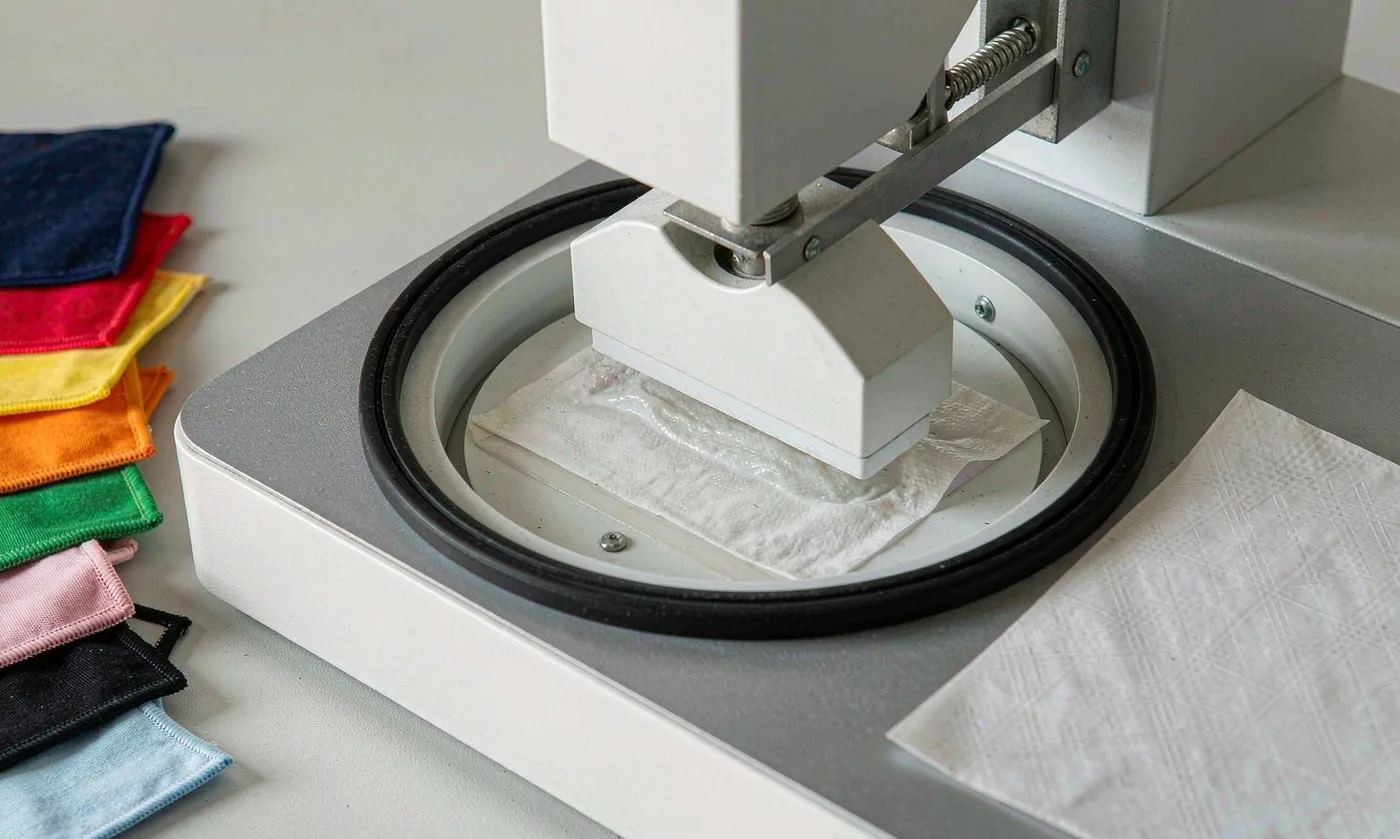
Fading behaviour is set by the pairing of dye class and fibre, and understanding the pairing explains most colour problems before any test is run. Polyester is dyed with disperse dyes, which diffuse into the fibre and generally give good wash and light fastness, particularly in darker shades. Nylon is dyed with acid dyes, which give bright shades but can be weaker on light fastness and are prone to staining in washing. Cotton and canvas are dyed with reactive or direct dyes, where reactive dyes bond well and direct dyes are weaker on washing.
The practical consequence for pet bags is that a polyester programme is easier to make fade resistant than a cotton canvas programme at the same price. Canvas can be specified to acceptable fastness, but it needs better dye selection and often a fixing agent, and it will still fade faster under sunlight than a comparable polyester.
Pigment printing is the third route and deserves a specific warning. Pigment sits on the surface bound by a resin rather than diffusing into the fibre, so a printed panel can crock badly and fade faster than the base fabric it sits on. Where a printed pattern is required, specify a crocking test on the printed area specifically, and consider a protective topcoat on high-contact zones.
Trim is the last variable. Webbing, binding tape and zipper tape are often dyed by different suppliers to different standards, and a strap that bleeds onto a light shell is a common and entirely avoidable defect. Specify the same fastness grades for trim as for the shell, and test the strap and shell together as an assembly.
Solution-Dyed Versus Piece-Dyed: The Biggest Single Decision
The largest single lever on fading is whether the colour is added before or after the yarn is made. In solution dyeing, pigment is added to the polymer melt before extrusion, so the colour runs through the entire cross-section of the filament. In piece dyeing, colour is applied to finished fabric in a bath, penetrating from the surface inward. Solution-dyed yarn fades far more slowly, resists washing almost completely, and is the standard choice for outdoor and automotive textiles.
The commercial trade-offs are real. Solution dyeing requires a minimum production run per colour at the yarn stage, which restricts small programmes to stock colours and can add 7-14 days to the schedule. Piece dyeing accepts almost any quantity and any shade, matches lab dips quickly, and costs less per metre in small lots. For a 500-piece programme in a custom brand colour, piece dyeing is usually the only practical option, and the mitigation is to select a high-light-fastness dye formulation rather than to switch process.
A useful middle path exists for dark shades. Blacks, navies and deep greens are where piece dyeing performs worst on rubbing and washing, because more unfixed dye sits near the surface. Specifying two reduction-clear washes after dyeing, plus a fixing agent for cellulosic substrates, closes much of the gap for a small cost per metre and is standard practice on any quality programme.
The recommendation for importers is to split the decision by SKU role. Use solution-dyed or high-fastness disperse-dyed polyester for the hero outdoor SKU and for any dark colourway, and use conventional piece dyeing for fashion shades in seasonal programmes where the product is not expected to survive years of sun.
Light Fastness in Retail Display and Outdoor Exposure
Most fading complaints originate in retail rather than in use, which surprises buyers. A bag displayed in a sunny shop window, or stored near a window in a customer's home, receives far more ultraviolet exposure in a month than an average pet bag receives in a year of normal use. Window display is therefore a specification input, not a merchandising detail.
Quantify it in the brief: if the product will sit in direct sun for more than a few weeks, specify light fastness 5 or better and ask for a xenon-arc exposure result rather than a short cycle. If the product ships in clear packaging, remember that the packaging itself may concentrate light and heat, and consider opaque packing for the most sensitive shades.
Outdoor use is the second exposure case, and it interacts with ultraviolet degradation of the fibre rather than only the dye. Prolonged UV exposure weakens polyester and nylon and yellows some coatings, so a programme sold for hiking or beach use should combine a high light fastness grade with a UV-stabilised fabric and should avoid light-coloured coatings that show yellowing.
Buyers can also manage the complaint rather than only the product. A care card that says store out of direct sunlight, and a product page that says colours may soften with prolonged sun exposure, set an honest expectation. It costs nothing and it is the difference between a fading complaint and a fading review.
Colour Consistency: Dye Lots, Metamerism and Approval Standards
Fastness is about change over time; consistency is about variation between pieces, and both drive complaints. Consistency is managed through a physical approval standard. The workflow is a lab dip submitted by the mill, approved by the buyer under a defined light source, then a bulk dye lot matched to that approved standard within an agreed tolerance. Without the physical standard, every subsequent conversation about shade is an argument about a photograph.
Specify the light source. Metamerism, where two materials match under one light and differ under another, is the reason a shade approved in a factory office looks wrong in a store. Approve under a daylight-equivalent source and, where the assembly combines different materials, check the assembled product under the same source rather than checking each component separately.
Set a numerical tolerance instead of a visual one where possible. A colour difference value measured instrumentally gives both sides an objective pass band, and a common commercial tolerance is a delta E of around 1.0 to 1.5 against the approved standard for the shell, with a slightly wider band for trims. Instrumental control is far cheaper than a dispute.
Dye lot planning closes the topic. Components used on the same bag should come from the same lot where they are meant to match, and cartons should be packed by lot so that a retailer receives a consistent shelf. Mixing lots within a shipment is the most common cause of the complaint where two bags of the same colour do not look the same.
Repeat orders deserve a specific instruction because they are where consistency quietly fails. Name the previous dye lot on the new purchase order and ask the mill to match it rather than to re-match the original lab dip, since the dip itself ages and successive interpretations of it drift. Where the original lot is no longer available, approve a new standard before production rather than after, and accept that a visible step change between seasons is better than a mismatch inside one shipment.
Cost Structure, MOQ 500 and Price Banding
Colour performance is mostly a selection cost rather than an added cost. Choosing a high-light-fastness disperse dye over a standard formulation typically adds 0.10-0.35 USD per metre. A fixing agent or an extra reduction-clear wash adds 0.05-0.20 USD. Solution-dyed yarn is the expensive route, generally 0.60-1.80 USD more per metre in stock colours and considerably more for a custom colour at yarn-stage minimums.
Testing is the other cost line and it behaves as a fixed cost. A full fastness set per construction runs a few hundred USD, and per-lot wash and rubbing checks are far cheaper. Amortised across 1,000 pieces the full set is negligible; across 500 pieces it is still small relative to the cost of one season of colour complaints.
MOQ behaviour is more pronounced here than in most categories because of dye lot minimums. MOQ 500 pieces per colourway is the practical threshold, and the economics improve sharply at 1,000 and again at 3,000. Terms are FOB Xiamen with T/T 30/70. Custom shades carry a mill dye-lot minimum that can exceed 500 metres, so a second colourway at low volume is genuinely expensive and should be priced as a separate purchase.
One commercial suggestion pays for itself repeatedly: consolidate the palette. A range of six colours at 500 pieces each is far more expensive per unit and far more prone to lot variation than a range of two colours at 1,500 pieces each, and in most pet bag programmes the best-selling two colours carry the majority of volume anyway.
Freight and duty interact with the palette in a way that is easy to miss. A consolidated two-colour programme ships in fewer cartons per colour, clears a single dye-lot reference per container and simplifies any customs query about product description. A fragmented palette multiplies all three, and the administrative cost of six shade references frequently exceeds the fabric saving that motivated them.
Sampling, Bulk Scheduling and AQL 2.5 Inspection
Sampling a colour-critical programme starts before the bag exists. Budget 5-10 days for lab dips and their approval, then 6-10 working days for the prototype once the approved shade is available. Add the light fastness test exposure time if it is commissioned on the sample rather than on the fabric, since that is the longest item in the test plan.
Bulk production runs 35-50 days after approval and deposit, and the critical path is the dye lot booking at the mill. Confirm it at deposit, because a late shade decision or a rejected lab dip resets the fabric schedule and pushes the whole order. Any change to a shade after the lot is dyed is effectively a new order.
Inspection follows AQL 2.5 for major defects and AQL 4.0 for minor defects, with colour handled as a specific category. Shade is compared against the approved physical standard under the specified light source, and the tolerance is the agreed instrumental value. Other colour-related major defects include crocking on a printed panel, trim bleeding onto the shell, and visible lot variation within a single carton.
Documentation for release should include the inspection report with the shade comparison result, the fastness report for the dye lot used, and the physical approval standard reference. Keeping the approved standard in a file and shipping a copy of the reference number with each order makes repeat programmes dramatically easier to control.
Claims, Care Labels and Channel Expectations
Fade-resistant is a claim that can be substantiated, and it should be written as one. A hangtag that says colour fast to light and washing, tested to grade 4-5, is specific and defensible; the bare word fade-resistant is neither. Retail compliance teams and marketplace reviewers respond far better to the numbered version, and the numbered version converts better with customers who are comparing two similar products.
Care labels carry the other half of the obligation. Wash at the temperature the dye was validated for, avoid prolonged direct sunlight, and dry away from strong light. Those instructions protect the product and, just as importantly, they establish that the care routine was communicated if a complaint arises later.
Channel expectations differ in degree. Outdoor and travel retailers ask for light fastness results as part of supplier onboarding and often re-test incoming goods. General merchandise and marketplace channels rely on the supplier file and ask only when a complaint triggers a review. Knowing which applies tells you how much testing to commission and whether an independent laboratory report is needed.
Substance compliance runs underneath every colour decision, since dyes and auxiliaries must satisfy REACH restrictions in Europe and the contact surfaces should carry a current OEKO-TEX Standard 100 certificate. Ask the mill for the dye formulation declaration with the lot, not once a year in general terms, because restricted-substance lists change and the declaration is what a retailer will ask for.
The final recommendation is to build a colour file per SKU and keep it current. Record the approved lab dip, the instrumental tolerance, the dye formulation, the fastness results and the certificate references in one place, indexed by dye lot. Programmes that maintain that file can approve repeat orders in days rather than weeks, and they can answer a retailer's colour question with evidence instead of a promise, which is ultimately what separates a colour-managed supplier from one that is simply lucky.
The last practical point concerns returned goods. Keep one retained sample from every dye lot, stored away from light, for the length of the warranty period. When a customer claims that a colour has faded, the retained sample settles within minutes whether the change is fading, soiling or a batch variation, and it does so with evidence the customer can be shown rather than with an argument. Retained samples also make insurance and warranty conversations short, because they establish the condition of the goods at the time of despatch rather than months later.
Production capability
- SGS-verified production space of 4,950 m², 149 machines, 7 assembly lines
- Pet bag output since 2014 from a 137-person team
- 200,000 units shipped monthly under BSCI and ISO 9001 systems
People Also Ask
What does colour fastness mean?
It is the resistance of a dyed material to change or to transfer colour under a defined exposure, reported on the grey scale or the blue wool scale.
What is a good light fastness rating?
Grade 4-5 on the blue wool scale for general retail and grade 5 or better for outdoor use or sunny window display.
Why did my pet bag fade in the sun?
Ultraviolet exposure breaks down dye molecules, and retail window display delivers more UV in a month than normal use does in a year.
Does washing fade pet bags?
Yes, gradually. Wash fastness grade 4 means minimal change over the tested cycles, and washing below the validated temperature helps.
Is polyester or canvas more fade resistant?
Polyester. Disperse dyes diffuse into the fibre, while canvas needs reactive dyes and a fixing agent and still fades faster in sunlight.
How do you test for colour bleeding?
With wash fastness and rubbing tests rated on the grey scale for both colour change and staining of an adjacent fabric.
Frequently Asked Questions
What colour fastness grade should we specify?
Light fastness 4-5 on the blue wool scale for retail and 5 for outdoor, wash fastness 4 for change and 3-4 for staining, and rubbing 4 dry and 3-4 wet. Always name the method.
What is the difference between the grey scale and the blue wool scale?
The grey scale rates colour change and staining from 1 to 5 and is used for wash, rub and water tests. The blue wool scale rates light fastness from 1 to 8.
Is solution-dyed fabric worth the cost?
For dark colours and outdoor programmes, yes. Colour runs through the filament so fading and washing loss are far lower, at 0.60-1.80 USD more per metre in stock shades.
Why do dark colours crock more than light ones?
More unfixed dye sits near the fabric surface in heavy shades. Two reduction-clear washes and a fixing agent close most of the gap at low cost.
Do printed panels need their own test?
Yes. Pigment prints sit on the surface and crock more readily than the base fabric. Specify a rubbing test on the printed area specifically.
Should trim be tested to the same standard?
It should. Webbing, binding and zipper tape are often dyed elsewhere and a strap that bleeds onto a light shell is a common defect.
What is the MOQ for a custom colour?
MOQ 500 pieces per colourway, though mill dye-lot minimums can exceed 500 metres. Consolidating two colourways into one larger run is usually cheaper.
How do we control shade variation between lots?
Approve a physical lab dip under a defined light source, set an instrumental tolerance such as delta E 1.0-1.5, and pack cartons by lot.
What causes metamerism problems?
Materials that match under one light source and differ under another. Approve the assembled product under a daylight-equivalent source rather than component by component.
Can fading be prevented in a sunny retail window?
Not entirely, but specifying light fastness 5 or better and avoiding clear packaging that concentrates light reduces it substantially.
How long do sampling and bulk take?
Allow 5-10 days for lab dips, 6-10 working days for the prototype, and 35-50 days for bulk once the dye lot is booked.
What documents should ship with the order?
The inspection report with the shade comparison, the fastness report for the dye lot used, the physical standard reference and the OEKO-TEX certificate for contact surfaces.
Talk to QUANZHOU JUNYUAN BAGS about a wholesale pet bag order: MOQ 500 pieces per colourway, samples in 6-10 working days, bulk production in 35-50 days under AQL 2.5 inspection.
Get a free quote Request a sample