Wholesale Pet Carrier Bags: Picking the Right Format
Short answer: picking a wholesale pet carrier bags format is a commercial decision, not a design one. The six working formats are sling, tote, backpack, shoulder, wheeled trolley and hard shell case, and they differ by a factor of more than twenty in pieces per carton and by a factor of four in unit build cost.
Format is the first decision in a pet carrier programme and the one that is made most casually, usually because somebody saw a competitor's product and liked it. Every other number follows from it: unit cost, carton cube, freight per unit, assembly labour, compliance surface, return rate and the price point the format can credibly hold. Choosing by appearance produces a range that looks coherent and performs unevenly. This guide is written for importers, distributors and chain buyers selecting a wholesale pet carrier bags mix for a defined channel and price architecture. QUANZHOU JUNYUAN BAGS has built pet bag programmes since 2014, with a founder in the trade since 2004, quoting on a fixed commercial frame: MOQ 500 per colourway, samples in 6-10 working days, bulk production 35-50 days after sample approval and deposit, AQL 2.5 final random inspection, T/T 30/70 and FOB Xiamen. Our production team operates from an SGS-verified production base of 4,950 square metres with 7 lines, 149 machines and 137 staff at roughly 200,000 pieces monthly under BSCI and ISO 9001 certification. The eight sections below compare formats on cost, geometry, channel, compliance, mix, lifecycle and a short selection worksheet.
Pet bag market size is reported three different ways depending on whether carriers, travel bags and accessories are bundled, so Pet Bag Types & Styles planning should pick one definition and stay with it. Pet bag market report figures are useful for board decks and of little use for MOQ planning.
Format Is a Buying Decision, Not a Design Preference
Ask most buyers why they selected a format and the answer is aesthetic. That is a legitimate input at the retail end and an inadequate one at the sourcing end, because a format is a bundle of manufacturing consequences that only becomes visible after the order is placed. The sling that looked efficient in a photograph may require a strap assembly that costs more than the body, and the trolley that looked premium may consume a fifth of the container for a tenth of the units.
The four consequences that follow from format are build cost, cube, labour and risk. Build cost is driven by component count and by the number of operations: a sling with a padded strap and a safety clip has fewer parts and fewer operations than a backpack with a framed back panel, two straps, a sternum clip and a structured base. Cube is driven by whether the format ships flat, nested or assembled. Labour is driven by assembly at destination and by retail handling. Risk is driven by load path.
Load path is the least considered of the four and the most expensive to get wrong. In a sling, load travels from the animal through a base panel into a single strap and then into the wearer's shoulder. In a backpack, it splits across two straps and a back panel. In a trolley, it goes into wheels and a handle rather than into the wearer. Each path has its own failure mode, and each one has to be engineered rather than assumed.
Format also sets the price ceiling. A market will pay a certain amount for a sling and a different amount for a wheeled case, and no amount of material upgrading moves a format outside its credible band. Selecting a format that cannot hold your required margin is the most common structural error in a first range, and it is not recoverable through negotiation.
The practical method is to decide format against channel and price point first, then to let design work inside that decision. Buyers who invert the sequence and design first spend a sample round discovering that the format cannot be made at the price, which is the most expensive way to learn it.
The Six Formats and What Each Costs to Make and to Ship
Six formats cover the overwhelming majority of wholesale pet carrier bags volume. The table below compares them on the three numbers that determine programme economics: relative build cost, pieces per carton, and the channel each one suits. Figures are relative indices rather than quotations, because absolute values move with material and specification.
| Format | Build cost index | Pieces per carton | Pieces per m3 | Primary channel | Main risk |
|---|---|---|---|---|---|
| Sling | 1.0 | 18-20 | 214-238 | Marketplace, value retail | Single-strap load path |
| Tote | 1.2 | 12-16 | 116-136 | Specialty, department | Handle root pull-out |
| Shoulder | 1.3 | 10-14 | 76-107 | Specialty, online | Strap attachment fatigue |
| Backpack | 1.8 | 6-10 | 46-61 | Specialty, travel | Back panel comfort claims |
| Wheeled trolley | 3.2 | 2-4 | 11-22 | Travel, premium retail | Wheel and handle failure |
| Hard shell case | 2.6 | 4-6 | 19-26 | Vet, premium, airline | Tooling amortisation |
The pieces-per-cubic-metre column is the one that changes container plans. A sling programme and a trolley programme differ by more than a factor of fifteen in units per container, which means the freight cost allocated to a single trolley can exceed the entire landed cost of a sling. Any average freight allocation across a mixed range misprices every line in it. Bulk pet carriers allocations should therefore be weighted towards the formats with the best units per cubic metre, and bulk dog carriers ranges in the upper bands should be reviewed against that benchmark every season.
The build cost column should be read alongside the price ceiling column that is not in the table: what the market will pay. A trolley costs roughly three times a sling to build and might carry twice the retail price, which is a compression of margin that only works if the channel supports it. A sling at the value end and a hard shell at the premium end both work because the price architecture supports the build cost.
The risk column is where warranty claims come from. Single-strap load paths fail at the strap root and at the clip; wheeled formats fail at the wheel housing and the telescoping handle; hard shells fail at the closure and at the hinge. Each of those has a known engineering answer, and each one should be specified rather than hoped for.
Finally, note that the format list is not a ladder. Buyers frequently assume the range should run from sling up to trolley in increasing sophistication. In practice, the best-selling ranges concentrate in two or three formats and go deeper in colour and print rather than wider in structure, because structural breadth costs development money and cube while colour breadth costs only a dye lot.
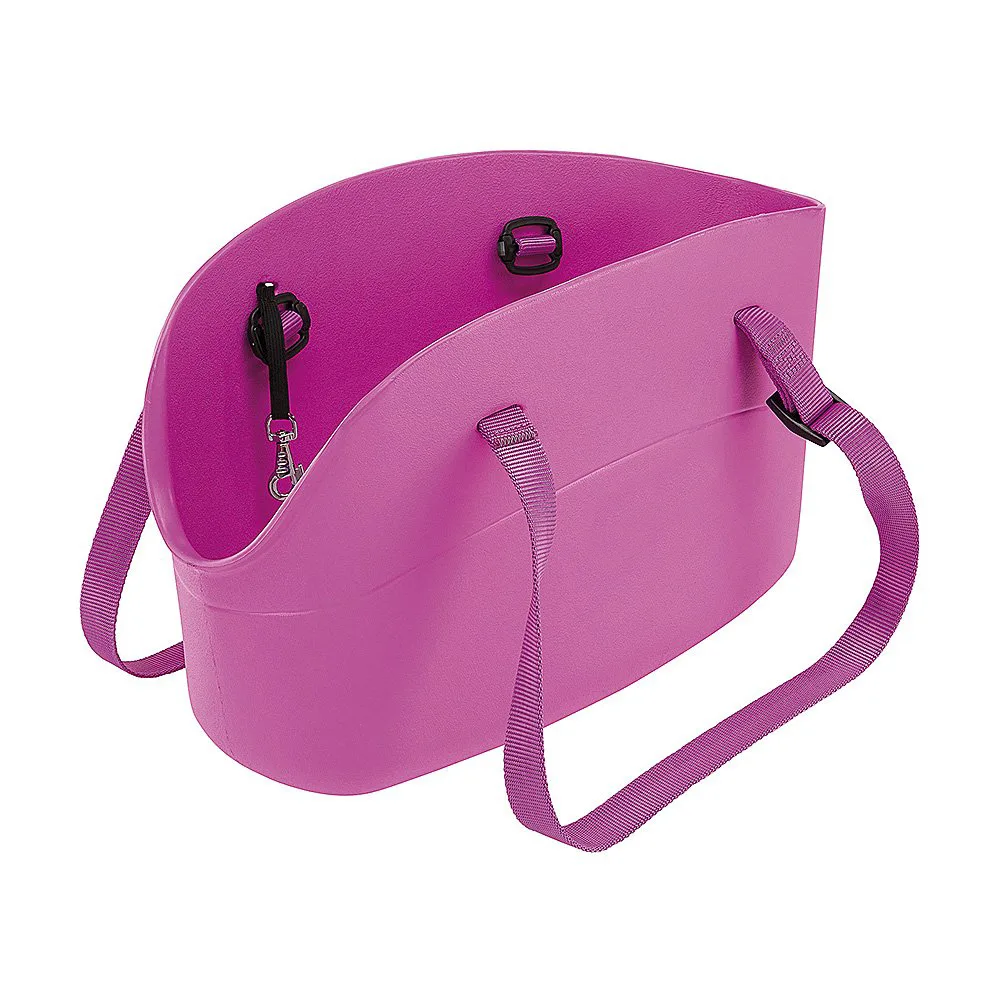
Carry Geometry: What Load Actually Does to Each Format
Carry geometry is the engineering behind the format and it is where most field failures originate. Three forces act on a loaded carrier: the static weight of the animal, the dynamic force from movement, and the internal force from the animal pushing against a panel or a closure. Formats distribute those forces differently, and the distribution determines where the bag breaks.
In a sling, static load runs through one strap into one shoulder, and dynamic force multiplies it with every step. The practical consequence is that the strap root and the clip carry the entire load case, and both need to be specified by rating rather than by appearance. A sling rated for 6 kg needs a strap assembly rated well above 6 kg, because dynamic loading is not the same number as static weight.
In a tote, load runs from the base panel into two handles, and the failure point is almost always the handle root rather than the handle itself. Bar-tacking the root, reinforcing the panel with an internal stay, and using a webbing that runs continuously under the base rather than being stitched to it are the three standard answers.
In a backpack, load splits but the back panel becomes the comfort-critical component. A panel that is too soft transfers the animal's shape into the wearer's back; one that is too stiff is uncomfortable and adds cube. The answer is a graded panel with a ventilation channel, and it is one of the few places where spending material genuinely changes the review score.
In a wheeled format, the load case changes character entirely: the wearer no longer carries it, so the failures move into the wheel housing, the axle and the telescoping handle. Those are hardware components with their own ratings, and they should be specified by cycle count and by load rather than by the catalogue photograph.
In a hard shell case, the shell carries the load and the closure is the weak point. A moulded shell that survives a drop can still fail because the latch releases under internal force. Specify the closure separately from the shell and test it with an outward force applied from inside, which is not covered by any general soft-goods test. Independent testing guidance from the Center for Pet Safety is the most useful external reference in this area.
Format Against Channel: Where Each One Actually Sells
Channel determines which formats will sell, and it does so more forcefully than consumer preference does. A format that performs in one channel can fail in another with no change in the product, because the buying context, the price expectation and the handling model are all different.
Marketplace channels reward formats that photograph well, ship cheaply and generate reviews. Sling and tote dominate here, because the cube economics support a competitive price and the product is simple enough that reviews concentrate on one listing. Wheeled and hard shell formats struggle in this channel, because the freight cost pushes the price above the level at which buyers will take a risk on an unreviewed listing.
Pet specialty retail supports the widest format range, because staff can explain the difference and customers arrive with a use case rather than a price. Backpack and shoulder formats do particularly well here, and the wheeled format finds its buyers among customers with larger animals who have already tried and rejected a carry format.
Travel and airline-adjacent retail is a distinct channel with its own format logic. Hard shell cases and structured formats sell here because the buyer's mental model is luggage rather than pet accessory, and because the format reads as compliant with carrier requirements. Soft formats sell poorly in this context regardless of their actual dimensions.
Discount and general merchandise channels compress the format range to one or two, at the value end, with an absolute price ceiling. Sling and simple tote are the only realistic options, and the engineering challenge is meeting the load case at a material cost that the price point allows.
The implication for a range plan is to name the channel before naming the formats, and to resist the temptation to build a range that spans channels. A range designed for both marketplace and specialty usually optimises for neither, and the cost of that compromise shows up as slow movement in the formats that do not belong.

Format and the Compliance Surface It Creates
Every format carries a different compliance surface, and the difference is material in documentation cost and in risk. Compliance surface means the set of obligations, tests and markings that the format triggers in the destination market, and it grows with component count and with claims.
A sling has the smallest surface: fabric, webbing, a clip, and a seam. Its obligations are the general textile and chemical ones — restricted substances, skin-contact considerations, and country-of-origin marking. A wheeled trolley has a much larger one: wheels and handle are mechanical components with their own material declarations, the telescoping mechanism may trigger additional screening, and any load claim becomes a testable assertion.
Claims are the part buyers create accidentally. Weight ratings, airline-compatible statements, crash-tested language and waterproof claims each convert a marketing sentence into a testable specification. The more formats in a range, the more claims, and the more claims a compliance team has to defend. Decide which claims are load-bearing for the sale and drop the rest.
Chemical obligations apply across all formats but differ by component. Skin-contact textiles are commonly documented through the OEKO-TEX system, mechanical hardware through restricted-substance declarations, and any coated fabric through the coating's own documentation. A wheeled format has more component categories and therefore more certificates to collect, which is a real administrative cost per style.
Testing cost follows the same logic. A sling may need two or three tests; a wheeled format may need five or more, including mechanical cycling. Budget testing per format rather than per programme, because averaging it produces a budget that is wrong for every line.
The practical rule is to keep the compliance surface proportionate to the margin. A format that carries a large documentation burden should also carry enough margin to pay for it, and if it does not, the answer is to simplify the format rather than to carry the documentation risk uninsured. Buyers who buy pet carriers wholesale into regulated markets should review the surface format by format, not range by range.
Building a Format Mix for a First Container
A first container should test the range without betting the season on it. That means concentrating the mix in the formats most likely to sell in the chosen channel, with a deliberately small allocation to one or two exploratory formats, and with the cube arithmetic done before the order rather than at booking.
A workable structure for a marketplace-led first buy is roughly 60 percent in the primary value format, 25 percent in the secondary format, and 15 percent split across one or two exploratory formats. The exploratory allocation is small enough that a miss is affordable and large enough to generate a meaningful read on rate of sale.
For a specialty-led first buy the structure shifts: roughly 40 percent in the primary carry format, 30 percent in the structured format, 20 percent in the value format and 10 percent in a premium explorer. Specialty customers buy across use cases, so a wider mix is appropriate, but the exploratory share stays small for the same reason.
Convert the mix to cube before confirming it. Multiply planned units per format by carton cube per unit, add a loading allowance of 6-10 percent, and compare to usable container volume. This step routinely changes the mix, because a wheeled or hard shell allocation that looks modest in units can consume a third of the container.
Keep colourway breadth inside formats rather than across them. Two formats with four colourways each is a more robust first buy than four formats with two colourways, because it concentrates the dye lots where turnover is measurable and keeps the minimum count manageable at 500 pieces per colourway.
Finally, plan the second container while shipping the first. The exploratory allocation exists to generate data, so the rate-of-sale read should be scheduled at a defined point rather than whenever somebody looks at the stock report. Programmes that schedule the read reformat the second buy deliberately; programmes that do not repeat the first buy with minor variations. A pet carrier wholesale plan should cap exploratory formats at one or two.
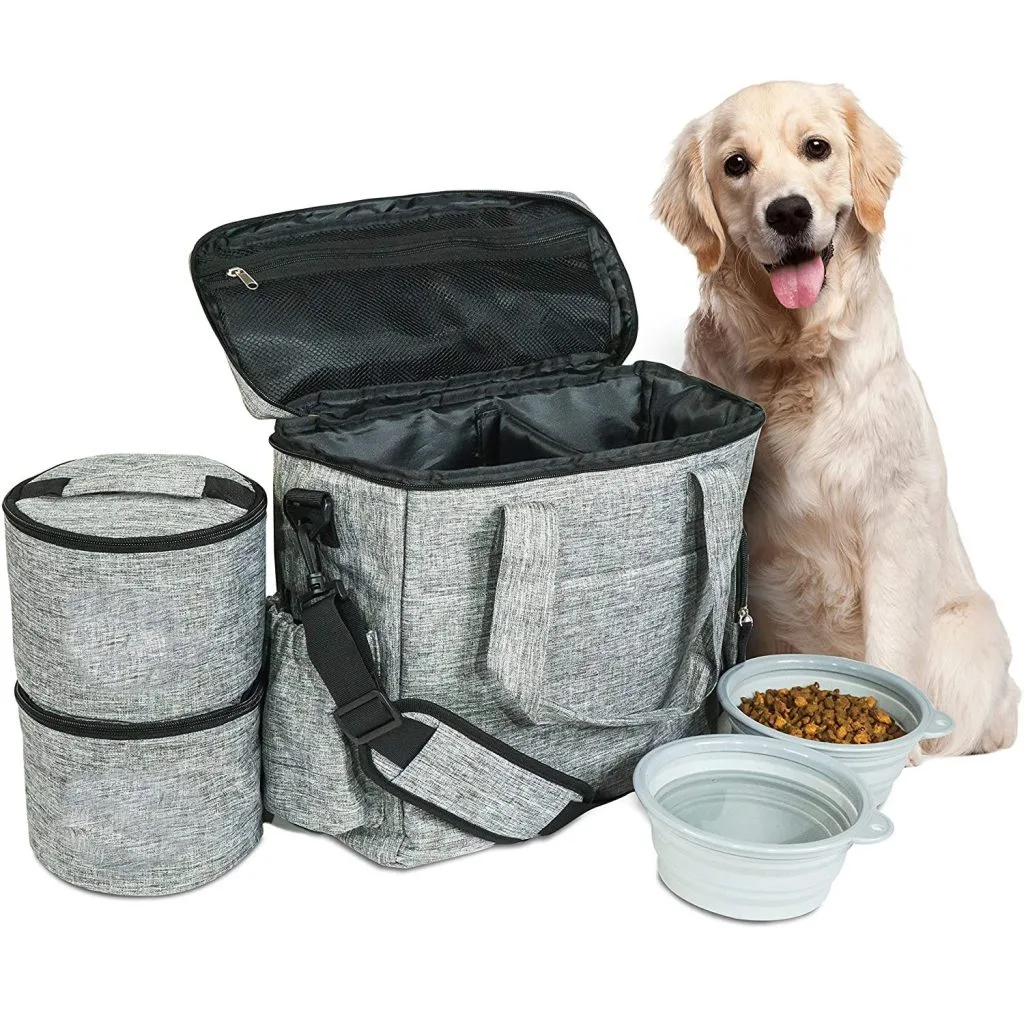
Format Lifecycle: Which Formats Survive and Which Get Cut
Formats have different economic lives, and the difference should be part of the selection decision. Some formats support a long programme with incremental improvement; others peak and are cut within two seasons. Knowing which is which prevents both premature discontinuation and stubborn attachment.
Sling and tote are long-life formats. They evolve through fabric, print and hardware rather than through structural change, so a well-chosen version can run for years with refreshed colourways and minor reinforcement upgrades. The development investment amortises across a long life, which is why they carry the volume in most ranges.
Backpack and shoulder formats have a medium life. They are more sensitive to fashion in the adjacent human-bag category, and a silhouette that looks current in one season reads dated two seasons later. Plan a structural refresh every two to three years and keep the pattern family consistent so the refresh is a revision rather than a redevelopment.
Wheeled and hard shell formats have the shortest effective life in most ranges, despite their long physical life, because they are the most exposed to cube economics and the most sensitive to freight rates. A format that was viable at one freight rate becomes unviable at another, and the decision to cut is frequently driven by logistics rather than by sales.
The discontinuation signal is freight-adjusted margin rather than revenue. A format can show healthy revenue and negative contribution once its cube cost, its damage rate and its documentation burden are allocated properly. Calculate contribution per cubic metre rather than contribution per unit for the bulky formats, and the cut decisions become obvious.
When a format is cut, cut it cleanly. Retire the pattern, close the colourways, and do not carry a reduced version into the next season in the hope it recovers. Reduced versions of cut formats consume development attention and minimum slots that belong to formats with a future. Buyers running wholesale dog carriers and wholesale cat carriers lines in parallel should review both format lists together, because the same cut decision often applies to both.
A Short Format Selection Worksheet
Format selection reduces to seven questions that can be answered in an hour and that prevent most of the expensive mistakes. Answer them in order, in writing, before the first enquiry goes out.
First: which channel is primary, and what price ceiling does it impose? Second: what weight band must the format serve, and does the carry geometry support it? Third: what is the build cost index of the format relative to the price ceiling, and is there margin left after freight?
Fourth: what is the carton cube per unit, and how many units of the planned mix fit in one container? Fifth: what is the compliance surface, including claims, and what will the documentation cost per style? Sixth: what is the known failure mode, and has it been specified against with a named component rating?
Seventh: what is the expected format life, and does the development investment amortise across it? A format that scores well on the first six and poorly on the seventh is a tactical rather than a programme decision, and should be sized accordingly.
Score each candidate format on the seven and keep the top three. Three is usually the right number of formats for a working range: enough to cover distinct use cases, few enough to keep the minimum count and the cube plan manageable, and concentrated enough that each format gets real development attention.
Then run the selected three through the sample cycle and let the results confirm or correct the worksheet. Samples take 6-10 working days per round and bulk production runs 35-50 days after approval and deposit, so the worksheet is cheap insurance against spending both on the wrong format. Buyers who buy dog carriers in bulk and cat carriers in parallel should run the worksheet once per species line, because the answers differ more than most assume.
Format Decisions That Fail in the Second Season
Some format choices look right in the first season and wrong in the second, and the pattern is consistent enough to plan around. The failures are rarely about the product itself; they are about the interaction between a format and the operating model, which only becomes visible after a full cycle of reorders, returns and freight rate movements.
The first failure is a format chosen for its margin without a check on its reorder frequency. A premium format selling in modest volume looks healthy at full price and becomes a problem when the reorder cycle forces either a large inventory commitment or an expensive small run. Check the reorder economics before committing to any format whose volume sits below the minimum per colourway.
The second is a format whose cube makes it sensitive to freight rates. A wheeled or hard shell format viable at one freight rate can become unviable at another with no change in sales, which is a risk most ranges never price. Model each format at a freight rate 30 percent above today's before committing the second container.
The third is a format chosen for a channel the buyer then leaves. Ranges frequently start in marketplace and move into specialty, or the reverse, and the mix that suited the first channel obstructs the second. Where channel migration is plausible, choose formats that travel: sling and tote work in both, whereas a wheeled format does not.
The fourth is a format with a single point of failure that was never specified: a wheeled format whose handle has no cycle rating, a sling whose clip has no load rating, a hard shell whose closure was never tested from the inside. All three sell well for one season and generate warranty claims in the second.
Buyers who buy pet carriers wholesale across several markets should review formats market by market rather than globally, because a format that works in one market frequently fails in another for reasons that have nothing to do with the product. Bulk dog carriers lines and wholesale cat carriers lines usually have different format lifecycles, and a wholesale dog carriers range reviewed on dog data alone will misjudge the cat formats sharing its platform; anyone who will buy dog carriers in bulk for both species should keep the two reviews separate. Bulk pet carriers allocations to the formats that survive this review are what make the third season predictable, and the review should be scheduled rather than triggered. A pet carrier wholesale programme with a standing format review catches the freight-sensitive formats before the rate moves. Format lifecycle planning connects directly to demand seasonality and to the architecture in price point planning.
Order and quality terms
- MOQ 500 pieces per colourway; samples in 6-10 working days
- Bulk production 35-50 days after approval; AQL 2.5 inspection standard
- T/T 30/70 terms, FOB Xiamen, full document set per shipment
People Also Ask
How do I choose a pet carrier format for wholesale?
Decide channel and price ceiling first, then weight band, then build cost against that ceiling, then carton cube and container fit, then compliance surface and known failure mode. Seven questions, answered in writing, before the first enquiry goes out.
Which pet carrier format has the best freight economics?
The sling, by a wide margin. At 18-20 pieces per carton it reaches 214-238 pieces per cubic metre, against 11-22 for a wheeled trolley. That difference is frequently larger than the difference in build cost between the two.
How many formats should a wholesale range cover?
Three is usually right. Enough to cover distinct use cases, few enough to keep colourway minimums and container planning manageable, and concentrated enough that each format receives real development attention.
Do different formats have different compliance requirements?
Yes, and the surface grows with component count. A sling needs textile and chemical documentation; a wheeled format adds mechanical components with their own declarations and cycle testing. Budget testing per format, not per programme.
Which formats have the longest commercial life?
Sling and tote, because they evolve through fabric, print and hardware rather than structure and can run for years with refreshed colourways. Wheeled and hard shell formats are most exposed to freight rate changes and are cut more often for logistics reasons.
Should I choose format before or after design?
Before. Designing first and then discovering the format cannot be made at the required price costs a sample round and weeks, which is the most expensive way to learn that lesson.
Frequently Asked Questions
What is the cheapest pet carrier format to manufacture?
The sling, at the lowest build cost index of the six working formats. It has the fewest components and operations, ships flat at high density, and carries the smallest compliance surface.
Why do wheeled pet carriers cost so much more to land?
Two reasons: build cost is roughly three times a sling because of the wheel assembly, handle and frame, and cube is roughly fifteen times worse per unit, so freight per unit is far higher.
What fails first on a pet carrier sling?
The strap root and the clip. Both carry the entire load through a single path, and dynamic force from walking multiplies the static weight, so both should be specified by rating rather than appearance.
Are backpack carriers better than totes for larger dogs?
Generally yes above roughly 11 kg, because the load splits across two straps and a back panel instead of concentrating on two handle roots. The back panel then becomes the comfort-critical component and needs grading and ventilation.
Do hard shell cases sell in marketplace channels?
With difficulty. Freight cost pushes the price above the level at which buyers will try an unreviewed listing. They perform better in travel, veterinary and premium retail where the buyer's mental model is luggage.
How do I stop marketing claims creating compliance obligations?
Treat every claim as a testable specification and keep only the ones that drive the sale. Weight ratings, airline-compatible language and waterproof claims each convert a sentence into a test you may have to defend.
Should a first container test many formats?
Test one or two exploratory formats at a small allocation, around 15 percent of units, and concentrate the rest in the formats your channel supports. Two formats with four colourways beats four formats with two.
How does format choice affect return rates?
Through fit and comfort rather than through durability. Carriers that fail on interior height or on back panel comfort generate returns even when nothing is broken, which is why geometry should be checked on a live animal in sampling.
What is the right mix of formats for pet specialty retail?
Roughly 40 percent in the primary carry format, 30 percent structured, 20 percent value and 10 percent premium explorer. Specialty customers buy across use cases, so a wider mix is appropriate than in marketplace.
When should I discontinue a format?
When freight-adjusted contribution per cubic metre turns negative, not when revenue declines. A format can show healthy revenue and negative contribution once cube, damage rate and documentation cost are allocated properly.
How often should a backpack format be refreshed?
Every two to three years. Backpack silhouettes follow the adjacent human-bag category and date quickly, so keep the pattern family consistent and treat the refresh as a revision rather than a redevelopment.
Can the same format serve both cats and dogs?
Often yes at the smaller bands, with different interior geometry and ventilation. Above roughly 11 kg the load case diverges enough that separate constructions are usually justified rather than a shared pattern.
Talk to QUANZHOU JUNYUAN BAGS about a wholesale pet bag order: MOQ 500 pieces per colourway, samples in 6-10 working days, bulk production in 35-50 days under AQL 2.5 inspection.
Get a free quote Request a sample