Pet Crossbody Bag: Hands-Free Design
Short answer: pet crossbody bags work as a program when the format is treated as a small-format business — compact dimensions for pets up to about 5 kg, a strap drop that positions the bag at hip level, one-handed access, and a carton pack that cubes well. Standard terms: MOQ 500 pieces per colour, 6-10 working days for sampling, 35-50 days for bulk, AQL 2.5 final inspection.
This guide covers crossbody pet bags from a program economics perspective rather than a single-product perspective, because that is where the format earns its place. Crossbody bags are the smallest and cheapest significant format in the pet bag category, and their value to a buyer is threefold: they are cheap to develop, they pack densely enough to improve container utilisation across an assortment, and they sell well in impulse, gift and marketplace channels where the purchase decision is made quickly. Our production team specifies crossbody programs on MOQ 500 pieces per colour, 6-10 working days for development samples, 35-50 days for bulk after sample approval and deposit, AQL 2.5 final random inspection, T/T 30/70 and FOB Xiamen, from an SGS-verified production base of 4,950 square metres with 7 lines, 149 machines and 137 staff at roughly 200,000 pieces of monthly output under BSCI and ISO 9001. Read the size and access sections first, then the cost and carton sections: in this format, freight and packing decisions are frequently worth more per unit than fabric decisions.
Buyers comparing bulk dog carriers against bulk cat carriers usually find the difference is structural, not cosmetic: Pet Bag Types & Styles sets the base panel and the vent area, and both drive the tooling. Bulk pet carriers ordered across two species still qualify as one programme when the shell platform is shared.
Where Crossbody Formats Fit in a Pet Bag Program
Crossbody pet bags occupy the entry tier of the category: compact, lightweight, worn across the body with the animal carried at the front or side. They are not a substitute for a travel bag or a structured carrier, and programs that try to position them as one generate disappointed customers. Their commercial role is different and genuinely valuable.
The first role is assortment entry. A crossbody bag is the cheapest SKU a brand can add credibly, and it gives a new range a visible price ladder — entry, core and premium — which improves conversion across the whole assortment. Buyers launching a pet bag line frequently start here for exactly this reason, then extend upward once the brand has traction.
The second role is freight ballast. Because crossbody bags pack densely, they fill the air in containers that would otherwise be paid for and shipped empty alongside bulkier formats. A program that combines travel bags with crossbody styles typically achieves meaningfully better landed cost per unit across the assortment than one that ships travel bags alone, and the improvement is available without touching the product specification.
The third role is channel reach. Crossbody bags sell in channels where larger formats do not: impulse fixtures near checkout, gift-led assortments, subscription boxes and marketplace bundles. They are cheap enough to be added to a basket and distinctive enough to be photographed well, which is what makes them a reliable volume filler in a seasonal plan.
What they should not be asked to do is carry weight. A crossbody format puts the animal's load onto one shoulder through a diagonal strap, and beyond roughly 5 kg it becomes uncomfortable regardless of how well the strap is specified. Stating that limit honestly in the specification and in the listing is the single most important decision in the format, because it protects the review profile that the rest of the program depends on.
Finally, treat the format as a repeat-purchase category rather than a durable-goods category. Customers who buy a well-made small bag come back for the next size, the next colour or the matching travel bag, which is why the crossbody SKU is often the cheapest customer acquisition in a pet bag range.
Size, Volume and the Small-Pet Constraint
Crossbody dimensions should be set by what a small animal needs rather than by what looks compact. The constraint is not the bag's footprint but its interior volume and its gusset depth: an animal needs depth to sit comfortably, and a shallow crossbody bag that looks elegant in a photograph will not hold a pet in a natural position.
| Size | External dimensions (cm) | Pet weight ceiling | Typical channel |
|---|---|---|---|
| Extra small | 30 x 22 x 14 | Up to 2.5 kg | Gift, impulse, subscription |
| Small | 35 x 25 x 15 | Up to 4 kg | Core marketplace |
| Medium | 40 x 28 x 17 | Up to 5 kg | Core retail and online |
| Large crossbody | 45 x 30 x 18 | Up to 6 kg with wider strap | Specialty retail |
The weight ceiling is the governing specification and should be stated on the product, not merely in the file. Above 5 kg, the diagonal strap puts asymmetrical load on the neck and shoulder, and even a well-padded strap becomes uncomfortable over a long carry. If a program needs to serve larger pets, the right move is not a bigger crossbody bag but a shoulder or backpack format with a better load path.
Gusset depth should not be traded away for looks. Fifteen centimetres is a workable minimum for the small size, and depth should grow with the size rather than staying flat while the footprint grows — a common error that produces bags which look generous and hold very little.
Interior geometry should hold the animal against the body panel. A crossbody bag that lets the animal slide to the outer edge creates the pendulum effect that customers describe as uncomfortable even at low weights. A lightly structured base and a gentle interior contour cost little and solve it.
Finally, plan the size curve honestly. Extra-small and small sizes dominate volume in this format, and the large crossbody sells in small quantities. Ordering a market-shaped curve rather than an even split is one of the few zero-cost decisions that materially improves inventory turns.
Strap Geometry, Drop Length and One-Handed Access
Crossbody strap geometry differs from shoulder-bag geometry in one important respect: the strap crosses the torso diagonally, so drop length determines where the bag sits relative to the hip rather than relative to the shoulder. Getting this right is most of the comfort story in the format.
Drop length should be specified as a range in centimetres and validated on real body types with the bag loaded. Too short and the bag rides under the arm and restricts movement; too long and it sits at the thigh and swings with every step. A correctly specified adjustment range lets a small-framed person wear it at the hip and a large-framed person wear it at the waist, which is what removes the fit complaints that dominate this category.
Strap width can be narrower than in a shoulder bag, because the diagonal carry distributes load across the torso rather than onto one shoulder. Twenty-five millimetres is a sensible minimum for pets up to 4 kg, with 32 mm above that. Padding matters less here than in shoulder formats, but the strap should still be specified by width and foam density rather than left to standard construction.
Hardware should be rated for the working load even at this size. A decorative clip on a crossbody strap is tempting because the bag is small and light, but the animal moves, and dynamic loads exceed static ones by a wide margin. Specify a rated triglide and a rated clip, and require a pull test in sampling — the cost difference is cents and the failure difference is a return.
One-handed access is the usability specification customers actually notice. A crossbody bag is bought for hands-free convenience, so the main opening should be operable with one hand while the bag stays in position. A top zip with a generous puller, or a magnetic closure with a safety catch, works; a stiff two-handed zip defeats the purpose of the format.
Finally, consider strap detachability. A detachable strap lets the bag convert to a handheld or clip-on format, which broadens the use case at the cost of one extra hardware point. Where the hardware is rated and tested, this is a genuine value-add rather than a gimmick.
Closure and Access Design at Small Format
Closure design at small format is constrained by three things: the bag is small so the opening is short, the animal is close to the opening so security matters, and the customer is likely to be using one hand. The options resolve into four families, each with a clear cost and performance profile.
A single top zip with a bound panel is the most robust and the most common. It is secure, it survives washing, and it can be operated one-handed with a well-chosen puller. Specify a minimum #5 gauge even at this size, because a lighter chain on a short, curved opening is prone to burst under load — particularly at the base radius where the animal's weight sits.
A magnetic closure with a secondary safety catch is cheaper to operate and looks cleaner, but it introduces a failure mode: magnets weaken, and a safety catch that is fiddly will be left undone. Where a magnet is used, the secondary catch should be a clip rather than a hook-and-loop patch, which loses strength with lint and washing.
A drawcord or cinch closure is light, cheap and packs flat, and it suits the gift-led end of the category. Its weakness is that it does not secure the opening against a determined animal, so it should be paired with an internal harness attachment point.
A fold-over flap with a clip closure gives the strongest visual identity and the best photograph, and it costs an extra panel and an extra hardware point. For premium crossbody programs it is often the right choice, because appearance drives conversion in this format more than in any other pet bag category.
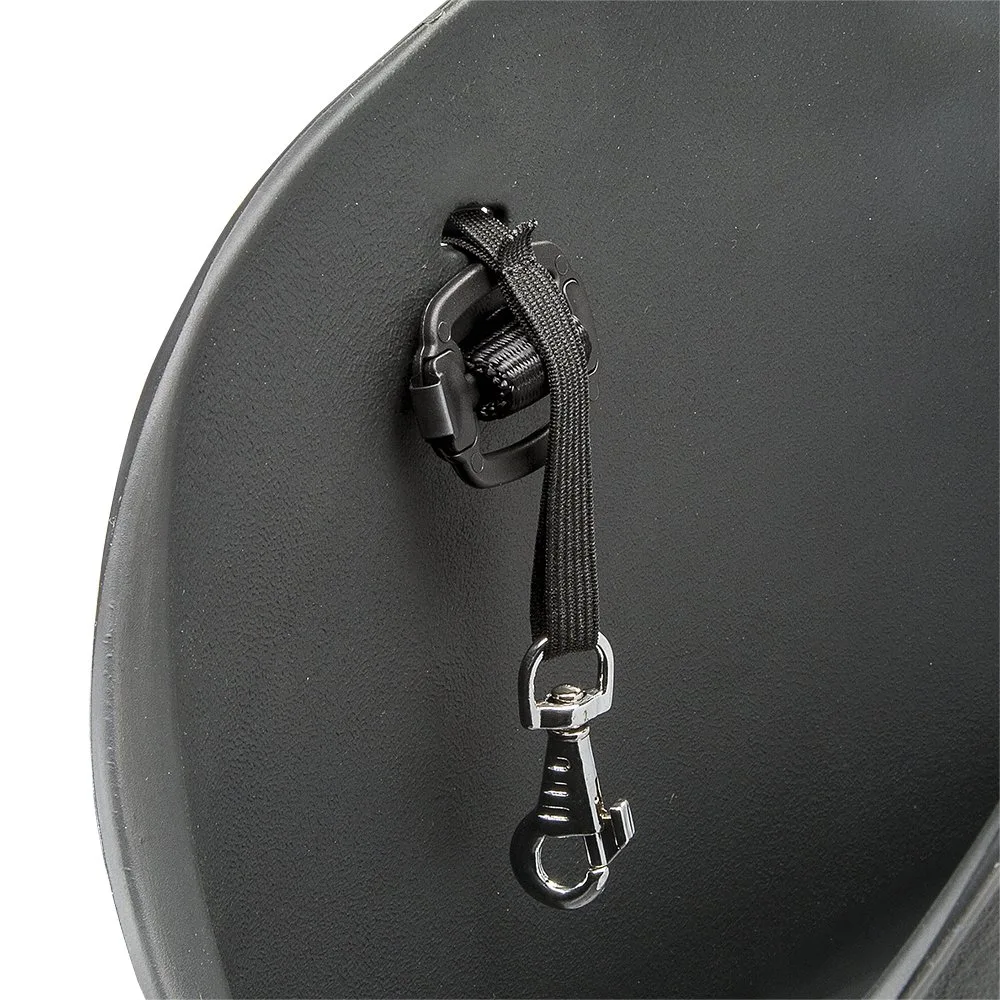
Whichever closure is chosen, the specification should include an internal attachment point for a harness clip, with a stated pull strength. In a small bag the animal is close to the opening, and the attachment point is the safety provision that prevents an escape — the item most often removed during value engineering and most regretted when it is missing.
Material and Component Selection at Low Price Points
Crossbody programs sit at the low end of the price range, which makes material selection a discipline rather than a compromise. The objective is to spend on the components that carry load and show, and to economise on the ones that do neither.
| Component | Spend here | Economise here |
|---|---|---|
| Shell fabric | Yes — it is the visible surface and the abrasion surface | No |
| Zipper and puller | Yes — the most touched component and a common failure | No |
| Strap webbing and hardware | Yes — rated components, load-bearing | No |
| Lining | Partly — coated lining prevents cleaning complaints | Partly |
| Interior pockets | No — every pocket adds panels and defect opportunity | Yes |
| Decorative trims and patches | No — perceived value without durability | Yes |
| Internal stiffeners | Partly — one base panel prevents collapse and sag | Partly |
300D to 420D polyester is the common shell specification at entry price points, with 600D for mid-market positioning and canvas or recycled blends where a story is needed. Below roughly 300D, abrasion performance drops sharply for a saving that customers will not perceive positively, so this is a false economy.
Hardware finish should be standardised across the program. A single finish — black nickel, gunmetal or antique brass — across all crossbody SKUs moves the component into a better purchase tier and prevents the mixed-finish look that reads as an error. Standardising finish is one of the cheapest quality signals available.
Colour consistency deserves a defined process because small bags are bought on appearance. Approve one master standard per colour, require strike-offs or lab dips before bulk, and set an acceptance tolerance under defined lighting. Where a colour is shared with other formats in the range, match everything to the same master rather than to a previous run.
Compliance should be maintained at material-family level. One fabric test covering four crossbody colourways is normally acceptable where the base cloth, finish and dye house are identical, which turns a per-SKU compliance cost into a per-season one — the single most valuable saving available in a high-SKU-count format.
Cost Structure, Carton Economics and Freight Utilisation
In crossbody programs, freight and packing can be worth more per unit than fabric. The format is small and compressible, so it packs at high density, and a well-planned carton can cut freight cost per unit dramatically compared with bulkier formats in the same container.
| Cost line | Share of ex-works price | Program-level lever |
|---|---|---|
| Shell and lining fabric | 24-32% | Share the fabric across four colourways |
| Hardware and zipper | 14-22% | Standardise finish and gauge across the range |
| Sewing labour | 16-24% | Minimise panel count; avoid pocket proliferation |
| Printing and labels | 6-12% | Digital print for unproven designs, screen for proven ones |
| Carton and packing | 3-6% | Optimise pack quantity against carton cube |
| Testing and certification | 2-5% | Test by material family, not per colourway |
| Freight allocation | 4-10% | Use dense SKUs to fill containers with bulky formats |
Carton optimisation should be modelled rather than assumed. The right pack quantity is the one that fills the carton to its efficient volume without exceeding its weight or crushing limit, and it frequently differs from the round number a buyer would choose. Ask for carton dimensions and a container loading estimate at quotation stage, and put the resulting freight per unit into the margin model.
Nesting is the second packing lever. A compressible crossbody bag can often be nested inside another, doubling pack density compared with polybagged individual units. Where the retail presentation allows it, nested bulk packing reduces both carton count and freight cost, with the trade-off of needing polybags applied at destination for marketplace fulfilment.
Program-level freight is where the format pays for itself. A container of travel bags alone may cube out well below its weight limit, effectively shipping air; adding dense crossbody cartons fills the space and lowers the average freight cost per unit across both formats. This is why landed cost should always be modelled at assortment level, a point covered in more detail in our wholesale pet bags bulk buying guide.
Finally, remember that small bags have a higher handling cost per unit at destination: more units to receive, pick, pack and label. Include per-unit fulfilment cost in the margin model for this format, because it is proportionally higher than for larger bags and is routinely overlooked.
Channel Fit: Marketplace, Impulse and Gift
Crossbody bags succeed in channels where the purchase is quick and visual, and the specification should be built for those channels rather than adapted to them later.
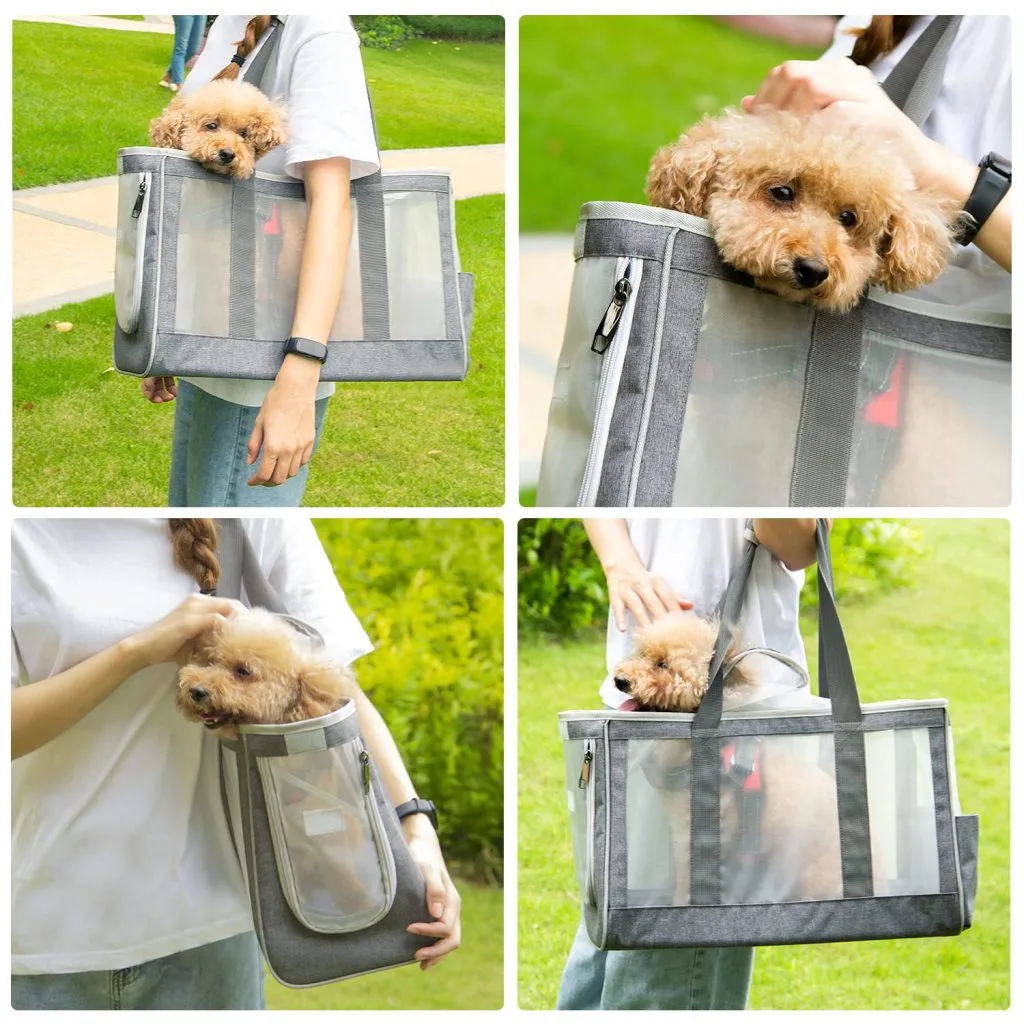
Marketplace channels require a scannable barcode on the retail pack, compliant fibre and care labelling, polybag suffocation warnings where bagging is used, and carton weight limits for inbound shipments. They also reward photography, which means the bag must hold its shape in a photograph — an argument for at least a light base stiffener even in an entry-priced product.
Impulse and checkout fixtures require a hangtag or a display-ready presentation and a price point that works as an add-on. Packaging matters more than product depth here: a clean printed band or a well-designed hangtag converts better than an extra pocket. Spend the packaging budget rather than the pocket budget.
Gift and subscription channels require presentation quality above all. Print registration, trim precision and packaging finish are judged at arm's length, and this is the channel where a woven label or a rubber patch earns its cost. Bundling works well here too — a crossbody bag paired with a small accessory lifts the perceived value far more than it lifts the cost.
Compliance documentation is required in all three, and marketplace enforcement has tightened most. Maintain a current file at material-family level covering CPSIA screening and California Prop 65 assessment for the US, REACH for the EU, and OEKO-TEX where skin contact is claimed. Guidance on California requirements is published by OEHHA and the consumer product framework is set out by the U.S. Consumer Product Safety Commission.
Claims should be conservative in this format. A small crossbody bag should not be described as suitable for long journeys or for larger animals, and the weight ceiling should appear wherever the product is sold. Overstating in this category produces returns and, increasingly, marketplace listing action.
Compliance and Labelling at Small Format
Small formats create a specific labelling problem: there is less surface area for the information that regulations and channels require. Planning label content early prevents the late-stage discovery that the required text does not fit the available space.
The required content is the same as for any textile pet product — fibre content, care symbols, country of origin, and any applicable warnings — and the solution is usually a combination: a small woven or printed content label inside, a hangtag for the extended text, and the barcode on the retail pack. Deciding this combination before the packing specification is written avoids the expensive retrofit of adding a second label operation after production.
Warnings deserve attention in this format because the bag is small and the animal is close to the opening. A weight ceiling, a statement that the bag is not a restraint device, and any ventilation guidance should be placed where they will be read — normally on the hangtag and in the listing rather than buried in a side-seam label.
Testing should be arranged by material family and documented with report numbers and validity dates, collected at material receipt rather than assembled at shipment. Where an independent report is required, third-party testing through SGS produces the format most retail and marketplace compliance teams accept without debate.
Finally, treat the artwork approval as a separate gate. Label and hangtag artwork should be approved independently of the product sample, because errors here are among the most common causes of listing removal and retail chargeback, and they are entirely avoidable with a two-day approval step.
Sampling, Packing and Launch Planning
Crossbody sampling should be efficient, because the format will usually carry more SKUs than any other category in the range. Sample the platform once — construction, strap specification, hardware family, closure — and approve colourway and print variants on strike-offs rather than on full samples. This halves development cost in a format where colourway count is naturally high.
Development sampling takes 6-10 working days for the first build, and bulk production takes 35-50 days from sample approval and deposit. Crossbody programs trend toward the shorter end when fabric, webbing and hardware are stock grades, and toward the longer end when a custom webbing colour, a branded puller or a moulded component is specified. Locking components at sample approval is what keeps the schedule short.
Packing specification should be fixed during sampling rather than after it. Confirm the pack quantity, the nesting arrangement, whether units are polybagged individually, carton dimensions and the container loading estimate, and require that the pre-production packing be confirmed before bulk starts. Packing errors discovered after production are expensive because they require repacking rather than adjustment.
Launch sequencing should follow the size curve: ship extra-small and small first, hold medium and large for the second drop, and use eight weeks of sell-through data to decide which colourways earn a reorder. Programs that launch four sizes and five colours simultaneously learn very little from the season and repeat the same guess next year.
Build the calendar backwards and re-baseline on any slip. Allow 6-10 working days for sampling, about two weeks for artwork and approvals, 35-50 days for bulk, and three to five weeks for freight and clearance. Then, the moment a milestone moves, restate every downstream date in writing — the discipline that separates programs hitting their season from ones arriving two weeks after it.
Order and quality terms
- MOQ 500 pieces per colourway; samples in 6-10 working days
- Bulk production 35-50 days after approval; AQL 2.5 inspection standard
- T/T 30/70 terms, FOB Xiamen, full document set per shipment
People Also Ask
How do I build a crossbody pet bag assortment?
Fix one platform — construction, strap specification, hardware family and closure — then vary colour and print across several SKUs. Sampling the platform once and approving colourways on strike-offs typically halves development cost in this format.
Why do small pet bags ship so efficiently?
They pack at high density and often nest, so a carton of crossbody bags occupies far less space per unit than a travel bag. Mixed containers that combine dense and bulky formats achieve better average freight cost per unit than either alone.
What is the best closure for a small pet bag?
A #5 top zip with a bound panel and a generous puller, because it is secure, survives washing and can be operated with one hand. Magnetic closures need a clip-based safety catch rather than hook-and-loop, which loses strength with washing.
How much weight can a crossbody pet bag carry?
About 5 kg is the practical ceiling regardless of strap quality, because the diagonal carry loads one shoulder asymmetrically. For heavier pets, specify a shoulder or backpack format instead of enlarging the crossbody.
Where should I spend money on an entry-priced pet bag?
Spend on shell fabric, zipper and puller, and rated strap webbing and hardware. Economise on interior pockets, decorative trims and patches, which add cost and defect opportunity without adding perceived value.
How should I plan packing for a crossbody program?
Confirm pack quantity, nesting arrangement, individual polybagging, carton dimensions and container loading during sampling rather than after it. Packing errors found after production require repacking, which is far more expensive than adjusting a specification.
Frequently Asked Questions
What size pet suits a crossbody bag?
Crossbody formats are designed for small pets, typically up to about 5 kg. Above that, the diagonal strap places asymmetrical load on the neck and shoulder, and a shoulder or backpack format with a better load path is the right choice rather than a larger crossbody bag.
What is the MOQ for a crossbody pet bag program?
The standard MOQ is 500 pieces per colour. Because crossbody programs usually carry several colourways on one shared platform, the combined material lots often reach better purchase tiers than any single colourway would alone.
How long do sampling and bulk production take?
Development sampling takes 6-10 working days and bulk production takes 35-50 days from sample approval and deposit. Programs using stock-grade fabric, webbing and hardware land at the shorter end of the bulk range.
What strap width is appropriate for a crossbody bag?
Twenty-five millimetres is a sensible minimum for pets up to 4 kg, with 32 mm above that. Width can be narrower than in a shoulder bag because the diagonal carry distributes load across the torso rather than onto one shoulder.
Which closure works best at small format?
A single top zip with a bound panel and a generous puller is the most robust choice and can be operated one-handed. Magnetic closures need a secondary clip rather than hook-and-loop, and drawcord closures should always be paired with an internal harness attachment point.
How do crossbody bags improve freight economics?
They pack densely and often nest, so cartons of crossbody bags fill the space that bulky formats leave empty. Modelling landed cost at assortment level rather than per SKU captures this benefit, which is frequently worth more per unit than fabric savings.
What should the carton pack quantity be?
The quantity that fills the carton to its efficient volume without exceeding its weight or crushing limit, which is rarely a round number. Ask for carton dimensions and a container loading estimate at quotation stage and put freight per unit into the margin model.
Do I need to test every colourway?
Normally no. Testing by material family is accepted where the base cloth, finish and dye house are identical, which turns a per-SKU compliance cost into a per-season one and is the most valuable saving in a high-SKU-count format.
What labelling is required at small format?
Fibre content, care symbols, country of origin and applicable warnings, usually split between a small internal content label and a hangtag for extended text. Plan the combination before the packing specification is written, because retrofitting a second label operation is expensive.
What is AQL 2.5 used for on crossbody orders?
AQL 2.5 is the acceptable quality limit applied to the final random inspection, defining how many major defects are tolerable in a statistically drawn sample. Print registration and trim mismatch are the most commonly counted major defects in this format.
Should crossbody bags include a safety attachment point?
Yes. An internal attachment point for a harness clip with a stated pull strength is the provision that prevents an escape from a bag where the animal sits close to the opening. It is often removed during value engineering and is the item most missed when absent.
What claims should I avoid for crossbody bags?
Avoid implying suitability for long journeys or for larger animals. Publish the weight ceiling wherever the product is sold, because overstating in this category drives returns and increasingly attracts marketplace listing action.
Talk to QUANZHOU JUNYUAN BAGS about a wholesale pet bag order: MOQ 500 pieces per colourway, samples in 6-10 working days, bulk production in 35-50 days under AQL 2.5 inspection.
Get a free quote Request a sample