Pet Travel Bag: Manufacturing Guide
Short answer: a pet travel bag program succeeds or fails on four specification decisions — the dimension set, the ventilation area, the load path at strap and handle joins, and the hardware grade. Lock all four before sampling: MOQ 500 pieces per colour, 6-10 working days for a development sample, 35-50 days for bulk, AQL 2.5 final inspection. Bags designed to airline dimension limits without a validated load path fail in month three, not in inspection.
This guide covers the manufacturing decisions behind pet travel bags: the soft and semi-structured formats built for car, rail and air journeys, sized to fit under-seat space or to carry comfortably for a full travel day. It is written for buyers specifying a program rather than choosing a product. Our production team builds travel formats on MOQ 500 pieces per colour, 6-10 working days for development samples, 35-50 days for bulk after sample approval and deposit, AQL 2.5 final random inspection, T/T 30/70 and FOB Xiamen, from an SGS-verified production base of 4,950 square metres running 7 lines, 149 machines and 137 staff at roughly 200,000 pieces of monthly capacity under BSCI and ISO 9001. Travel formats are the most specification-sensitive category we handle, because the product is judged on a journey rather than in a showroom: ventilation, structure and strap integrity are all experienced under load, and the failure mode is a return rather than a complaint. Work through the eight sections in order and treat the dimension set as a design constraint, not a marketing claim.
Wholesale waterproof pet bags and wholesale 600d pet carrier lines are quoted against coating weight rather than against fabric name, and Pet Bag Types & Styles specs have to say which test method applies. Wholesale durable pet carriers then hold their price because the failure cost - a returned unit - is far higher than the coating premium.
Defining the Travel Category: Sub-Formats and Buyers
Pet travel bags are not one product but a family of formats distinguished by how the animal is carried and how far the journey lasts. The four commercially significant formats are the under-seat travel bag, designed to the tightest cabin dimension set; the duffel or weekender format, built for car and rail journeys where interior volume matters more than a dimension limit; the rolling format, where a telescoping handle and wheel set trade interior space for carry convenience; and the backpack format, which distributes weight for walking portions of a journey.
Each format has a different buyer and a different specification priority. Under-seat buyers are dimension-driven and will reject a bag that is two centimetres too tall, regardless of its other merits. Duffel buyers are volume-driven and forgiving of dimensions but sensitive to collapse: a duffel that folds flat when empty reads as cheap. Rolling buyers are durability-driven, because wheels and handles are the components that fail. Backpack buyers are comfort-driven and judge strap padding and ventilation immediately.
Specifying a travel program therefore starts with a decision about which of these four you are actually building, because a design that tries to satisfy all of them satisfies none. A bag with a wheel set, backpack straps and under-seat dimensions will be heavy, expensive and compromised in every dimension. The commercially successful programs pick one format as the hero and, at most, one adjacent format as an extension.
The second decision is weight band. Travel bags are typically specified for small and medium pets, roughly up to 8 kg and up to 15 kg respectively, and the specification should state a recommended pet weight ceiling rather than an implied one. The ceiling drives webbing width, stitch density at joins, foam density in the base panel and hardware grade — four cost lines that cannot be value-engineered after launch without changing the product's safety profile.
For buyers entering airline-adjacent positioning, the framework that matters is the IATA Live Animals Regulations, which most carriers work from, and the individual airline policy, which is always stricter. United States carriers additionally operate under national aviation rules, and the FAA guidance for travelling with pets is the practical reference point for in-cabin expectations.
Dimension Sets: Writing Specs Against Real Constraints
Dimension sets should be written as external dimensions including hardware, measured on a loaded bag, with an explicit tolerance. The common specification error is quoting internal dimensions or unloaded dimensions, both of which produce a bag that fails the real test. External, loaded, with tolerance: that is the only formulation that survives contact with an airline gate agent or a marketplace customer with a tape measure.
| Format | Typical external dimension set (cm) | Weight band | Dominant specification risk |
|---|---|---|---|
| Under-seat travel bag | 43 x 28 x 25 (soft, compressible top) | Up to 8 kg | Height including handles and feet |
| Cabin-oriented duffel | 50 x 30 x 30 | Up to 12 kg | Collapse when empty |
| Rolling travel bag | 55 x 35 x 32 including wheels | Up to 15 kg | Handle and wheel assembly failure |
| Travel backpack | 45 x 32 x 26 | Up to 10 kg | Strap comfort under sustained load |
| Weekender | 55 x 32 x 30 | Up to 15 kg | Base panel sag with an insert |
Two structural decisions follow from the dimension set. The first is whether the bag is fully rigid, semi-structured or soft. Fully rigid construction holds its shape and protects the animal, but it cannot compress to fit a tight space and it cubes poorly in a container. Soft construction compresses and packs well, but it can sag onto the animal when carried. Semi-structured — a removable base panel plus light side stiffening — is the usual commercial answer for under-seat formats and is worth the extra two components.
The second decision is what counts as the dimension boundary. Feet, handles, pockets and wheel housings all extend beyond the nominal box. Specify the boundary explicitly: is the quoted height including the handle in its stowed position, including feet, and including any external pocket? A one-line clarification prevents the single most common cause of travel-bag returns.
Buyers should also decide how compressibility is described. A soft-sided bag that compresses by three centimetres is a genuine advantage under a height limit and a genuine risk for animal comfort. State the compressed dimension and the uncompressed dimension separately, and let the channel decide how to present it rather than leaving the claim implied.
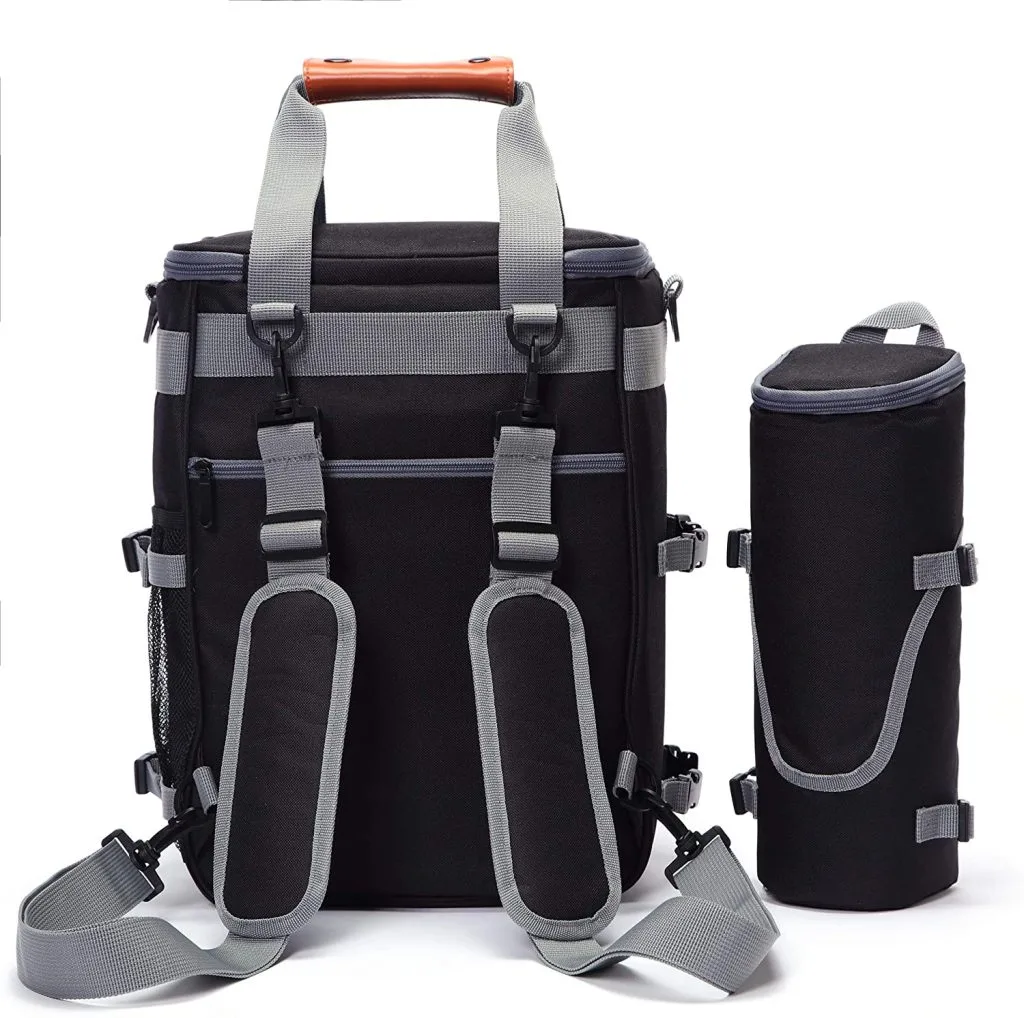
Material Selection for Travel Duty
Travel duty is harder on materials than everyday carry: bags are loaded heavily, compressed into tight spaces, dragged across rough surfaces, exposed to moisture and cleaned repeatedly. Material selection should be made against those five stresses rather than against a swatch book.
Shell fabric is the first decision. 600D polyester with a PU backing is the workhorse specification for mid-market travel bags: it resists abrasion, holds print acceptably and costs less than nylon equivalents. 900D or 1680D constructions suit rolling formats and heavier weight bands. Nylon 420D or 840D offers better abrasion-to-weight performance and a softer hand, at a higher material cost and with more shade-variation risk between dye lots. Canvas and blended fabrics appear in style-led travel programs and should be specified with a shrinkage allowance, because natural-fibre blends move in ways synthetics do not.
Lining determines cleanability, which in turn determines review sentiment. A TPU-laminated 210D lining wipes clean and resists odour retention; an uncoated lining is cheaper and absorbs moisture. For travel formats the laminated lining is almost always worth the cost, because the alternative generates the cleaning complaints that dominate negative reviews in this category.
Base panels deserve separate specification. A removable stiffened base panel — typically 4 to 6 mm board with a fabric sleeve — prevents sag and can be removed for washing. Specify the board material, the thickness, whether it is removable, and how it is retained, because a loose panel inside a lined bag is a customer-service problem that no inspection will catch.
Ventilation materials are both a comfort and a safety specification. Air-mesh with a 3 mm aperture is the common choice; tighter weaves resist claw snagging better but reduce airflow. Specify mesh by aperture and by snag resistance, and require that mesh panels be backed by a structural frame or binding rather than set into a single layer of shell fabric. Cleaning and chemical requirements should be checked against standards from OEKO-TEX where skin contact is claimed, and colourfastness against methods published by AATCC.
Structure, Ventilation and Load Path
Load path is the engineering concept that separates a travel bag from a tote. In a travel bag, the animal's weight is transferred from the base panel through the shell to the strap or handle joins, and every failure in the field occurs at one of those joins. Specifying the load path explicitly is therefore the highest-value thing a buyer can do at design stage.
The load path has four elements. Base panel and its attachment to the shell, where sag and tear-out start. Side panels, which carry the load up to the top. Strap or handle roots, which concentrate the entire load into a few square centimetres. Attachment hardware — D-rings, triglides, buckles — where the rated strength of the component must exceed the working load with a defined safety factor.
Each element should be specified numerically. Webbing width and material, with a stated tensile rating. Stitch type and stitch density at the root, with a stated bar-tack or box-stitch pattern. Reinforcement: whether the root is backed with an internal patch, and of what material. Hardware: material, finish and rated load. Four numbers and one photograph replace an entire page of adjectives.
Ventilation should be specified by area rather than by panel count. A useful rule for small-pet travel formats is that combined mesh area should be a meaningful fraction of the total surface area on at least two opposing sides, so that air can cross the bag rather than simply enter it. Two panels on the same side ventilate poorly; panels on opposing sides create cross-flow. State the requirement as a percentage of surface area with a minimum on two opposing faces.
Finally, specify the internal safety provisions: an attachment point for a harness clip inside the bag, with a stated pull strength, and any divider or restraint the design includes. These are small components with outsized consequences, and they are the items most often deleted during value engineering. Buyers should mark them as non-negotiable in the specification before cost discussions begin.
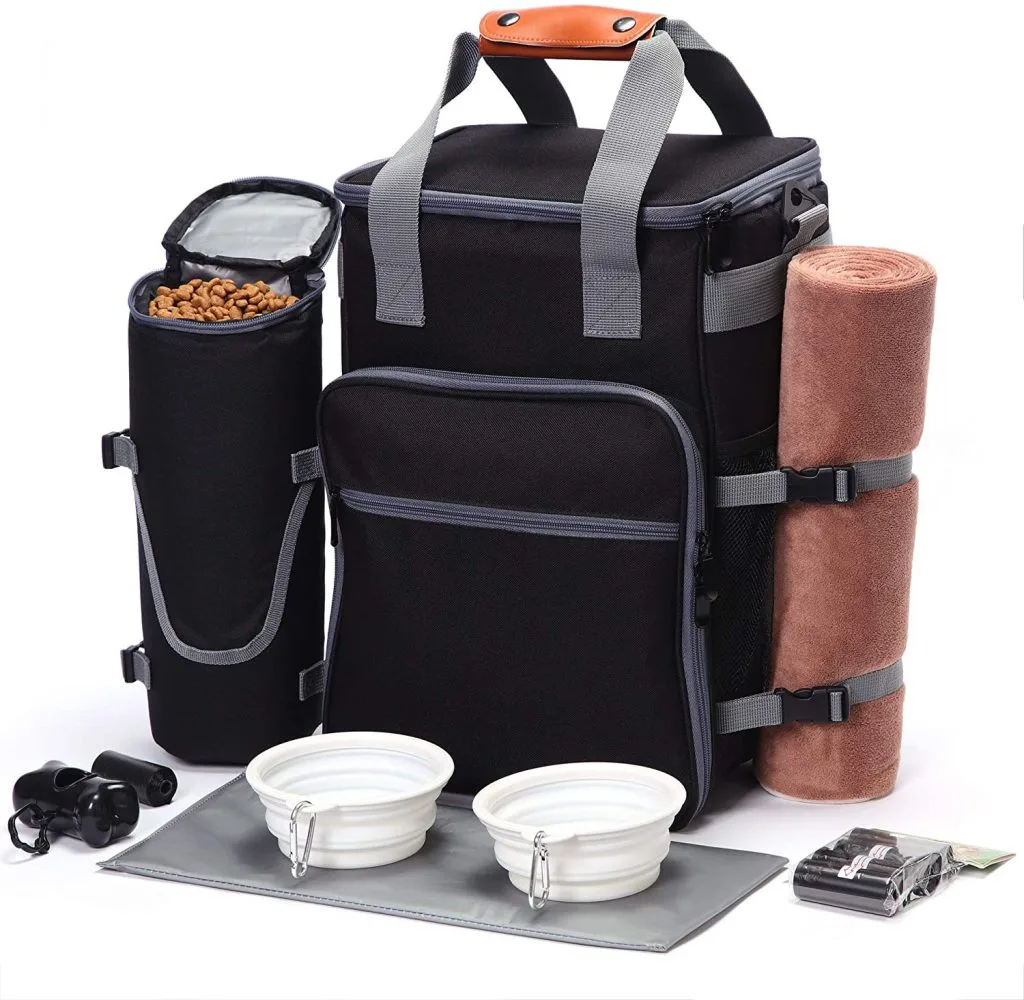
Hardware, Zippers and Closure Systems That Survive Travel
Hardware is where travel bags fail, and it is where specification discipline pays back fastest. Three component groups matter: zippers, strap hardware and structural fittings such as feet and frames.
Zippers should be specified by gauge, type and level. A #5 nylon coil is the minimum sensible gauge for a main opening on a travel bag; #8 or a #10 for rolling formats and larger duffels. Coil zippers tolerate curvature and are forgiving in use; metal and reverse-coil zippers look better and cost more. The slider and puller matter as much as the chain: a branded slider with a moulded puller survives travel handling far better than a generic one, and it is one of the few visible quality signals a customer can feel.
Strap hardware should be specified by material and finish. Zinc alloy with a nickel-free finish is the common mid-market specification and satisfies most chemical-screening requirements. Aluminium reduces weight; plastic reduces cost and weight but should be limited to non-load-bearing adjustments. Avoid mixing hardware finishes across a program: a black-finish buckle next to a silver-finish D-ring reads as an error on a premium product.
Load-bearing hardware should carry a stated rating. Triglides, side-release buckles and D-rings have published load ratings from their manufacturers, and the specification should require a rating comfortably above the maximum working load implied by the weight band. Ask for the component card with ratings, and file it with the approval sample — this is the document you will need if a claim ever arises.
Closure systems deserve a cycle test rather than an opinion. A zipper should be cycled several hundred times during sampling, on a loaded bag, before approval. Wheels and telescoping handles on rolling formats should be cycled over a rough surface for a defined distance. These are cheap tests that predict the most expensive failure modes in the category, and third-party verification through SGS is available where a channel requires an independent report.
Compliance and Documentation for Travel Pet Bags
Compliance for travel pet bags has two layers: product compliance, which is the same as for any soft pet bag, and journey compliance, which concerns what the product claims and what the animal's journey requires. Buyers frequently handle the first and ignore the second, and the second is where marketplace and advertising problems originate.
Product compliance follows the destination market. For the United States, expect CPSIA screening and California Prop 65 assessment; for the European Union, REACH substance restrictions and usually OEKO-TEX on skin-contact textiles. Travel formats add a practical requirement: because they are used in vehicles and public transport, buyers in several markets also want a strap or handle strength test and, where a restraint point is included, a pull test on that point.
Journey compliance is about claims. A bag described as airline-compatible should state the dimensions it was designed to, and should not imply carrier approval it does not have. Airline policies change, and a claim tied to a specific policy will drift out of date — which is why the better practice is to publish the dimension set and let the customer compare, rather than to name an airline. The CDC requirements for bringing an animal into the United States and the corresponding USDA APHIS rules govern the animal, not the bag, but buyers selling travel formats should know them, because customers conflate the two and support teams end up answering both.
Documentation should be planned as a file rather than assembled per order: material declarations per component, test reports by material family with numbers and validity dates, a country-of-origin statement, the approved care and content label artwork, and the component card for load-bearing hardware. Assembling this once and re-validating annually costs a fraction of rebuilding it per shipment.
Finally, the care and content label should be approved as a separate gate before bulk. Travel bags carry more label content than simple totes — fibre content, care symbols, country of origin, and any weight guidance — and label errors are among the most common causes of marketplace listing removal in this category.
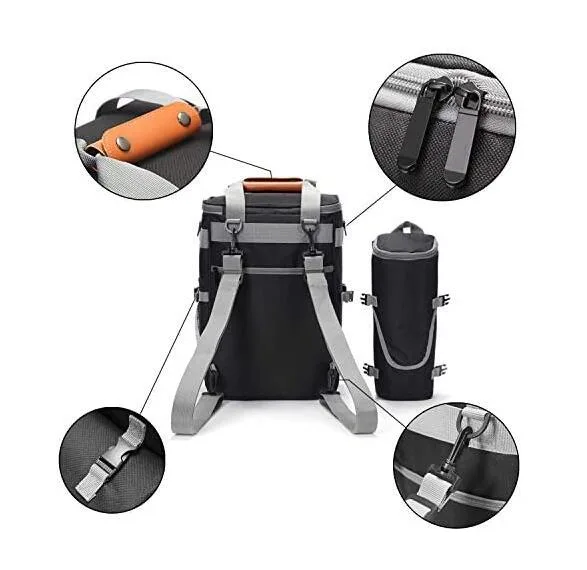
Cost Bands and Where Travel Bags Sit in a Program
Travel bags sit at the upper end of the soft pet bag price range, and the gap is structural rather than marketing. They carry more components — stiffeners, base panels, frames, additional hardware, more complex lining — and they consume more sewing time because panel counts are higher and tolerances tighter. Understanding where the money goes lets a buyer value-engineer intelligently rather than blindly.
| Cost driver | Share of ex-works price | Intelligent reduction | Reduction that backfires |
|---|---|---|---|
| Shell and lining fabric | 26-34% | Share the fabric across three SKUs | Dropping denier below duty requirement |
| Hardware and zippers | 16-24% | Standardise finish across the range | Unrated hardware on load paths |
| Structure (foam, board, frame) | 8-14% | Reduce panel count, keep the base panel | Removing the base stiffener |
| Sewing labour | 18-26% | Design for fewer panels and simpler binds | Reducing stitch density at joins |
| Testing and certification | 2-5% | Test by material family | Skipping strap and zipper testing |
The single most reliable cost reduction in travel formats is panel count. A design reduced from fourteen panels to nine typically saves more per unit than any material substitution, because it cuts cutting time, sewing time and the number of joins where defects occur. Bringing the production team into the design conversation before tooling is therefore worth more than a price negotiation after it.
The second reliable reduction is standardisation across the range. One shell fabric, one lining, one hardware finish and one zipper grade across three travel SKUs moves every one of those components into a better purchase tier and makes shade matching between SKUs achievable. Standardisation is also what allows a smaller buyer to reach bulk material pricing.
The reductions that backfire are consistent across the category: lowering denier below what the duty requires, removing the base stiffener, using unrated hardware on load paths, and reducing stitch density at joins. Each saves a small amount per unit and each converts into a return rate or a review problem that costs more than the saving. Freight planning for these bulky formats is covered further in our wholesale pet bags bulk buying guide.
Sampling, Testing and Launch Sequence for Travel SKUs
Travel formats need a longer and more structured approval sequence than simple soft bags, because more of their performance is experienced under load. Plan four gates rather than two.
Gate one is the development sample, produced in 6-10 working days, judged for dimensions measured loaded, ventilation area, panel alignment and general construction. Gate two is the load test: fill the bag to its stated weight ceiling, cycle the zippers several hundred times, carry it for a defined period, and inspect the strap roots and base panel. Gate three is the material compliance test, run by material family through a recognised laboratory. Gate four is the production pilot, inspected at AQL 2.5 before the balance payment is released.
Dimension verification deserves a protocol rather than a glance. Measure three production samples, loaded, at the stated weight, at three points each, and record the results. A travel bag that measures 25.5 cm against a 25 cm limit will produce a steady return rate from customers who tried to use it as described, and no inspection regime will catch it if the specification never stated a tolerance.
Bulk production takes 35-50 days from sample approval and deposit, and travel formats tend toward the longer end because stiffeners, frames and hardware are ordered components rather than stock items. Lock those components at sample approval so material booking and production booking run in parallel; this is the single decision that protects a fixed launch date.
Launch sequencing should follow the risk profile. Ship the hero format first, hold the extension for the second shipment, and use the first eight weeks of returns data to decide whether the extension needs a specification change. Programs that launch three travel formats simultaneously lose the ability to tell which one is generating the feedback, and end up changing all three based on a signal from one.
Finally, build the reorder calendar backwards from the travel season. Northern hemisphere demand builds ahead of summer and ahead of the year-end holiday period, and production slots book in deposit order. A program that approves samples early and shares a rolling 90-day forecast gets the slot, the price and the launch window; one that starts late pays for air freight and explains the delay to its channel.
Packaging, Packing and Warehouse Handling for Travel Formats
Travel formats are the most awkward products in the pet bag category to pack, ship and store, and the cost consequences are larger than most buyers expect. A semi-structured travel bag holds its shape, which is exactly what makes it cube inefficiently; a framed or wheeled format is worse again.
The packing decision has two honest options. Ship assembled, accepting the cube penalty and protecting the retail presentation; or ship with removable components detached — base panels, frames, shoulder straps — and assemble at destination, which improves density substantially and adds a labour operation. The second option only works where the destination has a documented assembly instruction and a quality check, because a bag reassembled incorrectly is a safety product assembled incorrectly.
Nesting is the third option and the best one where the design allows it: a compressible top section lets units nest inside one another and can improve carton density materially without any assembly at destination. Designing for nestability is a specification decision made at the pattern stage, and it is worth raising before the design is frozen rather than after the freight quote arrives.
Carton specification should follow from the packing decision rather than precede it. State the pack quantity, the arrangement, whether units are individually polybagged, and the carton's bursting strength requirement for the intended stack height. Light products invite over-filled cartons, and crushed cartons at destination are a freight claim that nobody wins.
Warehouse handling adds a cost that travel formats impose disproportionately: they occupy more space per unit, they cannot be stacked as high as flat-packed goods, and they are picked in larger cubic volumes. Include storage and pick cost per unit in the margin model for this category, because the difference against a flat-packed sling is several times larger than the difference in freight alone.
Finally, plan the master pack for the channel. Marketplace fulfilment inbound has carton weight and dimension limits and per-unit labelling requirements; retail distribution has pallet standards and sometimes a required carton quantity. Deciding which applies before the carton is specified avoids the expensive retrofit of repacking at destination, which is the most common avoidable cost in travel-format programs.
Order and quality terms
- MOQ 500 pieces per colourway; samples in 6-10 working days
- Bulk production 35-50 days after approval; AQL 2.5 inspection standard
- T/T 30/70 terms, FOB Xiamen, full document set per shipment
People Also Ask
How do I specify a pet travel bag for air travel?
Write the external dimensions including hardware, measured on a loaded bag, with an explicit tolerance, and state the compressed and uncompressed figures separately. Design to the strictest carrier your customers use, then publish the dimension set rather than naming an airline.
Why do travel pet bags fail after a few months?
Almost all field failures occur at strap roots, handle joins, zippers or base panel attachment — the load path — rather than in the middle of a panel. Specifying webbing ratings, stitch patterns, reinforcement patches and hardware ratings numerically prevents most of them.
What is the best way to reduce travel bag cost without hurting quality?
Reduce panel count and standardise components across the range. Cutting a design from fourteen panels to nine saves more than most material substitutions, while lowering denier, removing the base stiffener or using unrated hardware costs more in returns than it saves.
How should travel bag samples be approved?
Use four gates: a development sample in 6-10 working days, a load test at the stated weight ceiling with zipper cycling, material compliance testing by family, and an AQL 2.5 production pilot before releasing the balance payment.
Do travel pet bags need special compliance testing?
They need the standard market tests plus strap and handle strength testing and, where a restraint point is included, a pull test on that point. Claim substantiation matters as much as laboratory testing, because travel claims attract marketplace scrutiny.
When should I book production for the travel season?
Early. Slots are allocated in deposit order ahead of northern hemisphere summer and year-end demand. Approve samples early, share a rolling 90-day forecast, and lock structural components at sample approval so material and production booking run in parallel.
Frequently Asked Questions
What is the MOQ for pet travel bags?
The standard MOQ is 500 pieces per colour. Travel formats use ordered components such as stiffeners, frames and rated hardware, so ordering below the threshold mainly raises the per-unit cost of those components rather than saving money.
How long does sampling and bulk production take?
Development sampling takes 6-10 working days and bulk production takes 35-50 days from sample approval and deposit. Travel formats tend toward the longer end of the bulk range because structural components are ordered rather than stocked.
Should I design to a specific airline's dimensions?
Design to the strictest dimension set among the carriers your customers actually use, and publish the dimensions rather than naming an airline. Airline policies change, and a claim tied to one carrier will drift out of date while the product is still shipping.
What zipper gauge is appropriate for a travel bag?
A #5 nylon coil is the sensible minimum for a main opening, with #8 or #10 for rolling formats and larger duffels. Specify the slider and puller as well as the chain, because the slider is what fails under travel handling.
How much ventilation does a travel bag need?
Specify ventilation by area rather than by panel count, requiring a defined percentage of total surface area on at least two opposing faces so that air can cross the bag. Two panels on the same side ventilate poorly compared with opposing panels.
What is the load path and why does it matter?
The load path is the route by which the animal's weight travels from the base panel through the shell to the strap or handle joins. Every field failure occurs at one of those joins, so specifying webbing rating, stitch pattern, reinforcement and hardware rating numerically is the highest-value design decision.
Which inspections and tests should I require?
Require AQL 2.5 final random inspection plus load-path testing: strap and handle pull tests, zipper cycle testing on a loaded bag, and a pull test on any internal restraint point. Third-party reports through a recognised laboratory are advisable for a first program.
What is AQL 2.5?
AQL 2.5 is the acceptable quality limit applied to the final random inspection, setting how many major defects are tolerable in a statistically drawn sample. Critical defects, such as a failed load-bearing strap, carry an acceptance number of zero.
Which materials suit travel duty best?
600D polyester with PU backing is the mid-market workhorse, with 900D or 1680D for rolling formats and heavier weight bands. Pair it with a TPU-laminated lining, because cleanability drives review sentiment more than almost any other single factor in this category.
What payment and shipping terms apply?
Standard terms are T/T 30/70 with the balance released against a passed AQL 2.5 inspection, and FOB Xiamen as the default Incoterm. Buyers without benchmark freight data should stay on FOB until they can evaluate a landed quote against real numbers.
Can I share components across several travel SKUs?
Yes, and it is the most reliable cost reduction available. One shell fabric, one lining, one hardware finish and one zipper grade across three styles moves each component into a better purchase tier and makes shade matching achievable.
What documentation should a travel bag program keep?
Material declarations per component, test reports by material family with report numbers and validity dates, a country-of-origin statement, approved care and content label artwork, and the component card for load-bearing hardware with its rated load.
Talk to QUANZHOU JUNYUAN BAGS about a wholesale pet bag order: MOQ 500 pieces per colourway, samples in 6-10 working days, bulk production in 35-50 days under AQL 2.5 inspection.
Get a free quote Request a sample