Pet New Year Bag: Fresh Start Wholesale Sourcing Guide
A wholesale pet New Year bag programme starts at MOQ 500 pieces per colourway, runs USD 4.10-7.90 FOB Xiamen per unit, and needs 35-50 days of bulk production after a 6-10 working day sample cycle. Orders intended for a January shelf must be released before the Lunar New Year shutdown, which halts production for two to three weeks. Shipments release only after an AQL 2.5 pre-shipment inspection.
January is a resolution month, and the pet bag demand it creates is behavioural rather than decorative. Owners buy walking gear, fitness-adjacent carriers and organised storage because they have committed to doing more with their pet, not because they want a themed novelty. That distinction drives the assortment: fresh-start units sell on function with a light seasonal cue, not on heavy theming. Programmes are structured at MOQ 500 pieces per colourway, with the seasonal element treated as a swappable component rather than as part of the shell.
The calendar risk is severe and specific. Production in China stops for the Lunar New Year holiday, and the effective stoppage is wider than the official holiday because line labour returns gradually over one to two weeks after the break. A programme that misses the pre-holiday cut-off does not slip by a few days; it slips by three to five weeks. Our production team therefore sets a hard cut-off date for artwork approval and deposit release, typically eight to ten weeks before the holiday, and quotes a pre-holiday completion date rather than a duration.
Standard timing otherwise applies: sampling takes 6-10 working days from confirmed artwork and colour standard, bulk runs 35-50 days, and sea freight to a US West Coast distribution centre adds 28-35 days. Quality gates are fixed at AQL 2.5 under general inspection level II with zero tolerance for critical defects, terms are T/T 30/70 against FOB Xiamen, and production runs through an SGS-verified production base with 7 lines, 149 machines and 200,000 pieces per month under BSCI and ISO 9001.
Pet bags oem china and pet bags odm china arrangements differ on who owns the tooling, and Pet Bag Types & Styles is usually where that argument starts. Pet bag bulk supplier terms should state mould ownership in writing before the first sample is cut.
What January Buyers Actually Order Under a Fresh-Start Theme
New Year pet bag demand is a function of intent, not of occasion. The purchase is triggered by a resolution, and the resolutions that convert into pet accessories are overwhelmingly about walking more, travelling more, and getting organised. That produces an assortment profile that looks much closer to an everyday catalogue than to a holiday one, with a thin seasonal overlay doing the merchandising work.
The commercial implication is important for buyers: heavy theming underperforms in this window. A bag covered in fireworks and champagne glass prints sells at a discount to a clean unit with a single embroidered wordmark and a better hardware package. Our production team sees the same pattern every season, and the reason is straightforward. The buyer is purchasing equipment for a behaviour change, and equipment has to look credible. Novelty undermines credibility.
The table below shows the four configurations that carry most Q1 fresh-start volume, priced FOB Xiamen at MOQ 500 pieces per colourway for repeat orders.
| Configuration | Functional driver | Size (cm) | Pet weight | FOB band (USD) | Seasonal overlay |
|---|---|---|---|---|---|
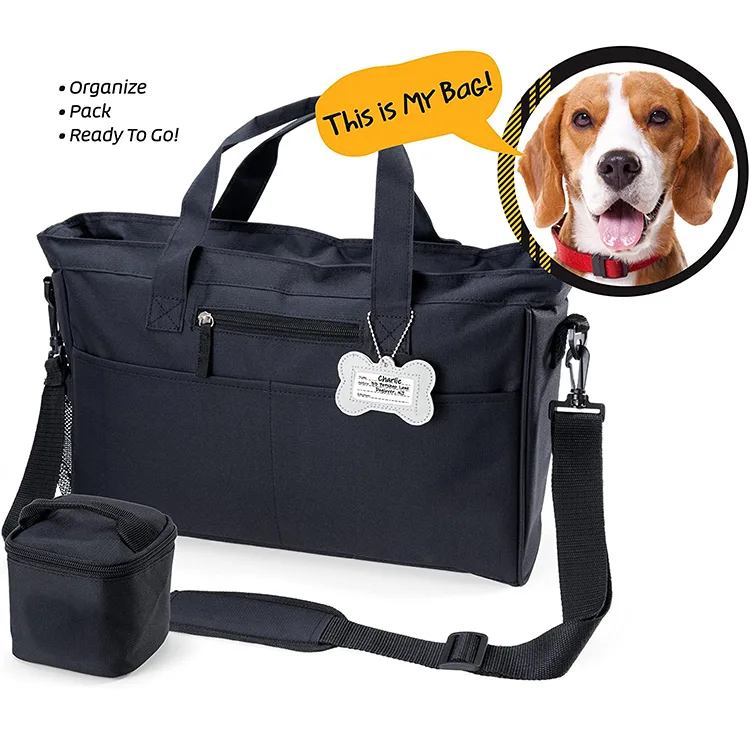
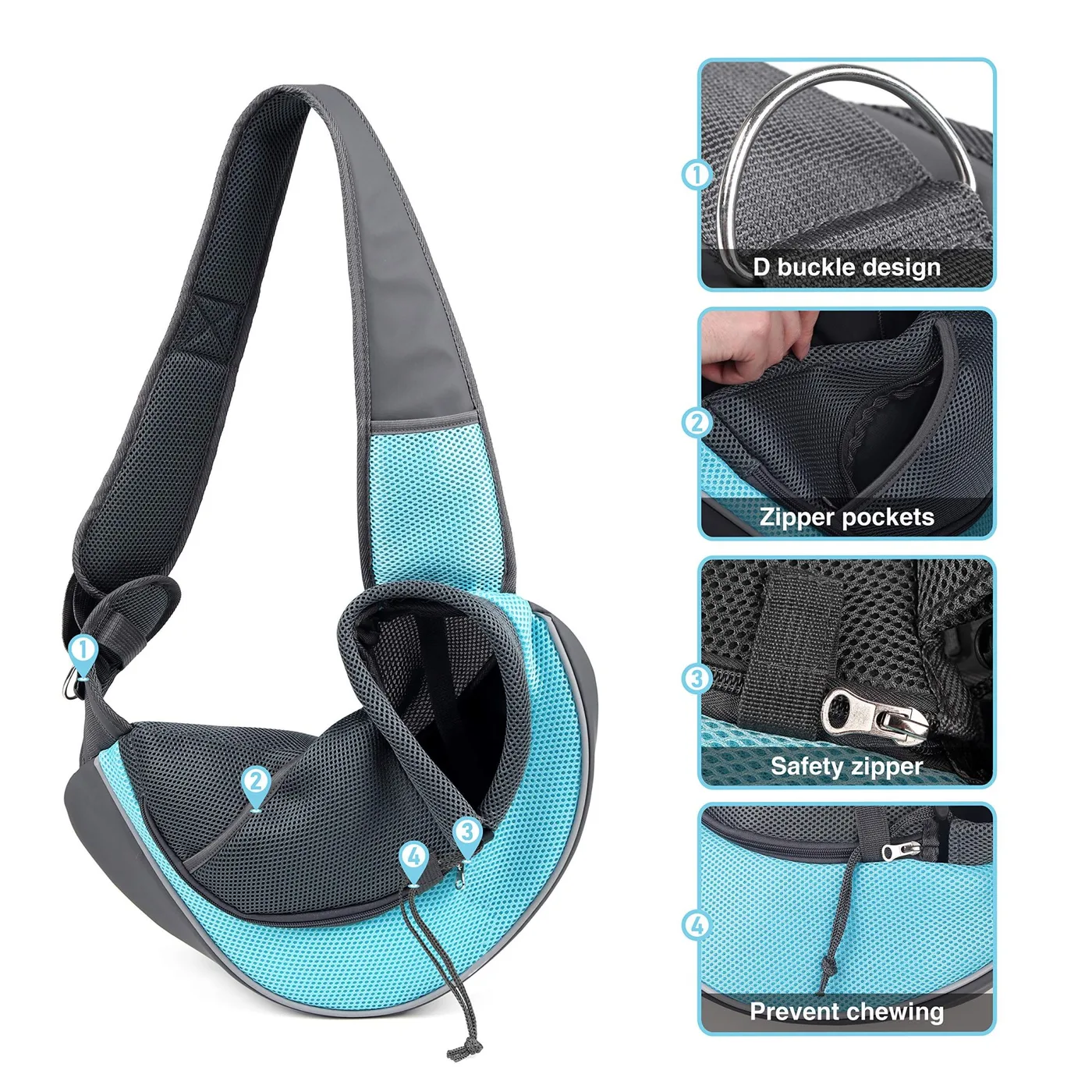
| Walk-ready sling | Daily walking volume | 34 x 18 x 24 | Up to 4 kg | 4.10 - 5.00 | Embroidered wordmark |
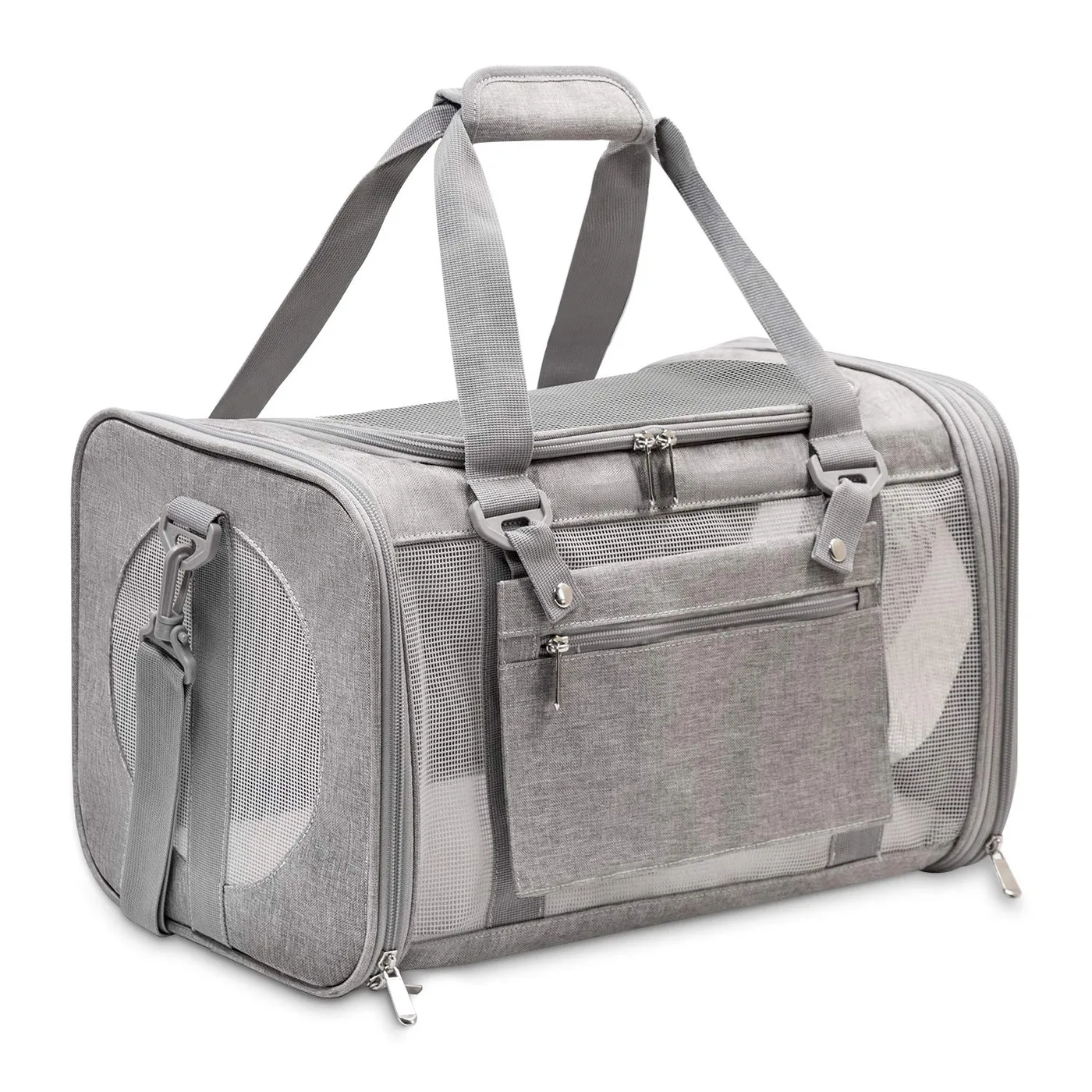
| Organised weekender | Travel and storage | 44 x 26 x 30 | Up to 9 kg | 5.80 - 6.90 | Printed inner lining |
| Active backpack | Hiking and fitness use | 42 x 25 x 32 | Up to 10 kg | 6.60 - 7.90 | Reflective piping |
| Fresh-start bundle | Gift and starter set | Box 42 x 30 x 10 | Up to 6 kg | 7.20 - 8.80 | Card and bandana |
Two patterns in the table are worth noting. First, the seasonal overlay is always a low-cost element: an embroidered wordmark, a printed lining, reflective piping or a card. None of these commits the buyer to a dated or heavily themed shell, which is the whole point of the structure. Second, the average unit price in this category sits above the Valentine and birthday averages, because the demand is functional and functional buyers pay for capacity and hardware.
Buyers should also decide how far the assortment leans into the travel end of the category. Travelling more is one of the three resolutions that convert into pet accessory purchases, and it pulls demand toward larger wheeled or convertible formats with a materially higher unit value. The trade-off is inventory risk: a travel-format unit costs roughly twice a walking sling and turns half as fast, so it should be treated as a depth decision supported by sell-through history rather than as a default inclusion in the January buy.
Channel behaviour reinforces this. Fresh-start units sell best in pet specialty and sporting-adjacent outlets and worst in party supply, which is the exact inverse of the birthday category. Buyers should therefore allocate the January open-to-buy toward functional configurations and treat the gift bundle as a secondary placement, not as the lead SKU.
The Dated SKU Problem: Year Numerals and Obsolescence Exposure
A bag printed with the year number is the most dangerous inventory a pet accessories buyer can hold, because its value does not decline gradually. It declines to near zero on a known date. Any unit carrying the year in print, embroidery or hardware becomes unsellable as themed merchandise the moment the calendar turns, and the only recovery options are markdown, re-labelling or destruction.
The arithmetic is unforgiving. A dated unit at a USD 5.60 landed cost carrying a USD 4.40 gross margin has to sell through at full price to break even against an undated equivalent, and historical sell-through on dated pet merchandise in the fresh-start window runs in the sixtieth percentile range for first-season programmes. That means a meaningful share of the buy is sold at a loss or written off, and the write-off lands in the quarter when budgets are tightest.
The structure our production team recommends removes the exposure entirely: keep the year off the shell and put it on a removable element. A printed belly band, a hangtag or a card insert carries the numeral, costs USD 0.12-0.28 per unit, and can be stripped or swapped in under an hour of destination-country labour. The shell then carries over into the general assortment in February, and the entire dated risk sits on a component that is cheaper to write off by an order of magnitude.
Where a buyer insists on a permanent year element, the exposure should be sized deliberately rather than by default. The recommended approach is to cap dated production at the volume that historical sell-through supports with an eighty percent confidence level, and to place the balance on an undated shell from the same run. Because both share the same fabric and the same pattern, they can be produced in one production order, and the split costs nothing in MOQ terms. That is the cheapest insurance available in this category.
Lunar New Year Shutdown: Planning Around the Production Stoppage
The single most consequential fact about a Q1 pet bag programme is that the factory calendar stops. The official holiday runs about a week, but the operational stoppage is considerably longer. Cutting rooms close before the holiday as workers travel home, and line staffing returns progressively over one to two weeks afterwards, so effective output is reduced for roughly three to five weeks around the break.
Experienced buyers plan around this by pulling the schedule forward rather than by trying to compress it. The working method is to fix the holiday date for the relevant year, count back the full production cycle plus a buffer, and set a cut-off for artwork approval and deposit release. For a January delivery, that cut-off typically falls in the preceding October, which surprises first-time importers who assume a November release is safe.
Three tactics make the stoppage manageable. The first is pre-building shells: because the fresh-start structure uses a carry-over body, the base units can be cut and sewn before the holiday and only the seasonal overlay applied afterwards, which converts a three-week stoppage into a three-day finishing operation. The second is booking freight early, because container space tightens sharply in the weeks before the holiday as exporters rush to clear cargo. The third is accepting a slightly higher pre-holiday labour cost, since overtime rates rise as the deadline approaches.
Buyers should also plan for the quality risk that comes with the pre-holiday rush. Lines running at overtime capacity in the final fortnight before the break have measurably higher defect rates, and the inspections that matter most are the ones run in that window. Our production team schedules in-line inspection at twenty percent and eighty percent completion on all pre-holiday orders rather than relying on a single final inspection, and buyers should request that explicitly in the purchase order.
Material and Specification Choices for Q1 Fresh-Start Units
Fresh-start units live outdoors more than any other celebration category, and the specification should reflect that. Walking, hiking and fitness use puts abrasion, moisture and load cycling on the unit in a way that a gift tote never experiences, and the material choices that follow from this are different from the ones that govern a seasonal novelty bag.
Shell fabric is the first decision. A 600D polyester with a polyurethane backing is the default for active configurations because it holds shape under load and resists abrasion at the base contact points. A 420D nylon ripstop is the lighter alternative for walking slings and saves roughly forty grams, but it needs a reinforced base panel to survive the same duty cycle. Both are quoted FOB Xiamen with the same MOQ, and the price delta between them is small enough that the decision should be made on use case rather than on cost.
Reflective elements are the highest-value trim in this category and the cheapest. Retroreflective piping at USD 0.22-0.38 per unit lifts the perceived quality of a walking bag substantially and supports a merchandising claim that no other trim in the price band can match. The specification to write is a retroreflective coefficient requirement rather than a visual description, because appearance is not the property being bought.
Hardware and closure decisions follow the same logic. Fresh-start units should specify anodised or PVD-finished hardware rather than standard electroplating, because abrasive webbing and outdoor use expose plating wear within the return window. Zippers should be specified by cycle rating, with a minimum of five hundred cycles for the main closure on an active unit. Ventilation should be specified as an open area in square centimetres rather than as a mesh description, because mesh appearance varies widely and open area is what actually governs airflow.
Cost Structure, Price Bands and Promotional Margin
January is a promotional month, and buyers routinely set the promotional price before they know the landed cost. That order of operations is the reason so many Q1 programmes lose money despite healthy sell-through. The correct sequence is to fix the promotional retail price, deduct the channel margin and the fulfilment cost, and derive the maximum allowable landed cost before any specification is written.
Working the arithmetic on a typical marketplace placement: a USD 29.99 promotional price with a fifteen percent referral fee, a USD 4.20 fulfilment cost and a target twenty-eight percent contribution margin leaves roughly USD 12.90 for landed cost including duty and freight. With sea freight at USD 0.55 per unit and duty at the applicable rate, the allowable FOB cost lands near USD 9.60, which is comfortably above the top of the fresh-start price band. The category therefore supports promotion, but only if the freight mode stays sea and the dimensional weight stays controlled.
FOB Xiamen bands for the category run USD 4.10-8.80 as shown earlier, and volume elasticity is moderate. A move from 500 to 3,000 pieces reduces unit cost by roughly ten to fourteen percent, concentrated in amortised setup rather than in fabric. Buyers negotiating a January promotion should therefore ask for setup amortisation across the full annual programme rather than against the single seasonal order, which is how the better terms are obtained.
One further cost line deserves attention because it is systematically underestimated: the cost of the return. January purchase volumes are high and January return rates are higher, and a returned unit carries inbound freight, inspection labour and, in many cases, a repackaging cost before it can be resold. On a marketplace programme with a twelve percent return rate, the fully loaded cost of processing returns typically runs one dollar forty to two dollars sixty per unit sold, which is comparable to the entire freight line. Buyers building a promotional margin should include it, because it is real cost and it scales with volume rather than with unit value.
The promotional calendar also creates a second-order cost: the markdown reserve. Buyers who have lived through a January promotion know that a share of the buy will be sold below the promotional price in February, and that share should be funded in the original margin calculation rather than discovered later. The convention our team suggests is a four to seven percent markdown reserve on fresh-start inventory, sized against historical sell-through rather than against optimism.
MOQ Strategy for a Short-Dated Programme
MOQ on a wholesale fresh-start pet bag is 500 pieces per colourway, and the constraint that matters in this category is not the minimum itself but the dated split inside it. Where a buyer is running both dated and undated units from the same pattern, the question to resolve at quotation stage is whether the supplier will accept a single five hundred piece fabric commitment covering both variants. Our production team does, because the dated element is applied after cutting, and that is the single most valuable concession a buyer can obtain in this category.
Colourway strategy is conservative by design. Fresh-start palettes are muted: charcoal, slate, deep green and oat carry the volume, with a single accent colour providing the seasonal cue. Three colourways at five hundred pieces each is a fifteen hundred unit commitment, and for a first programme two colourways at one thousand total is the safer opening. Buyers who need three for planogram reasons should consider splitting the third across two sizes rather than adding a third colourway, since sizes share the cutting marker.
Size splits are where the fresh-start category offers genuine flexibility. Because the configurations are functional, a buyer can offer a small walking sling and a larger weekender on the same fabric commitment, and the two sizes serve different pet weights and therefore different customers rather than competing. The recommended opening split is sixty percent on the smaller walking format and forty percent on the larger, adjusted after one season of sell-through data.
The final MOQ lever is the replenishment option. Because January demand is steep, buyers who under-order can still recover, but only if a reorder slot was reserved before the holiday shutdown. Our production team holds a post-holiday reorder slot against a nominal deposit for exactly this purpose, and buyers should negotiate that slot at the same time as the main order rather than hoping for capacity in February when every other importer is asking for the same thing.
Compliance, Labelling and Promotional Packaging Rules
Fresh-start units are the least chemically risky category in the celebration group because they carry minimal decoration, but they are the most documentation-heavy because they are sold through channels that audit. Sporting goods chains, warehouse clubs and large pet specialty accounts all maintain vendor compliance manuals, and the failure mode is a chargeback rather than a customs hold.
On chemical compliance, the scope is narrow and predictable. Coated shells need phthalate and, where applicable, lead screening; reflective piping and printed linings need the same; hardware needs a nickel release or a Prop 65 assessment depending on the destination. California safe harbour levels are published by the California Office of Environmental Health Hazard Assessment, and the CPSC publishes children's product limits that apply where the unit is marketed with child appeal through the US Consumer Product Safety Commission guidance.
On trade documentation, promotional programmes frequently involve a change of Incoterms mid-season, usually when a buyer switches from sea to air to rescue a delayed promotion. That switch changes who bears the risk and who pays the freight, and it should be documented rather than assumed. The reference framework for this is the Incoterms rules maintained by the International Chamber of Commerce, and buyers moving between FOB and other terms on the same programme should state the applicable rule and the named place in the purchase order.
Packaging compliance for promotional placements is stricter than for general merchandise. Warehouse clubs require a master pack configuration that matches their pallet pattern, most large chains require a GS1-128 shipping label, and several require a specific carton weight ceiling for manual handling reasons. Our production team applies carton marks, inner polybag warnings and shipping labels at the partner facilities so the unit arrives distribution-centre ready, because third-party relabelling in the destination country costs USD 0.30-0.55 per unit and is pure margin loss.
Supplier Scorecard and Pre-Shutdown Production Planning
The supplier scorecard for a Q1 programme weights one criterion above all others: pre-holiday delivery performance. That criterion carries thirty percent, followed by capacity reservation at twenty percent, colour and specification continuity at fifteen percent, documentation at fifteen percent, communication at ten percent, and price at ten percent. The weighting reflects a simple fact: a supplier who misses the pre-holiday cut-off has not delivered a late order, they have delivered a cancelled season.
Buyers should ask a direct question at quotation stage: how many pre-holiday orders did you complete in the last two years, and what share shipped before the committed date. A supplier with a strong answer will produce the record. A supplier who cannot answer is disclosing the risk without being asked twice. Our production team treats pre-holiday completion as a published commitment with a named completion date rather than as a duration, and that is the formulation buyers should insist on in the purchase order.
Quality gates stay fixed. AQL 2.5 under general inspection level II, zero tolerance for critical defects, and in-line inspection at twenty and eighty percent completion on all pre-holiday orders. Critical defects in fresh-start units are dominated by structural failures: load-bearing seam separation, zipper failure under load, hardware detachment and reflective piping delamination. Major defects include shade deviation outside the signed band, stitch density below specification and any dimensional deviation that affects the stated pet weight rating.
Independent verification closes the loop. A recognised third-party body such as SGS can combine the pre-shipment inspection with component screening in a single appointment, and the resulting report is what most retail accounts payable departments want to see before releasing payment. The production base behind this programme holds BSCI social compliance and ISO 9001 quality management across 4,950 square metres, 137 staff, 7 lines and 149 machines at 200,000 pieces per month, with certificates released at quotation stage. Payment terms are T/T 30/70 against FOB Xiamen, with the balance released against the passed inspection report.
Production capability
- SGS-verified production space of 4,950 m², 149 machines, 7 assembly lines
- Pet bag output since 2014 from a 137-person team
- 200,000 units shipped monthly under BSCI and ISO 9001 systems
People Also Ask
Do New Year pet bags sell better themed or functional?
Functional, with a light seasonal cue. January demand comes from a behaviour change, so clean configurations with an embroidered wordmark or reflective piping outsell heavily themed novelty units.
How does the Lunar New Year shutdown affect my order?
Effective production stops for roughly three to five weeks around the holiday, wider than the official break because labour returns gradually. Orders missing the pre-holiday cut-off slip by more than a month.
Is dated pet merchandise a bad idea?
It carries a hard expiry. Value falls to near zero once the calendar turns, so the year should sit on a removable band, tag or card rather than on the shell.
What colourways sell in the January fresh-start window?
Muted palettes: charcoal, slate, deep green and oat carry the volume, with one accent colour providing the seasonal cue. Bright novelty colours underperform in this window.
Can I mix sizes under one MOQ commitment?
Yes when the sizes share the same fabric roll and cutting marker. A sixty-forty split between a walking sling and a larger weekender is a common opening structure.
How do I protect margin on a January promotion?
Fix the promotional retail price first, deduct channel fees and fulfilment, and derive the maximum allowable landed cost before writing the specification. Keep freight on sea and control dimensional weight.
Frequently Asked Questions
What is the MOQ for a wholesale New Year pet bag?
MOQ is 500 pieces per colourway. Where dated and undated variants share a pattern and a fabric, the dated element is applied after cutting, so both can be covered under a single fabric commitment.
When must the order be placed for a January delivery?
Artwork approval and deposit should be completed roughly eight to ten weeks before the Lunar New Year holiday. Missing that cut-off does not delay the order by days; it delays it by three to five weeks.
How long does sampling take?
Sampling takes 6-10 working days once artwork, colour standard and hardware finish are confirmed in writing. Reflective piping and coated shells should be approved on physical swatches rather than on screen.
What is the bulk production lead time?
Bulk runs 35-50 days. Clean shells with stock hardware complete at the short end; coated fabrics, reflective piping and custom hardware push the schedule toward the long end.
Should the year number be printed on the bag?
Only on a removable element. A printed belly band, hangtag or card carries the numeral at USD 0.12-0.28 per unit and can be stripped, which keeps the shell sellable after the calendar turns.
What does a New Year pet bag cost FOB?
FOB Xiamen bands run USD 4.10-5.00 for a walking sling, USD 5.80-6.90 for a weekender, USD 6.60-7.90 for an active backpack and USD 7.20-8.80 for a fresh-start bundle at MOQ 500 per colourway.
Which inspection standard applies?
AQL 2.5 at general inspection level II with zero tolerance for critical defects. Pre-holiday orders should also carry in-line inspection at twenty percent and eighty percent completion.
Does the Lunar New Year shutdown affect quality?
Yes. Lines running overtime in the final fortnight before the break have measurably higher defect rates, which is why in-line inspection at two completion points is specified on all pre-holiday programmes.
Can I reserve capacity for a February reorder?
Yes, and it should be negotiated with the main order. A reserved post-holiday reorder slot against a nominal deposit is far more reliable than requesting capacity in February when demand for it peaks.
What compliance documentation do large chains require?
Coated shells and reflective trims need chemical screening, hardware needs a Prop 65 assessment for California, and most large accounts require a GS1-128 shipping label plus a carton configuration that matches their pallet pattern.
How much should I budget for markdowns on fresh-start stock?
A four to seven percent markdown reserve on fresh-start inventory is the conventional figure, sized against historical sell-through. Funding it in the original margin calculation avoids discovering it after the promotion ends.
What Incoterms apply if I switch from sea to air freight?
The switch changes who bears risk and who pays freight, so it must be documented. State the applicable Incoterms rule and the named place in the purchase order rather than assuming the original terms still apply.
Talk to QUANZHOU JUNYUAN BAGS about a wholesale pet bag order: MOQ 500 pieces per colourway, samples in 6-10 working days, bulk production in 35-50 days under AQL 2.5 inspection.
Get a free quote Request a sample